Common Myths About Heater Efficiency: What Matters Most
Heater efficiency myths usually mix up conversion efficiency and comfort efficiency; pick the heater that matches the room, and ignore claims that ignore heat loss, airflow, and thermostat control. I have seen people spend extra on a unit that looks efficient on paper, then sit in a cold room with a high bill. This guide separates the common myths from the buying and usage decisions that actually matter, so you can spot marketing claims and judge heaters by how they perform in a real room.
Common myths about heater efficiency
Most confusion starts when a product page talks about heat delivery, warm-up feel, or thermostat behavior as if those were the same thing as energy conversion. They are not. A heater can feel faster, stay warm longer, or cycle differently and still use the same amount of electricity for the same heat output.
The useful split is simple: conversion efficiency asks how much input electricity becomes heat at the heater, while comfort efficiency asks how well that heat reaches people and surfaces in the room. Buyers often pay for the second and think they are getting a better first.
Conversion efficiency versus comfort efficiency
An electric resistive heater converts electrical energy to heat at the point of use. Oil-filled, fan, ceramic, and convection styles are all in the same basic category. Their design changes how heat moves through the room, not how much electricity becomes heat.
That is where the myths begin. A heater that throws warm air farther may feel better near the doorway. A heater with thermal mass may feel smoother after shutoff. A thermostat with tighter control may reduce swings. None of those features creates extra heat from the same watts.
According to Most common myths about electric space heaters – Heating Trends — Heating Trends says a 1.5 kW heater produces 1.5 kW of heat.
Are all electric heaters 100 percent efficient?
At the point of use, electric resistive heaters convert most of the electricity they use into heat. That includes oil-filled units, fan heaters, ceramic heaters, and convection heaters. The practical difference is how the heat is spread, how fast it is felt, and how stable the room temperature feels.
What point-of-use efficiency means
Point-of-use efficiency is about the device itself. If a 1.5 kW heater draws 1.5 kW, it produces 1.5 kW of heat in the room. Heating Trends states electric resistance heaters convert electrical energy to heat with zero waste, and also says oil heaters, fan heaters, ceramic heaters, and convection heaters are equally energy efficient.
That does not mean every heater is equally good for every room. A small bedroom, a drafty basement, and a living room with an open door all need different heat delivery. The heater may be efficient, yet still be the wrong tool.
Why resistive heaters all turn electricity into heat
There is no hidden source of extra heat in the fan, casing, or thermostat. Those parts help move or control the heat you already paid for. When a product claims a special element or shape is more efficient, check whether the claim is about heat transfer, not energy conversion.
Why oil-filled heaters feel different
Oil-filled heaters can feel gentler and may keep warming for a short time after shutdown, but that comes from stored heat rather than extra efficiency. The oil acts as a thermal buffer. It changes how the heater releases heat, not how much electricity was required to create that heat in the first place.
Stored heat after shutdown
Heating Trends says oil in a radiator is used as a buffer to store energy, and that heat retention is about 10 minutes depending on size. That lingering warmth can be useful in a bedroom or office where a steadier feel matters. It is not free heat.
The tradeoff is warm-up time. Oil-filled units usually take longer to feel active than a fan heater. In a room with short occupancy, that delay can matter more than any feel-good claim on the box.
Warm-up time versus total energy use
A faster warm-up can improve comfort sooner. It does not mean lower total electricity use. If two heaters deliver the same heat over the same period, the bill follows the watt-hours consumed, not how impressive the first five minutes felt.
This is where buyers get misled. A heater may feel “more efficient” because the air around the user warms first. The room may still need the same total energy to reach the same temperature.
Do fan heaters or bigger heaters use less energy?
No. Fan airflow can make heat feel faster because it spreads warm air sooner, but that does not usually reduce total energy use. Larger heaters do not make more heat per watt, and they still follow the same energy conversion limits. They only change how much heat is available and how quickly it can be delivered.
Fan airflow and perceived speed
A fan heater moves air across the heating element and sends warm air into the room faster. That can reduce the lag between switch-on and first comfort. The fan itself does not create extra heat. It only helps distribute the heat already produced by the resistive element.
That makes fan heaters feel lively in small rooms. It also makes them easier to oversell. A fast start is not the same as lower consumption.
Watts, room size, and runtime
The real energy equation is watts times runtime. A higher-watt heater can raise room temperature faster, but only by drawing more power while it runs. If the room is undersized, that extra output may overshoot comfort and increase cycling. If the room is too large, the heater may never settle the space properly.
Heating Trends says bigger heaters would require rewriting laws of thermodynamics if they made more heat with less power. That is the cleanest way to read the claim. More output can help match the room, but it is not a shortcut to lower use.
When oversizing hurts comfort
Oversized heaters can create hot-cold swings, short cycling, and a room that feels stale near the heater and cold elsewhere. That is a comfort problem first. It can also become an energy problem if the thermostat keeps shutting off before heat spreads evenly.
Does the thermostat setting change how fast a room heats?
No. The setpoint changes how long the heater runs, not how quickly the heater can produce heat. A higher setting asks for more runtime until the room reaches that target. It does not give the heater extra power or make heat appear faster.
Setpoint and runtime
Thermostat setting affects energy use because it changes the target temperature. If the thermostat is set higher, the heater usually runs longer. If the room is already warm enough, lowering the setpoint cuts runtime. That is basic control behavior, not a special efficiency feature.
McAllister Energy recommends a comfortable thermostat range of 68-72 degrees Fahrenheit. That range is useful because it keeps heating demand sane without pretending that temperature setting changes the heater’s output rate.
Control differential and cycling behavior
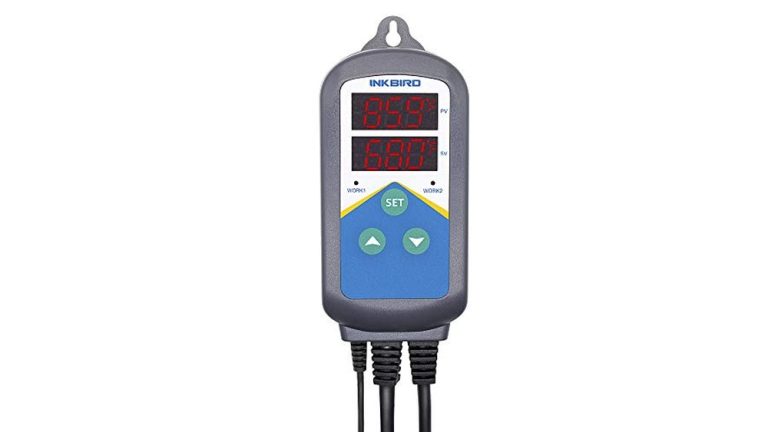
Space heater thermostat accuracy matters because poor sensing can create short cycles or wider temperature swings. A small control differential keeps the room steadier. A sloppy thermostat may shut off too early or restart too late, which hurts comfort and can waste runtime through repeated starts.
Heating Trends says inaccurate thermostats do not change average energy consumption the same way people assume. The point is simple: bad control usually hurts feel first, then efficiency second. It does not create a magic savings story.
Why accuracy matters more than hype
Good thermostat control can reduce overshoot and keep the room more even. That is valuable. It is still not a new heat source. If the heater is placed badly, near a curtain, or in a draft, thermostat quality cannot fix the room layout.
Myth-vs-truth matrix for heater efficiency claims
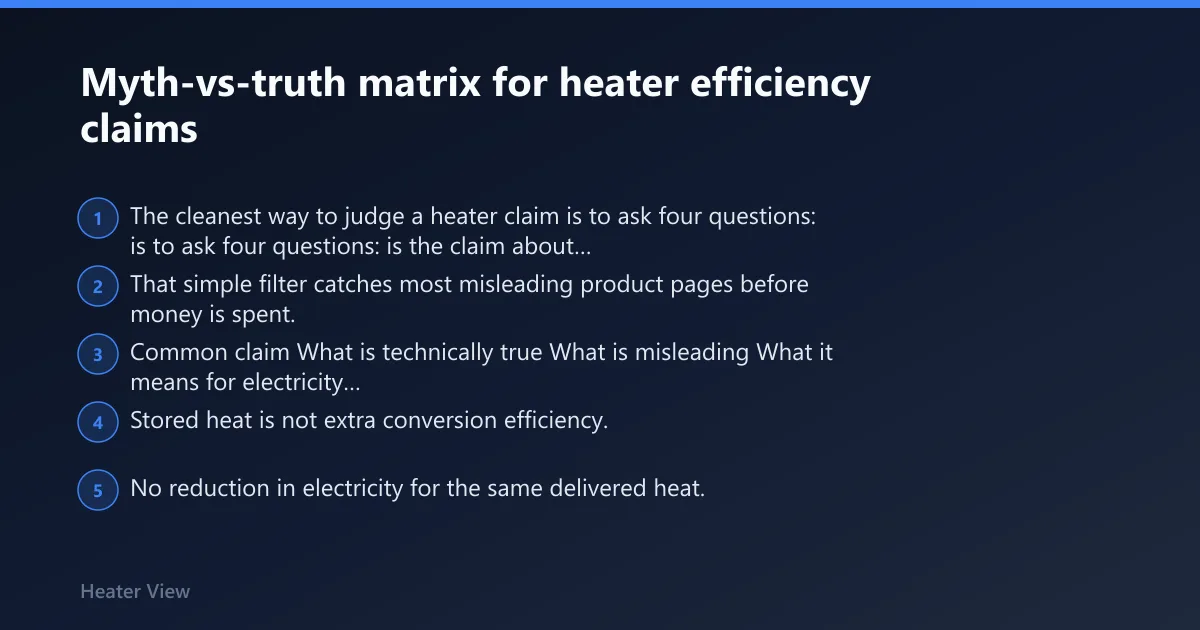
The cleanest way to judge a heater claim is to ask four questions: is the claim about heat conversion, heat movement, thermostat behavior, or room match? That simple filter catches most misleading product pages before money is spent.
| Common claim | What is technically true | What is misleading | What it means for electricity use | When it matters in real homes |
|---|---|---|---|---|
| “Oil-filled heaters are more efficient because they stay warm after shutdown.” | The oil stores heat and releases it briefly after power stops. | Stored heat is not extra conversion efficiency. | No reduction in electricity for the same delivered heat. | Useful when smoother feel matters in a bedroom or office. |
| “Fan heaters use less energy because they heat faster.” | Airflow spreads heat sooner, so the room feels warmer sooner. | Faster perceived warmth is not lower total energy use. | Same or higher use if runtime and wattage are unchanged. | Useful for short occupancy and quick spot comfort. |
| “Bigger heaters are more efficient.” | More powerful heaters can deliver heat faster. | More output does not mean more heat per watt. | Energy use rises with runtime and wattage, not size alone. | Only matters when matching output to room size. |
| “Advanced thermostats save energy by themselves.” | Better control can reduce overshoot and cycling swings. | Controls do not change the heater’s conversion efficiency. | May trim waste from poor cycling, not create big savings alone. | Matters in rooms with frequent cycling or poor sensing. |
| “Closing vents always saves energy.” | Changing airflow can redirect heat in some systems. | On a balanced HVAC system, it can disrupt airflow and comfort. | May increase waste if the system works against the blockage. | Relevant to central heating, not a blanket rule. |
| “A premium element is over 99% efficient, so it is better.” | Some heating elements are marketed at over 99% efficiency. | That figure is about conversion, not room comfort or fit. | Little practical difference versus other resistive heaters. | Only matters if the buyer is comparing marketing claims carefully. |
Is a space heater more efficient than central heat?
Not for whole-home use. Space heaters are generally less efficient than modern central heating systems for larger areas or an entire home. A portable unit can be the better choice for one occupied room, while central heat usually makes more sense when multiple rooms need steady warmth.
Whole-room heating versus whole-home heating
A space heater works best when the goal is targeted comfort. Heating one room you are using avoids paying to warm the rest of the house. That is a usage strategy, not a miracle efficiency gain. The energy still goes into heat.
For larger areas, central heating tends to do a better job because it is built to move heat through the home in a balanced way. McAllister Energy notes that space heaters are generally less efficient than modern central heating systems for larger areas or an entire home.
Duct losses and room targeting
Central systems can lose heat through ducts, especially if the system is old or poorly maintained. Even so, they often win on practicality when several rooms need heat at once. A portable heater in one room may be perfect at 7 p.m. and useless at 7 a.m. when the rest of the house needs warmth too.
Closing vents can seem like a shortcut, but McAllister Energy warns that it can disrupt the HVAC system’s balance. In a balanced duct system, random vent changes can create pressure issues and uneven heating.
Where portable heat makes sense
Portable units make sense in small rooms, short occupancy periods, drafty spots that need local help, and homes where one zone is consistently colder than the others. They make less sense as a whole-home solution or as a fix for poor insulation.
How do I tell whether a heater efficiency claim is real?
Start by checking whether the claim talks about conversion efficiency or comfort behavior. Then look at room size, placement, thermostat quality, and operating pattern. Real efficiency claims survive that test. Vague claims about “faster,” “warmer,” or “smarter” usually do not.
A practical checklist
- Ask whether the claim is about heat conversion, heat distribution, or thermostat control.
- Check the wattage and match it to the room size and use pattern.
- Look for thermostat accuracy and cycling behavior, not just a premium label.
- Decide whether the room needs quick burst heat or steady background warmth.
- For central heat, check maintenance, airflow balance, and duct condition.
- Ignore claims that say a heater creates more heat than its electrical input allows.
Maintenance is part of efficiency
Heating system maintenance is a real efficiency factor. Regular inspections can catch airflow problems, worn controls, and dirty components before they waste energy. That matters most for central systems, but some appliances also depend on good upkeep and usage conditions.
Water hardness and heavy use can affect some appliances, including equipment that heats water for the home. If mineral buildup or wear is part of the appliance’s job, maintenance is not optional. It is part of keeping output steady and losses low.
Frequently asked questions
Are all heaters 100 percent efficient?
Electric resistive heaters convert nearly all input electricity into heat at the point of use. The useful differences are in heat spread, thermostat behavior, and room fit. For buying decisions, that means “more efficient” usually describes comfort or control, not a better conversion rate.
Do bigger heaters use more energy than smaller ones?
Bigger heaters do not automatically use more energy, and they do not make more heat per watt. Energy use depends on wattage and runtime. A bigger heater can be right for a larger room, but oversizing can hurt comfort and shorten useful cycling periods.
Are oil heaters more efficient than other space heaters?
No. Oil-filled radiators feel different because they store heat in diathermal oil and release it after shutdown. That stored warmth is not extra efficiency. They are often better for steadier comfort, while fan, ceramic, and convection units mainly differ in how they move heat.
Does turning the thermostat up heat a room faster?
No. Turning the thermostat up changes the target temperature and usually increases runtime. It does not increase heater output or warm the room faster by itself. If the heater is undersized or badly placed, raising the setpoint only makes it run longer.
Do advanced thermostats save energy?
Sometimes they reduce waste by improving control, limiting overshoot, and reducing short cycling. They do not change the heater’s basic conversion efficiency. Their real value is better temperature control, especially in rooms where inaccurate sensing causes comfort swings or repeated cycling.
How do I tell whether a heater efficiency claim is real?
Ask what kind of efficiency is being claimed. If it is about heat conversion, nearly all electric resistive heaters are already similar. If it is about comfort, check room size, thermostat accuracy, placement, and runtime. The claim is real only if it improves the room without hiding extra electricity use.