Primary heat vs supplemental heat: Which system do you need?
A heat pump needs no backup in mild climates and tight homes, automatic supplemental heat in colder snaps or with defrost, and a true dual-fuel setup only when a furnace is intended to take over below a set outdoor temperature. Get that wrong and you waste energy, short-cycle equipment, or end up cold because the backup is undersized. This guide shows how primary heat and supplemental heat work, how to tell normal backup from a problem, and which setup fits.
| Decision factor | Primary heat | supplemental heat: Which system do you need | Winner |
|---|---|---|---|
| Seasonal role | Provides the majority of heating over the season. | Adds capacity when the main system cannot keep up. | Primary heat |
| Best fit | The main furnace, boiler, or heat pump for the home. | Cold snaps, shoulder seasons, defrost, or load spikes. | Primary heat |
| Control logic | Runs as the default heating source. | Turns on by thermostat staging, outdoor reset, or lockout rules. | Primary heat |
| Cost when it runs | Usually the lower-cost choice when sized and matched well. | Often costs more per unit of heat, especially with electric resistance. | Primary heat |
| Comfort protection | Keeps the house heated through most conditions. | Prevents temperature drop when demand outruns capacity. | supplemental heat: Which system do you need |
What’s the difference between primary heat and supplemental heat?
Primary heat is the system that does most of the heating work over the season. Supplemental heat adds capacity when the main equipment needs help. That split matters because the same house can have a primary heat source and one or more support sources that only come on at specific times.
Primary heat carries the season
Primary heating can be a furnace, boiler, or heat pump, depending on the house. The key is simple: if one system runs for most of the cold season, it is the primary heat source, no matter what fuel it uses.
Supplemental heat fills the gap
Supplemental heating is there for shoulder seasons, cold snaps, or short load spikes. It can be electric resistance strips, a mini-split in another zone, a furnace, or even a wood stove in some homes. The role is added capacity, not whole-house duty for most of the season.
Where backup heat fits
Backup heat is a stronger form of help. It can provide near full capacity when the primary system cannot. In heat-pump setups, backup and auxiliary heat often overlap, which is why homeowners mix the terms and end up confused.
According to Heat Pumps and Supplemental Heating – Michaels Energy — Cold-climate heat pumps can perform very well below 0F.
When does a heat pump need backup heat?
A heat pump may need backup heat when the heating load rises above what the unit can deliver at that outdoor condition. That usually happens in colder weather, during defrost, or when the home has a higher load than the heat pump was sized to cover alone. A cold-climate heat pump can still do a lot of work below 0F, but peak load can still call for help.
Balance point is the first test
A balance point occurs when heating load exceeds heating capacity. Below that point, the heat pump can no longer carry the full house by itself, so supplemental heat may be needed. A well-insulated home pushes that point lower; a leaky home pushes it higher.
Defrost and short spikes are normal
During normal defrost, the outdoor fan may stop and steam may rise from the unit. That does not mean failure. It means the system is briefly dealing with frost on the coil, and some controls will bring on auxiliary heat during that period to prevent a cold draft indoors.
Cold-climate units reduce, but do not erase, backup needs
Cold-climate heat pumps can perform very well below 0F. That lowers the need for backup in milder cold and in tight houses. It does not remove the need in every home, because duct losses, poor insulation, or a very high design load can still force backup heat to run.
Is emergency heat the same as auxiliary heat?
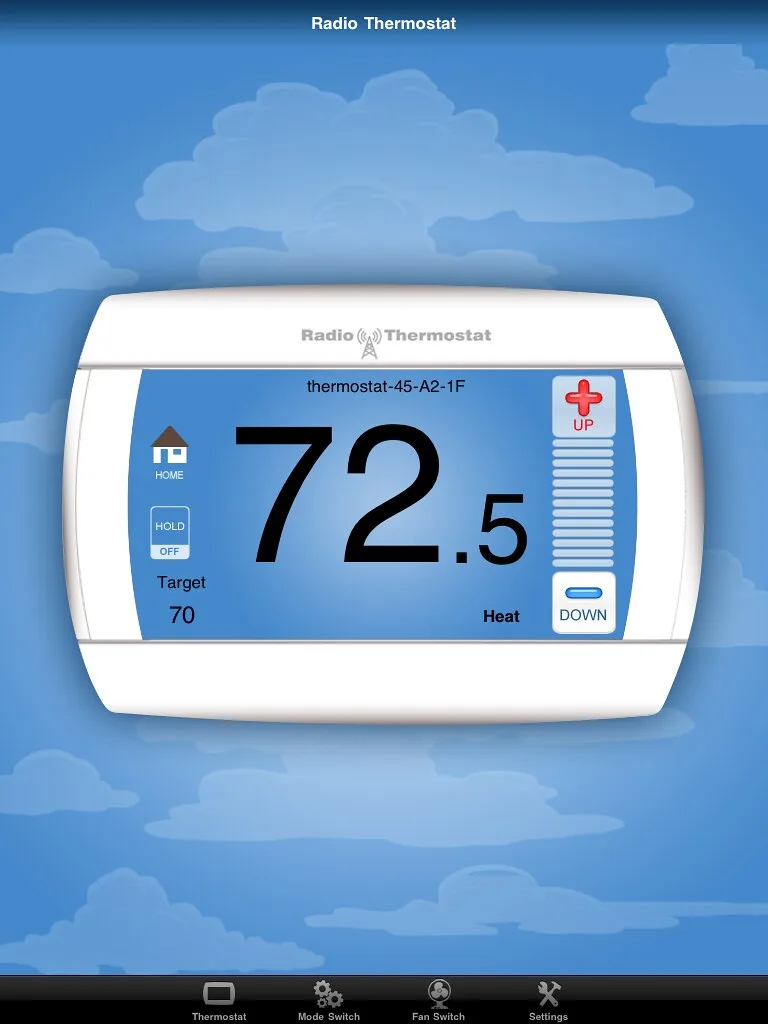
Emergency heat is generally treated as a manual heat-pump mode that disables the compressor and uses backup heat only. Auxiliary heat is automatic staging by the thermostat when backup heat is needed. One is for failure or lockout; the other is normal control logic.
Emergency heat is for compressor problems
Emergency Heating is essentially backup heating for heat pumps that lock out the compressor. It is meant for a failed outdoor unit, a service issue, or a situation where the heat pump cannot run safely. It is not a winter comfort setting.
Auxiliary heat is automatic
Auxiliary heat is automatically staged when backup heat is needed. It is often electric resistance heat or a furnace backup, and it can come on during defrost or when the load spikes. That makes it a normal part of some systems, not a sign that someone touched the wrong switch.
Wrong setting, wrong bill
Emergency Heat disables the heat pump and uses only backup heat. If that backup is electric resistance, operating cost rises fast because electric resistance heat often has a COP of about 1, while heat pumps often have a COP between 2 and 4. Leaving emergency mode on by mistake can be an expensive error.
How do balance point and switchover temperature differ?
Balance point is the outdoor condition where heating demand exceeds heat-pump output. Switchover temperature is the outdoor condition where controls choose the cheaper or preferred source. Those temperatures can be different, because one is about capacity and the other is about operating logic.
Balance point is about physics
When outdoor temperature falls, heat-pump capacity drops and the house needs more heat. The balance point marks the moment the load wins. That point depends on climate, system sizing, duct losses, air sealing, and insulation.
Switchover is about cost and control strategy
A system may switch to backup before balance point if the backup source is cheaper at a certain temperature. A dual-fuel system often does this with gas or oil, because the controller is trying to choose the lower-cost source for those conditions. That is a decision rule, not a capacity limit.
The two numbers often do not match
A home can have a balance point at one temperature and a switchover temperature at another. If electricity is expensive and gas is cheap, the switchover point may be higher. If the heat pump is efficient and the furnace fuel is costly, the switchover may be much lower or never happen in ordinary weather.
Which backup setup fits your home?
The right backup setup depends on home type, climate severity, insulation level, utility rates, and what equipment is already installed. All-electric homes can often use no backup or electric resistance backup. Homes with gas or oil already in place may be better served by a dual-fuel setup if the fuel price and climate justify it.
All-electric homes
In a mild climate with a tight envelope, no backup may be enough. In colder areas, a small electric resistance bank may be the practical choice because it is simple and always available. The tradeoff is operating cost, since that backup is usually the most expensive heat in the system.
Homes with gas or oil equipment already installed
If a furnace is already present, a heat pump plus furnace can make sense as a dual-fuel system. The controller can let the heat pump do the work until outdoor temperature or cost favors the furnace. That gives you near-full backup capacity without forcing electricity to cover the worst hours.
Boilers and furnaces can be supplemental heat
Yes, a furnace or boiler can be supplemental heat for a heat pump. It is common in retrofit work, especially when the existing fossil-fuel system stays in place as backup or as the cold-weather source. The main question is not whether it can work; it is whether the controls and operating cost make sense.
Homeowner decision table: no backup, electric backup, or dual-fuel?
Use the table below as a practical rule, not a slogan. Start with climate, then insulation, then utility rates, then what equipment is already in the house. That order catches most real-world cases better than guessing from outdoor temperature alone.
| Home type | Climate severity | Insulation and air sealing | Utility rates / existing equipment | Recommended heating role |
|---|---|---|---|---|
| All-electric home | Mild winter | Tight | Electricity not unusually costly | No backup, or small automatic auxiliary heat only |
| All-electric home | Cold snaps common | Average or leaky | Electricity moderate to high | Heat pump with automatic electric resistance backup if comfort risk is high |
| Home with existing gas furnace | Cold winter | Average to good | Gas cheaper than high-rate electricity | Dual-fuel system with furnace backup below the switchover temperature |
| Home with existing oil furnace | Very cold winter | Average or leaky | Oil already in place, electricity costly | Dual-fuel or retained furnace as backup, depending on control strategy and fuel cost |
| Tightly insulated new build | Cold but not extreme | Very good | Any common utility mix | Primary heat pump with little or no backup capacity |
| Older home with weak insulation | Cold or very cold | Poor | Any utility mix | Heat pump plus real backup capacity; fix the envelope or expect more auxiliary runtime |
Decision rule in plain language
If the home is tight and the climate is mild, start with no backup and verify comfort across a cold week. If the home is leaky or the climate is harsher, automatic backup becomes more attractive. If a gas or oil furnace already exists and fuel cost is favorable, dual-fuel often makes the most sense.
How do you know if supplemental heat is running too much?
Supplemental heat is running too much when it is active often outside of brief cold snaps, when the house struggles to recover, or when the backup seems to carry the load for long stretches. That can point to undersized equipment, poor insulation, thermostat misconfiguration, or a control problem rather than a bad heat pump.
Red flags to check first
- Backup heat runs on mild days when the outdoor unit should be able to keep up.
- Indoor temperature drops even though the thermostat is calling for heat.
- The system switches to auxiliary heat on short recovery cycles after small setbacks.
- Emergency heat was left on after a service call or outage.
- The thermostat settings force backup heat too early.
- Ducts, filters, or coils are restricted.
- The home was recently converted to a heat pump without a load check.
What constant backup heat can mean
Frequent auxiliary heat can mean the system is undersized for the load, especially after insulation work was skipped. It can also mean the thermostat is set to favor backup too early, or that the outdoor sensor, balance logic, or staging settings are wrong. Do not assume the compressor has failed until those basics are checked.
When the heat pump is not the real problem
If the house has major air leaks, weak attic insulation, or undersized ductwork, a healthy heat pump can still look bad. The backup then becomes a symptom, not the cause. Fixing the envelope and controls often cuts auxiliary runtime more effectively than replacing equipment.
Should supplemental heat be electric resistance or a dual-fuel furnace?
Choose electric resistance when you want simple, automatic backup in an all-electric home and the extra operating cost is acceptable. Choose dual-fuel when a furnace is already in place, winter is cold, and fuel prices make the furnace cheaper to run below a switchover temperature.
Electric resistance backup
Electric resistance backup is simple, compact, and easy to stage. The drawback is cost, since electric resistance heat often has a COP of about 1. That means it turns electricity into heat without the efficiency boost a heat pump provides.
Dual-fuel backup
A dual-fuel system combines a heat pump with gas or oil furnace heat. The control can switch based on outdoor temperature or on cost. This makes sense when the furnace can take over below a set point and when the price of fuel beats running high-cost electric backup.
Which one wins?
For an all-electric house, electric resistance wins on simplicity. For a house that already has a furnace and faces a colder winter, dual-fuel usually wins on operating cost and low-temperature capacity. The cleanest choice is the one that matches the load, the envelope, and the utility bill.
Choose primary heat if…
Choose primary heat when you are deciding what should carry most of the heating season. That is the main system in the house, whether it is a furnace, boiler, or heat pump. If the question is “what does the real work most days,” primary heat is the answer.
Choose supplemental heat if…
Choose supplemental heat when the main system already exists and you need a support source for cold snaps, defrost, or high demand. That is the right path for a heat pump in a colder home, for a retrofit with an existing furnace, or for any setup where one source should not carry the whole load alone.
Frequently asked questions
What’s the difference between primary heat and supplemental heat?
Primary heat is the system that does most of the heating over the season. Supplemental heat adds capacity when the main system needs help. In practice, the primary source runs the longest, while supplemental heat steps in during cold snaps, defrost, or load spikes.
Do I need supplemental heat if I already have a heat pump?
Not always. A tight home in a mild climate may do fine with no backup. A colder climate, a leaky house, or a smaller heat pump often benefits from automatic supplemental heat because the system needs help when load rises above what the outdoor unit can provide.
When does a heat pump need backup heat?
A heat pump needs backup heat when heating demand exceeds heat-pump capacity. That can happen during very cold weather, during defrost, or in a house with a high design load. A cold-climate heat pump lowers that need, but it does not erase it in every home.
Is emergency heat the same as auxiliary heat?
No. Emergency heat is a manual mode that disables the compressor and uses only backup heat. Auxiliary heat is automatic and turns on when the thermostat decides backup heat is needed. Emergency heat is for failure or lockout, not routine winter operation.
What temperature makes supplemental heat kick on?
There is no universal outdoor temperature, such as 35F, for manually selecting Emergency Heat. The actual switchover or backup point depends on the heat pump, the home’s load, the thermostat settings, and fuel prices. The right number is site-specific, not fixed.
Can a furnace or boiler be supplemental heat for a heat pump?
Yes. A furnace or boiler can act as supplemental heat in a heat-pump system, and that arrangement is common in retrofit work. It becomes especially useful when the existing fossil-fuel equipment stays in place as backup or when a dual-fuel setup is cheaper to run in cold weather.
How do I know if my supplemental heat is running too much?
Watch for backup heat on mild days, long recovery times, or repeated staging into auxiliary heat after small thermostat setbacks. Those signs can point to undersizing, poor insulation, bad thermostat settings, or control faults. Frequent backup heat is a reason to inspect, not to guess.
Should supplemental heat be electric resistance or a dual-fuel furnace?
Use electric resistance when the house is all-electric and you want a simple backup layer. Use dual-fuel when a furnace already exists and fuel cost makes it cheaper to switch below a set outdoor temperature. The better choice follows the house, not a rule of thumb.