Wood Stove vs Fireplace Insert: Which Heats Better?
A wood stove usually heats a house better overall, but a fireplace insert can win in homes with an existing masonry fireplace and a good central ductless layout; for pure peak output, compare BTU ratings, but for whole-house warmth, distribution matters more. Pick the wrong one and you get cold rooms, wasted wood, and one hot zone that never reaches the rest of the house. This guide compares peak heat, heat spread, and the home layouts where each option works best.
| Decision factor | Wood stove | Fireplace insert | Winner |
|---|---|---|---|
| Heat output and usable warmth | Higher usable heat; modern units often run at 60%-80% efficiency | Better than an open fireplace, but usually less room heat than a stove | Wood stove |
| Heat distribution | Can be placed in central areas to spread heat better | Limited by fireplace location, which is often on an exterior wall | Wood stove |
| Existing fireplace present | Needs a separate location, floor protection, and venting plan | Designed to fit inside your current fireplace | Fireplace insert |
| Chimney and flue needs | Often needs a chimney or flue if the home lacks one | Often needs chimney lining and fit checks | Tie |
| Installation complexity | Can be harder if no vent path or safe floor area exists | More straightforward in an existing masonry opening, but still needs code compliance | Fireplace insert |
| Maintenance burden | Regular cleaning and chimney inspections | Cleaning and inspection still needed, though the insert reduces fireplace heat loss | Tie |
| Safety and spark containment | Closed combustion system with clearance and code requirements | Improves control over an open fireplace and reduces spark escape | Tie |
| Long-term wood use | Usually burns less wood for the same usable heat | Uses less wood than an open fireplace, but often more than a stove | Wood stove |
Wood stove vs fireplace insert: the real heating trade-off
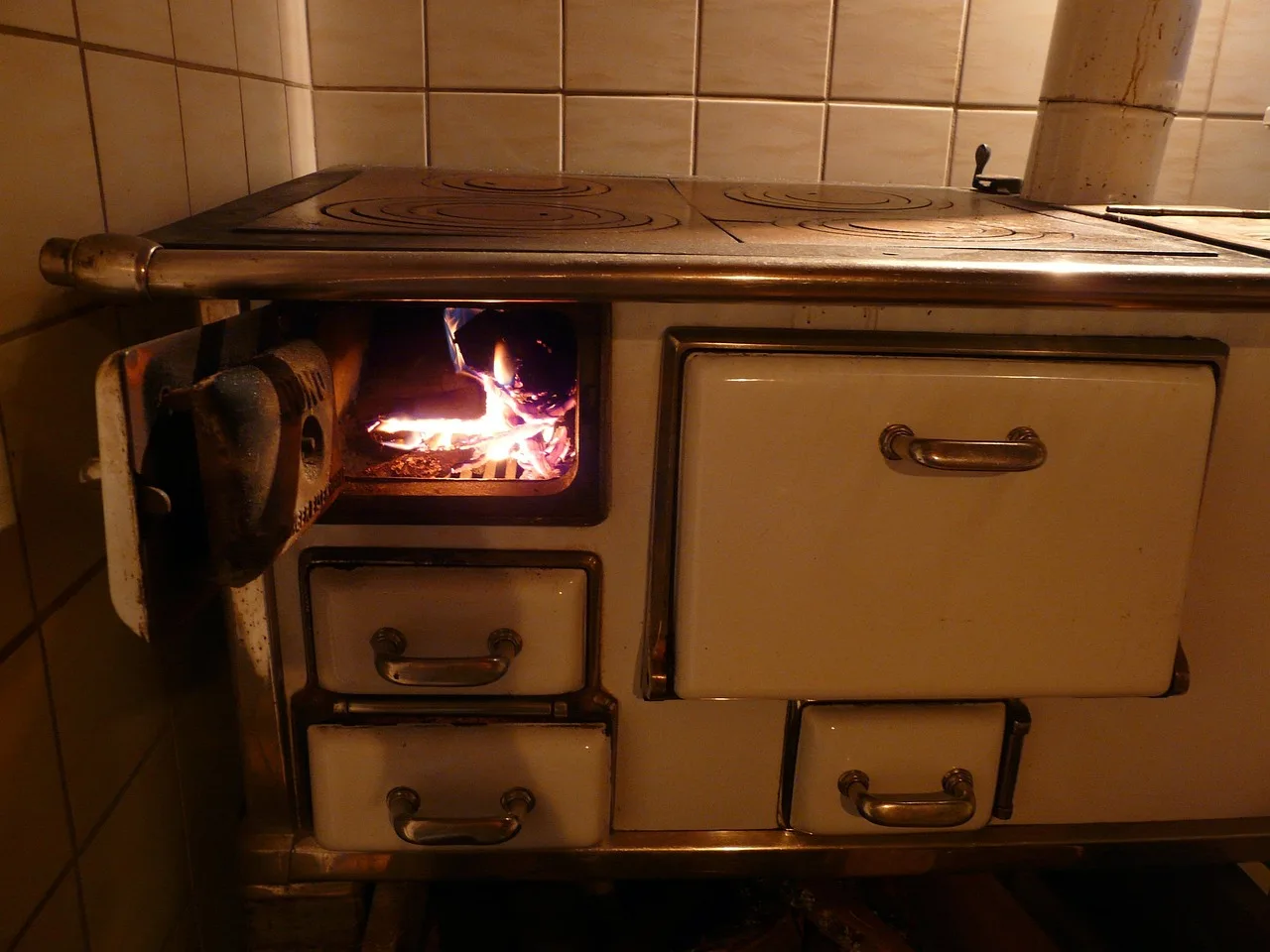
The core trade-off is simple: a wood stove usually makes more usable heat, while a fireplace insert mainly recovers heat that an open fireplace would waste. An open fireplace is the baseline because it loses most heat up the chimney, with only about 10%-20% of heat converted into usable warmth.
A wood stove is a closed combustion system, so it holds and directs heat better. A fireplace insert fits inside your current fireplace and cuts that chimney loss, but it still depends on where the fireplace sits in the house.
What a wood stove does well
A freestanding wood stove gives you more control over placement, which is why it often performs better in whole-house heating. Because a wood stove can be placed in central areas to maximize heat distribution, it is easier to push warmth beyond one room.
It also tends to use wood more efficiently than an open fireplace. Modern wood stoves boast efficiency ratings between 60% and 80%, so more of the fuel becomes useful heat instead of escaping through the vent path.
What a fireplace insert does well
A fireplace insert is the better retrofit when you already have a masonry fireplace and want more heat from that same opening. It can reduce heat loss through the chimney and is often the more direct path to improving a weak fireplace without rebuilding the whole heating setup.
That advantage is real, but it is bounded by the fireplace location. If the firebox sits on an outside wall in a closed floor plan, the insert may warm the room well and still struggle to move heat far from that room.
Why an open fireplace is the wrong baseline for heat output
An open fireplace is mostly an ambiance source, not a serious heat appliance. It is an open system, so a large share of its heat goes up the chimney instead of staying in the house.
That is why both a stove and an insert can feel like major upgrades. The better comparison is not “stove versus fireplace,” but “which upgrade fits this house’s layout and venting conditions.”
📊 Modern wood stoves boast efficiency ratings between 60% and 80%. Source: Which heats better wood stove or fireplace?.
How heat output and efficiency compare
Efficiency matters because it tells you how much of the wood’s energy becomes usable heat. A wood stove usually wins this category because it keeps more heat in the firebox and room, while a fireplace insert mainly improves an existing opening that was losing heat in the first place.
For wood use, that means the stove often gives more heat per load, while the insert gives better performance than an open fireplace without reaching the same whole-house reach as a well-placed stove.
Usable heat versus heat that goes up the chimney
Usable heat is the part that warms rooms. Heat that goes up the chimney is lost from the homeowner’s point of view, even if the fire looks good. The more closed and controlled the appliance, the more likely it is to keep heat indoors.
That is why the word “efficiency” matters more than firebox size alone. Bigger flames do not guarantee better heating if the appliance wastes the output through poor draft or a weak vent setup.
Why efficiency ratings matter for wood use
Modern wood stoves boasting 60%-80% efficiency can stretch a cord of wood farther than an open fireplace ever will. A fireplace insert also improves efficiency, but the exact gain depends on the existing chimney, liner condition, and how well the insert fits the opening.
In plain terms: higher efficiency usually means less wood burned for the same room comfort. It also means less ash and soot to manage over time, though neither appliance is maintenance-free.
Why a stove often produces more room heat than an insert
A stove often wins because it is not constrained by an old fireplace cavity. It can be placed where the house needs heat, and that placement matters as much as raw output. A peripheral fireplace may keep one end of the house warm and leave the rest behind.
Picture a ranch-style home with the fireplace on an outside wall at one end of the living room. An insert may make that room comfortable, but a centrally located stove has a better shot at sharing heat with hallways and adjacent rooms.
Does a wood stove heat a house better?
Yes, a wood stove usually heats a house better overall because it produces more usable heat and can be placed for better distribution. That advantage is strongest in homes where the heat source can sit near the center of the floor plan and move warmth into nearby rooms.
It does not guarantee whole-house heating in every layout. Closed floor plans, stair barriers, and long room runs can still trap heat near the appliance.
Best-fit home layouts for a wood stove
A wood stove is usually the better choice in open-plan homes, small ranch homes, and houses where the stove can sit near the center of the main living area. Those layouts let heat spill into adjoining spaces instead of getting trapped at one end of the house.
Older drafty houses can also benefit, but only if the stove is sized carefully. Too small, and the house stays cold. Too large, and one room overheats while the rest still needs help.
When central placement matters most
Central placement matters most when you want room-to-room heat movement without fans or ducts. Heat naturally spreads better when the appliance is not tucked into a corner or backed against an exterior wall.
That is why a stove can outperform an insert even when the insert has a stronger-looking fireplace opening. Location can matter as much as appliance design.
When a stove may overheat one zone and leave others cold
A stove can also fail when the home plan works against it. In a split layout or a two-story house with doors and hall bends, the stove may overheat the main room while bedrooms stay cooler.
A common first-timer mistake is sizing for peak heat alone. In a smaller home with tight bedrooms and a long hallway, a strong stove may make the living room hot and still not move enough warmth down the hall.
Is a fireplace insert good for whole-house heating?
A fireplace insert can help with whole-house heating, but it is usually better at improving the room that already contains the fireplace than at heating every corner of the home. It works best when the fireplace is central, the chimney is sound, and the layout lets heat travel naturally.
If the fireplace is peripheral or the house is compartmentalized, the insert may still leave cold rooms. In that case, it is a comfort upgrade, not a full-house answer.
What an insert fixes in an existing fireplace
An insert upgrades an open fireplace by fitting inside your current fireplace and reducing heat loss through the chimney. That makes a big difference compared with an open fireplace, which is mostly an air leak with a flame view.
It also helps with spark containment and keeps combustion more controlled. That is a real safety and efficiency gain, especially in older masonry setups.
When an insert can heat beyond one room
An insert can heat beyond one room when the fireplace is near the center of the home and the floor plan allows open doorways or short sightlines to other spaces. In that case, the warmer room can spill heat into nearby zones.
It can also do better in smaller houses where the distance between rooms is short. The same insert that feels limited in a large two-story home may feel plenty strong in a modest single-level layout.
When an insert still falls short for whole-house warmth
An insert still falls short when the chimney is weak, the fireplace opening is poorly sized for the unit, or the fireplace sits far from the center of the home. Liner condition and draft matter too; a poor chimney can reduce performance even if the insert itself is efficient.
That is why the dimensions and fit check matter so much. Fireplace inserts are designed to fit inside an opening, not to fix every structural problem behind it.
Side-by-side decision matrix for 8 homeowner scenarios
| Homeowner scenario | Wood stove | Fireplace insert | Winner |
|---|---|---|---|
| Existing fireplace present | Possible, but may need a new location and floor protection | Direct fit for an existing masonry fireplace | Fireplace insert |
| Central versus peripheral location | Better if placed centrally | Bound to fireplace location, often less central | Wood stove |
| Single-room versus whole-house heating | Stronger for broader heating goals | Best for one room or nearby spaces | Wood stove |
| Chimney condition and liner needs | Needs a safe chimney or flue path | Often needs chimney lining and exact fit checks | Tie |
| Installation complexity | Harder if no vent path or hearth exists | Usually more straightforward in an existing fireplace | Fireplace insert |
| Maintenance burden | Regular cleaning and chimney inspections required | Still needs cleaning, ash removal, and inspection | Tie |
| Safety | Requires clearance, ventilation, and safety codes | Improves spark containment over an open fireplace | Fireplace insert |
| Long-term wood use | Usually lower wood use for the same usable heat | Better than an open fireplace, but often not as efficient as a stove | Wood stove |
That matrix shows the split clearly. The stove wins when heat output, heat spread, and wood use matter most. The insert wins when the house already has a usable masonry fireplace and the goal is to turn a weak opening into a real heater.
How much does installation cost for a wood stove vs insert?
Wood stoves usually have lower upfront prices than fireplace inserts, but installation can change the total quickly. The real cost depends on chimney or flue work, floor protection, clearances, and whether the home already has a suitable vent path.
For a fireplace insert, the existing masonry opening can reduce some of the setup burden, but chimney lining often adds cost. For a wood stove, the appliance itself may be cheaper, yet a new chimney or flue can make the project more complex.
Installation requirements that can change the budget
Both options usually need professional installation, careful measurements, and code compliance. A wood stove needs clearance, ventilation, and safety-code compliance, plus non-combustible surface protection beneath it. An insert needs a good fit inside the fireplace and often a liner in the chimney.
Those are not optional details. A unit that looks affordable can become expensive if the hearth depth is wrong, the chimney is damaged, or local building codes require extra work.
Which is safer and easier to maintain, a stove or insert?
Neither option is maintenance-free, but a fireplace insert is often easier to live with when it replaces an old open fireplace. It reduces spark escape and cuts chimney heat loss, while a wood stove tends to win on heat performance but demands regular cleaning and chimney inspections.
Safety depends on correct installation, safe clearances, and ongoing chimney care. The wrong vent setup can make either unit a fire hazard.
Cleaning, ash, soot, and inspection
Wood stoves require regular cleaning and chimney inspections. So do inserts. Ash and soot build up in both systems, and poor upkeep can hurt draft and raise the risk of chimney problems.
The difference is practical rather than absolute. A stove often burns hotter and cleaner when properly tuned, while an insert can be easier to manage if it is fitted into a sound masonry fireplace.
Spark containment and fire hazard reduction
An open fireplace sends sparks into the room unless screens and other barriers are in place. A closed appliance reduces that risk. That is one reason both a stove and an insert are better heating tools than a traditional open fireplace.
If the goal is safer, more controlled wood heat, either upgrade is a step up. The insert has the edge when the starting point is a leaky open hearth.
Should I choose a stove or insert for an existing fireplace?
Choose a fireplace insert if you already have a masonry fireplace in the right place and want a more direct retrofit. Choose a wood stove if your goal is maximum usable heat, better room-to-room distribution, and lower long-term wood use, especially when you can place it near the center of the house.
Choose neither if the chimney is in bad shape, the flue cannot be lined safely, or code clearances make the project poor value. In that case, the house may need a different heating plan before either appliance makes sense.
Choose a wood stove if…
- You want the strongest whole-house heating potential.
- You can place the unit in a central area.
- You need better heat spread than a fireplace opening allows.
- You want lower wood use over time and can meet clearance and floor-protection rules.
Choose a fireplace insert if…
- You already have a suitable masonry fireplace.
- You want to recover heat from an opening that now wastes warmth up the chimney.
- Your fireplace is in a decent location for the rooms you actually want to heat.
- You want a more direct retrofit with less structural change than adding a new stove location.
Choose neither if…
- The chimney draft is poor and cannot be corrected.
- The hearth, floor, or clearances fail code requirements.
- The home layout blocks heat movement so badly that neither option will help enough.
- You need true whole-house heating in a closed, multi-story plan without supplemental distribution.
Frequently asked questions
Does a wood stove heat a house better than a fireplace insert?
Usually yes, because a wood stove tends to produce more usable heat and can be placed for better distribution. A fireplace insert is often the better retrofit for an existing fireplace, but it still works within the limits of that fireplace’s location and chimney setup.
How many square feet can a wood stove heat?
There is no single honest square-foot number that fits every stove or house. Most manufacturers list heating ranges based on insulation, layout, and climate. Open floor plans and central placement improve coverage; drafty rooms, doors, and stair barriers reduce it.
Is a fireplace insert good for whole-house heating?
It can be, but only in the right layout. A fireplace insert is strongest when the fireplace is near the center of the home and the house is compact or open enough for heat to travel. In many homes, it is mainly a room heater.
Which uses less firewood: a stove or an insert?
A wood stove usually uses less firewood for the same usable heat because modern models are often more efficient, with ratings between 60% and 80%. An insert beats an open fireplace by a wide margin, but it often trails a well-placed stove in wood use.
Can a fireplace insert heat a house better than an open fireplace?
Yes, clearly. A traditional open fireplace converts only about 10%-20% of heat into usable warmth, while an insert reduces heat loss through the chimney and captures much more of the fire’s output. That makes a major difference in comfort and fuel use.
Which is safer and easier to maintain, a stove or insert?
Both need cleaning, ash management, and chimney inspection. An insert is often easier to live with when replacing an open fireplace because it improves spark containment and reduces chimney loss. A stove usually needs more attention to clearance, placement, and regular upkeep.