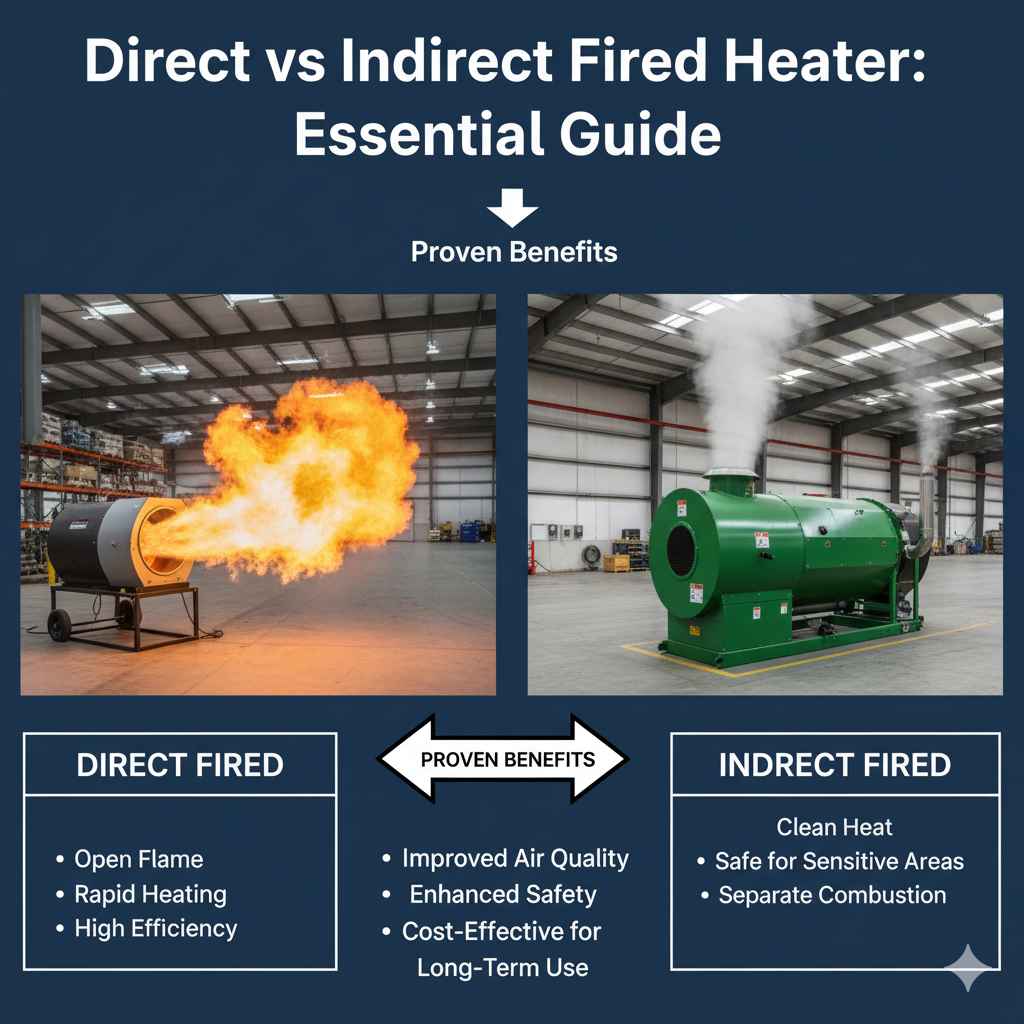
Choosing between direct and indirect fired heaters depends on your need for warmth and air quality. Direct heaters mix heat with air for quick warmth in open spaces, while indirect heaters keep exhaust fumes separate from the heated air, ideal for enclosed or sensitive areas.
Welcome! If the thought of heating your space seems a bit confusing, you’re not alone. Many of us want to feel cozy and comfortable, especially when it gets chilly, but figuring out the best way to do that can feel overwhelming. Heating systems often involve technical terms that make it hard to know where to start. But don’t worry! My goal is to make understanding different heaters super simple. We’ll break down the differences between direct and indirect fired heaters so you can make the best choice for your home or workspace. Let’s get your space comfortably warm!
What Are Direct and Indirect Fired Heaters?
When we talk about heating a space, especially larger ones like garages, workshops, or even event tents, we often come across different types of heaters. Two common types that use a fuel source (like propane or natural gas) to create heat are direct fired heaters and indirect fired heaters. They both do the job of warming a space, but they do it in fundamentally different ways, which impacts where and how you should use them.
Think of it like cooking: you can cook food directly over a flame, or you can cook it using steam in a sealed pot. Both methods apply heat, but the outcome and how clean the food stays are different. Similarly, direct and indirect heaters apply heat differently, making one better than the other depending on what you’re trying to heat and your priorities.
Understanding Direct Fired Heaters
A direct fired heater, sometimes called a direct vent heater, works by burning fuel directly within the space it is heating. This means that the combustion process and the resulting hot air are mingled and then sent out into the room. It’s like having a controlled campfire inside your space, but with a lot more safety and efficiency!
Because the combustion byproducts (like exhaust fumes) are released directly into the heated air, these heaters are best used in areas that have plenty of ventilation. This ensures that any fumes are quickly dispersed and don’t build up, keeping the air safe to breathe.
How Direct Fired Heaters Work
- Fuel Input: Propane or natural gas is fed into the heater.
- Ignition: The fuel ignites in a combustion chamber.
- Heat Transfer: The heat produced from burning the fuel directly heats the air.
- Air Distribution: A fan blows this heated air, which includes the combustion air, directly into the living or working space.
- Exhaust: The exhaust gases are mixed with the heated air and sent into the space. They are then typically vented out, but often through natural air exchange in the room rather than a dedicated flue.
Pros of Direct Fired Heaters
- High Efficiency: Almost all the energy from the fuel is converted into heat that goes into your space. There’s very little heat wasted.
- Quick Heating: They can heat up large spaces relatively quickly because they don’t need to reroute exhaust.
- Cost-Effective: Often less expensive to purchase and operate due to their simpler design and high efficiency.
- Portable: Many models are designed to be easily moved from one space to another.
Cons of Direct Fired Heaters
- Air Quality Concerns: Since exhaust gases are released into the heated air, they are not suitable for tightly sealed, occupied spaces where air quality is critical (like homes or offices).
- Moisture Production: The combustion process can produce water vapor, which might be an issue in very sensitive environments.
- Oxygen Depletion Risk: In poorly ventilated spaces, they can potentially deplete oxygen levels.

Understanding Indirect Fired Heaters
Now, let’s look at indirect fired heaters. These heaters operate on a different principle. The fuel is burned in a sealed combustion chamber, and the heat transfers to a separate airstream that is then distributed. The exhaust gases from the burning fuel are kept completely separate and are typically vented directly outside through a dedicated chimney or flue system.
This separation is the key difference. It means that the air you breathe in your warmed space never comes into contact with the combustion byproducts. This makes indirect fired heaters a much safer and more suitable option for enclosed or sensitive areas where maintaining clean air is important.
How Indirect Fired Heaters Work
- Sealed Combustion: Fuel is burned in a burner and combustion chamber that is completely sealed off from the main airflow.
- Heat Exchanger: The heat generated in the combustion chamber passes through a heat exchanger.
- Airstream Heating: A separate fan draws in fresh air from the surrounding environment, passes it over the hot heat exchanger, and heats it up without mixing it with combustion gases.
- Air Distribution: This clean, heated air is then blown into the space.
- Exhaust Venting: The exhaust gases from the combustion process are channeled and vented directly outside through a dedicated flue.
Pros of Indirect Fired Heaters
- Excellent Air Quality: The heated air is clean and free from combustion byproducts, making them safe for occupied and enclosed spaces.
- Versatile Installation: Can be used in a wider variety of applications, including those requiring strict air quality standards.
- No Moisture Added: Because the combustion gases are vented separately, they don’t add moisture to the heated air.
- Safety: No risk of oxygen depletion or carbon monoxide buildup in the occupied space.
Cons of Indirect Fired Heaters
- Lower Efficiency: Some heat is lost through the exhaust system, making them slightly less energy-efficient than direct fired heaters.
- Higher Cost: Typically more expensive to purchase due to their more complex design (separate combustion chamber and heat exchanger).
- Installation Complexity: Require a proper venting system (flue), which adds to installation complexity and cost.
- Slower Heating: May take a bit longer to heat up a space compared to direct fired heaters.
Key Differences at a Glance
To make the choice even clearer, let’s lay out the main distinguishing features in a simple table. This will help you quickly compare and contrast direct vs indirect fired heaters based on their core functions and benefits.
| Feature | Direct Fired Heater | Indirect Fired Heater |
|---|---|---|
| Combustion Gases | Mixed directly with heated air and released into the space. | Kept separate from heated air and vented outside. |
| Air Quality | Requires good ventilation; not ideal for sensitive environments. | Excellent; safe for occupied and enclosed spaces. |
| Efficiency | Very High (nearly 100% of heat enters space). | Good to Very Good (some heat lost through venting). |
| Installation | Simpler; no external venting required for the heater itself. | More complex; requires a proper flue/venting system. |
| Cost | Generally lower purchase price. | Generally higher purchase price. |
| Moisture Production | Adds moisture to the air. | Does not add moisture. |
| Typical Use Cases | Construction sites, open garages, workshops, patios, agricultural buildings. | Warehouses, factories, churches, event tents, areas requiring clean air. |
Choosing the Right Heater for Your Space
Deciding between a direct and indirect fired heater comes down to understanding your specific needs and the environment you plan to heat. Here’s a simple guide to help you make the best decision:
Consider Air Quality Requirements
This is often the most critical factor. Ask yourself:
- Will people or animals be spending extended periods in the heated space? If yes, especially in a sealed or enclosed area, an indirect fired heater is the safer choice. For example, if you’re heating a workshop where you work all day, or a tent for an event with guests, indirect is preferred.
- Is the space well-ventilated naturally? If you have large doors that are often open, or excellent airflow, a direct fired heater might be acceptable for temporary use. Think of a very large, open construction site.
- Are there any air-sensitive activities or materials? If you’re storing delicate items, running sensitive equipment, or performing activities where air purity is paramount, opt for indirect heating.
Evaluate Space Type and Size
Direct Fired Heaters are great for:
- Large, open, and well-ventilated areas: Garages being used for work, large sheds, barns, or construction sites.
- Temporary heating needs: Where immediate and powerful heat is needed and air quality concerns are less strict.
- Unoccupied or intermittently occupied areas: When the primary goal is to quickly warm a space before use, or to keep machinery warm.
Indirect Fired Heaters are best for:
- Enclosed or tightly sealed spaces: Warehouses, factories, churches, schools, or any building where fresh air circulation might be limited.
- Areas where people work or gather for long periods: Offices, studios, or large event marquees that need consistent, clean heat.
- Situations with specific air purity needs: Such as in some industrial processes or food serving areas.
Think About Energy Efficiency and Cost
Direct fired heaters are generally more energy-efficient because almost all the heat generated goes directly into the space. They are also typically less expensive to buy. If your priority is maximizing heat output for the fuel consumed and keeping initial costs low, and air quality is not an issue, direct fired might be your go-to.
Indirect fired heaters are slightly less efficient overall because some heat is lost through the venting system. However, they can still be very effective and offer superior air quality, which often justifies the higher initial cost and minor efficiency difference.
Installation and Venting Considerations
Direct Fired: These are usually plug-and-play. You connect your fuel source, and they start heating. They don’t require an external vent for their exhaust. This makes them very easy to set up and move.
Indirect Fired: These require a proper venting system (a flue or chimney) to safely direct exhaust gases outside. This means installation might involve more planning, potentially professional help, and additional materials. Check out resources from organizations like the National Renewable Energy Laboratory (NREL) for general information on building efficiency and ventilation, which can be relevant to safe heating installations.
Do I Need a Professional’s Opinion?
It’s always a good idea to consult with a qualified HVAC professional or a contractor experienced with temporary heating solutions. They can assess your specific space, ventilation, fuel source, and safety requirements to recommend the best type of heater and ensure it’s installed correctly. For installation guidance, resources like those from HomeTips can offer general DIY advice, but professional installation for heating systems is often recommended for safety and efficiency.
Safety First: General Tips for Using Any Heater
Whether you choose direct or indirect, safety is paramount. Here are some essential tips to keep in mind:
- Read the Manual: Always follow the manufacturer’s instructions for operation, maintenance, and safety.
- Proper Ventilation: Even with indirect heaters, ensure adequate fresh air exchange in any occupied space. For direct heaters, good ventilation is non-negotiable.
- Clearances: Keep heaters at a safe distance from combustible materials like curtains, furniture, and paper. Check the manual for specific clearance requirements.
- Stable Surface: Place heaters on a level, stable, non-combustible surface.
- Fuel Source Safety: Ensure fuel lines are properly connected and free from leaks. Store fuel tanks safely, away from heat sources.
- Carbon Monoxide Detectors: Install and maintain working carbon monoxide (CO) detectors in any space where fuel-burning appliances are used. This is especially critical for direct fired heaters. You can find more information on CO safety from the Consumer Product Safety Commission (CPSC).
- Never Leave Unattended: Do not leave portable heaters running unattended, especially in enclosed spaces or when you are sleeping.
- Regular Maintenance: Keep the heater clean and perform any recommended maintenance to ensure it runs efficiently and safely.

Frequently Asked Questions About Fired Heaters
Q1: Can I use a direct fired heater in my garage?
A1: Yes, you generally can, especially if your garage is well-ventilated or used primarily for working or parking vehicles. However, if you spend a lot of time in your garage working and it’s very sealed, you might prefer an indirect heater for better air quality. Always ensure there’s good airflow.
Q2: Are indirect fired heaters better for homes?
A2: For heating enclosed living spaces in a home, indirect fired heaters are generally not the typical choice. Homes usually have central heating systems that are designed for the specific needs of residences. However, an indirect fired heater could be suitable for a supplemental heating need in a very large, well-sealed, and temporarily used area of a home, like a guest house without its own heating, provided it is properly vented and installed.
Q3: What is the biggest advantage of a direct fired heater?
A3: The biggest advantage is its high efficiency and the speed at which it can heat a space. Because there are no heat losses through a separate exhaust system and the combustion byproducts are mixed into the air, nearly 100% of the fuel’s energy is converted into immediate heat for the area.
Q4: What is the main drawback of an indirect fired heater?
A4: The primary drawback is that they are slightly less energy-efficient than direct fired heaters because some heat is inevitably lost through the venting system required to exhaust combustion gases. They also tend to have a higher upfront cost due to their more complex design.
Q5: How do I know if my space is well-ventilated?
A5: A well-ventilated space has good airflow. This can be due to large openings like open doors or windows, or dedicated exhaust fans. If air feels stale, or if you notice any odors lingering for a long time, it might not be well-ventilated enough for a direct fired heater.