
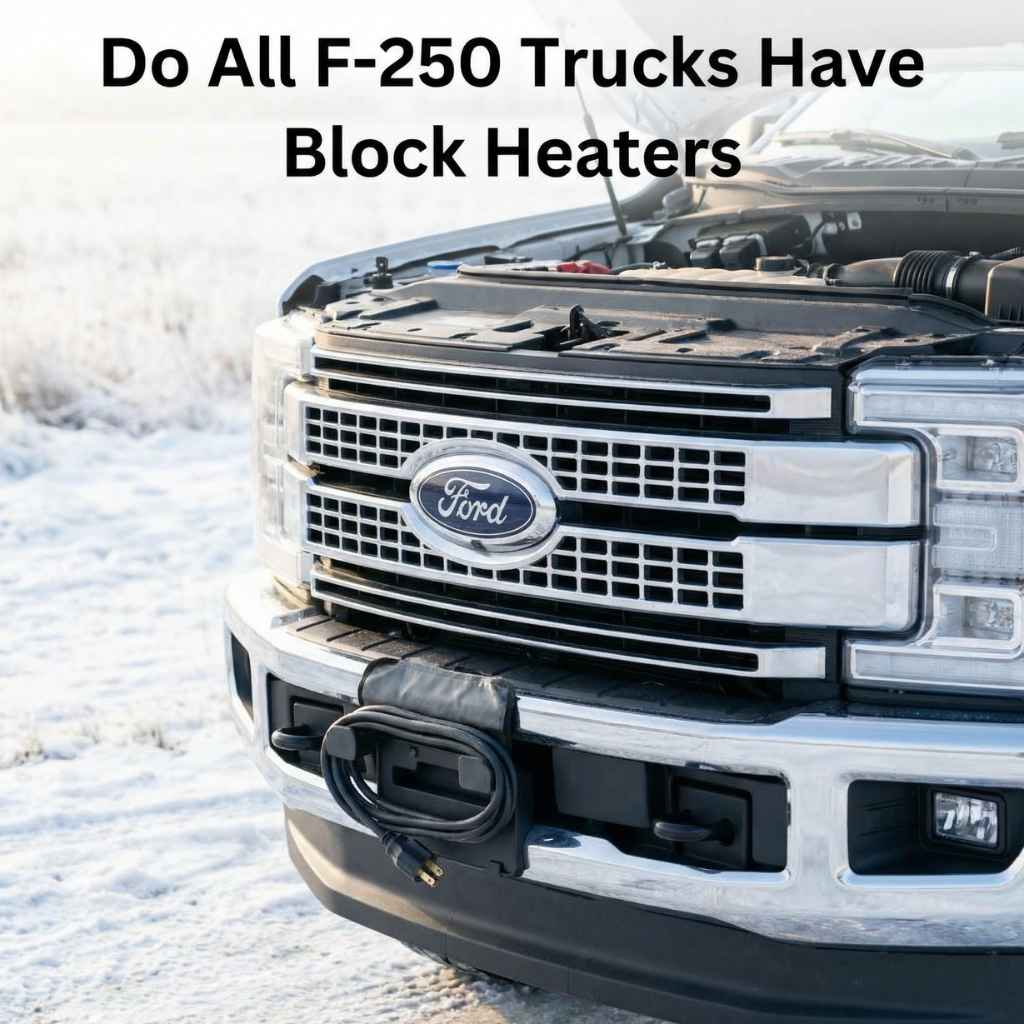
Figuring out if your Ford F-250 truck has a block heater can feel a little tricky, especially if you’re new to trucks or cold weather driving. It’s a common question because not all trucks come with them, and knowing if yours does is important for starting it up smoothly when it’s freezing outside. Don’t worry, this guide will make it super simple.
We’ll walk you through exactly how to check if your F-250 is equipped with this handy feature and what to do next. Get ready to learn the easy way.
Checking F-250 Trucks For Block Heaters
Many truck owners wonder about block heaters, especially those who live in colder climates. This section helps you figure out if your Ford F-250 has this useful feature. We will explore the common places to look for the block heater cord and how to tell if it’s installed.
Understanding this simple check ensures your truck can start reliably on chilly mornings.
Locating the Block Heater Cord
The block heater cord is your main clue. It’s usually a thick, weather-resistant cord designed to plug into a standard electrical outlet. Finding this cord is the first step to confirming if your truck has the heater installed.
This cord typically hangs down from the front of the truck, often near the grille or bumper.
It’s designed to be easily accessible for plugging in overnight. Think of it like a power cord for your truck’s engine. If you can spot this cord, it’s a strong sign that your F-250 has the block heater system.
Do All F-250 Trucks Have Block Heaters? This question often comes up because Ford offers the block heater as an option. It’s not a standard feature on every single F-250 model. Therefore, you have to check your specific truck.
Visual Inspection of the Cord
- Examine the front of your F-250. Look carefully around the grille, the bumper, and the lower front fascia.
- You are searching for a black, heavy-duty electrical cord, typically with a molded plug on the end. This cord might be tucked away, so a good look is necessary.
This cord is specifically designed to handle outdoor conditions and cold temperatures. It’s usually a few feet long and meant to reach from the engine block area to an external power source. If you find this cord, it’s a very good indicator that the block heater is present and operational.
Identifying the Block Heater Unit
Sometimes, the cord is visible, but you might also want to confirm the heater unit itself is there. This unit screws into the engine block and warms the coolant. It’s the actual component that makes starting easier in the cold.
Finding the heater unit can be a bit more challenging as it’s located inside the engine bay. However, knowing what to look for can help you confirm its presence. This gives you full confidence that your truck is prepared for winter.
Where the Heater Unit is Mounted
- The block heater is usually installed on the engine block itself. Its exact location can vary slightly depending on the engine size and model year of your F-250.
- Look for a metal fitting screwed into the side of the engine block, often near the oil filter or water pump. A small electrical connector will be attached to it, where the cord plugs in.
The unit itself is a metal cylindrical shape, with an electrical connection point. It’s designed to be robust and withstand the heat and vibrations of the engine. If you can see this fitting and its electrical connector, you’ve confirmed the heater unit is installed.
It is important to note that sometimes the cord can be damaged or detached, so finding the cord is a primary indicator. However, locating the unit provides extra assurance.
Consulting Your F-250 Owner’s Manual
Your owner’s manual is a treasure trove of information specific to your F-250. It details all the features your truck is equipped with and how to use them. If you’re unsure about the block heater, the manual is the best place to get an official answer.
It will tell you whether the block heater was an option on your specific trim and model year, and if it was, it will guide you on its location and operation. This is a reliable method to confirm if your truck came with this feature from the factory or if it was added later.
What to Look for in the Manual
- Find the section related to engine components or cold weather operation.
- The manual will often have diagrams or pictures showing the location of optional equipment like the block heater and its cord.
- It may also mention if the block heater was a standard feature on certain configurations or an optional add-on.
If you don’t have a physical copy of your owner’s manual, you can usually find a digital version on the Ford website by entering your truck’s VIN or model information. This is a straightforward way to answer the question about your truck’s specific equipment.
Checking the Build Sheet or Window Sticker
When a truck is purchased new, it comes with a build sheet or window sticker that lists all the factory-installed options. This document is the most definitive proof of what came with your F-250 directly from the assembly line. If you have access to this, it will clearly state if a block heater was included.
This is especially helpful if the truck was purchased used, and you don’t have the original owner. The build sheet is a complete record of the vehicle’s factory specifications, making it an invaluable resource for confirming optional equipment.
Finding Your Truck’s Build Information
- If you purchased the truck new, you might have kept the original window sticker or build sheet. Look through your purchase documents.
- If you bought the truck used, you might be able to obtain a build sheet or VIN decoder online. Many websites offer this service, often for free, by simply inputting your truck’s Vehicle Identification Number (VIN).
- The build sheet will have a list of codes for each option. You can often find a legend online or in your owner’s manual to decipher these codes, one of which will correspond to the block heater.
This method is very precise because it shows exactly what was installed at the factory. It removes any guesswork and provides a clear answer to whether your F-250 was originally equipped with a block heater.
Why F-250 Block Heaters Are Important
Block heaters are more than just a convenience; they are a vital component for many truck owners in colder regions. This section explores the benefits and reasons why an F-250 might be equipped with, or need, a block heater. We will cover how they work and the advantages they offer during winter months.
How Engine Block Heaters Work
An engine block heater is a small electric heating element that is installed in the engine’s cooling system. It is designed to gently warm the engine’s coolant while the vehicle is parked and plugged into an electrical outlet. This warming process has several significant benefits.
The heater itself consists of a heating element, typically a resistive coil, encased in a metal sheath. This sheath is screwed into a specially designed port on the engine block. The electrical current passes through the coil, generating heat, which is then transferred to the coolant surrounding it.
Do All F-250 Trucks Have Block Heaters? No, as we’ve established, they are typically an optional feature. This is because the need for one is largely dependent on climate and usage patterns. However, for those who experience frigid temperatures, a block heater is an invaluable tool.
The warmed coolant then circulates through the engine, bringing the oil and other engine components up to a more optimal operating temperature. This prevents the oil from becoming too thick and viscous, which is a common problem in extreme cold.
Warming the Coolant and Oil
- The block heater element heats the engine coolant directly. This is similar to how a kettle heats water.
- As the coolant warms, it circulates naturally through the engine block due to convection. Warmer coolant rises, and cooler coolant sinks, creating a slow but steady circulation.
- This circulation transfers heat to the engine block, the cylinder walls, and the oil passages. The engine oil, which can become extremely thick and draggy in freezing temperatures, also benefits from this warming.
Warmed engine oil flows more easily. This significantly reduces the strain on the starter motor and the engine itself during the initial startup phase. It also ensures that lubricating oil reaches all the critical moving parts of the engine much faster, reducing wear and tear.
Imagine trying to pour syrup that has been in the freezer – it’s very slow. Engine oil in extreme cold can be similar, making it hard for the engine to turn over. A block heater prevents this.
Benefits of Using a Block Heater
Using a block heater on your F-250 offers a range of advantages, especially during the harsh winter months. These benefits translate into better vehicle performance, reduced wear, and improved fuel efficiency. Understanding these advantages highlights why it’s a sought-after option for many truck owners.
The most immediate benefit is easier starting in cold weather. A cold engine requires more effort to turn over, leading to increased wear on the starter and battery. By pre-heating the engine, the block heater significantly reduces this strain.
Furthermore, when an engine starts cold, it runs rich, meaning it uses more fuel to get to its optimal operating temperature. A pre-heated engine reaches this temperature much faster, leading to improved fuel economy in the initial stages of driving.
Easier Starting and Reduced Engine Wear
- Reduced Strain on Starting System: Cold engine oil is thick and sticky, making it hard for the starter motor to turn the engine. A block heater warms the oil, making it thinner and easier to crank. This saves wear on your starter and battery.
- Faster Lubrication: When an engine starts cold, it takes time for the oil to circulate and reach all the moving parts. With a block heater, the oil is already warm and flows more freely. This means vital parts get lubricated faster, reducing friction and wear.
- Reduced Emissions: Cold engines produce more emissions because they are less efficient. A pre-heated engine runs more cleanly and efficiently from the moment you start it, contributing to lower overall emissions.
These advantages mean your F-250 will feel more responsive on cold mornings. You’ll notice less hesitation and a smoother ride from the get-go. The long-term effect is a healthier engine that can last longer.
Improved Fuel Efficiency in Cold Weather
Cold engines are notoriously thirsty. When you start a cold engine, the fuel system injects more fuel than necessary to ensure combustion occurs effectively. This “rich” mixture is a major reason for poor fuel economy in winter.
A block heater counteracts this by bringing the engine closer to its optimal operating temperature before you even turn the key. This means the engine management system doesn’t need to inject as much extra fuel, leading to a more efficient burn from the start.
The difference might not seem huge on a single trip, but over a whole winter season, the cumulative savings can be noticeable. For F-250 owners who rely on their trucks for work or long commutes, any improvement in fuel efficiency is a welcome advantage.
How Pre-Heating Boosts MPG
- Faster Warm-Up Time: The engine reaches its ideal operating temperature much quicker when it’s pre-heated. This reduces the amount of time the engine runs in its less efficient cold-start state.
- Optimized Fuel Injection: Modern engines adjust fuel injection based on engine temperature. A warmer engine requires less fuel to achieve stable combustion, directly improving miles per gallon.
- Reduced Idling Time: Many people idle their vehicles to warm them up. Pre-heating with a block heater can reduce the need for prolonged idling, saving fuel and reducing emissions.
For example, a study by the U.S. Department of Energy found that using a block heater can improve fuel economy by up to 10% in cold weather conditions. This is because the engine operates more efficiently when it’s not fighting extreme cold.
Extended Battery and Alternator Life
Starting a cold engine is one of the most demanding tasks for a vehicle’s electrical system. The battery has to provide a massive surge of power to crank the engine against the resistance of cold, thick oil. The alternator then has to work overtime to recharge the battery.
Over time, this repeated stress can significantly shorten the lifespan of both your battery and alternator. A block heater alleviates this strain by making the engine easier to turn over, reducing the electrical load during startup.
This means your battery and alternator don’t have to work as hard, leading to fewer premature failures and potentially saving you money on replacements. It’s another way a block heater contributes to the overall health and longevity of your F-250.
Protecting Your Electrical Components
- Less Battery Drain: The initial power draw from the starter motor is reduced when the engine is warmer. This means less of the battery’s stored energy is used up during startup.
- Reduced Alternator Load: After starting, the alternator’s job is to replenish the battery. With less initial drain, the alternator doesn’t have to work as intensely to recharge, reducing its workload.
- Protection Against Freezing: In extremely cold conditions, a battery’s capacity can be significantly reduced. Warming the engine can indirectly help keep the battery at a more optimal temperature, maintaining its performance.
Consider this scenario: A battery in sub-zero temperatures might only be able to deliver 50% of its rated cranking power. Starting a cold engine with that reduced power is a major stressor. A block heater ensures the engine requires less of that limited power.
Do All F-250 Trucks Have Block Heaters By Default
This section directly addresses the core question of whether all F-250 trucks come equipped with block heaters as a standard feature. We will explore Ford’s approach to including this feature, differentiating between standard equipment and optional packages. Understanding this distinction is key for F-250 owners.
The short answer is no, not all Ford F-250 trucks come with block heaters as a standard, default feature. Ford, like most automakers, offers the block heater as an optional accessory or as part of specific cold-weather or heavy-duty equipment packages. This means its inclusion depends on how the original purchaser configured the truck or what packages were available for that model year and trim level.
Many truck buyers, especially those in warmer climates, do not need or opt for a block heater. Therefore, making it standard on every single truck would add unnecessary cost and complexity for a feature that wouldn’t be used by a significant portion of the customer base. Ford’s strategy allows buyers to customize their trucks according to their specific needs and regional climate.
Ford’s Optional Feature Strategy
Automakers often use optional features to allow buyers to tailor their vehicles to their specific needs and budgets. The block heater for the Ford F-250 falls into this category. It is typically listed as an add-on that can be selected at the time of purchase or installed later by a dealership or aftermarket shop.
This approach makes sense because the necessity of a block heater is highly dependent on geographic location. Drivers in Alaska or Minnesota might consider it essential, while those in Florida might never need it. By making it optional, Ford caters to a broader market and avoids forcing a feature on customers who won’t benefit from it.
Do All F-250 Trucks Have Block Heaters? Again, no. They are a smart option for cold climates, but not a universal standard. The decision to include it often hinges on the buyer’s choices during the ordering process.
Cold Weather Packages and Options
- Ford often bundles popular winter-driving features into “cold weather packages.” These packages might include items like heated seats, a heated steering wheel, and, crucially, a block heater.
- These packages are designed for customers who live in or frequently travel to regions with very low temperatures. They offer a convenient way to get a collection of useful winter aids at a potentially reduced cost compared to buying each option individually.
- The specific contents of these packages can vary by model year and F-250 trim level. It’s always best to check the Ford order guide or specifications for the exact year you are interested in.
If your F-250 was ordered with a cold weather package, there’s a high probability it includes a block heater. However, it’s still important to visually confirm its presence, as sometimes specific sub-options within a package might be excluded based on other selections.
Trim Levels and Standard Equipment
The trim level of an F-250 can sometimes influence what features are standard versus optional. Higher trim levels, which are generally more luxurious or feature-rich, might include items that are optional on lower trims. However, even on the most premium F-250 models, a block heater is rarely a standard, universally included item.
Ford tends to keep the block heater as a specific option, likely due to the regional demand. This means that regardless of whether you have an XL, XLT, Lariat, King Ranch, Platinum, or Limited trim, you should always verify if the block heater was included.
It’s more common to find the block heater as a standalone option or within those aforementioned cold-weather packages. This flexibility allows buyers to choose exactly what they need without paying for features they won’t use.
Understanding Trim-Specific Options
- Base Trims (XL, XLT): On lower trim levels, the block heater is almost always an optional add-on. It would not be expected to be standard equipment.
- Mid-to-High Trims (Lariat, King Ranch, Platinum): While these trims come with many more conveniences, the block heater is still typically an optional extra. It might be included in specific packages for these trims, but not as a standalone standard feature.
- Top Trims (Limited): Even the highest luxury trims usually offer the block heater as an option. While some features might be standard here that are optional elsewhere, the block heater’s inclusion still depends on the original buyer’s configuration.
The consistent factor across all trim levels is that the block heater is a selectable option. Your F-250’s build sheet or VIN decoder would be the most accurate way to confirm its presence on any specific trim.
Aftermarket Installation Possibilities
Even if your F-250 didn’t come from the factory with a block heater, it’s often possible to have one installed later. Many dealerships and independent mechanics specialize in installing aftermarket block heater kits for vehicles that didn’t originally include them.
This means that if you find an F-250 that you love but it’s missing this feature, you have the option to add it. This opens up possibilities for buyers who might have specific needs for cold-weather starting but find a suitable truck that wasn’t originally equipped with the heater.
The cost and complexity of an aftermarket installation can vary. It’s advisable to get quotes from reputable shops and ensure they use quality parts designed for your specific engine and F-250 model.
The Process and Considerations
- Kit Selection: There are various block heater kits available, designed for different engine types and vehicle models. A mechanic can help you choose the correct kit for your F-250.
- Installation: The process typically involves draining some coolant, removing a freeze plug or core plug from the engine block, and installing the heater element. A cord is then routed to the front of the vehicle for external power connection.
- Professional vs. DIY: While some mechanically inclined individuals might attempt a DIY installation, it’s often recommended to have a professional do it. Improper installation can lead to coolant leaks or damage to the engine block.
An aftermarket installation can add significant value and utility to your F-250, especially if you live in a cold climate. It’s a viable solution for those whose trucks were not originally equipped with this beneficial feature.
How to Identify Your F-250’s Engine Type
Knowing your F-250’s engine type is crucial for several reasons, including understanding its capabilities and, as we’ll see, how it might be equipped with specific features like a block heater. This section will guide you through the common engine options for F-250 trucks and how to identify which one your vehicle has. This information is helpful for maintenance and confirming specific equipment.
Ford offers several robust engine options for their F-250 Super Duty trucks, designed to handle heavy loads and demanding work. The most common engines you’ll find are the gasoline V8 options and the powerful diesel engines. Each engine has unique characteristics and might have slightly different block heater installations, if equipped.
Identifying your engine is usually straightforward and can be done by looking at specific indicators on your truck or by checking your vehicle documentation. This knowledge not only helps with maintenance but also with confirming specific factory options like a block heater.
Common F-250 Engine Options
Over the years, the F-250 has featured a variety of powerful engines. The most prevalent in recent model years include gasoline V8 engines and the highly regarded Power Stroke diesel engines. Each offers different performance characteristics and towing capabilities.
For instance, you might find a 6.2L V8 gasoline engine, known for its good balance of power and everyday drivability. Then there are the more potent diesel options, such as the 6.7L Power Stroke V8, which are renowned for their massive torque, ideal for heavy-duty towing and hauling.
The specific engine available can depend on the model year of your F-250. Later models tend to have more advanced and powerful engine options. It’s good to know which engine you have for maintenance and when discussing specific parts like block heaters.
Gasoline Engine Variants
- 6.2L V8 (SOHC): This engine has been a staple for many F-250 models. It offers a good blend of power and efficiency for general use.
- 7.3L V8 (Gasoline): A more recent offering, this larger displacement gasoline engine provides increased horsepower and torque, often found in newer F-250s.
Gasoline engines are generally less complex than diesels and may have different considerations for block heater installation, though the principle remains the same – warming the coolant.
Diesel Engine Variants
Diesel engines in F-250 trucks, particularly the Power Stroke models, are built for extreme durability and performance. They are the go-to choice for those who regularly tow heavy loads or operate in demanding commercial applications.
Do All F-250 Trucks Have Block Heaters? This question becomes even more relevant when considering diesel engines, as they can sometimes be more sensitive to extreme cold, making block heaters particularly beneficial.
Power Stroke Diesel Engines
- 6.7L Power Stroke V8 Turbo Diesel: This has been the flagship diesel engine for Ford Super Duty trucks for many years. It’s known for its immense torque, reliability, and towing prowess.
- Earlier Power Stroke Variants (e.g., 6.0L, 6.4L): While these engines are older, they were also powerful options in their time. Each has its own characteristics and potential maintenance considerations.
Diesel engines have glow plugs that help start them in cold weather, but a block heater provides an additional layer of assistance and protection, especially in the most extreme temperatures. This ensures reliable starting and reduces wear on the engine’s components.
Methods for Identifying Your Engine
There are several easy ways to determine exactly which engine is powering your F-250. Having this information is useful for a variety of reasons, from ordering parts to understanding your truck’s performance characteristics.
The most direct methods involve looking for identifying labels on the engine itself or checking your vehicle’s documentation. These methods are straightforward and require no special tools.
Knowing your engine type helps confirm if a block heater was an option for that specific configuration and year. This is particularly useful when sourcing aftermarket parts or when trying to verify factory options.
Checking Under the Hood
- Engine Covers/Labels: Many engines have decorative covers or identification plates that clearly state the engine size and type (e.g., “6.7L Power Stroke Turbo Diesel” or “6.2L V8”). Pop the hood and look for these labels.
- Visual Cues: While more advanced, you can sometimes identify engines by their general appearance, number of spark plug wires (for gasoline), or the presence of a large turbocharger and common rail fuel system (for diesel). However, relying on labels is more accurate.
These visual cues are the quickest way to get an idea of what engine you have. Many owners find this information readily available right on the engine itself.
Reviewing Vehicle Documentation
Your vehicle’s paperwork is an excellent source of truth for its specifications. This includes the engine type, trim level, and any optional equipment it came with from the factory.
Owner’s Manual: The owner’s manual for your F-250 will have a section detailing the different engine options available for that model year, and it will likely indicate which engine your specific truck has.
Using a VIN decoder is a highly reliable method to confirm your engine type and all other factory specifications.
It’s a quick and easy way to get definitive information about your F-250.
Frequently Asked Questions
Question: Do all F-250 trucks come with block heaters installed from the factory
Answer: No, not all Ford F-250 trucks come with block heaters installed from the factory. The block heater is typically an optional feature that can be added to the truck or included as part of a cold-weather package.
Question: Where is the block heater cord usually located on an F-250
Answer: The block heater cord on an F-250 is usually found hanging from the front of the truck, often near the grille or bumper. It’s designed to be easily accessible for plugging into an electrical outlet.
Question: How can I tell if my F-250 has a block heater if I can’t find the cord
Answer: If you cannot find the cord, you can check your F-250’s owner’s manual, the original build sheet or window sticker, or use a VIN decoder to see if the block heater was a factory-installed option.
Question: Is it possible to have a block heater installed on an F-250 that didn’t come with one
Answer: Yes, it is often possible to have a block heater installed on an F-250 that did not come with one from the factory. This can be done by a dealership or an independent mechanic who specializes in aftermarket installations.
Question: Why would I need a block heater for my F-250
Answer: A block heater is beneficial for F-250 trucks in cold climates because it warms the engine coolant and oil. This makes starting the engine easier, reduces wear and tear, improves fuel efficiency, and extends the life of your battery and alternator during cold weather.
Summary
In summary, not all Ford F-250 trucks come standard with block heaters. This feature is typically an optional add-on. You can check for the cord near the front of the truck, consult your owner’s manual or VIN decoder, or look for cold-weather packages.
Block heaters are highly beneficial for cold climates, easing engine starts and reducing wear.