Electric Baseboard Heaters Vs Infrared Heater: Proven Choice
For a cozy home, both electric baseboard heaters and infrared heaters offer effective warmth. Electric baseboards provide steady, consistent heat throughout a room and are ideal for primary heating. Infrared heaters offer quick, targeted warmth for individuals or specific zones, making them excellent for supplemental heating and saving energy where it counts. Your best choice depends on your heating needs and goals.
Are you feeling a chill and wondering about the best way to warm up your home? Choosing the right heater can feel like a puzzle, especially with so many options out there. You might be looking at those classic electric baseboard heaters or maybe the newer infrared models. It’s a common worry – how do you pick the one that’s perfect for your comfort, your wallet, and your home? Don’t fret! I’m here to make it super simple. We’ll break down these two popular heater types, looking at how they work, what they’re best for, and how to choose the proven winner for your cozy space. Let’s get started on finding your perfect warmth!
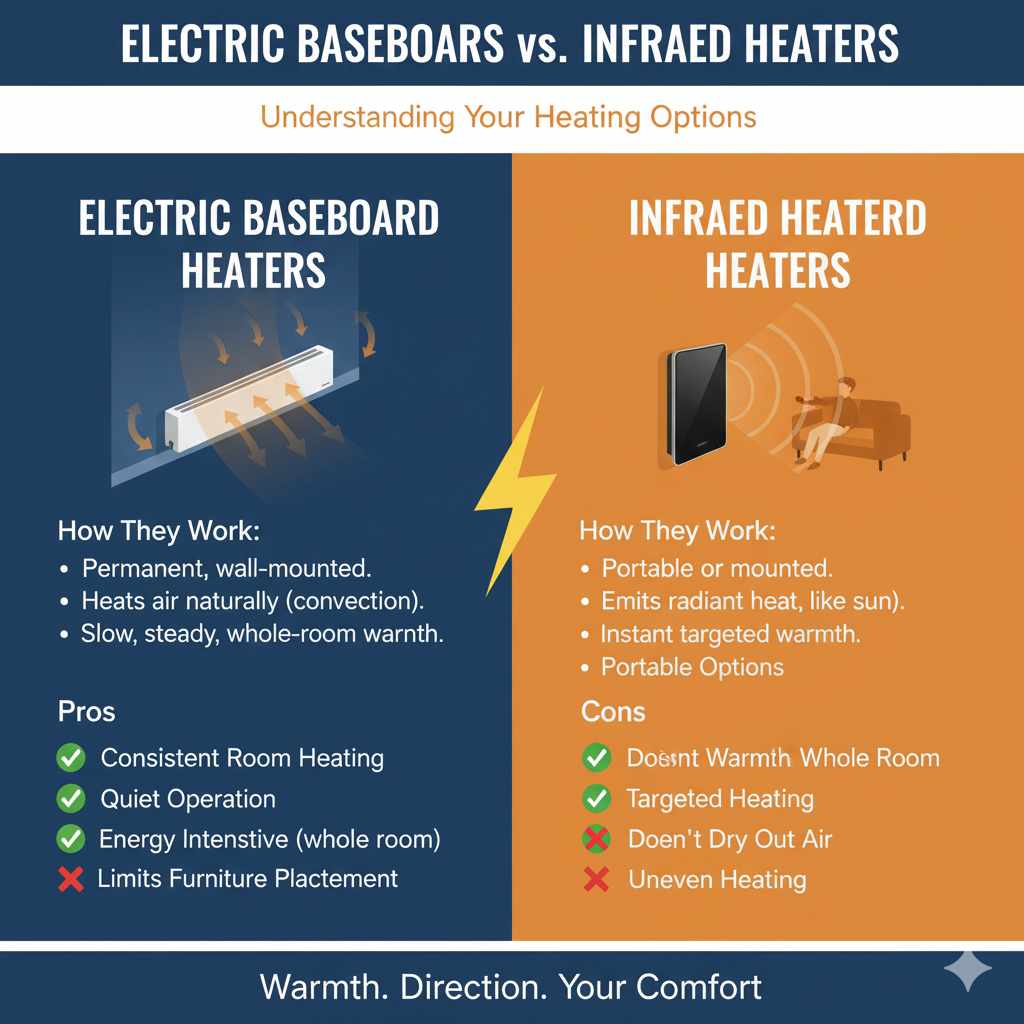
Electric Baseboard Heaters vs. Infrared Heaters: Understanding Your Heating Options
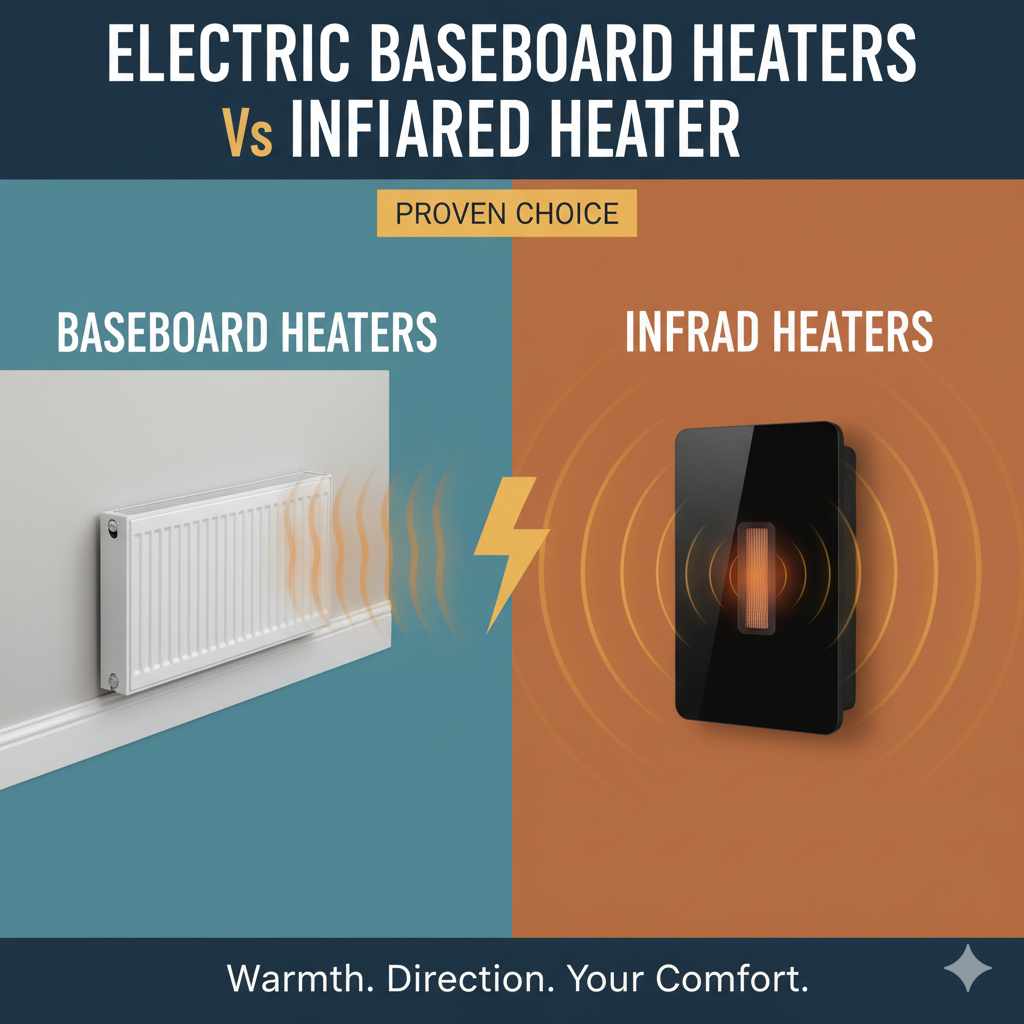
When it comes to keeping your home toasty, electric baseboard heaters and infrared heaters are two popular choices. They might both use electricity, but they heat your home in completely different ways, and that makes a big difference in how they feel and how you might use them. Think of it like this: one is like a gentle, all-over hug, and the other is like a warm ray of sunshine. Understanding these differences is the first step to making the smartest choice for your needs.
How Electric Baseboard Heaters Work
Electric baseboard heaters are a common sight in many homes, often found beneath windows. Their design is pretty straightforward. They have a heating element, usually a metal coil, that warms up when electricity flows through it. This heat is then transferred to a surrounding metal fins or a liquid-filled tube. As the air near the heater gets warm, it rises, creating a natural convection current. This cycle of warm air rising and cooler air sinking continuously circulates and heats the entire room. They work slowly but steadily to bring the whole space up to your desired temperature.
Pros of Electric Baseboard Heaters
- Consistent Room Heating: They are designed to heat an entire room evenly, providing a steady and comfortable temperature throughout.
- Easy Installation: Typically, they are installed along the base of walls, often replacing or complementing existing baseboards. Professional installation is recommended for safety and optimal performance, but the process is relatively standard. You can find helpful installation guides from resources like the U.S. Department of Energy which outlines various electric heating options.
- Thermostat Control: Most units come with built-in thermostats, allowing you to set and maintain a specific room temperature.
- Quiet Operation: They operate very quietly, as their heating method relies on silent air circulation.
- Zone Heating Potential: While they heat a whole room, you can control individual baseboards with separate thermostats, allowing for zoned heating across your home and potential energy savings by not heating unused areas.
Cons of Electric Baseboard Heaters
- Slower to Heat Up: Because they rely on convection, it takes time for the entire room to reach the set temperature.
- Can Be Energy Intensive: If used to heat an entire home or poorly insulated spaces, they can consume a significant amount of electricity.
- Air Stratification: Can sometimes lead to warmer air near the ceiling and cooler air near the floor.
- Physical Obstruction: They occupy wall space at floor level, which can limit furniture placement.
- Surface Temperature: The surface can get quite hot, posing a potential burn risk, especially for children or pets if not properly supervised or if furniture is placed too close.
How Infrared Heaters Work
Infrared heaters work on a different principle: radiant heat. Instead of heating the air, they emit invisible infrared radiation, much like the sun’s rays. This radiation travels through the air and gently warms objects and people it directly hits. Think about standing in a sunbeam – you feel warm even if the air around you isn’t. Infrared heaters do the same for you and the surfaces in your room. This means you feel the warmth almost instantly on your skin or on furniture, without waiting for the air to heat up.
Pros of Infrared Heaters
- Instant Warmth: You feel the heat almost immediately as it directly warms people and objects.
- Energy Efficient for Targeted Heating: They are excellent for supplemental heating because you can direct their warmth to specific areas or people, reducing the need to heat an entire room or house. This can lead to noticeable energy savings.
- Doesn’t Dry Out Air: Unlike some other heaters that can dry out the air, infrared heat is often described as a more comfortable, moist warmth.
- Quiet Operation: Most infrared heaters operate silently.
- Portable Options: Many infrared heaters are portable and lightweight, allowing you to move them easily to where you need warmth most.
- Safest Surface Temperatures: Generally, their external surfaces tend to stay cooler compared to electric baseboard heaters, reducing burn risks.
Cons of Infrared Heaters
- Doesn’t Heat the Whole Room Quickly: They primarily warm what they ‘see.’ To heat an entire room evenly, multiple units or a very powerful one might be needed, and even then, it relies on objects absorbing and re-radiating heat.
- Objects and People Must Be in the Path: If you move out of the direct path of the infrared waves, you’ll stop feeling the warmth.
- Wall Space for Permanent Units: Wall-mounted infrared panels require installation space and might affect room aesthetics.
- Potential for Uneven Heating: If not strategically placed, some areas of the room might feel warmer than others.
Key Differences: A Quick Comparison Table
To make it even clearer, let’s look at how these two heater types stack up against each other in a simple table. This should help you quickly see where each one shines.
| Feature | Electric Baseboard Heaters | Infrared Heaters |
|---|---|---|
| Heating Method | Convection (Heats air) | Radiation (Heats objects & people directly) |
| Warmth Speed | Slow and steady | Almost instant |
| Best Use Case | Primary heating for entire rooms or homes | Supplemental heating, spot heating, quick warmth |
| Energy Efficiency | Can be high if used for whole-room heating; potentially costly if not insulated well. | Highly efficient for targeted heating, can save energy by heating only occupied zones. |
| Air Comfort | Can dry out air slightly over long periods. | Maintains air moisture, feels gentle. |
| Installation | Fixed, wall-mounted (often permanent) | Fixed (panels) or portable |
| Safety (Surface Temp) | Can become very hot to the touch. | External surfaces are generally cooler. |
Choosing the Proven Choice for Your Home: What’s Best for You?
So, how do you decide which one is the “proven choice” for your situation? It all comes down to what you need most from your heating. Are you looking to heat a whole room consistently, or do you just need a quick burst of warmth for yourself on a chilly evening?
Scenario 1: You Need Consistent, Whole-Room Heating
If your goal is to maintain a comfortable, steady temperature throughout an entire room or even your whole house, electric baseboard heaters are often the go-to solution. They are designed for this very purpose. Imagine coming home and the living room gradually warms up to a cozy 70 degrees, and stays there all evening. Baseboard heaters excel at this.
- Ideal for: Bedrooms, living rooms, basement finishing projects where you want primary, reliable heat.
- Why they work: Their convection method ensures that the whole volume of air in the room is heated.
- Consider: Ensure your home is well-insulated to get the most efficiency. The Environmental Protection Agency (EPA) offers great tips on home insulation which can significantly impact heating costs.
Scenario 2: You Need Quick, Targeted Warmth and Energy Savings
If you find yourself often cold while sitting in one spot – maybe at your desk, in your favorite armchair – or you only need to heat a small area for a short time, an infrared heater is likely your proven choice. They provide that “sunbeam” warmth exactly where you want it, exactly when you want it. This is fantastic for saving energy because you’re not running a heater to warm up empty space.
- Ideal for: Home offices, garages you use occasionally, heating a specific spot in a larger room, supplementing existing heat on very cold days.
- Why they work: They heat you, not the air, so you feel warm instantly without waiting.
- Consider: If you need to heat a larger area evenly, you might need multiple infrared units or a more powerful panel designed for room heating.
Scenario 3: You Want an Eco-Conscious and Gentle Heat
For those who prioritize a gentler warmth or are concerned about air quality and dryness, infrared heat often wins. Because it doesn’t rely on blowing heated air around, it can feel much more natural and less drying. Many people find this type of heat more comfortable and less likely to trigger allergies or dry sinuses.
- Ideal for: People sensitive to dry air, those who prefer a natural warmth, nurseries or children’s rooms (with safety precautions).
- Why they work: Radiant heat mimics natural warmth and doesn’t dehydrate the air as much as forced-air convection.
- Consider: Even with cooler surfaces, always safety-proof any heater in a child’s or pet’s environment.
Installation and Safety Tips for Both Heater Types
No matter which heater you choose, proper installation and safety are key. I always say, a warm home should also be a safe home!
Electric Baseboard Heater Installation and Safety
While basic installations are often done by electricians, understanding the basics is helpful. Baseboard heaters are typically mounted along the bottom of a wall, often under a window. It’s crucial they have adequate clearance from curtains, furniture, and bedding to prevent fire hazards. They should be installed on their own dedicated circuit if possible, especially for larger units, to avoid overloading other electrical circuits. Always adhere to manufacturer instructions and local building codes. For detailed guidance on electrical safety, you can refer to resources from organizations like the National Fire Protection Association (NFPA), which provides crucial safety information about heating equipment.
- Placement: Under windows is common to counteract cold drafts. Ensure at least 6 inches of clearance top and sides, and 12 inches from drapes.
- Power: Often require dedicated circuits. Consult a qualified electrician for proper wiring.
- Child Safety: Use safety covers if children or pets are present.
- Maintenance: Keep fins clean and free of dust and debris for efficient operation.
Infrared Heater Installation and Safety
Many infrared heaters are plug-and-play, making them incredibly easy to use right out of the box. However, even portable units need safe placement. Keep them at least 3 feet away from flammable materials like curtains, paper, or upholstered furniture. Avoid placing them where they could be easily knocked over. If you’re installing a wall-mounted infrared panel, follow the manufacturer’s guidelines closely, ensuring it’s securely fastened and in a location that allows for both direct heating and safe operation.
- Placement: Position to deliver heat where it’s needed most. Avoid placing directly under electrical outlets or in damp areas unless specifically designed for it.
- Clearance: Maintain at least 3 feet of clear space around the heater.
- Stability: Ensure portable units are on a stable, level surface.
- Supervision: Never leave portable infrared heaters unattended when in use, especially around children or pets.
Energy Efficiency: Making Your Choice Count
When it comes to saving money on your energy bills, both heater types have their place. Your choice depends on how you plan to use them.
Electric Baseboard Efficiency
As primary heaters, electric baseboard heaters convert almost 100% of the electricity they consume into heat. However, electricity is often more expensive per unit of heat than natural gas. Their efficiency in warming a space depends heavily on how well that space is insulated and sealed. If your home has good insulation and you’re heating specific zones with thermostats, they can be reasonably efficient. If you’re heating a drafty, poorly insulated space all day, they can become quite costly.
Infrared Heater Efficiency
Infrared heaters shine in terms of efficiency when used for their intended purpose: targeted heating. Since they warm objects and people directly, you can feel comfortable with the thermostat set lower in the room, or by only heating the occupied area. This “zonal” heating capability can lead to significant energy savings compared to running a central heating system or a convection heater constantly. For example, heating just your home office for 8 hours a day with an infrared heater is much more efficient than heating your entire house for that same duration.
Making the Final Decision: Which is Your Proven Choice?
It’s clear that neither electric baseboard heaters nor infrared heaters are universally “better” than the other. The “proven choice” is the one that best fits your home’s needs, your lifestyle, and your budget.
If you need reliable, whole-room heating for living spaces or bedrooms and have a well-insulated home, electric baseboard heaters are a time-tested and effective option. They provide consistent comfort.
If you’re looking for quick, on-demand warmth for specific areas, want to save energy by heating only where and when needed, or prefer a gentler kind of heat, infrared heaters are an excellent, modern solution.
Many homeowners find that a combination of both can be ideal: electric baseboards for general background heat in main living areas and infrared heaters to boost warmth in specific spots or for quick comfort. By understanding how each type works and considering your unique needs, you can confidently make the choice that will keep your home warm, comfortable, and safe all season long.

Frequently Asked Questions (FAQ)
Q1: Can I use an infrared heater to heat my entire house?
While powerful infrared heaters exist, they are generally most effective for heating specific rooms or zones. To heat an entire house consistently, you would likely need multiple units strategically placed. For whole-house primary heating, electric baseboard heaters or other systems are often more suitable.
Q2: Are electric baseboard heaters safe for children and pets?
Electric baseboard heaters can get very hot to the touch. While they are generally safe when used as intended and kept clear of flammable materials, it’s important to take precautions with young children and pets. Consider using safety screens or covers, and ensure furniture is not placed too close, which could block airflow or pose a burn risk.
Q3: Do infrared heaters dry out the air?
No, infrared heaters do not significantly dry out the air. Unlike convection heaters that heat and circulate air, infrared heaters warm surfaces and people directly. This radiant heat feels natural and is less likely to cause the dry air or throat discomfort sometimes associated with other heating methods.
Q4: Which type of heater is more energy-efficient in the long run?
It depends on usage. Infrared heaters are more energy-efficient for targeted heating because you only heat the space or people you need. If you need to heat an entire home evenly and consistently, well-insulated electric baseboard heaters can also be efficient, but electricity costs can be higher than other fuel sources.
Q5: Do I need an electrician to install an infrared heater?
Most portable infrared heaters simply plug into a standard wall outlet, making installation very easy. Wall-mounted infrared panels may require professional installation to ensure they are securely mounted and properly connected to the electrical supply, following manufacturer and local code requirements.
Q6: How quickly will I feel the warmth from each type of heater?
You’ll feel warmth from an infrared heater almost instantly as it directly heats you and objects. With electric baseboard heaters, it takes time for the unit to heat the air, and then for that warm air to circulate and heat the room. So, while baseboards provide a sustained warmth, infrared provides rapid, localized comfort.
Conclusion
Navigating the world of home heating doesn’t have to be overwhelming. You’ve learned that electric baseboard heaters offer steady, reliable heat for entire rooms, making them a solid choice for primary heating. On the flip side, infrared heaters provide instant, targeted warmth, making them fantastic for energy efficiency and personal comfort where and when you need it most. By understanding these differences and considering your specific needs – whether it’s consistent room temperature, quick bursts of personal heat, or energy savings – you can confidently choose the right heater for your home. Remember, a warm and cozy home is well within your reach with the right guidance!