
Is your car heater blowing cold air? This is a common problem, especially when the weather turns chilly. It can be a real challenge for beginners to figure out why their heater isn’t working right.
But don’t worry! We’re here to help you solve this. We’ll walk you through simple steps to get your car heater working again quickly.
Let’s get your car warm and cozy!
Troubleshooting Your Car Heater Fast
This section will guide you through the initial steps to figure out why your car’s heater isn’t working. We will cover the most common causes that prevent warm air from coming out of your vents. By following these simple checks, you can often identify the issue and, in many cases, fix it yourself without needing a mechanic.
This is all about making sure you can feel comfortable driving your car, no matter the temperature outside.
Checking Coolant Levels
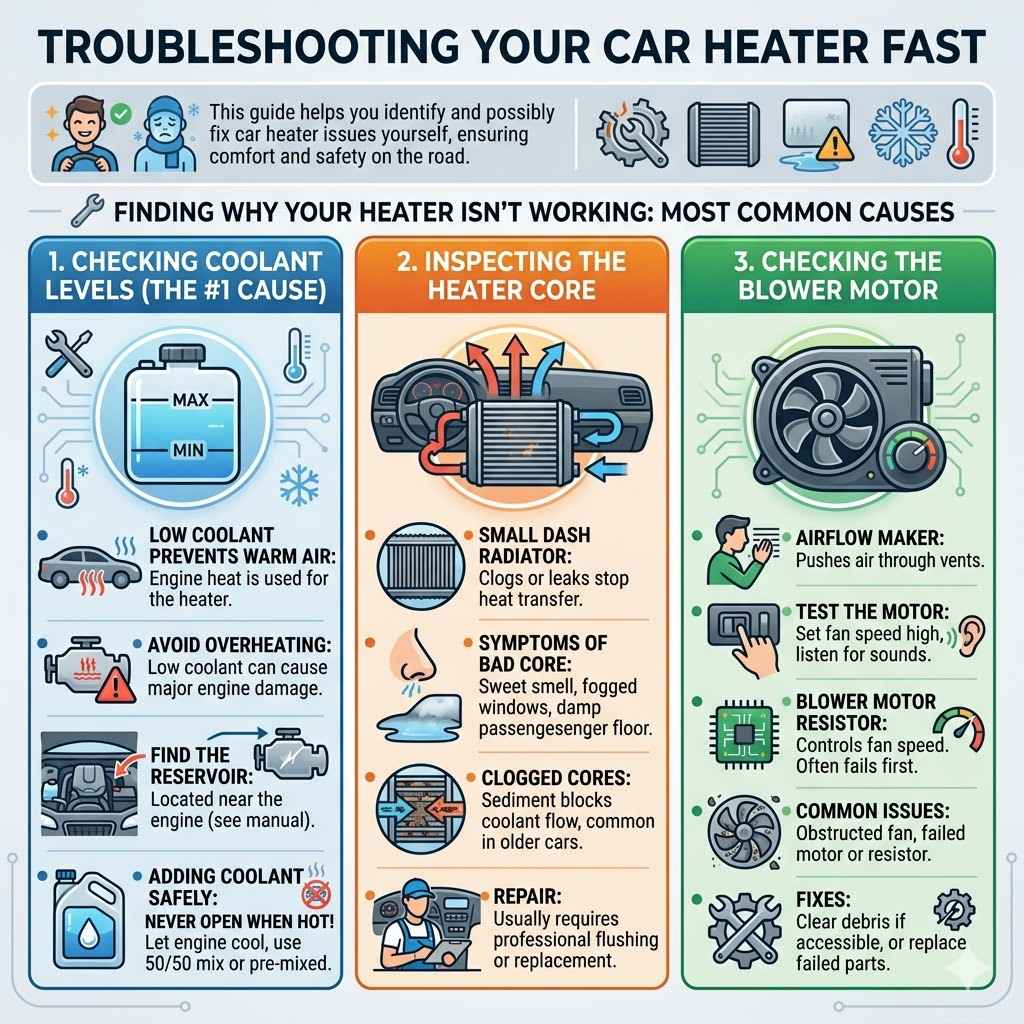
The first and most important thing to check is your car’s coolant level. Your car’s heater uses hot coolant from the engine to warm the air that blows into the cabin. If your coolant is low, there isn’t enough hot fluid to heat the air.
Low Coolant Is a Major Culprit. Many people overlook this simple check. Driving with low coolant can cause your engine to overheat, which is a much bigger problem. Always make sure your coolant reservoir is filled to the correct level. You can usually find the “max” and “min” lines on the side of the reservoir.
Finding the Coolant Reservoir. The coolant reservoir is typically a translucent plastic tank connected to the radiator. It’s usually located near the engine. Consult your car’s owner’s manual if you’re unsure where to find it or what type of coolant to use.
Adding Coolant Safely. Never open a hot radiator cap. Let the engine cool down completely. Use a 50/50 mix of antifreeze and distilled water, or a pre-mixed coolant solution. Pour it slowly into the reservoir until it reaches the proper level.
Inspecting the Heater Core
The heater core is like a small radiator located inside your car’s dashboard. Hot engine coolant flows through it, and a fan blows air over it to heat your car’s interior. If the heater core is clogged or leaking, your heater won’t work.
Symptoms of a Bad Heater Core. Common signs include a sweet smell inside your car (coolant has a distinct odor), fogged-up windows that won’t clear, or damp spots on the passenger side floor. You might also notice your engine overheating more quickly.
Checking for Leaks. Look under your dashboard for any signs of moisture or coolant. Sometimes, a small leak can be hard to spot without removing some interior panels. If you suspect a leak, it’s best to have it professionally inspected.
Clogged Heater Cores. Over time, sediment and debris can build up in the heater core, blocking the flow of coolant. This is more common in older vehicles or those with infrequent coolant changes. A clogged heater core usually requires flushing or replacement.
Checking the Blower Motor
The blower motor is responsible for pushing air through your car’s vents. If the blower motor isn’t working, you won’t feel any air coming out, even if the air is getting heated.
Testing the Blower Motor. Turn your car’s ignition to “on” and set the fan speed to high. Listen for any sounds coming from the dashboard. If you don’t hear anything, or if the fan only works on certain settings, the blower motor might be the problem.
Blower Motor Resistor. Often, the blower motor resistor fails before the motor itself. This small component controls the fan speed. If your fan only works on the highest setting, the resistor is likely the issue.
Possible Fixes. Sometimes, debris can obstruct the blower motor fan. You might be able to clear it if you can access it. If the motor or resistor has failed, they will need to be
Common Causes of a Cold Car Heater
Understanding the common reasons for a car heater failure helps in diagnosing and fixing the problem quickly. Many issues are related to the cooling system, as this is where the heat originates. When these components aren’t functioning correctly, the result is a lack of warm air in your car’s cabin, making for an unpleasant driving experience during cold weather.
Thermostat Issues
The thermostat in your car controls the engine’s operating temperature. It regulates the flow of coolant between the engine and the radiator. If the thermostat gets stuck open, the engine may not reach its optimal operating temperature, meaning there isn’t enough heat to warm your cabin.
What a Thermostat Does. The thermostat acts like a valve. When the engine is cold, it stays closed to help it warm up faster. Once the engine reaches its proper temperature, the thermostat opens to allow coolant to flow to the radiator for cooling.
Signs of a Faulty Thermostat. If your car takes a very long time to warm up, or if the temperature gauge stays lower than normal, a stuck-open thermostat is a likely cause. Conversely, a thermostat stuck closed can cause the engine to overheat rapidly.
Replacing a Thermostat. Thermostats are relatively inexpensive parts. Replacing one involves draining some coolant, removing the old thermostat housing, swapping the thermostat, and then refilling and bleeding the cooling system. This is a repair many DIYers can tackle.
Air in the Cooling System
Air pockets in the cooling system can prevent hot coolant from circulating properly. This is especially true for the heater core, which is often located at the highest point in the system. Air pockets can block the flow of heat.
Why Air Gets Trapped. Air can enter the system if there’s a leak, or during coolant changes if the system isn’t properly bled afterward. This trapped air acts like an insulator, preventing heat transfer.
Bleeding the System. To fix this, you need to “bleed” the cooling system. This involves running the engine with the radiator cap off (or a special bleeding valve open) to allow trapped air to escape. Follow your car’s manual for the specific procedure.
Combination with Low Coolant. Air in the system often goes hand-in-hand with low coolant levels. If you’ve added coolant, and your heater still isn’t working, the system may need to be bled to remove any air that entered.
Blend Door Actuator Problems
Inside your car’s dashboard, there are small doors that control which vents the air comes out of and whether it’s heated or cooled. These are controlled by actuators. If the blend door actuator responsible for directing air through the heater core fails, you’ll only get cold air.
How Blend Doors Work. Your car’s climate control system uses these doors to mix hot and cold air to achieve your desired temperature. The blend door actuator is a small electric motor that moves the door to the correct position.
Identifying the Issue. If you can adjust the temperature settings from hot to cold and hear clicking or grinding noises from behind the dashboard, but the air temperature doesn’t change, it’s a strong sign of a faulty blend door actuator.
Replacement Complexity. Replacing a blend door actuator can range from simple to quite difficult, depending on its location. Some are easily accessible, while others require significant disassembly of the dashboard.
How to Fix My Car Heater Fast Simple Steps
This section offers a straightforward, step-by-step approach to diagnosing and fixing your car’s heating system. We aim to provide clear instructions that even a novice can follow. The goal is to get your heater blowing warm air again without unnecessary complications.
Follow these steps in order for the best results.
Step 1 Check the Coolant Level
As we’ve mentioned, this is the most common reason for a car heater not working.
- Make sure your car engine is completely cool. Never open the radiator cap when the engine is hot.
- Locate your coolant reservoir. It’s usually a translucent plastic tank near the engine, marked with “min” and “max” lines.
- Check the coolant level. If it’s below the “min” line, you need to add coolant.
- If you need to add coolant, use a 50/50 mix of antifreeze and distilled water, or a pre-mixed coolant. Slowly fill the reservoir to the “max” line.
- Start the engine and let it run for a few minutes. Check the coolant level again and top off if necessary.
Step 2 Inspect for Leaks and Hose Condition
Low coolant often means there’s a leak somewhere. Also, check the condition of the hoses that carry coolant.
Visual Inspection for Leaks. Look under your car for any puddles of green, orange, or pink fluid. Check around the radiator, hoses, and water pump for any signs of wetness or residue.
Examine Heater Hoses. Your car has two main heater hoses that connect the engine to the heater core. These are usually rubber hoses. Squeeze them to check for cracks, bulges, or brittleness. A damaged hose can leak or collapse, restricting coolant flow.
Tighten Hose Clamps. Sometimes, a leaky hose connection is simply due to a loose clamp. Gently try to tighten any clamps you find around the heater hoses and radiator. Be careful not to overtighten, which can damage the hose.
Step 3 Test the Blower Motor and Fan Settings
This step checks if air is actually being pushed into your car.
- Turn your car’s ignition to the “on” position, but don’t start the engine yet.
- Set your climate control to the highest fan speed and direct the airflow to the vents.
- Listen for the fan running. Can you hear air coming out of the vents?
- Try different fan speed settings. If the fan only works on high, or not at all, the blower motor or its resistor might be faulty. If you hear clicking or grinding, it could be debris or a failing motor.
Step 4 Check the Thermostat
A faulty thermostat can prevent your engine from reaching the temperature needed for heat.
- Observe Engine Temperature Gauge. After the engine has warmed up for a few minutes, check your car’s temperature gauge. If it stays very low or doesn’t move much, the thermostat might be stuck open.
- Feel the Upper Radiator Hose. Once the engine is warm, carefully feel the upper radiator hose. If the engine is hot but the hose is cool, the thermostat is likely closed, preventing coolant from circulating. If the hose is hot, the thermostat is likely open.
- Potential Replacement. If you suspect the thermostat is bad, it can be replaced. This involves draining some coolant, removing the thermostat housing, replacing the thermostat, and then refilling the system.
Step 5 Consider Heater Core Flush (Advanced)
If coolant levels are good, hoses are okay, and the blower works, but you still get no heat, the heater core might be clogged. This is a more involved step.
- What a Flush Does. A heater core flush involves forcing a cleaning solution or fresh coolant through the heater core in the reverse direction of normal flow. This helps dislodge blockages.
- Procedure Overview. The process typically involves disconnecting the heater hoses from the heater core and using a garden hose or specialized flushing kit to push fluid through. It requires careful attention to not damage the heater core itself.
- When to Seek Professional Help. If you’re not comfortable with this process, or if the flush doesn’t resolve the issue, it’s time to consult a mechanic. A severely clogged heater core may need to be replaced, which is a more complex repair.
Why Car Heater Problems Happen
Cars are complex machines, and many things can go wrong with the heating system. The heating system is closely tied to the engine’s cooling system. This means any issue with the engine’s temperature regulation can directly impact your car’s ability to produce heat.
Understanding these connections helps in diagnosing and fixing the problem.
Cooling System Efficiency
The entire premise of your car’s heater is based on the engine’s ability to generate and retain heat. The cooling system is designed to manage this heat. If the cooling system isn’t working efficiently, the heat needed for your car’s cabin will not be available.
- Heat Exchange Process. Your engine generates a lot of heat as it runs. The coolant absorbs this heat and carries it to the radiator, where it’s dissipated into the air. The heater core works by diverting some of this hot coolant to a smaller radiator inside your car’s dashboard.
- Impact of Leaks. Small coolant leaks might not cause immediate engine overheating but can lead to a gradual loss of coolant. This then reduces the amount of hot coolant available to circulate through the heater core, resulting in less heat or no heat at all.
- Age and Wear. Over time, components in the cooling system, like hoses, seals, and water pumps, can wear out. This wear can lead to leaks, reduced coolant flow, or air entering the system, all of which compromise the heating system’s effectiveness.
Maintenance Schedule Importance
Regular maintenance is key to preventing issues with your car’s heating system. Following the manufacturer’s recommended service schedule can catch problems before they become major headaches.
- Coolant Flushes and Changes. Coolant degrades over time and can become less effective at transferring heat and protecting against corrosion. Regular coolant flushes and refills, as recommended in your owner’s manual, ensure the coolant is clean and potent.
- Hose and Belt Inspection. During routine checks, mechanics will inspect rubber hoses for cracks or swelling and belts for wear. Catching a deteriorating hose or belt early can prevent a breakdown that might also affect your heating system.
- Catching Small Issues Early. Many heating system problems start small, like a slow coolant leak or a slightly malfunctioning sensor. Regular check-ups allow technicians to spot these minor issues and address them before they lead to a complete failure of the heater.
Environmental Factors
The climate you live in can also play a role in how your car’s heater performs and the types of problems you might encounter.
- Cold Weather Stress. In extremely cold temperatures, rubber components like hoses and seals can become brittle and more prone to cracking. The cooling system also works harder to maintain engine operating temperature, making any inefficiencies more noticeable.
- Corrosion and Buildup. Over time, especially in areas with hard water or if the wrong type of coolant is used, sediment and corrosion can build up within the cooling system, including the heater core. This buildup restricts coolant flow and reduces heat output.
- Infrequent Use. If you live in a warmer climate and rarely use your heater, certain components might seize up or dry out from lack of use, leading to potential failure when you eventually need it.
Frequently Asked Questions
Question: My car heater is blowing cold air. What’s the first thing I should check?
Answer: The very first thing you should check is your car’s coolant level. Low coolant is the most common reason for a car heater not blowing warm air.
Question: How do I know if my heater core is bad?
Answer: Signs of a bad heater core include a sweet smell inside the car, foggy windows that won’t clear, or damp spots on the passenger floor. Your engine might also overheat faster.
Question: Can I fix my car heater myself?
Answer: Yes, many common car heater problems, like low coolant or a faulty blower motor resistor, can be fixed by a DIYer with basic tools and guidance. More complex issues might require professional help.
Question: How long does it take to fix a car heater?
Answer: Simple fixes like adding coolant can take minutes. Replacing a part like a blower motor or thermostat might take a few hours, depending on your skill level and the car model.
Question: Is it safe to drive my car if the heater isn’t working?
Answer: It is generally safe to drive if the heater isn’t working, but it can be very uncomfortable in cold weather. However, if the lack of heat is due to a major engine overheating issue, you should not drive.
Conclusion
Getting your car heater working fast is achievable. Start with simple checks like coolant levels and hoses. If those are fine, look at the blower motor and thermostat.
Don’t let a cold car ruin your drive. With these steps, you can often solve the problem yourself and enjoy warmth again.