
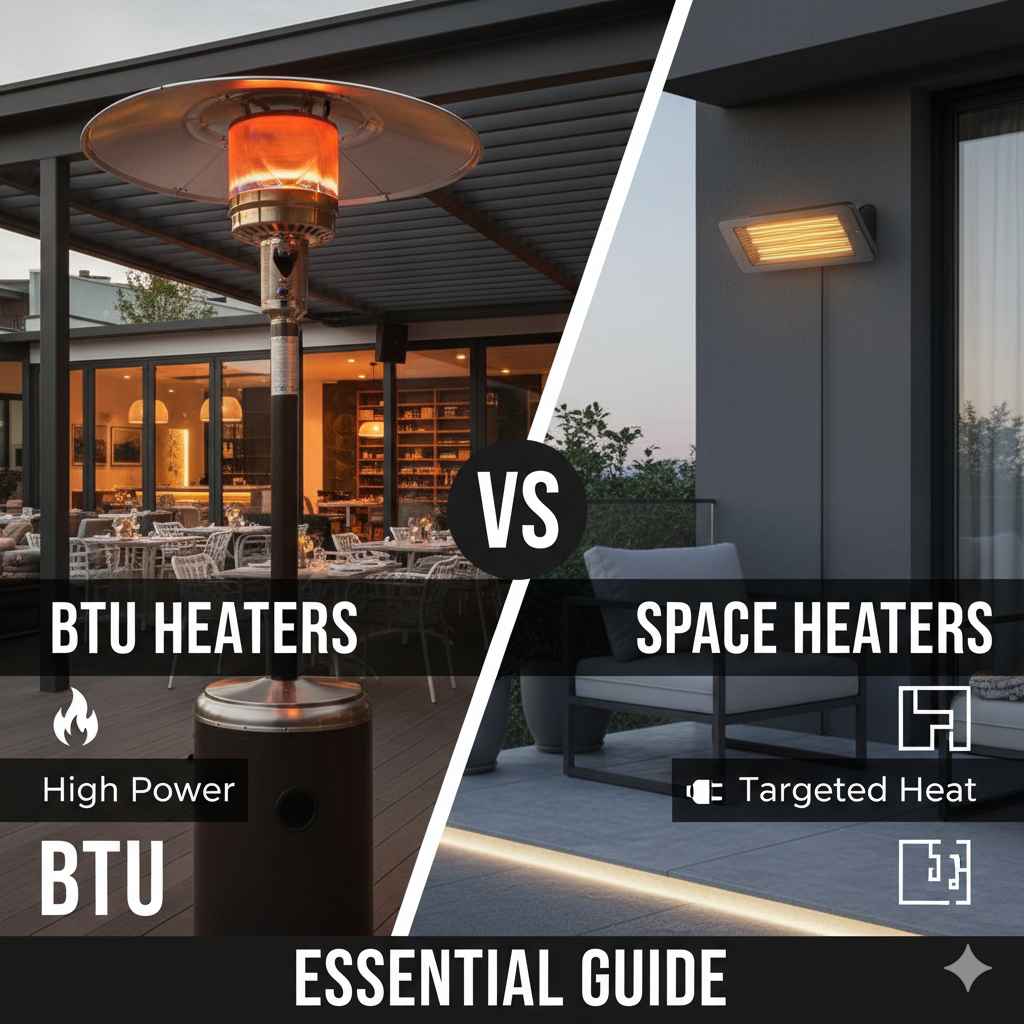
Choosing the right outside heater involves matching its BTU output to the size of your outdoor space. Higher BTU means more heat, suitable for larger areas. Smaller spaces need less BTU to avoid overheating and wasted energy. This guide simplifies BTU and space considerations for perfect outdoor warmth.
Is your patio too chilly for cozy evening gatherings? Do you find yourself wondering why your outdoor heater just isn’t cutting it, or perhaps using way too much fuel? It’s a common puzzle! Figuring out the right balance between your heater’s power and the area you want to warm can feel tricky. But don’t worry, I’m Tanim, your friendly guide to all things home heating. We’ll break down the essential concepts of BTU and space, so you can confidently choose and use an outdoor heater that keeps you perfectly comfortable, safely, and affordably. Let’s transform your outdoor space into a warm sanctuary!
Understanding BTU: The Heart of Your Heater’s Power
You’ll see “BTU” everywhere when you look at outdoor heaters. But what does it actually mean, and why is it so important? BTU stands for British Thermal Unit. Think of it as a measure of energy. Specifically, one BTU is the amount of heat needed to raise the temperature of one pound of water by one degree Fahrenheit. For your outdoor heater, the BTU rating tells you how much heat it can produce.
The higher the BTU, the more powerful the heater and the more heat it can generate. This is crucial because different outdoor spaces require different amounts of heat to feel comfortable. A small balcony needs much less heat than a large patio or backyard.
Why BTU Matters for Your Outdoor Space
- Adequate Warmth: A heater with too low a BTU rating won’t be able to warm your space effectively, leaving it feeling still chilly.
- Energy Efficiency: A heater with too high a BTU rating might overheat a small area, leading to wasted energy and higher fuel bills. You want just enough heat, not too much!
- Comfort Control: Understanding BTU helps you select a heater that provides a comfortable, consistent temperature without being overpowering.
- Safety: Overheating a space with an excessively powerful heater can also pose safety risks, especially in enclosed or partially enclosed areas.
When you’re shopping for an outdoor heater, pay close attention to its BTU output. It’s usually listed right on the packaging or in the product specifications. This number is your first clue to whether it’s suitable for your needs.
What is “Space” in Outdoor Heating?
When we talk about “space” in the context of outdoor heaters, we’re referring to the physical dimensions of the area you intend to heat. This isn’t just about the square footage; it also considers factors like:
- Size (Square Footage/Meters): How large is your patio, deck, balcony, or garden area?
- Enclosure Level: Is the space completely open, partially covered (like a pergola or awning), or more enclosed (like a sunroom or screened porch)?
- Prevailing Conditions: Is your area exposed to wind? Is it a sheltered spot? Wind significantly affects how quickly heat dissipates.
- Ambient Temperature: What is the typical temperature you’re trying to combat? Heating a space from 40°F (4°C) to a comfortable 70°F (21°C) requires more energy than heating it from 60°F (15°C) to the same 70°F.
Simply put, the “space” is the environment your heater needs to warm up. A larger, more exposed space will require a more powerful heater (higher BTU) than a small, sheltered nook.
Measuring Your Outdoor Space
Accurately measuring your outdoor space is straightforward:
- Measure the Length and Width: For a rectangular or square area, measure the length and width in feet or meters.
- Calculate Square Footage/Meters: Multiply the length by the width. For example, a patio that is 10 feet wide and 15 feet long has an area of 150 square feet (10 x 15 = 150).
- Consider Unusual Shapes: If your space is irregularly shaped, you can divide it into simpler shapes (rectangles, squares, triangles), calculate the area of each, and add them together.
- Note Sidewall/Roof Coverage: Make a mental note or a quick sketch of any walls, railings, overhead structures, or windbreaks. These features can help retain heat.
Having a clear understanding of your space’s dimensions and characteristics is the second crucial piece of the puzzle, right alongside your heater’s BTU rating.
BTU Vs. Space: Finding the Perfect Match
Now, let’s bring it all together. The relationship between BTU and space is about matching the heat output of your heater to the needs of your area. It’s not a one-size-fits-all situation!
As a general rule of thumb, for every 100 square feet of outdoor space, you might need anywhere from 2,000 to 4,000 BTUs. However, this is a very broad estimate and needs to be adjusted based on the factors mentioned above.
Key Considerations for Matching BTU to Space
- Open vs. Enclosed: A completely open area exposed to wind will require more BTUs than a space that is partially or fully enclosed, as the enclosure helps to trap heat.
- Climate: If you live in a colder climate, you’ll need a higher BTU output to make the space comfortable than someone in a milder climate.
- Wind Exposure: Outdoor heaters are less effective in windy conditions. If your space is often breezy, consider a higher BTU heater or seek recommendations for wind-resistant models.
- Desired Temperature: How warm do you want the space to be? If you’re looking to create a tropical oasis in a chilly evening, you’ll need more BTUs than if you’re just taking the edge off a cool breeze.
It’s often better to slightly overestimate your BTU needs for a more challenging environment than to underestimate them. You can always turn down a powerful heater, but you can’t magically increase the output of an underpowered one.
General Guidelines: BTU Requirements for Different Spaces
To make things even clearer, here are some general guidelines. Remember, these are starting points, and you should always consider your specific conditions.
| Outdoor Space Size (Approximate) | BTU Range Needed (General) | Notes |
|---|---|---|
| Small Balcony (under 50 sq ft) | 1,000 – 3,000 BTU | Ideal for taking the chill off. Avoid very high BTU units to prevent overheating. |
| Medium Patio/Deck (50 – 150 sq ft) | 3,000 – 7,000 BTU | Good for comfortable evening use. Consider wind. |
| Large Patio/Deck (150 – 300 sq ft) | 7,000 – 15,000 BTU | May need a more powerful unit or multiple smaller units. Account for open areas. |
| Very Large Area / Open Backyard (300+ sq ft) | 15,000+ BTU | Requires significant heat output. Consider commercial-grade heaters or multiple units. Significant wind protection might be needed. |
It’s also important to think about the type of heat radiated. Some heaters heat a directed area, while others provide a more ambient warmth. For example, a tall, standing patio heater is designed to warm people standing near it, whereas a radiant floor heater might cover a wider, more general area.
Factors That Increase BTU Needs
There are a few situations where you’ll need to boost your BTU calculation significantly:
- Always Windy Areas: If your space is consistently hit by wind, the heat dissipates very quickly. You’ll need a higher BTU to compensate.
- Higher Altitudes: At higher elevations, the air is thinner, and heat can dissipate more rapidly. Though the effect is less pronounced than wind, it can still be a factor.
- Colder Climates: If you’re trying to extend your outdoor season significantly into cooler months, you’ll need more BTUs to reach and maintain a comfortable temperature.
- Above-Ground Pools: If your outdoor space includes an unheated pool, the evaporation from the water can create a cooler microclimate that requires more heating power.
If you’re unsure, it’s often recommended to err on the side of caution and choose a heater with a slightly higher BTU output than the minimum calculated. You can often adjust the heat settings on propane or natural gas heaters.
Types of Outdoor Heaters and Their BTU Characteristics
Understanding the different types of outdoor heaters can also help you make a decision:
1. Patio Heaters (Propane/Natural Gas)
These are the classic tall, standing heaters you see on many patios. They typically come with impressive BTU outputs, ranging from 30,000 to 45,000 BTU for residential models. They are excellent for heating larger patio areas but can be overkill for small balconies.
- Pros: High heat output, can cover a good area, readily available.
- Cons: Can be bulky, require fuel tanks (propane) or gas line connections, can be affected by wind.
2. Electric Patio Heaters
Electric heaters are a fantastic option for smaller spaces or where gas connections are not feasible. Their BTU output is often listed in Watts, which can be converted to BTUs (1 Watt ≈ 3.412 BTU). Common electric heaters range from 1,500 to 5,000 Watts, meaning roughly 5,000 to 17,000 BTUs. They are great for balconies and areas near an electrical outlet.
- Pros: Easy to use, no fuel tanks, often more compact, no direct emissions.
- Cons: Heat output may be less powerful than gas heaters, reliance on electricity, requires an outdoor-rated outlet.
You can find helpful information on electrical calculations and safety standards from the Electrical Safety First organization, which offers excellent advice on safe outdoor electrical usage, applicable globally for principles.
3. Tabletop Heaters
These are smaller, often portable heaters that sit on an outdoor table. They typically have lower BTU outputs, ranging from 5,000 to 15,000 BTU. They are perfect for intimate seating areas or small balconies where you just need to keep a few people warm.
- Pros: Portable, good for small gatherings, can provide targeted heat.
- Cons: Limited heating range, may not be sufficient for larger areas.
4. Wall-Mounted Heaters
Similar to electric patio heaters, these are mounted on walls for a cleaner look and to save floor space. Their BTU/Wattage is comparable to electric patio heaters, making them suitable for medium-sized, enclosed, or partially enclosed spaces.
- Pros: Space-saving, sleek design, good for consistent heating.
- Cons: Installation required, dependent on power source.
Choosing the right type of heater will also influence how effectively its BTU output is utilized for your specific space.
Installation and Safety Tips
No matter the BTU or space, safety is paramount. Always follow the manufacturer’s instructions for installation and use.
General Safety Guidelines
- Clearance: Ensure your heater is placed with adequate clearance from combustible materials like fences, furniture, plants, and the walls of your home. Check the manual for specific distances.
- Stable Surface: All outdoor heaters, especially tall standing ones, must be placed on a stable, level surface to prevent tipping.
- Ventilation: For gas heaters, ensure proper ventilation if they are used under a partial covering. Never use a gas heater in a fully enclosed space without proper venting designed for that purpose.
- Fuel Safety: If using propane, ensure the tank is correctly connected and there are no leaks. Store spare tanks upright and away from heat sources.
- Electrical Safety: For electric heaters, use only outdoor-rated extension cords and ensure they are not run through doorways or high-traffic areas.
- Supervision: Never leave a lit outdoor heater unattended, especially if children or pets are present.
Professional Installation Information
For natural gas heaters, professional installation is often required and highly recommended. A qualified gas technician will ensure the gas line is correctly sized, connected securely, and leak-tested. This is crucial for both safety and efficiency. Incorrect gas line installation can lead to leaks, fire hazards, and inefficient operation. Organizations like the International Code Council (ICC) develop building codes and standards that ensure safety in installations, including for gas appliances.
Common Mistakes to Avoid
To help you get the best performance and ensure safety, here are some common pitfalls to steer clear of:
- Ignoring Wind: This is probably the biggest mistake. A powerful heater will struggle mightily in a windy spot if its BTU isn’t significantly higher than a calm-environment recommendation.
- Overestimating for Small Spaces: Buying a huge, high-BTU heater for a tiny balcony is like using a fire hose to water a single potted plant – it’s wasteful and potentially unsafe.
- Underestimating for Large or Open Spaces: Conversely, a small heater in a vast, open backyard will do next to nothing. You’ll spend more on fuel trying to achieve minimal warmth than you would have on a more appropriately sized unit.
- Not Considering Shelter: A heater placed in a sheltered corner will perform much better than one out in the open. Think about how the structure of your space can help retain heat.
- Forgetting About Power Source Limitations: For electric heaters, ensure your outdoor outlet can handle the wattage. An undersized circuit can trip your breaker, and a standard extension cord may not be rated for outdoor use or the heater’s power draw.
By being mindful of these common errors, you can make a much more effective choice and enjoy your heated outdoor space with confidence.
FAQs About Outdoor Heaters, BTU, and Space
1. How do I convert Watts to BTUs for electric heaters?
It’s easy! Multiply the wattage by 3.412. For example, a 1,500-watt electric heater produces approximately 5,118 BTUs (1500 x 3.412 = 5118).
2. Can I use a patio heater on a covered porch?
Yes, but with caution. Ensure there is adequate ventilation as recommended by the manufacturer. Many gas heaters produce carbon monoxide, so never use them in fully enclosed spaces. Electric heaters are generally safer for covered areas, provided there is enough clearance from the roof. Always check your heater’s manual.
3. What happens if my outdoor heater’s BTU is too low for my space?
The heater will struggle to raise the temperature to a comfortable level. You might feel a little warmth directly in front of the unit, but the surrounding space will remain cool, especially if it’s breezy or large.
4. What happens if my outdoor heater’s BTU is too high for my space?
For gas heaters, you might find yourself turning the dial down very low, which can sometimes lead to inefficient burning. For electric heaters, you might be wasting energy as the unit cycles on and off frequently or if it overheats the space. It can also make a small space uncomfortably hot, forcing you to turn it off sooner.
5. How much does it cost to run an outdoor heater?
This depends on the type of heater, its BTU output, fuel cost (propane, natural gas, electricity), and how long you run it. Propane heaters are often priced per gallon, natural gas by your utility rate, and electric heaters by kilowatt-hour. A higher BTU unit generally consumes more energy.
6. Should I get a propane or natural gas heater?
Propane heaters are portable and don’t require a permanent gas line, making them great for flexibility. Natural gas heaters are more convenient as they connect directly to your home’s gas supply, eliminating the need for tank refills. The choice often comes down to your existing setup and desired portability.