5 Best Porch Heaters (2026): Based on Specs and Reviews
For most enclosed porches, the best portable heater is a 1,500-watt electric model with a thermostat, tip-over shutoff, and overheat protection. That output is usually the ceiling for a standard 120V household circuit, and it is enough for many small-to-medium enclosed porches when the space is reasonably sealed. For screened or drafty porches, a more directional heater or propane may be the better fit.
Verdict: best portable heater for an enclosed porch
For an enclosed porch, the best portable heater is a 1,500W electric unit with a thermostat, tip-over protection, and overheat shutoff. If the porch is truly enclosed and reasonably insulated, a tower, PTC ceramic heater, or oil-filled radiator can work well. If the porch is screened or leaky, move toward infrared or propane.
Quick comparison
| Product | Badge | Best for | Price | ||
|---|---|---|---|---|---|
 |
Lasko Space Heater for Indoor UseLasko | Our pick | 1500W · ceramic tower · remote control | $67.57
Price as of 14 Nov 2026
|
View |
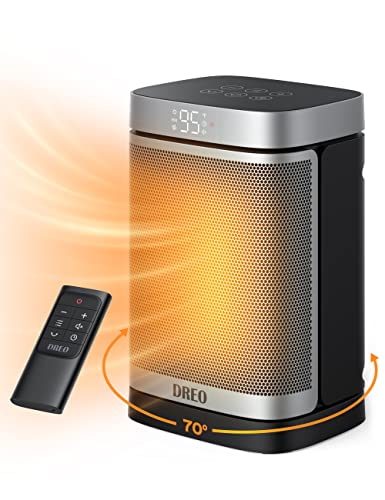 |
DREO Space Heater, Portable Electric Heaters for Indoor UseDREO | Budget pick | 1500W · PTC ceramic · 70° oscillation | $49.99
Price as of 14 Nov 2026
|
View |
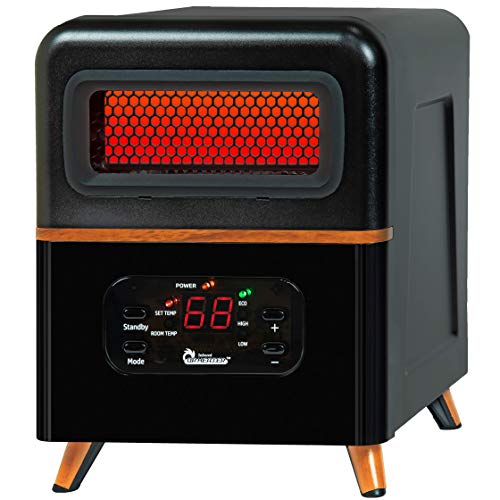 |
DR. INFRARED HEATER DR-978 New Upgraded Dual Heating HybridDR. INFRARED HEATER | Also great | 1500W · hybrid dual heat · remote | $99.99
Price as of 14 Nov 2026
|
View |
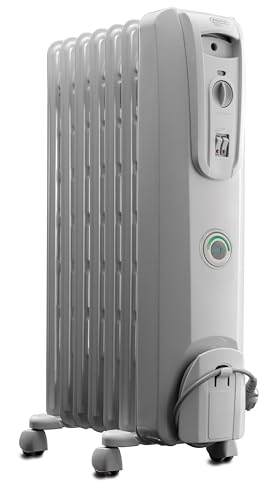 |
De’Longhi Oil filled Radiator HeaterDe’Longhi | Upgrade pick | 1500W · oil-filled radiator · indoor | $129.95
Price as of 14 Nov 2026
|
View |
 |
Vornado AVH10 (2026) Space HeaterVornado | Also great | Auto climate · whole-room · fan-only | $99.99
Price as of 14 Nov 2026
|
View |
This quick view separates screened porches from fully enclosed spaces, because air movement, glass, and insulation change the right heater. A 1,500W electric unit fits many small porches, while propane makes more sense when you need more output than a standard outlet can support. For a more detailed breakdown, start with the decision matrix below.
The matrix is the fastest way to match heater type to porch conditions. Screened porches favor infrared or weather-tolerant electric models, enclosed porches can often handle 1,500W electric heat, and drafty open porches may need propane. Use the table as a starting point, then check your outlet, space layout, and ventilation needs.
How we chose
The best porch heater has to match heat loss, not only wattage. We compared output, coverage claims, safety features, and placement limits for screened, enclosed, glass-heavy, and drafty porches.
We also weighed certification, moisture resistance, thermostat control, and whether the design leaves enough floor space around chairs, rugs, curtains, and pets. For propane models, ventilation and cylinder handling matter as much as heat output.
Coverage is treated as a heat zone, not whole-porch comfort. Published specs and buyer guidance show why a 1,500W unit can suit a small space, while larger or leakier porches often need propane or multiple heat sources.
Picks for enclosed, screened, and drafty porches
Portable electric infrared heater: best for screened porches
- Hybrid PTC plus infrared heating
- Low-noise blower design
- Tip-over and overheat protection
This is the safest starting point for a screened porch or a semi-open space with moving air. Infrared heat warms people and objects directly, so it holds up better when air escapes through screens or gaps. If you want broader context for placement and space loss, see the linked screened-porch guidance.
The published 1500W format fits the common portable-heater range for porches, and the included remote suits frequent adjustment when the wind changes. It also matters that this model includes tip-over and overheat protection.
The drawback is simple: infrared gives focused warmth, not full-space recovery. On a larger porch with high ceilings or open corners, the warm zone can feel narrow unless you sit close and keep the heater aimed well.
Environment fit: best for screened porches and drafty semi-open porches; acceptable for enclosed porches if the goal is targeted seat warmth rather than whole-room comfort. Certification and moisture rating should be verified on the listing or packaging before use outdoors or in a damp area.
Oil-filled radiator heater: best for quiet enclosed spaces
- Gentle radiant heat
- Low surface temperature design
- Thermal slot design maximizes heat flow
This suits a small enclosed porch where you want steady heat and less direct airflow. Oil-filled radiators give gentle radiant warmth and tend to feel less harsh near seating than fan-blown heaters.
The low surface temperature design is useful around furniture and curtain edges, and the 1500W rating fits the same outlet limits many porches can handle. It is a better fit for a tight, draft-light porch than for a screened one.
The drawback is slow response. If the porch loses heat fast through glass or gaps, this style usually feels less immediate than infrared or propane.
Environment fit: best for enclosed porches with limited drafts and clear floor space. Certification should be checked on the product page or label; the listing is described as indoor-use only, so it is not the right choice for damp or exposed porches.
PTC tower heater: best for small enclosed porches
- Up to 1500W heating
- 70° wide-angle oscillation
- ECO mode helps save energy
This is a strong pick for a small enclosed porch where you want oscillation and adjustable output from a wall outlet. Published details show 1500W heating, a thermostat, ECO mode, and 70° oscillation, which helps spread warmth across a modest sitting area.
It is practical for renters because it needs no venting or fuel storage, and the remote can make small temperature changes easier from a chair. That matters on porches that get used as reading corners or plant rooms.
The drawback is that convection-style airflow can lose ground in drafty or screened spaces. If the porch has open edges or a cold floor, the heat may mix away faster than an infrared beam would.
Environment fit: best for small enclosed porches and lightly drafty enclosed porches. The listing is for indoor use; treat certification and humidity tolerance as manufacturer claims unless the product page or packaging shows a third-party listing and any moisture protection.
Whole-room tower heater: best for wider enclosed porches
- Fast-heat ceramic element
- Widespread oscillation spreads warmth
- Remote control and timer included
This is a good choice when the porch is fully enclosed and you want heat to circulate across more than one chair or seating nook. The oscillation and timer help distribute warmth more evenly than a fixed-direction unit.
The remote and thermostat are useful when the porch has multiple seating spots or you need to step the heat down after the room comes up to temperature. For a room-like porch, that control is valuable.
The drawback is floor-space impact. A tower needs a clear footprint, and it is a weaker fit for narrow porches, pet traffic, or layouts with tight chair spacing near the heater.
Environment fit: best for enclosed porches with enough floor space for a tower footprint. This is an indoor-use listing, so it should not be used on damp or semi-exposed porches; check the unit’s certification marking and keep it away from curtains and traffic lanes.
Auto-climate heater: best for set-and-forget use
- Auto climate control adjusts heat automatically
- Whole-room Vortex Heat Circulation
- Fan-only mode adds year-round use
This works best for homeowners who want the heater to manage output more automatically in a closed porch. Auto climate control can reduce the need to keep changing settings as the room warms and cools.
It also makes sense where year-round flexibility matters, since the fan-only mode gives it more use than a winter-only heater. That is helpful if the porch doubles as a reading area, plant room, or overflow seating space.
The drawback is that whole-room circulation is less useful on very drafty porches. If the space leaks heat through screens or loose windows, auto control cannot overcome a poor enclosure by itself.
Environment fit: best for enclosed porches that are close to true indoor rooms in layout and sealing. Manufacturer specs may describe whole-room coverage, but that should be treated as a claim rather than a guarantee unless your porch is similarly sealed.
How to choose
Choose the infrared hybrid first if your porch has screens, open seams, or a lot of air movement. It is the best match when you need direct warmth without waiting for all the air in the room to heat up.
Choose the PTC tower or whole-room tower for a small or medium enclosed porch with decent insulation and limited drafts. If you mainly want steady background heat, those formats fit better than a propane unit.
Choose the oil-filled radiator if noise is a concern and the porch is tightly enclosed. Its slower heat-up is acceptable when the room holds temperature reasonably well.
Suppose you have a 120-square-foot screened porch with two chairs and a side table. A 1,500W infrared heater is the most sensible starting point, because it heats the seated zone directly instead of trying to warm all the escaping air. For sizing help on compact spaces, use the linked small enclosed porch guidance as a reference point for room-like layouts.
Picture a glass-lined three-season porch with a cold floor and no practical way to run fuel lines. A 1,500W electric heater with a thermostat is usually the safer and more convenient answer, because propane adds ventilation and fuel-handling demands.
Electric vs propane
Electric is the simpler choice for a sealed or semi-sealed porch because it plugs into a standard outlet and usually tops out at 1,500 watts on a normal 120V circuit. Propane wins when heat loss is too high for electric to keep up. For a deeper product list, see the site’s electric porch heaters guide.
Electric heaters are easier to place near seating, but they need proper clearance and a suitable outlet. Propane heaters deliver stronger output measured in BTUs, which can be helpful on drafty porches; BTU-to-watt comparisons are only directional because combustion heat behaves differently from resistance heat.
How much power or BTU do I need?
For most enclosed porches, 1,500 watts is the practical electric ceiling on a typical household circuit. For propane, published examples range from around 4,000 to 9,000 BTU for compact portable heaters to 40,000 BTU and up for larger patio-style units. The right size depends more on porch sealing and air movement than on square footage alone.
Safety
Use a heater only if its labeling and third-party listing match the environment. UL, ETL, or CSA listing tells you the product has been evaluated to a recognized standard, but it does not replace spacing, ventilation, or the manufacturer’s installation rules. For extension cords, the safest guidance is to avoid them for heaters whenever possible because heaters draw high current and cord heating can become a problem.
Also keep the unit off rugs and away from curtains, baskets, cushions, and pet beds. A heater should sit on a stable, level surface, and the cord should not cross a walkway or press under a chair leg.
Tip-over and overheat protection
Tip-over safety switch and overheat protection are the two features that matter most around porch furniture. A tipped heater can land on rugs, blankets, or pet items, while overheat shutoff helps if the unit is blocked by drapes or too much nearby clutter.
Portable electric models commonly list automatic shutoff for unsafe temperatures. For propane, the flame cut-off or tip-over shutoff matters even more because the heat source is open flame or a flame-fed burner.
ETL or CSA certification
ETL or CSA certification gives you a third-party safety listing to look for before the heater goes on a porch. That matters because the space may be treated like indoors in winter but still exposed to moisture, dust, or airflow.
If the heater will sit near screens or semi-open edges, the certification should be paired with the product’s placement rules. A listed heater is still unsafe if it sits too close to fabric, walls, or traffic paths.
IP weather-resistance rating
An IP weather-resistance rating is useful on screened or semi-outdoor porches because splashes, damp air, and drifting moisture are part of the setting. One screened-porch guide cites an IPX5 waterproof rating, which signals meaningful water resistance, but it is not a license to place the unit in direct rain.
Use that rating as a durability filter, not as a promise that every moisture condition is fine. Covered and screened porches can still funnel wind-driven rain or condensation onto the heater.
Thermostat and heat settings
Multiple heat settings help you avoid running a porch heater at full output all the time. A 1,500W unit with lower settings can be easier to balance on mild days, and a thermostat helps it cycle instead of blasting continuously.
That is especially useful on porches that warm unevenly. One side may sit in sun while the other stays cold, so a thermostat gives more control than a single fixed setting.
Sizing
Start by matching the heater to the porch’s heat-loss pattern. Tight enclosed porches usually do best with 1,500W electric heat, while drafty, glass-heavy, or larger spaces may need propane or a more directional electric unit. If you are working with a small enclosed porch, choose output for the occupied zone rather than the entire floor area.
Place the heater where it can warm the sitting zone without crowding furniture or blocking exits. If the porch has curtains, rugs, pet beds, or hanging plants, keep those outside the heater’s direct path.
A common mistake is choosing a heater sized for the entire porch instead of the smaller corner where people actually sit. A 1500W heater may be fine for a small corner, but it will not make a leaky porch feel uniformly warm.
Decision matrix
| Porch condition | Recommended heater type | Minimum output range | Safety must-haves | Common failure mode |
|---|---|---|---|---|
| Screened porch | Portable electric infrared heater | 900W to 1500W | ETL or CSA certification, overheat protection, tip-over safety switch, moisture resistance such as an IP rating | Warm air escapes through screens before it can build comfort |
| Three-season enclosed porch | Portable electric convection or infrared heater | 1500W | Thermostat, overheat protection, tip-over safety switch, ETL or CSA certification | Heat loss through uninsulated walls or floor leaves cold edges |
| Glass-enclosed porch | Electric tower or oil-filled radiator | 1500W, or a heater with stronger room coverage claims | Thermostat, overheat protection, stable base, ETL or CSA certification | Large glass area creates radiant loss and uneven comfort near windows |
| Drafty covered porch | Propane portable heater | 4,000 BTU and up; stronger models may be needed as the space gets larger | Ventilation, tip-over shutoff, fuel handling controls, outdoor-safe use guidance | Electric heat fades too quickly in moving air and open edges |
This matrix is the main shortcut. Screened porches usually reward radiant heat, enclosed porches can often get by with 1,500W, glass-heavy spaces need steadier output, and drafty covered porches are where propane starts to make sense.
Electric porch heaters
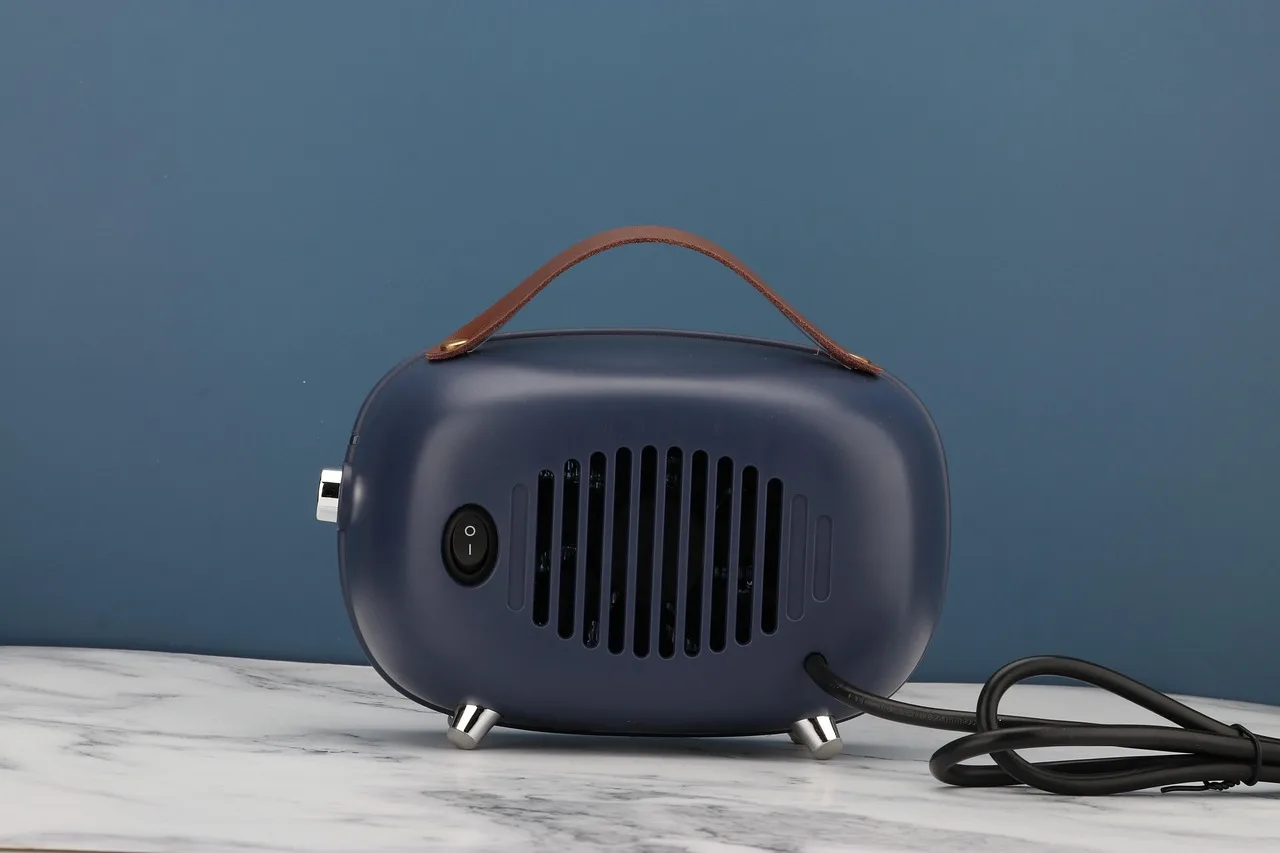
Infrared is the best electric style when air escapes through screens, cracks, or an open edge. It warms people and objects directly, so the heat does not disappear as fast as warmed air. Electric porch heaters are the most practical choice for small enclosed porches because they avoid fuel storage and ventilation issues.
Published porch-heater guidance often puts electric porch heaters in the 900W to 1500W range, and screened-porch advice frequently points to a 1,500W infrared tower with 3 heat settings. That combination fits small-to-medium seating zones better than broad whole-porch coverage.
Placement matters. Keep the heater aimed at the sitting area, not at curtains, stacked cushions, or pet beds, and leave enough clearance that people do not brush it while moving around the porch.
Placement and cord limits
Use a wall outlet whenever possible. Extension-cord limits matter because a heater can draw near the upper limit of a household circuit, and long cords can add heat and voltage drop. Standard residential circuits are commonly 15A or 20A, which is why 1,500W is a common practical ceiling for portable porch heat.
If the porch outlet is not suitable, the safer answer is usually to choose a different heater or have the outlet evaluated, not to string together a casual extension setup. The same caution applies to power strips.
Tabletop vs tower format
Tabletop heaters save floor space and can work well for a small screened nook or two-seat porch. Tower heaters usually throw heat higher and wider, which helps if the seating area is long rather than deep.
Choose tabletop for tight placement and directed warmth. Choose tower when you need the heater to sit out of the traffic lane and spread heat across more of the porch.
Propane heaters
Propane is the stronger-heat choice when a porch loses heat too fast for a 1,500W electric unit to keep up. It delivers instant radiant warmth and can cover larger seating zones, but it also brings ventilation and fuel-handling obligations.
One published propane Buddy heater lists 4,000 to 9,000 BTU output and suitability for up to 225 square feet, while other patio-heater guidance moves into 40,000 to 49,999 BTU and even 50,000 BTU ranges. That gap shows why size and leakiness matter so much.
Use propane only where the porch design and product instructions allow safe ventilation. Do not assume a sealed room, closed glass porch, or renter-friendly indoor setup is right for combustion heat.
Ventilation and fuel handling
Propane requires fresh air and careful cylinder handling. Fuel storage, refill logistics, and burner clearance are part of the decision, not afterthoughts.
That is also why propane is a poor default for porches with pets, curtains, or tight seating. The heater can be strong, but the space has to support combustion safely.
When propane beats electric
Propane starts to win when the porch is drafty, wide, or hard to seal against wind. It also makes sense when electric heat at 1500W is clearly too weak for the space size or the seating zone keeps cooling off as soon as the unit cycles down.
A 1,500W heater is often enough for a small porch zone. Once the porch grows larger, loses heat through screens, or has open edges, propane becomes the more realistic option.
FAQ
Can I use a space heater on a screened-in porch?
Yes, if the heater is rated for the environment and the setup respects clearance, outlet load, and moisture exposure. A screened porch usually favors infrared heat, because the unit warms people and objects directly instead of trying to hold warm air in a space that leaks it.
What heater is best for a small enclosed porch?
A small enclosed porch usually does best with a 1,500W electric heater that has a thermostat and overheat protection. If the room is quiet and tightly sealed, an oil-filled radiator can be a good fit; if the porch is draftier, a PTC tower or infrared model is often better.
Do I need a waterproof heater for a porch?
Not always waterproof, but weather resistance matters on screened or semi-outdoor porches. Look for an IP rating when moisture is part of the setting, and do not treat that rating as permission for direct rain or exposed placement in bad weather.
How do I keep a porch heater from tipping over?
Choose a model with a tip-over safety switch and place it on a level, hard surface away from foot traffic. Keep it out from under chair legs, drapes, or hanging plants, and avoid squeezing it into a corner where someone can bump it while sitting down.
Is infrared better than convection for a porch?
Infrared is usually better for screened or drafty porches because it heats people and objects directly. Convection works better when the porch is enclosed enough to hold warm air, so the better choice depends on whether the space leaks heat through screens, gaps, or glass.
How much heater power do I need for a screened porch?
For most screened porches, 900W to 1500W is the useful electric range, and 1500W is the practical starting point for many small spaces. If the porch is larger, windier, or has a cold floor, you may need propane or a stronger heat source to keep the sitting area comfortable.
Sources
Propane guidance follows standard ventilation recommendations for combustion appliances and the BTU ranges published by patio and portable-heater manufacturers. For screened and enclosed porch conditions, use the product manual and any local electrical or fire-safety rules first.
For a final rule of thumb: if your porch is enclosed enough to hold warm air, start with a 1,500W electric heater and a thermostat. If it is screened or drafty, prioritize infrared or propane depending on how much air the space loses. And if the porch is damp, exposed, or cramped, certification, moisture resistance, and clearance matter as much as raw heat.