Best Portable Heater for a Utility Room
A commonly recommended portable heater for a utility room is a fan-forced ceramic heater with tip-over and overheat shutoff, sized with the room’s insulation, ceiling height, moisture, and door traffic in mind rather than by floor area alone. Used poorly, a heater can heat clutter, trip breakers, or create a fire risk near stored paint, cardboard, and laundry supplies. This guide compares heater types, safety features, moisture limits, and room-size rules so you can choose the right unit for short bursts of heat.
Top pick for utility rooms
Top pick: a ceramic fan heater with tip-over protection, overheat protection, a thermostat, and a timer. It fits utility rooms because it heats fast after you open the door, then shuts back down instead of running all day in a space that often gets interrupted by laundry, storage, and traffic.
Why this type fits utility rooms
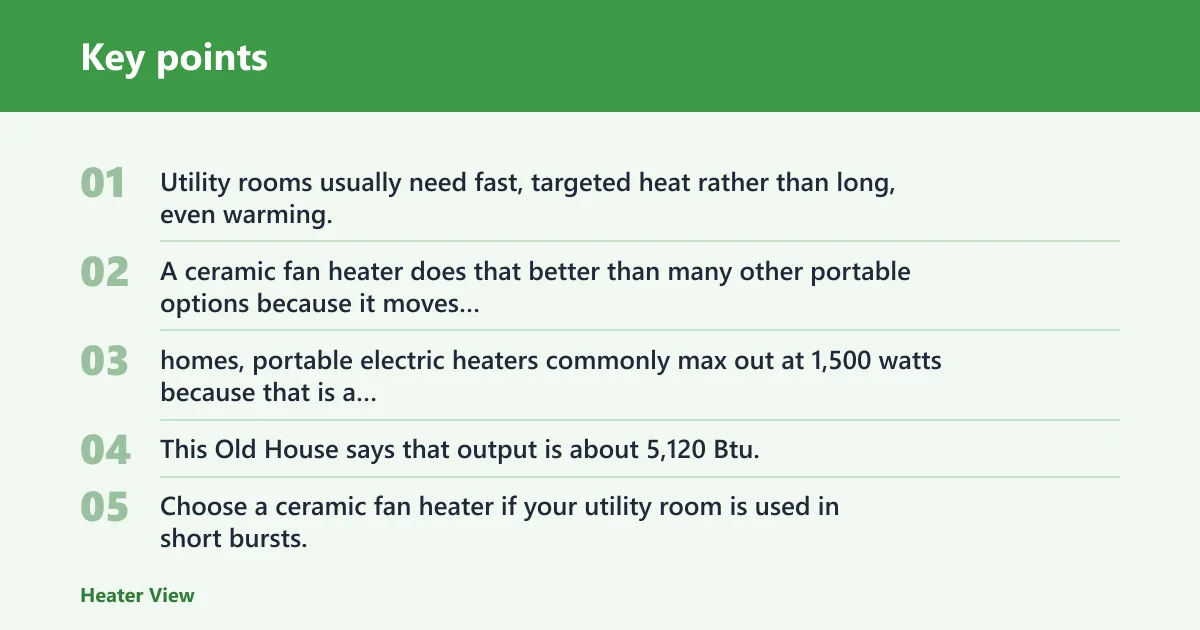
Utility rooms usually need fast, targeted heat rather than long, even warming. A ceramic fan heater does that better than many other portable options because it moves air quickly across a small space and can warm cold feet, damp clothes, or a work area after the door has been open.
In many U.S. homes, portable electric heaters commonly max out at 1,500 watts because that is a practical ceiling for standard household circuits and indoor use. This Old House says that output is about 5,120 Btu, so the heater can work well in a small or medium utility room, but it is still a zone heater, not a whole-house solution.
Who should choose it?
Choose a ceramic fan heater if your utility room is used in short bursts, has a clear floor area near the outlet, and needs heat that arrives fast when you step in to sort laundry or clean up. It is also the better fit when you want the heater to stop and start with a thermostat instead of running continuously.
When to pick a different type
Pick an oil-filled radiator if the room stays occupied for longer periods, or if you want quieter heat with less fan noise. Pick a fan heater if you need rapid warm-up. If the room is very damp, crowded, or used for drying laundry, placement and safety features matter more than the brand name on the front.
📊 In many U.S. homes, portable electric heaters commonly max out at 1,500 watts. Source: Packing Heat.
Quick picks by need
- Best for small utility rooms: a ceramic fan heater with a thermostat and a 1 to 8 hour timer. It is the simplest match for short heat bursts and tight floor space.
- Best for damp or cluttered rooms: a model with tip-over protection, overheat protection, and UL or ETL markings. Clearances matter more here than output alone.
- Best for quiet, longer runtime: an oil-filled radiator. It runs more quietly than a fan heater and gives steady, even heat, but it warms more slowly.
What heater type fits your utility room?
The right heater depends on moisture, clutter, and how long the room stays in use. In a utility room, that matters more than square footage alone, because wet floors, detergent bottles, laundry baskets, and frequent door openings all change the risk profile.
Oil-filled radiator
An oil-filled radiator is a strong choice when you want silent operation and steady, even heat. It is often 1500W, so it fits the same general power ceiling as other electric portable heaters, but it usually takes longer to feel warm than a fan heater. That makes it better for longer occupancy, not quick visits.
Ceramic fan heater
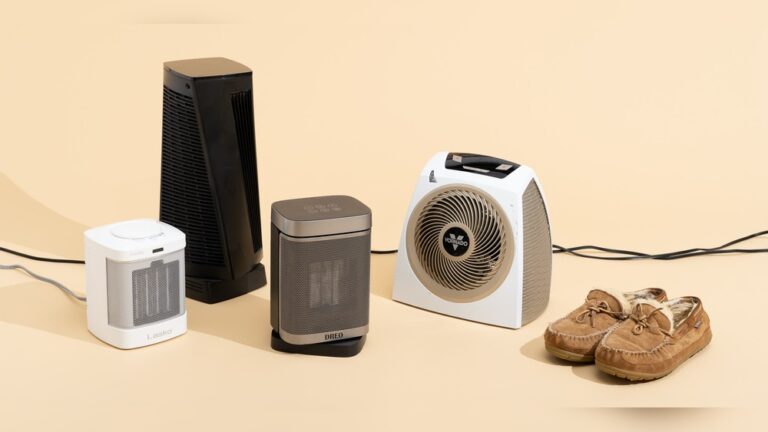
A ceramic fan heater gives fast heat output and is often the best fit for brief utility-room use. Quiet models exist, which helps if the room sits near a kitchen or hallway, but fan heaters still tend to be more noticeable than an oil-filled radiator. Oscillation can help spread heat more evenly in a narrow or awkward room.
When a non-electric heater is a poor fit
A non-electric heater is usually a poor choice for an indoor utility room. Combustion heat needs ventilation and creates added safety risk around detergents, cardboard, paint, and lint. Kerosene heaters also emit carbon monoxide, and a 2016 thesis on portable heater use in ice fishing shelters examined carbon monoxide exposure for the same basic reason: combustion indoors is a safety problem, not just a comfort choice.
Utility room heater selector table
| Room size | Moisture / clutter risk | Drying-laundry use | Safest heater type | Must-have safety features | Expected runtime pattern | Simple recommendation rule |
|---|---|---|---|---|---|---|
| Small | Low to moderate | Light laundry sorting | Ceramic fan heater | Tip-over protection, overheat protection, thermostat, timer, UL/ETL marking | Short bursts of 15 to 45 minutes | If the room clears quickly and floor space is open, choose a fast heater with a timer. |
| Small to medium | Moderate | Frequent drying racks or damp clothes | Oil-filled radiator | Tip-over protection, overheat protection, thermostat, stable base, UL/ETL marking | Longer cycles with fewer restarts | If you want quieter heat and less fan movement around drying laundry, choose steady heat. |
| Medium | High clutter or wet-floor risk | Occasional use only | Ceramic fan heater with oscillation | Tip-over protection, overheat protection, timer, oscillation, UL/ETL marking | Brief warm-up, then shutoff | If traffic is frequent, keep the heater off the floor path and use short timed runs. |
| Medium | Low clutter, better clearance | Longer occupancy while sorting or folding | Oil-filled radiator | Thermostat, overheat protection, tip-over protection, UL/ETL marking | Steady temperature with thermostat cycling | If the room stays occupied and noise matters, choose slow, even heat. |
Is a fan heater or oil-filled radiator better for a utility room?
For most utility rooms, a fan heater is better for short bursts and an oil-filled radiator is better for longer, quieter heating. The better choice depends on whether you need rapid warm-up after opening the door or steady heat while the room stays in use.
Fast heat versus steady heat
A ceramic fan heater warms air quickly, which is useful when the room is cold at the start of a laundry task. An oil-filled radiator warms more slowly, but it keeps giving off heat after the thermostat cycles off, so it feels less abrupt and less noisy.
If the room is used for ten-minute tasks, speed matters more. If it is used for folding, sorting, or drying over a longer stretch, steady heat may be the better fit.
Noise and placement differences
Oil-filled radiators are quiet. That is their main advantage in a room near bedrooms or a living area. Fan heaters make more moving-air noise, although some quiet models exist. Either type still needs open clearance around it, especially in a room with baskets, detergent bottles, and hanging laundry.
Oscillation, often in the 70° to 120° range, helps a fan heater spread heat more evenly in an awkward room shape. It is useful when the heater sits near a wall or doorway and needs to cover more than one corner.
Which one suits short bursts?
For short bursts, a ceramic fan heater usually wins. Suppose your utility room is 80 square feet and you only need 20 minutes of heat while loading a washer and drying gloves. A fan heater with a thermostat and timer can warm that space faster than an oil-filled radiator and then stop on schedule.
How many watts do you need for a utility room heater?
Most utility rooms do well with a heater sized by floor area, then adjusted for door traffic, dampness, ceiling height, and clutter. A common rule of thumb is 10 watts per square foot, but it works best as a starting point rather than a fixed rule.
1,500-watt ceiling and what it means
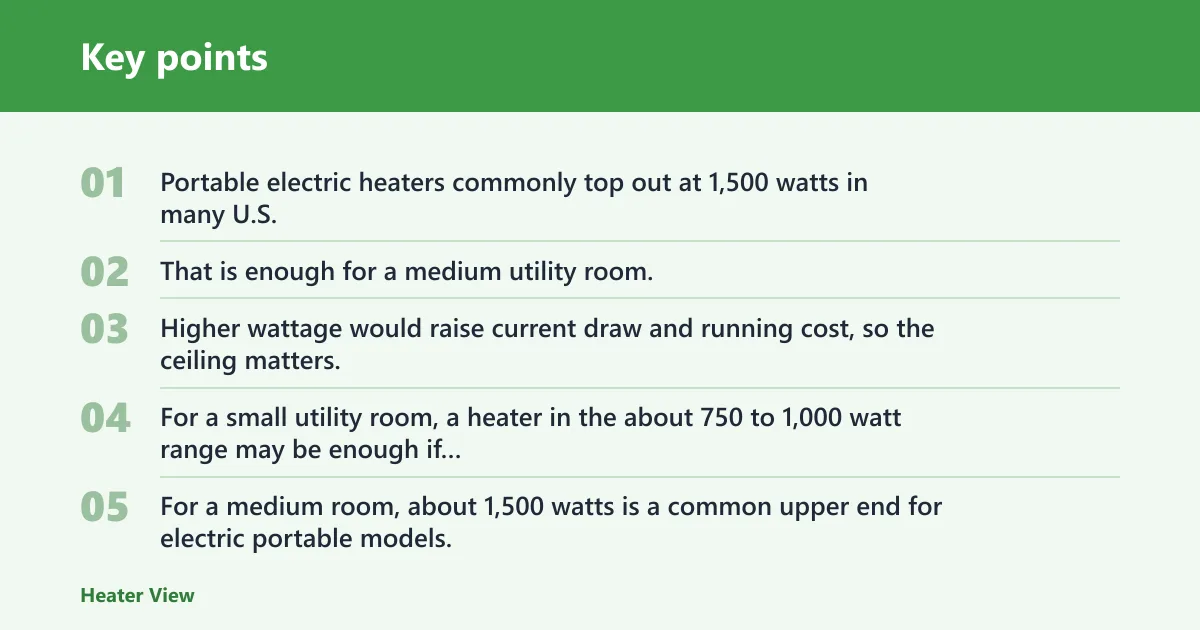
Portable electric heaters commonly top out at 1,500 watts in many U.S. household settings. That is enough for a medium utility room, but only if the room is reasonably insulated and the heater can sit where airflow is not blocked by baskets, cabinets, or drying racks. Higher wattage would raise current draw and running cost, so the ceiling matters.
Small versus medium utility rooms
For a small utility room, a heater in the about 750 to 1,000 watt range may be enough if the room is only needed briefly. For a medium room, about 1,500 watts is a common upper end for electric portable models. The rule still depends on layout: a cramped room with lots of storage may need a better placement more than a bigger heater.
Running cost basics
Running costs can climb quickly, so the cheapest-to-run heater is not always the best choice if it heats the wrong way for the room. A thermostat helps reduce unnecessary runtime, and eco mode often works with it by adjusting output to conserve energy. That matters in a room that gets used for short, repeated tasks rather than one long stay.
For context, Family Handyman suggests estimating heater size at 10 watts per square foot. That is a planning shortcut, not a guarantee, and utility-room conditions can push you toward better airflow, better controls, or a different heater style rather than more wattage.
Should you choose a thermostat and timer?
Yes. In a utility room, a thermostat and timer are more than convenience features. They help prevent a heater from running after the task is done, which matters in a space people enter and leave often, sometimes with the door open and attention on laundry or storage.
Thermostat and eco mode
A thermostat maintains a set temperature automatically. That reduces unnecessary runtime and keeps the room from swinging from hot to cold while you are moving between washer, dryer, sink, and shelving. Eco mode often pairs with thermostats by adjusting output to save energy when full power is not needed.
Timer ranges and safety benefits
Timers commonly run from about 1 to 8 hours, and some go up to around 12 hours. In a utility room, that matters because people forget heaters in rooms that are used briefly and then left empty. A timer adds a built-in stop point so the heater does not keep working after the job is done.
Remote control and convenience features
Remote control is useful, but it should never replace safety features. If the heater sits away from the entry door or near laundry racks, a remote can make it easier to adjust settings without stepping around clutter. It is a convenience feature, not a safety one.
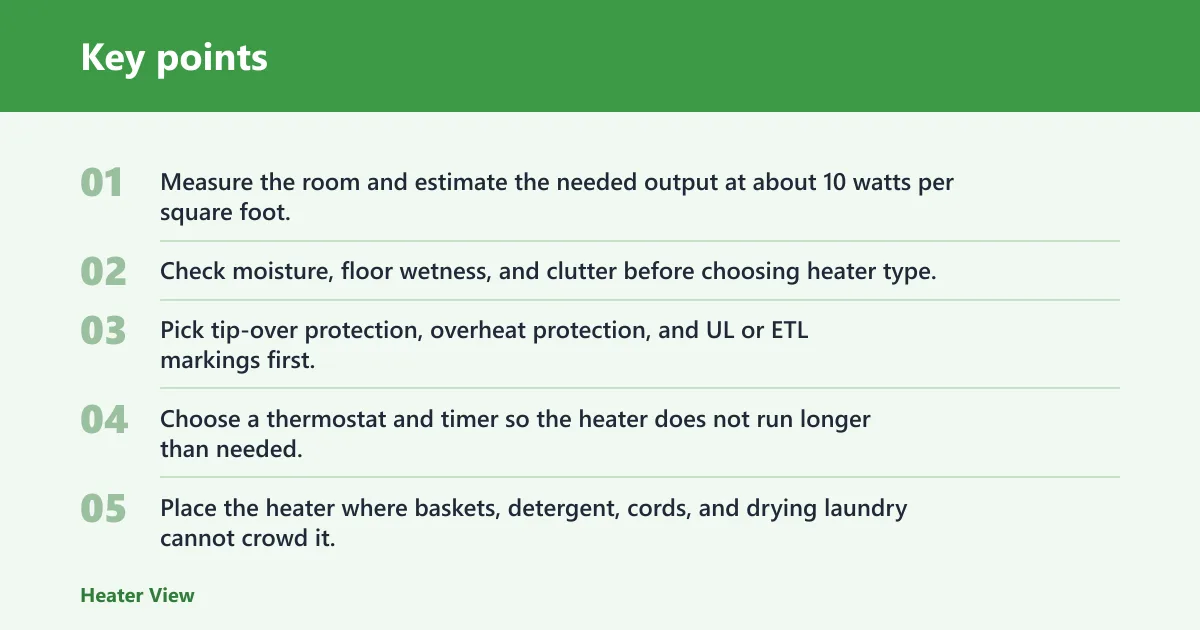
- Measure the room and estimate the needed output at about 10 watts per square foot.
- Check moisture, floor wetness, and clutter before choosing heater type.
- Pick tip-over protection, overheat protection, and UL or ETL markings first.
- Choose a thermostat and timer so the heater does not run longer than needed.
- Place the heater where baskets, detergent, cords, and drying laundry cannot crowd it.
Say your utility room is 70 square feet, but it also has a drying rack and a narrow path to the back door. A 1,500W fan heater may still be the better choice, yet only if it has a timer, oscillation, and clear floor space. The same wattage in a blocked corner is a worse setup.
What safety features should a utility room heater have?
At minimum, choose tip-over protection, overheat protection, and UL or ETL certification. Those features matter more in a utility room because the heater may sit near moving laundry baskets, damp flooring, cleaning products, and traffic through a tight doorway.
Tip-over protection
Tip-over protection is an automatic shutoff if the heater is knocked over. It is essential in busy utility spaces where a basket, shoe, or cord can nudge the unit. This is one of the first features to check before comparing style or price.
Overheat protection
Overheat protection cuts power when internal temperature gets too high. That helps if airflow is blocked by lint, a towel, or a wall too close to the intake or outlet. In a room where storage and heat share the same space, this feature is core, not optional.
UL or ETL certification
UL or ETL markings are commonly treated as independent safety-testing marks and a useful trust signal for indoor use. They do not make a heater safe in every setup, but they do show the unit has been tested to a recognized standard. That is a sensible filter for a room with more hazards than a plain bedroom or office.
Placement and clearance rules
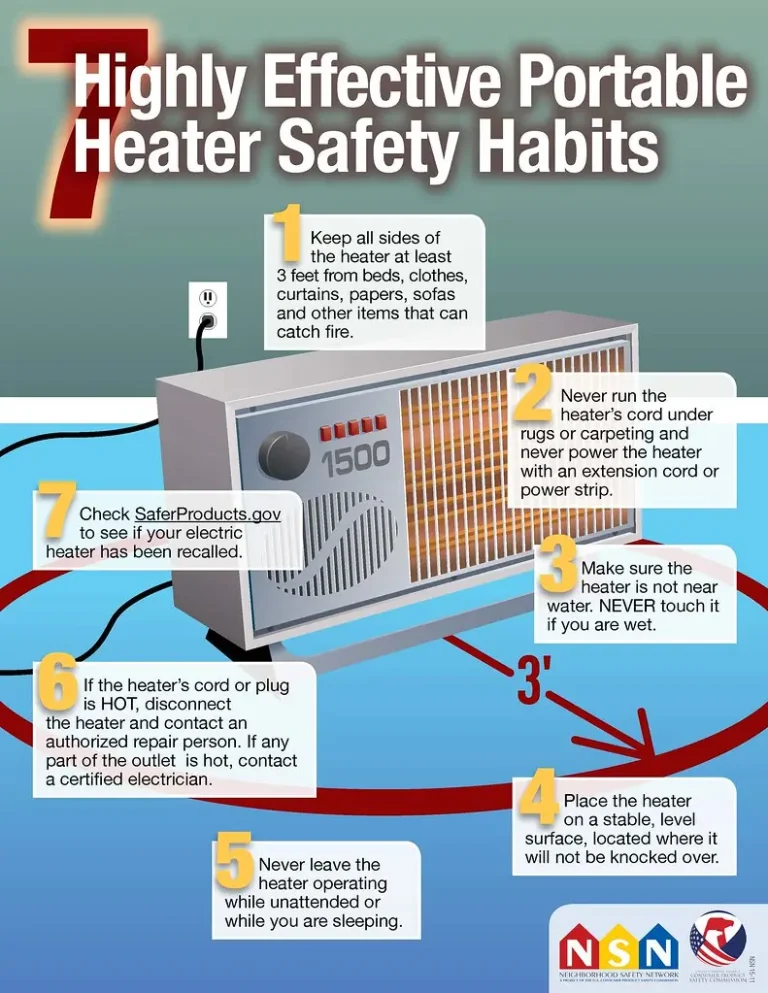
Keep the heater off wet floors, away from detergent spills, and clear of cardboard, towels, and hanging laundry. Do not place it where a door can slam into it or where a drying rack can drift into its air intake. A utility room can look harmless and still create a problem if the heater is boxed in.
The better rule is simple: choose the safest unit that fits the room’s airflow, traffic, and drying pattern, then use the timer every time.
Frequently asked questions
What is the best portable heater for a utility room?
The best portable heater for a utility room is usually a ceramic fan heater with tip-over protection, overheat protection, a thermostat, and a timer. It fits short bursts of heat, which is how many utility rooms are used. If you want quieter, longer heat, an oil-filled radiator is the next best option.
Are portable heaters safe to leave on in a utility room?
They should not be treated as safe to leave on without limits. Use a heater with tip-over protection, overheat protection, a thermostat, and a timer, and keep it clear of clutter and wet floors. A utility room has more ignition and trip hazards than a simple spare room.
Which portable heater is cheapest to run in a utility room?
The cheapest heater to run is the one that matches the room and shuts off when the room is warm enough. A thermostat and timer matter as much as heater type. An oil-filled radiator and a fan heater can have similar operating costs at the same wattage; the difference is usually how long they run and how well they fit the room.
Can I use a non electric heater in an indoor utility room?
Generally, no. Combustion heaters need ventilation and add carbon monoxide risk. Kerosene heaters emit carbon monoxide, which is a poor match for a small indoor room that may already hold detergents, lint, cardboard, and damp laundry. An electric portable heater is the safer default indoors.
Should I choose a heater with a thermostat and timer?
Yes. A thermostat helps hold the room near a set temperature and reduces unnecessary runtime, while a timer prevents forgotten use. In a utility room, that combination is especially useful because the room is often left between tasks and can be forgotten while the laundry cycle runs.