Oil Filled Heater Vs Electric Heater: Essential Guide
Confused about which heater to choose? This guide breaks down oil-filled and electric heaters. We’ll explore their pros, cons, and best uses so you can pick the perfect one for safe, efficient, and comfortable warmth in your home.
For portable or electric heater comparisons, Electric Baseboard Heaters Vs Oil Filled: Heating Showdown gives readers another helpful angle before buying or using one.
Choosing the right heater can feel like a big decision, especially when the weather turns chilly. You want a warm, comfortable home without breaking the bank or worrying about safety. Two popular choices are oil-filled radiators and standard electric heaters. They both use electricity, but they work in very different ways. This might leave you wondering, “Which one is better for me?”. Don’t worry, I’m here to help simplify things. We’ll look at exactly how they perform, what makes them different, and how to pick the winner for your specific needs. Let’s get your home toasty warm!
Understanding Your Heating Options: Oil Filled Heaters vs. Electric Heaters
It’s time to get to know your contenders! Think of them as two different tools in your home comfort toolbox. Both are designed to heat your space, but their methods and the results they deliver can be quite distinct. Understanding these differences is the first step to making the best choice for your home.
What is an Oil-Filled Heater?
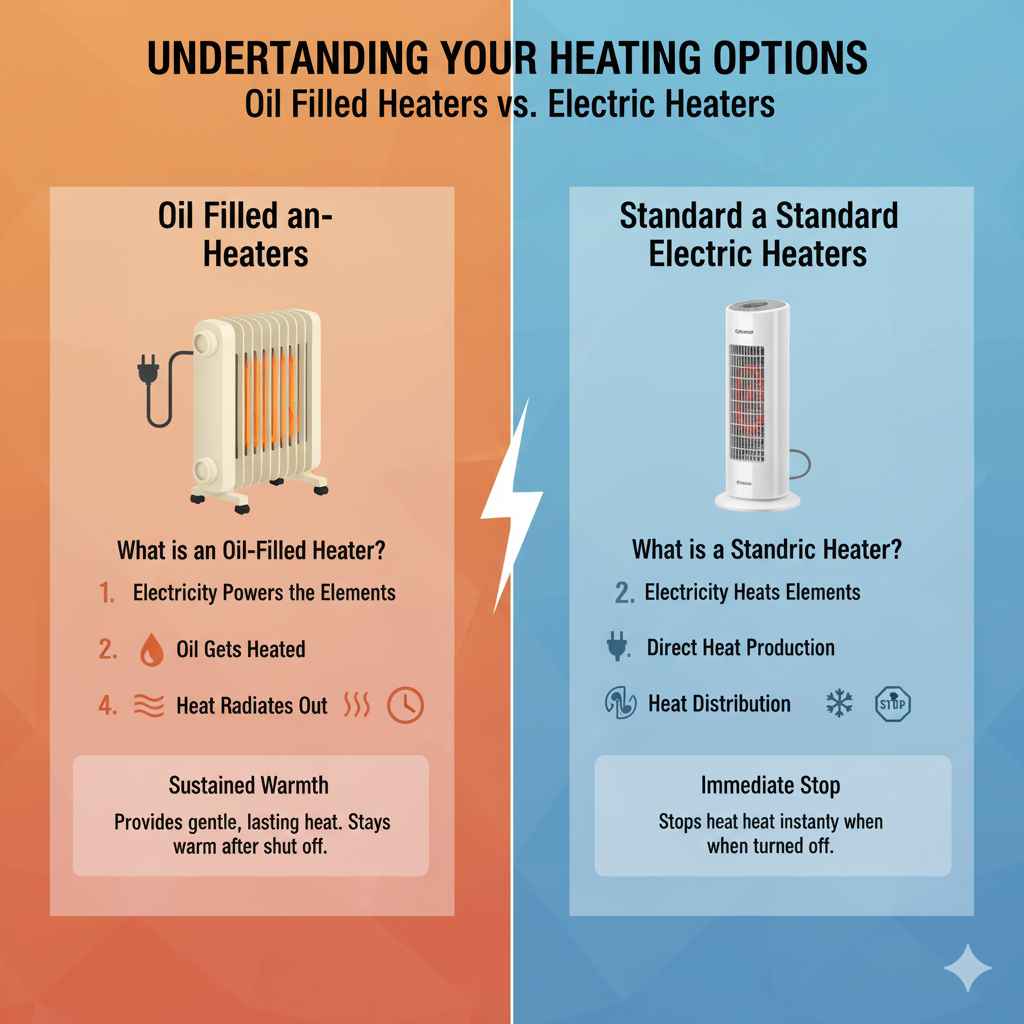
An oil-filled heater, often called an oil-filled radiator, looks a lot like a traditional old-school radiator. But instead of steaming hot water, it’s filled with a special type of oil that never needs to be replaced. When you plug it in, electricity heats up the metal elements inside. These elements heat the oil, which then circulates throughout the heater’s fins. This warmed oil then transfers its heat to the surrounding air, making the room feel cozy. Because the oil retains heat very well, these heaters continue to radiate warmth even after they’ve been turned off, providing a gentle, lasting heat.
How an Oil-Filled Heater Works:
- Electricity Powers the Elements: You plug it in, and electricity flows to internal heating elements.
- Oil Gets Heated: These elements heat the special oil sealed inside the heater.
- Heat Radiates Out: The warm oil circulates, heating the metal fins of the heater. These fins then radiate heat into the room.
- Sustained Warmth: The oil holds its heat, meaning the heater continues to give off warmth for some time after it’s switched off.
What is a Standard Electric Heater?
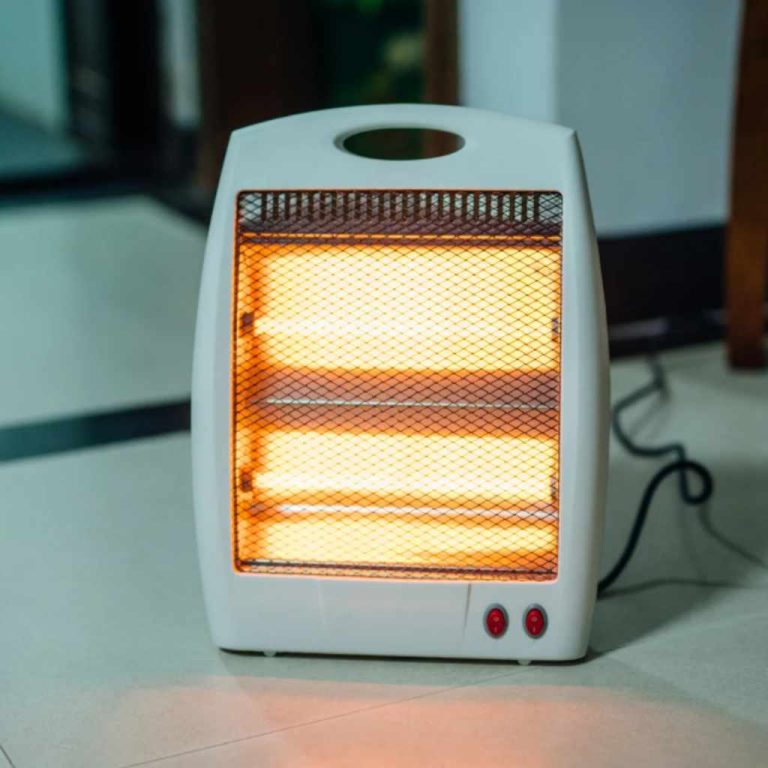
When we talk about “standard electric heaters,” we’re often referring to portable heaters that use a heating element (like a coil or ceramic plate) to generate heat directly. This heat is then pushed into the room, usually with the help of a fan. Think of portable ceramic heaters, fan heaters, or even simple radiant panel heaters. They are quick to heat up and start working almost immediately. The heat they produce is often more direct and can warm a person or object closer to the heater relatively quickly. However, once turned off, they stop producing heat instantly.
How a Standard Electric Heater Works:
- Electricity Heats Elements: Plugging it in sends electricity to a heating element (like a coil or ceramic plate).
- Direct Heat Production: The element gets hot very quickly.
- Heat Distribution: A fan often blows air over the hot element, pushing warm air into the room. Some radiant types heat surfaces directly.
- Immediate Stop: When you turn it off, the heating element cools down quickly, and heat production stops.
Oil Filled Heater vs. Electric Heater: A Detailed Comparison
Let’s dive deeper into how these two types of heaters stack up against each other. We’ll look at key factors that matter most to homeowners, like how quickly they heat a room, how much energy they use, safety features, and how much they cost to buy and run. This detailed comparison will help you see the strengths and weaknesses of each.
Heat Distribution and Comfort
This is where the biggest difference in feel often lies. Oil-filled heaters excel at providing a gentle, ambient warmth. Because the oil retains heat and releases it slowly, they create a more consistent and less dry heat. This can be particularly comfortable for longer periods, as it avoids that sharp, intense heat that some other heaters produce. The heat is often described as more natural and less likely to create drafts. Standard electric heaters, especially those with fans, can heat a room up faster. This is great if you just need a quick blast of warmth. However, the heat can sometimes feel very direct and might dry out the air more noticeably. The fan can also create a sense of air movement, which some people might not prefer.
Speed of Heating
If you need warmth right now, a standard electric heater often wins. A fan heater or a ceramic heater can start warming the air within seconds of being turned on. You’ll feel the hot air pushing out, and your immediate surroundings will feel warmer quickly. Oil-filled heaters take a bit longer to get going. They need time for the electricity to heat the oil, and then for that oil to heat the fins. This process can take 15-30 minutes or more, depending on the size of the heater and the room. So, for instant gratification, standard electric wins. For a slow and steady warmth that builds up over time, oil-filled might still be your best friend.
Energy Efficiency and Running Costs
This is a crucial point for many homeowners looking to manage their electricity bills. Both oil-filled and standard electric heaters are technically “100% efficient” in that they convert all the electricity they use directly into heat. However, efficiency in home heating is more about how that heat is used and retained. Oil-filled heaters have an advantage due to their heat retention. They can continue to radiate heat after being switched off, meaning they might cycle on and off less often to maintain a temperature, potentially saving energy over time.
Standard electric heaters stop producing heat immediately when turned off. If you have good insulation, either can be relatively efficient, but the sustained heat of an oil-filled unit can lead to lower overall energy consumption for maintaining a comfortable temperature throughout the day or night. For more on how to improve your home’s overall energy efficiency, you can check out resources from the U.S. Department of Energy at Energy.gov.
Portability and Placement
Most standard electric heaters are designed to be very portable. They are often smaller, lighter, and equipped with wheels or easy-to-carry handles, making them simple to move from room to room. Oil-filled heaters are also portable, but they tend to be heavier and bulkier due to the oil inside. While you can move them, they’re more suited for placement in a specific room where you want consistent heat. When placing any portable heater, always ensure there’s at least three feet of clear space around it, away from anything flammable like curtains, furniture, and bedding. This is a crucial safety tip for all types of portable heaters.
Noise Level
For those who value peace and quiet, this is an important consideration. Oil-filled heaters are generally very quiet. They operate using convection and radiant heat, with no fans involved in the direct heating process. You might hear a very faint click as the thermostat cycles on and off, but otherwise, they are virtually silent. Standard electric heaters, particularly fan-forced models, can produce a noticeable fan noise. While many newer models are designed to be quieter, the fan is still an active component. If you’re sensitive to noise, especially in a bedroom or office, the silent operation of an oil-filled heater might be a significant advantage.
Safety Features
Safety is paramount when using any heating appliance. Most modern heaters, both oil-filled and standard electric, come with built-in safety features. Anti-tip switches are common, which automatically shut off the heater if it’s knocked over. Overheat protection is also standard, preventing the unit from getting too hot. However, because oil-filled heaters stay hot for a while after being turned off, they might pose a slight burn risk if touched directly when still warm. Standard electric heaters can also have hot surfaces. Always supervise children and pets around any portable heater and ensure they don’t touch the hot parts. For detailed safety guidelines and certifications, you can refer to organizations like Underwriters Laboratories (UL) at ul.com/consumers.
Maintenance
Maintenance for both types of heaters is usually quite simple. The key is keeping them clean. Dust can accumulate on the fins of an oil-filled heater or on the heating elements and fan of a standard electric heater. This dust can then burn off, causing unpleasant odors and potentially reducing efficiency. For oil-filled heaters, simply unplug and wipe down the exterior and fins with a damp cloth when the unit is cool. For standard electric heaters, unplug the unit and carefully use a vacuum cleaner attachment or a soft brush to remove dust from any vents or coils. Neither type requires regular servicing from a professional, making them convenient, low-maintenance options.
Pros and Cons Table: Oil Filled Heater vs. Electric Heater
To give you a quick snapshot, here’s a table summarizing the main advantages and disadvantages of each type of heater. This can help you quickly see which one aligns better with your priorities.
| Feature | Oil-Filled Heater | Standard Electric Heater (e.g., Ceramic, Fan) |
|---|---|---|
| Heat Quality | Gentle, ambient, consistent, less drying. | Direct, quick, can be intense, may dry air. |
| Heating Speed | Slow to heat up, but provides sustained warmth. | Fast to start heating, immediate warmth. |
| Energy Efficiency (Perceived) | Good for maintaining consistent temperatures due to heat retention. | Efficient for quick heating, but stops when off. |
| Noise Level | Very quiet (virtually silent). | Can be noisy due to fan operation (varies by model). |
| Portability | Portable but often heavier and bulkier. | Generally very portable, lightweight, easy to move. |
| Safety Features | Tip-over switch, overheat protection. Remains warm after shut-off. | Tip-over switch, overheat protection. Hot surfaces. |
| Initial Cost | Moderate to high. | Low to moderate. |
| Best For | Long-term heating, bedrooms, offices, maintaining consistent warmth, quiet environments. | Quickly heating small spaces, supplemental heat, areas needing rapid warmth. |
When to Choose an Oil-Filled Heater
An oil-filled heater is an excellent choice for specific situations and needs. If you’re looking for a heater that provides a steady, comfortable warmth without drying out the air, and you don’t need instant heat, an oil-filled unit is likely a great fit for you. They are particularly well-suited for keeping a room at a consistent temperature throughout the day or night.
Ideal Scenarios for Oil-Filled Heaters:
- Bedrooms: Their silent operation and gentle, consistent heat are perfect for creating a cozy sleeping environment without causing dryness or noise distractions.
- Offices or Studies: Maintaining a comfortable, distraction-free workspace is key. The quiet and steady warmth of an oil-filled heater helps you focus.
- Living Areas for Extended Periods: If you’re in a room for several hours, an oil-filled heater can maintain a pleasant temperature without frequent adjustments.
- Homes with Dry Air Issues: People who find standard electric heaters too drying will appreciate the moist heat from an oil-filled unit.
- Garages or Workshops (Insulated): For spaces that need to be kept at a minimal, consistent temperature, an oil-filled heater can do the job efficiently once the initial temperature is reached.
- Supplemental Heating for Larger Rooms: While they take time to heat up, their sustained heat can supplement your main heating system in larger areas.
When to Choose a Standard Electric Heater
Standard electric heaters shine when speed and portability are your top priorities. If you need to heat a small space quickly or want a heater you can easily move around your home, a standard electric model might be the better option for you.
Ideal Scenarios for Standard Electric Heaters:
- Quick Warm-Up Needs: Getting ready in the morning, warming up a bathroom before a shower, or just taking the chill off a room quickly.
- Infrequently Used Rooms: For spaces you only use for short periods, like a small guest room or a home gym, where you need heat on demand.
- Temporary Heating: If your central heating is temporarily out of order and you need a quick solution for a specific room.
- Situations Requiring High Portability: If you need to move the heater frequently between different rooms or even different floors.
- Targeted Spot Heating: If you need to warm yourself directly, radiant electric heaters can be very effective for personal comfort.
- Budget-Conscious Initial Purchase: Standard electric heaters often have a lower upfront cost compared to oil-filled models.
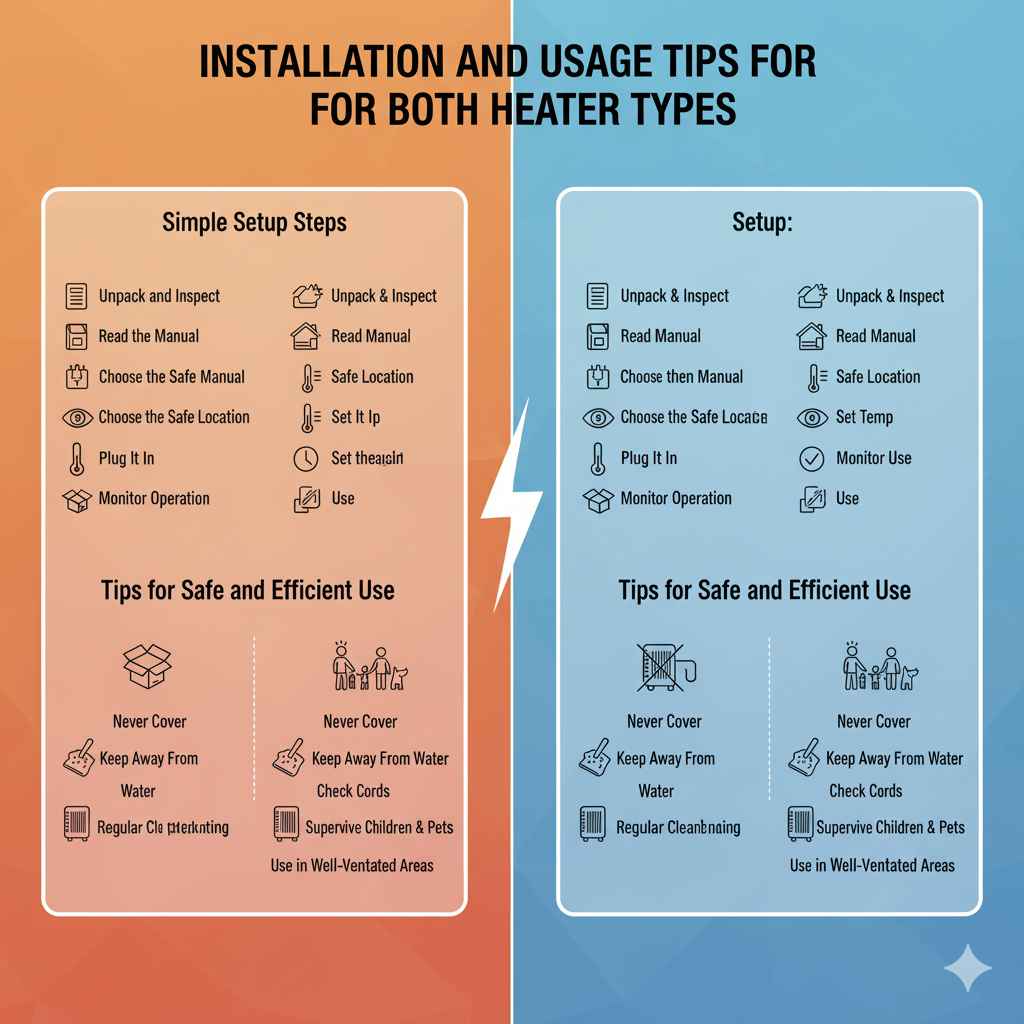
Installation and Usage Tips for Both Heater Types
Whether you choose an oil-filled heater vs. electric heater, proper installation and safe usage are crucial. The good news is that these portable heaters are designed for ease of use, requiring no complex setup.
Simple Setup Steps:
- Unpack and Inspect: Carefully remove the heater from its packaging. Check for any signs of damage that might have occurred during shipping.
- Read the Manual: Always take a moment to read the manufacturer’s instruction manual. It will have specific details for your model, including safety warnings and operating instructions.
- Choose a Safe Location: Place the heater on a firm, level, and stable surface. Ensure there is at least three feet (about one meter) of clear space around the heater. Keep it away from flammable materials like curtains, carpets, furniture, and bedding. Never place a heater near a doorway where it could be easily knocked over or near water sources like sinks or bathtubs.
- Plug It In: Connect the heater directly to a wall outlet. Avoid using extension cords if possible, as they can sometimes present a fire hazard if they are not rated for high-wattage appliances or if they are damaged. If you must use an extension cord, ensure it is heavy-duty and in good condition.
- Set the Temperature: Most heaters have a thermostat. Turn the dial or set the digital control to your desired temperature. For oil-filled heaters, you might notice it takes a little while to feel the heat. For standard electric heaters with fans, you should feel warm air almost immediately.
- Monitor Operation: Keep an eye on the heater as it operates, especially for the first few times you use it. Make sure it’s functioning correctly and that the space around it remains clear.
Tips for Safe and Efficient Use:
- Never Cover Your Heater: Blocking the vents or covering the heater can cause overheating and fire.
- Unplug When Not in Use: Always unplug the heater when you leave the room for an extended period, go to sleep, or if there’s a power outage.
- Keep Away from Water: Do not use portable electric heaters in bathrooms or other damp areas.
- Regular Cleaning: Dust build-up can be a fire hazard and reduce efficiency. Gently clean your heater regularly as per the manufacturer’s instructions.
- Check Cords: Periodically inspect the power cord for any fraying or damage. If the cord is damaged, discontinue use immediately.
- Supervise Children and Pets: Keep them at a safe distance from the heater.
- Use in Well-Ventilated Areas: While these heaters don’t produce carbon monoxide like fuel-burning heaters, ensuring good air circulation is always a good practice for comfort and safety.
Frequently Asked Questions (FAQ)
Here are some common questions about oil-filled heaters and electric heaters to help you feel confident in your choice.
Q1: Are oil-filled heaters more energy-efficient than standard electric heaters?
While both convert nearly 100% of electricity into heat, oil-filled heaters can feel more efficient for maintaining consistent warmth. Their ability to retain heat means they may cycle less often once a room is warm, potentially using less energy over a longer period compared to an electric heater that stops immediately when turned off.
Q2: Which type of heater is safer?
Both types, when used correctly and equipped with modern safety features like tip-over switches and overheat protection, are generally safe. Oil-filled heaters lack exposed hot coils, which can be an advantage. However, they retain heat longer, so caution is still needed around hot surfaces and by children/pets.