Good Front Speakers for Home Theater 2026: Top Picks for Buyers
Finding The Right Front Speakers For Your Home Theater
Setting up front speakers for a home theater can feel overwhelming. You want clear sound and deep bass without complexity or overspending. Many face decisions about size, placement, and sound quality that aren’t always straightforward.
Choosing front speakers means balancing factors like room size, sound preferences, and budget. Some speakers focus on rich bass, while others emphasize clarity and surround compatibility. It’s easy to get stuck between expensive options and simpler choices without knowing what truly matters.
This guide aims to simplify that process. We’ll help you understand the key points to consider when looking for good front speakers, so you can pick options that fit your home theater setup and listening style.
What Really Matters When Choosing Front Speakers
Good front speakers should deliver clear vocals and immersive sound. Think about how they will fit in your room and work with your existing equipment. Size and placement affect the experience as much as the technical specs. Consider whether you want wall-mountable options or freestanding models.
Sound balance is important. Some speakers provide deep bass, which adds impact to movies and music. Others focus on detailed mid and high ranges for dialogue clarity. Finding speakers that handle both well is key for a satisfying home theater experience.
Common Challenges Buyers Face
It’s easy to get confused by terms and technical details that don’t always translate to better sound. People often wonder if bigger speakers are always better or if premium features justify the price. Another common question is how to integrate front speakers with other parts of a surround system.
Also, buyers may struggle to find speakers that are easy to set up and compatible with their current receivers. Balancing quality with affordability and simplicity can be tricky without clear guidance.
Understanding these factors before choosing can save time and avoid disappointment.
Next, we’ll look at a selection of front speakers chosen for their sound quality, ease of use, and suitability for different home theater setups. These options cover a range of preferences and needs to help you find a good fit.
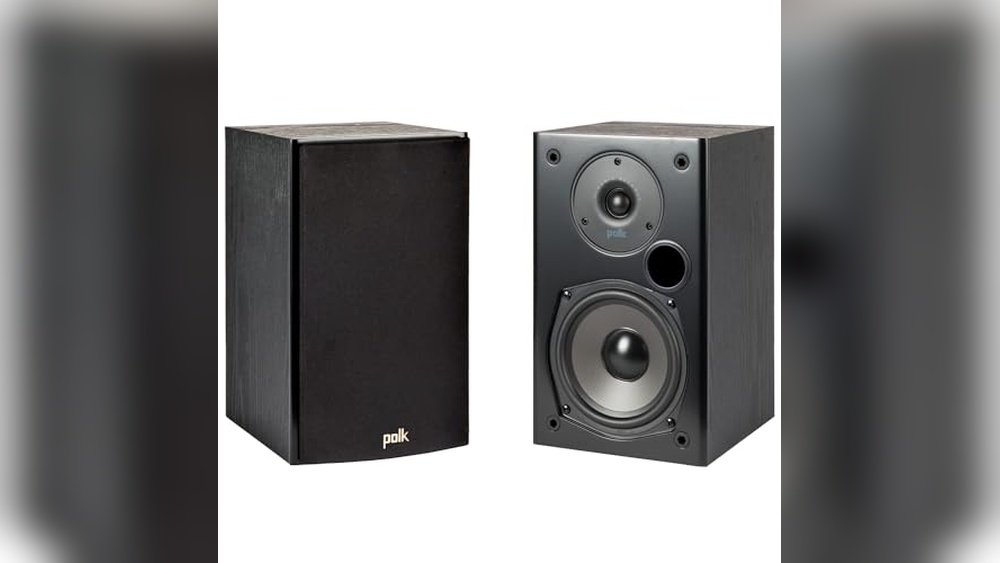
Polk Audio T15 Bookshelf Speakers
These are good front speakers for home theater setups, offering clear and balanced sound with deep bass for immersive listening.
The Polk Audio T15 are passive bookshelf speakers designed to deliver rich, immersive audio for home theater and stereo use. They feature a 0.75″ tweeter and a 5.25″ Dynamic Balance driver that provide clear vocals and balanced sound with deep bass, even at lower volumes. These speakers are wall-mountable and can be used as front, left-right, or rear speakers in a surround sound system.
Using the T15 speakers in a home theater setup feels straightforward and reliable. Setup is quick and easy—just connect speaker wires to your AV receiver. The sound quality remains consistent, making it a solid choice for anyone starting their home audio journey who wants a dependable and immersive listening experience without hassle.
Key Features for Home Theater Front Speakers
- Clear and balanced sound with deep bass for immersive audio
- Wall-mountable design offers flexible placement options
- Compatible with full 5.1 systems for future expansion
- Quick and simple setup with standard speaker wire connection
- Trusted brand with 50 years of home audio experience
- Compact bookshelf size fits well in most rooms
Considerations Before Buying
- Passive speakers require an AV receiver or amplifier to power them
- May need additional components for a complete surround system
- Not designed for standalone wireless use or Bluetooth connectivity
Who Should Consider These Speakers
The Polk Audio T15 speakers are best for beginners or budget-conscious users looking for good front speakers to start a home theater setup. They remove the guesswork and hassle of complicated installation, letting you focus on enjoying clear, immersive sound. For better results, pair them with compatible Polk Audio components as you expand your system.
These speakers offer peace of mind with a trusted brand behind them and straightforward use. If you prefer a no-fuss, reliable option that balances sound quality and ease of setup, the T15 is a practical choice.
| Best for | Why |
|---|---|
| Home theater beginners | Simple setup and balanced sound help start your audio journey |
| Wall-mount installations | Designed to be wall-mountable for flexible placement |
| Compact room setups | Bookshelf size fits well without overwhelming small spaces |
| Expandable surround sound | Works with Polk Audio’s 5.1 system components for future upgrades |
Klipsch R-41m Bookshelf Speakers
These are good front speakers for home theater setups, offering clear sound and efficient performance for small to medium rooms.
The Klipsch R-41M Bookshelf Speakers deliver solid audio for home theater front channels, helping to fill the room with clear sound. Their 4-inch spun-copper woofer and aluminum tweeter with Tractrix horn design work together to reduce distortion and enhance detail. This makes them a practical choice for users seeking good sound quality in a compact speaker.
Using these speakers provides a reliable and consistent listening experience without complicated setup. Their sensitivity and power handling make them versatile for everyday home theater use, ensuring sound is both rich and precise. They fit well in smaller spaces while maintaining a clean, balanced audio profile.
Key Advantages for Home Theater Sound
- Efficient LTS tweeter reduces distortion for clear highs
- Compact size fits easily on shelves or stands
- Good sensitivity ensures loud, detailed sound from modest power
- Durable construction with spun-copper woofer for solid bass
- Compatible crossover frequency supports smooth sound blending
- Reliable 8-ohm impedance matches most home theater receivers
Considerations Before Buying
- Limited bass depth compared to larger floor-standing speakers
- Power handling suits moderate volume levels, not very high output
- Best for smaller rooms due to size and driver dimensions
When This Makes Sense
These speakers are best for someone setting up a home theater in a small to medium room who wants clear front channel sound without bulky equipment. They remove the guesswork of compatibility thanks to their standard impedance and straightforward design.
For better results, position them at ear level and allow some space around for optimal sound dispersion. Their build quality and trusted Klipsch components offer peace of mind for consistent performance over time.
If you prefer a neat and efficient setup without sacrificing clarity, these speakers fit well into that approach.
| Best for | Why |
|---|---|
| Small to medium rooms | Compact size and suitable power handling for limited space |
| Budget-conscious home theater builders | Good sound quality without high cost or complexity |
| Users wanting clear dialogue and detailed highs | LTS tweeter design enhances clarity and reduces distortion |
| Those needing easy integration with standard receivers | Compatible 8-ohm impedance and common crossover frequency |
Klipsch R-52c Center Channel Speaker
A reliable choice among good front speakers for home theater, the Klipsch R-52C delivers clear, detailed sound for balanced dialogue and effects.
The Klipsch R-52C is a center channel speaker designed to improve clarity and detail in home theater setups. Featuring dual 5.25″ spun-copper woofers and a 1″ aluminum tweeter with a square tractrix horn, it handles a broad frequency range to enhance dialogue and sound effects. This speaker is built to support consistent, high-quality sound without overpowering the room.
Using the R-52C provides a balanced and immersive listening experience that complements other front speakers in your home theater. Its sensitivity and power handling ensure it performs well at various volume levels, making it easier to enjoy movies and shows with clear speech and dynamic sound.
Key Features for Home Theater Use
- Dual 5.25″ spun-copper woofers for detailed midrange and bass
- 1″ aluminum tweeter with 90×90 square tractrix horn for precise highs
- Wide frequency response from 89Hz to 21kHz covers essential audio range
- High sensitivity (95dB) ensures good volume with less amplifier power
- Handles up to 400 watts for dynamic sound without distortion
- Compact dimensions fit well in most home theater setups
- Black finish blends easily with typical AV equipment
Considerations Before Buying
- Specifically a center channel speaker, requires matching front left and right speakers for full setup
- Weighs 13.5 pounds, may need sturdy placement or mounting
- Does not include wireless or smart features
Where This Speaker Works Well
This speaker is ideal for home theater enthusiasts who want clear dialogue and detailed sound without complex installation. It removes guesswork by delivering consistent sound quality from a trusted brand, making setup straightforward. For best results, pair it with compatible Klipsch speakers to maintain tonal harmony.
It offers peace of mind with solid build quality and reliable performance, reducing concerns about sound inconsistencies or distortion during critical scenes. If you prefer a no-nonsense, effective center channel speaker, the R-52C is a practical choice to anchor your front sound stage.
| Best for | Why |
|---|---|
| Home theaters needing clear dialogue | Designed to enhance speech clarity with detailed midrange response |
| Users with existing Klipsch front speakers | Tonal match ensures smooth sound blending across channels |
| Those seeking reliable, wired speaker solutions | High power handling and sensitivity support consistent performance |
| Compact spaces requiring moderate-sized speakers | Dimensions fit well without overwhelming the room visually |
Understanding Your Speaker Setup Needs
Choosing the right speakers depends largely on your room size, listening habits, and existing audio equipment. Bookshelf speakers are versatile and suitable for smaller to medium rooms or as part of a larger surround sound system. Center channel speakers are designed primarily to enhance dialogue clarity in home theater setups.
Consider how you plan to use the speakers:
- For general music listening or smaller home theaters, bookshelf speakers provide balanced sound with good bass response without taking up much space.
- If you want clear and focused dialogue in movies, a dedicated center channel speaker is essential.
- Wall-mountable options can save space and improve sound dispersion in some room layouts.
Key Factors To Consider Before Purchase
Sound Quality vs. Room Acoustics
Speakers perform differently depending on the room’s size, shape, and furnishings. Hard surfaces may cause sound reflections, while soft furnishings absorb sound. Testing speaker placement and considering room acoustics can improve your listening experience more than just focusing on specifications.
Power Handling and Compatibility
Make sure your amplifier or AV receiver matches the speakers’ power handling capacity to avoid distortion or damage. Check the nominal impedance to ensure compatibility with your existing system.
Speaker Size and Placement
Larger speakers often deliver better bass but require more space. Smaller speakers fit easily on shelves or desks but may need a subwoofer for deeper bass. Wall-mountable options offer flexibility for placement but require proper installation.
Common Misconceptions When Choosing Home Speakers
Many buyers focus too much on specifications like wattage or frequency response numbers without considering practical listening conditions.
- Higher wattage does not always mean better sound; it relates to the speaker’s power capacity, not loudness quality.
- Frequency response ranges can be misleading if not paired with proper room setup and speaker placement.
- Assuming all speakers of the same category perform similarly ignores brand and design differences.
Tips For Setting Up Your Speakers
Positioning
Place bookshelf speakers at ear level and avoid corners to reduce bass distortion. Center channel speakers should be directly above or below your TV, aligned with ear level for optimal dialogue clarity.
Wiring and Connection
Use quality speaker wire and ensure secure connections to your receiver. Avoid running wires parallel to power cables to reduce interference.
Calibration
Use your AV receiver’s calibration tools or manual adjustment to balance speaker levels and optimize sound based on room acoustics.
Frequently Asked Questions
Can bookshelf speakers be used as part of a surround sound system?
Yes, bookshelf speakers are commonly used as front or rear speakers in surround sound setups due to their size and balanced sound.
Do I need a subwoofer with these speakers?
It depends on your bass preference and room size. Bookshelf speakers deliver decent bass, but a subwoofer enhances low-frequency performance significantly.
What is the importance of speaker sensitivity?
Sensitivity indicates how efficiently a speaker converts power into sound. Higher sensitivity means louder sound at lower power, useful for pairing with lower-powered amplifiers.
Are wall-mountable speakers harder to install?
They require proper mounting hardware and placement consideration but offer space-saving benefits. Installation complexity varies based on wall type and mounting system.
How important is the brand when selecting speakers?
Brand reputation can reflect build quality and sound consistency, but personal listening preference should guide your final choice.
Final Thoughts On Choosing Home Speakers
Selecting the right home speakers involves balancing your audio needs, room environment, and equipment compatibility. Focus on how you intend to use the speakers and the listening experience you want rather than just technical specs. Taking time to assess your space and system will lead to a more satisfying and lasting audio setup.