Shop Heater vs Warehouse Heater: Which Size and Type Fits?
Choose a shop heater for smaller, tighter spaces under about 5,000 to 10,000 cubic feet, and a warehouse heater for larger spaces with taller ceilings. Size it by volume, insulation, and ventilation, not floor area alone. Undersizing leaves cold zones and long run times, while oversizing wastes fuel, trips limits, or creates comfort and safety problems. This guide explains how to match heater type, output, power or fuel source, and duty cycle to garages, workshops, pole barns, and small warehouses.
| Decision factor | Shop heater | warehouse heater | Winner |
|---|---|---|---|
| Typical space | Garages, workshops, small bays, and part-time work areas | High-bay rooms, loading areas, and large open floors | Warehouse heater |
| Mounting and airflow | Portable units or small fixed units for spot heat | Mounted unit heaters or larger systems for whole-space coverage | Warehouse heater |
| Best duty cycle | Intermittent use and short warm-up periods | Longer runtime and broader coverage across the day | Tie |
| Fuel and power flexibility | More options for plug-in electric and portable propane | More often tied to hardwired electric, natural gas, or piped fuel | Shop heater |
| Whole-space heating in large volume | Poor fit once ceiling height and air volume climb | Built for larger cubic footage and higher mounting points | Warehouse heater |
Shop heater vs warehouse heater: the core trade-off
The main difference is not size alone. A shop heater is usually chosen for faster spot heat or intermittent use in a smaller volume, while a warehouse heater is chosen to move more heat through a larger, taller space and hold a steadier temperature over time.
If the room has high ceilings, frequent door opening, or large air leakage, the heating load rises quickly. That changes the answer more than square footage does. A 1,500-square-foot room with 8-foot ceilings is a very different job from the same floor area with 18-foot ceilings.
Comparison table: size, mounting, fuel, and duty cycle
The right pick depends on how much air must be heated, how often cold air enters, and whether the heater needs to sit near a work zone or cover an entire bay. Mounted heaters suit large volumes better. Portable units suit targeted heat better.
What changes when ceiling height and air volume increase
Heater output is usually discussed in BTU per hour, but the room volume tells you how much air must be warmed. Ceiling height multiplies the workload fast. That is why floor area alone can lead to undersizing in pole barns, warehouses, and tall garages.
As a rough planning step, calculate cubic feet by multiplying length × width × ceiling height. A 40 × 60 foot room with a 12-foot ceiling has 28,800 cubic feet, while the same floor with an 8-foot ceiling has 19,200 cubic feet. The taller room needs more output or a better heat distribution plan.
What size heater do you need?
Start with room volume, then adjust for insulation, air leakage, and door use. A heater that fits a sealed, insulated shop may fall short in a drafty warehouse with loading doors open several times an hour. The needed BTU output rises with colder outdoor air, higher ceilings, and faster heat loss.
How square footage and ceiling height change BTU needs
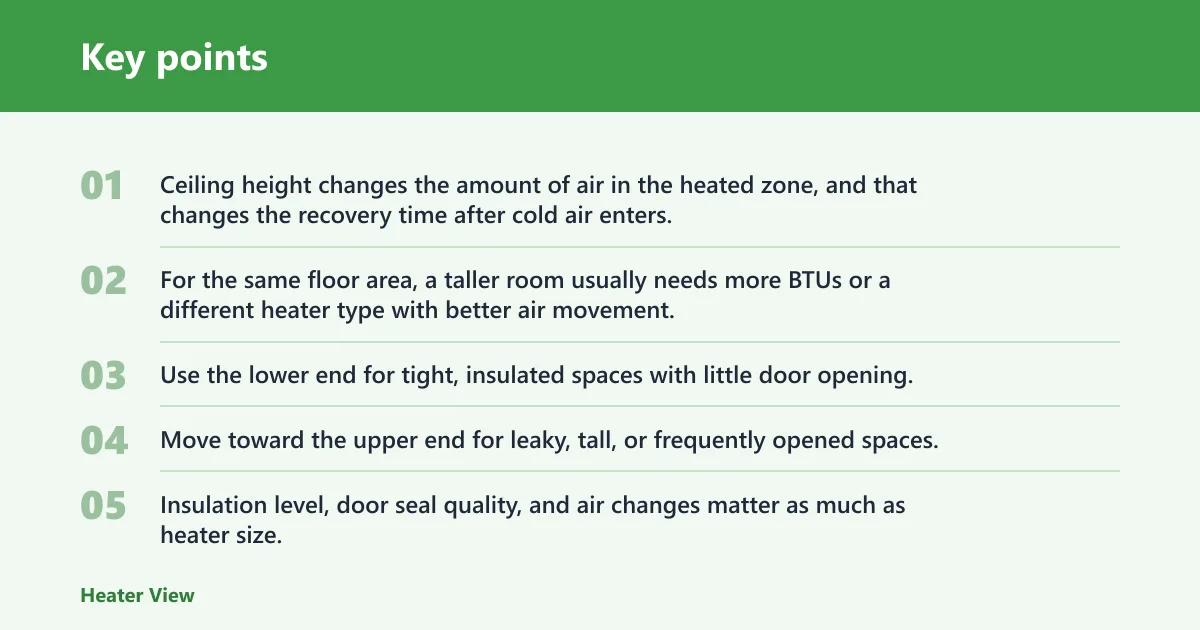
Square footage gives only the floor plane. Ceiling height changes the amount of air in the heated zone, and that changes the recovery time after cold air enters. For the same floor area, a taller room usually needs more BTUs or a different heater type with better air movement.
A common planning range for heated indoor spaces is about 20 to 50 BTU per square foot, but that is only a rough starting point and assumes a typical ceiling height. Use the lower end for tight, insulated spaces with little door opening. Move toward the upper end for leaky, tall, or frequently opened spaces.
How insulation, air leakage, and door openings affect recovery time
Insulation level, door seal quality, and air changes matter as much as heater size. A room with good wall and roof insulation holds heat longer and recovers faster after a door cycle. A room with poor seals can lose the heated air before it becomes useful at the bench or aisle.
Suppose a 600-square-foot garage has a 10-foot ceiling, average insulation, and a large overhead door that opens often. A portable unit may warm the work zone for a short task, but a ceiling-mounted unit heater will usually recover faster after each door opening.
Heater sizing checklist
Use this checklist before you choose a heater type. It keeps the decision tied to the actual space instead of to floor area alone.
| Check item | What to note | How it affects heater choice |
|---|---|---|
| Room area | Length × width in square feet | Sets the first BTU estimate |
| Ceiling height | Average height in feet | Raises or lowers room volume |
| Insulation level | Walls, roof, and door R-value or quality | Affects heat loss and runtime |
| Door-opening frequency | Rare, occasional, or frequent | Changes recovery time and oversizing risk |
| Occupancy pattern | Spot work, part-time use, or all-day use | Points toward portable, infrared, or mounted heat |
| Power or fuel availability | 120V, 240V, gas line, or propane supply | Limits which heater types are realistic |
| Safety limits | Clearance, ventilation, and code constraints | Rules out some vent-free or high-temperature options |
-
Measure the volume.
Multiply length by width by ceiling height to estimate volume. Use cubic feet, not just square feet, because tall rooms need more heat input for the same floor area. -
Rate the envelope.
Note whether the walls, roof, and doors are well insulated, average, or poor. Better R-value and tighter seals lower the BTU demand and shorten recovery time. -
Count door events.
Estimate how often large doors open and how long they stay open. Frequent openings push the choice toward higher output and faster recovery. -
Match power or fuel.
Check whether the space has enough electrical capacity, a safe propane setup, or a natural gas line. If those limits do not fit the space, the heater choice changes.
Which heater type fits each space?
Different heater types solve different problems. A shop heater is often the better fit for a garage or workshop that needs targeted heat. A warehouse heater is better when the goal is to warm a large air mass, often from a mounted location, and hold that temperature across the full space.
Shop heater for garages and workshops
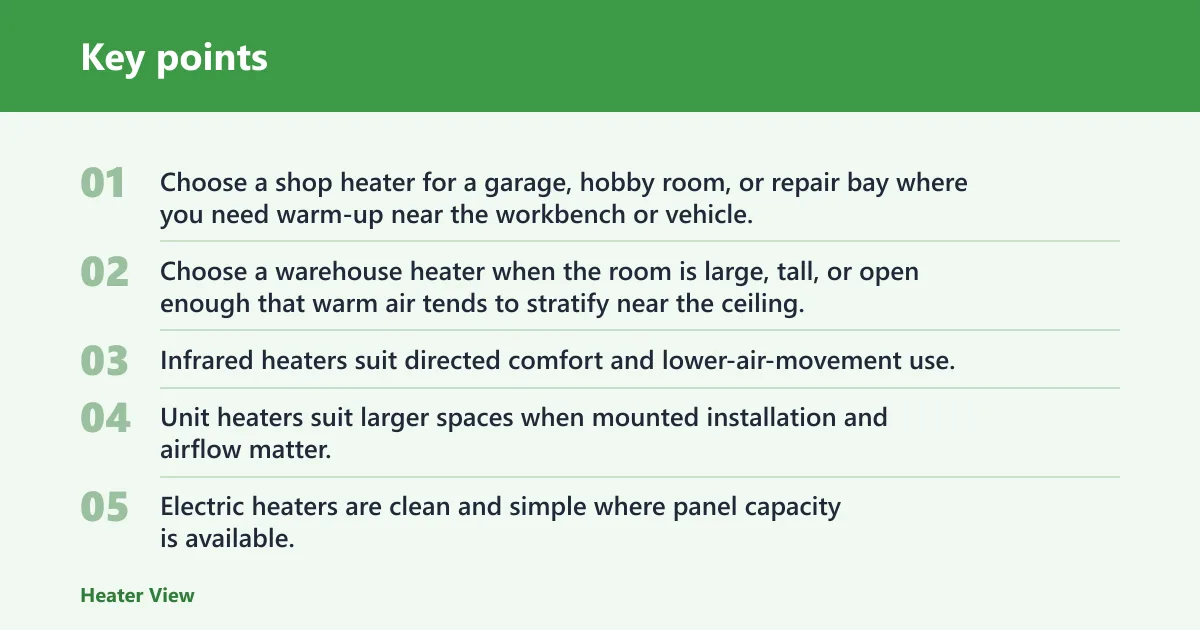
Choose a shop heater for a garage, hobby room, or repair bay where you need warm-up near the workbench or vehicle. Portable units are useful when the task moves, but they are not the best answer for high ceilings or all-day whole-room heating.
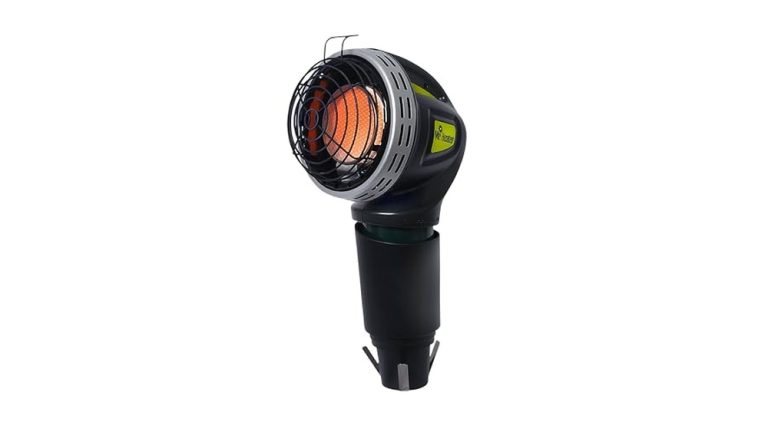
Infrared heaters are often a strong fit here because they warm people and objects in a directed zone instead of trying to heat every cubic foot. That helps in low-air-movement spaces and in areas with short, intermittent use.
Warehouse heater for high-bay and large-volume spaces
Choose a warehouse heater when the room is large, tall, or open enough that warm air tends to stratify near the ceiling. Mounted unit heaters are common because they can move heated air through the space and reduce cold spots better than a small portable unit.
These spaces often need a stronger recovery after door openings and may run longer during the day. That makes a whole-space heater more practical than a spot heater aimed at one workstation.
Infrared, unit, electric, propane, and natural gas options
Infrared heaters suit directed comfort and lower-air-movement use. Unit heaters suit larger spaces when mounted installation and airflow matter. Electric heaters are clean and simple where panel capacity is available. Propane heaters are portable but need ventilation. Natural gas heaters fit fixed spaces with a gas line and vented combustion.
A common first-timer mistake is buying a portable propane unit for a drafty 2,000-square-foot pole barn and expecting even whole-space heat. That can work for short tasks near the heater, but it rarely behaves like a true warehouse heating setup.
How do fuel and power limits change the choice?
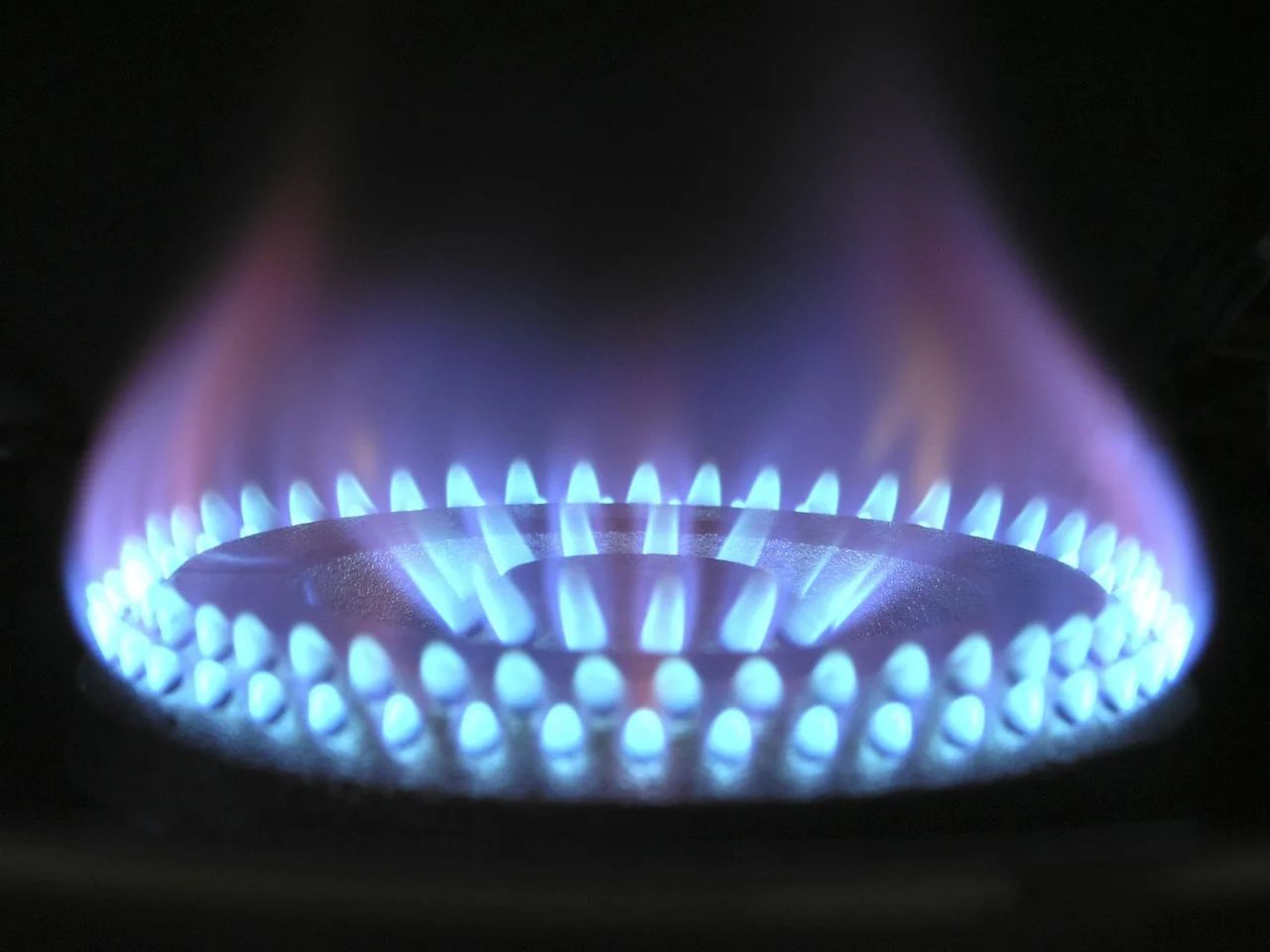
Fuel and power availability can decide the answer before BTU size does. A high-output electric heater may look simple on paper, but it can fail the panel-capacity check. A propane heater may produce strong heat, but it adds ventilation and fuel-handling requirements. A natural gas heater may be ideal only if the building already has the line and vent path it needs.
Electric heaters: voltage, amperage, and panel capacity
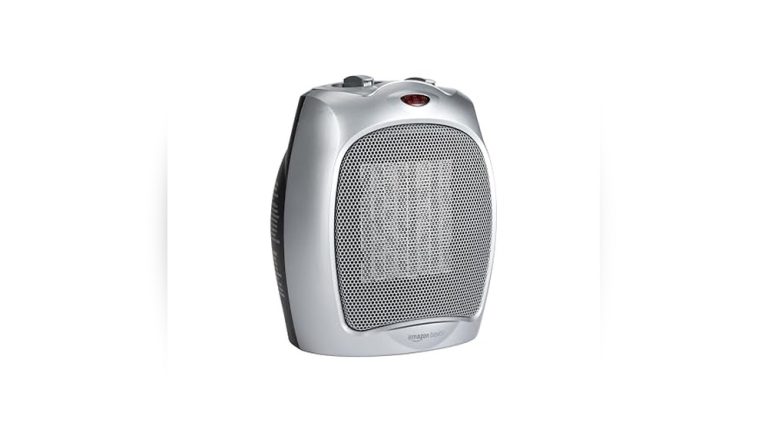
Electric heaters are clean at the point of use and are often easier to place in finished spaces. The limiting factors are voltage, amperage, and available breaker space. A plug-in 120V unit is usually for smaller jobs, while larger shop and warehouse heaters often require 240V or hardwired installation.
Before choosing electric heat, check panel capacity and circuit loading. A heater that exceeds available amperage is not a real option, even if the BTU rating looks right.
Propane heaters: ventilation and indoor safety
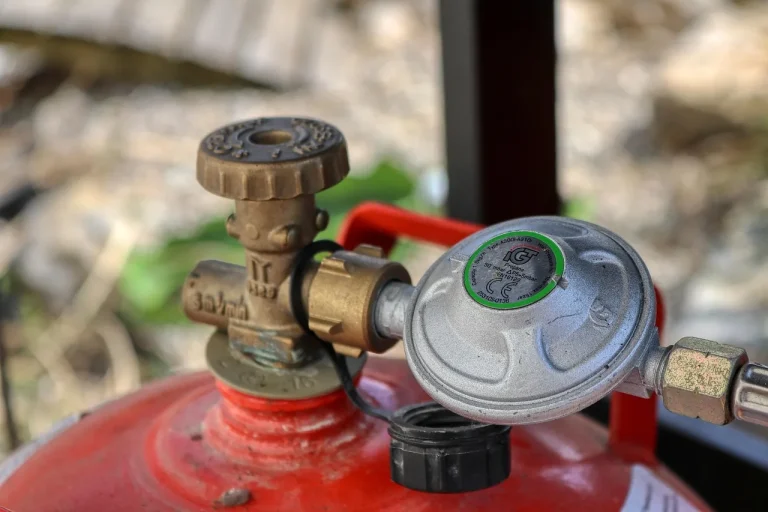
Propane heaters can be portable and high-output, which makes them useful where electric service is limited. They also need ventilation because combustion creates moisture and, depending on the design, can create a carbon monoxide risk. Clearance to combustibles matters, and indoor use must follow the heater’s listing and the building’s code rules.
How much ventilation does a propane shop heater need? Follow the manufacturer’s minimum fresh-air requirement and the local code, because the safe amount depends on the heater type and whether it is vented or unvented. For indoor use, do not treat a closed room as acceptable just because the heater lights.
Natural gas heaters: vented combustion and installation needs
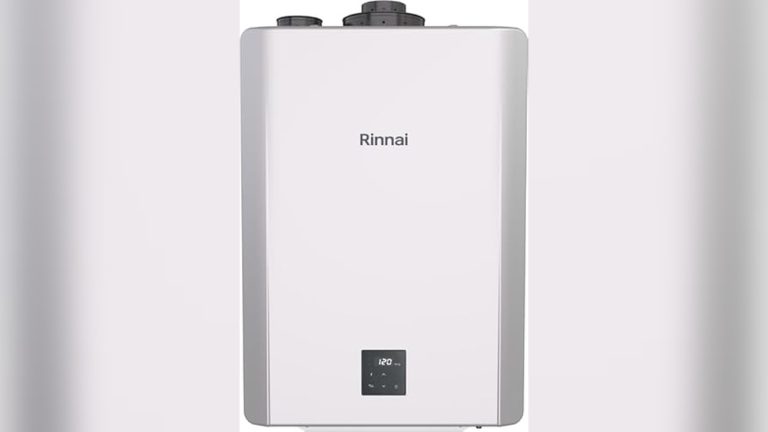
Natural gas heaters are a strong fit where piped fuel is already available and a permanent installation makes sense. They usually need vented combustion or a listed installation method, and they often work best in spaces that stay occupied for long stretches.
These heaters tend to make more sense for mounted, whole-space heat than for portable spot warming. Installation is more involved, but running cost is often better when the heater is used often and for longer periods.
Choose shop heater or warehouse heater if…
Choose a shop heater if the space is smaller, the heat demand is local, or the heater only needs to run for part of the day. Choose a warehouse heater if the room is tall, open, and used long enough that mounted whole-space heat is worth the added installation effort.
Choose a shop heater if you need spot heat or intermittent use
- You work in a garage, small workshop, or part-time bay.
- You need warm-up at a bench, vehicle, or single work zone.
- Your ceiling is modest and the room volume stays manageable.
- Your electrical service or fuel setup is limited.
Shop heaters are a better fit when the job is to warm the person and the work area, not the entire building. Infrared and compact unit options often fit this pattern well.
Choose a warehouse heater if you need mounted, whole-space heat
- Your building has high ceilings or a large open volume.
- Doors open often and the space must recover heat quickly.
- You need even heat across aisles, storage, or loading areas.
- You can support mounted equipment, venting, or a stronger fuel supply.
Warehouse heaters are the better match when one small portable unit would leave cold zones or long warm-up times. A mounted unit heater or similar fixed system usually handles the load more effectively.

- Hardwired 240V electric heater
- Three heat settings for flexibility
- Ceiling mount saves floor space
Frequently asked questions
What size heater do I need for a shop or warehouse?
Use room volume first: length × width × ceiling height. Then adjust for insulation, door cycling, and occupancy. A tight, low-ceiling shop may work with a lower BTU range, while a tall warehouse often needs substantially more output to overcome air volume and recovery losses.
How many BTUs do I need for a garage workshop?
A garage workshop often falls in a moderate BTU range if the walls and doors are reasonably insulated and the ceiling is standard height. Start with a rough 20 to 50 BTU per square foot guide, then move upward for high ceilings, drafts, or frequent door openings.
Is a shop heater or warehouse heater better for a pole barn?
It depends on size, height, and leakage. A small, tight pole barn used for spot work can fit a shop heater, especially with infrared or targeted heat. A larger pole barn with tall sides, loose doors, or all-day use usually needs a warehouse heater or mounted unit heater.
What type of heater is safest for a warehouse?
The safest choice is the one that fits the building’s code, venting, and clearance rules. In many warehouses, a listed, properly mounted, vented unit heater is safer than an unvented portable fuel heater because it avoids indoor exhaust accumulation and reduces clearance problems around stored materials.
Can a portable heater heat an uninsulated shop?
It can add useful spot warmth, but whole-space comfort is unlikely in a drafty, uninsulated shop. Air leakage and low R-value increase heat loss faster than a small portable heater can recover. For short tasks, targeted heat may be enough; for full-room comfort, a stronger fixed system usually works better.
What is the difference between a unit heater and a portable shop heater?
A unit heater is usually mounted overhead or on a wall and uses forced air to heat a larger area. A portable shop heater sits on the floor or a cart and is better for flexible, local heat. The mounted option better suits whole-space heating; the portable option suits short, movable jobs.