
Sometimes car parts get clogged up. Your heater core can be one of those parts. If your car’s heater isn’t blowing hot air, a blocked heater core might be the problem.
Many people wonder about How to Flush a Heater Core with a Garden Hose because it sounds like a simple fix. For beginners, the idea can feel a bit tricky, with many steps to remember. But don’t worry!
We’ll break it down into easy steps that anyone can follow. Get ready to learn a simple way to clear that heater core and get warm air back in your car.
Why Flush A Heater Core With A Garden Hose
A heater core is a small radiator inside your car’s dashboard that heats the cabin air. Over time, rust, sludge, and mineral deposits can build up inside it, blocking coolant flow. This blockage stops the hot coolant from reaching the heater core, which means you get no warm air.
Flushing it is a way to clear out these blockages. It’s a common DIY fix because it uses simple tools, like a garden hose, and can save you money compared to replacing the heater core. Many car owners try this method when they notice their car’s heater performance dropping.
Recognizing A Clogged Heater Core
A blocked heater core usually shows itself in a few clear ways. The most obvious sign is weak or no heat coming from your car’s vents, even when the engine is fully warmed up. You might also notice a sweet, syrupy smell inside your car, which could indicate a coolant leak from the heater core.
Sometimes, the windows might fog up quickly, especially on the inside, because of moisture from a small leak. If you hear a gurgling sound from behind the dashboard, that can also point to air or coolant trapped in the heater core system.
It’s important to catch these signs early. A small blockage can worsen over time, potentially leading to more serious cooling system issues. Ignoring a clogged heater core might eventually force you to replace the entire unit, which is a much bigger and more expensive job.
Looking for these symptoms is the first step to deciding if a flush is needed.
Signs Of A Failing Heater Core
- No heat or very little heat from the vents.
- A sweet, coolant smell inside the car.
- Windows fogging up on the inside.
- Coolant leaks under the dashboard.
- Gurgling noises from the heater area.
These signs mean your heater core isn’t working as it should. A clogged heater core means coolant can’t flow through it properly. This coolant is what carries the engine’s heat to your car’s cabin.
When the flow is blocked, that heat doesn’t reach the air that blows on you.

How To Flush A Heater Core With A Garden Hose Step By Step
This section guides you through the process of clearing out your car’s heater core using a garden hose. It’s a direct method to remove common blockages. We’ll go through each step clearly so you can do it yourself.
Preparing Your Vehicle For The Flush
Before you start flushing, make sure your car is ready. You’ll need to gather a few things. Safety first is always a good idea when working on your car.
You’ll want safety glasses to protect your eyes from any coolant splashes. Gloves are also smart to keep your hands clean and protected.
Locate your car’s coolant reservoir. This is usually a clear plastic tank with markings for ‘cold’ and ‘hot’ levels. You’ll need to let the engine cool down completely before starting.
Working on a hot engine can cause serious burns.
Identifying Heater Core Hoses
The heater core is connected to your car’s cooling system by two rubber hoses. These hoses run from the engine bay into the firewall, which is the metal panel separating the engine from the passenger cabin. One hose brings hot coolant from the engine to the heater core, and the other returns cooler coolant back to the engine.
Finding them is often straightforward. Look for two hoses that go through the firewall. They are usually similar in size.
Sometimes, they might have labels or be routed in a way that makes them easy to spot. If you’re unsure, consulting your car’s service manual is a good idea.
Disconnecting The Heater Hoses
Once you’ve found the hoses, you’ll need to disconnect them from the heater core. This usually involves loosening hose clamps. These clamps hold the hoses tightly onto the fittings of the heater core.
You might need a screwdriver or a pair of pliers to loosen them. Gently twist and pull the hose off the fitting.
Be prepared for some coolant to spill out when you disconnect the hoses. It’s a good idea to have a drain pan or bucket ready underneath to catch it. Make sure the engine is cool before you do this to avoid hot coolant spraying out.
Flushing The Heater Core
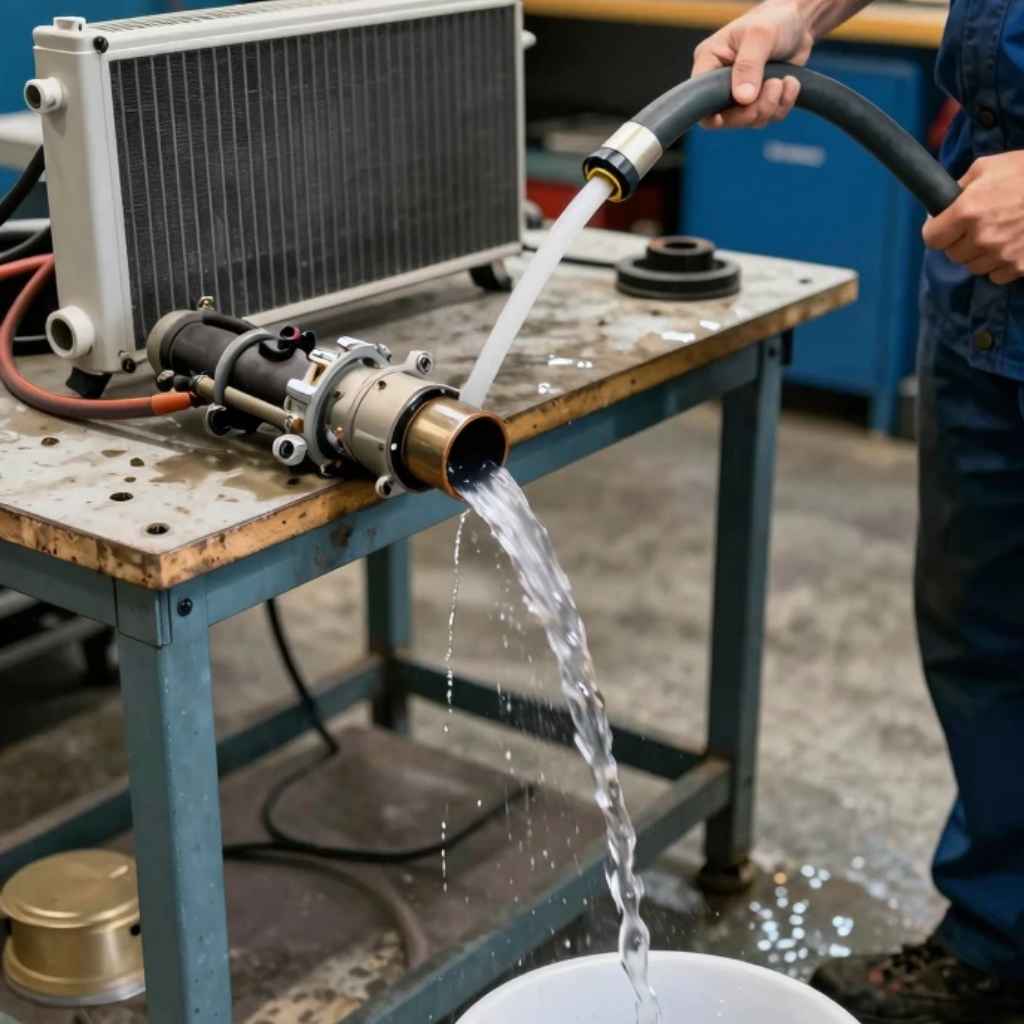
With the hoses disconnected, you can now start flushing. Take your garden hose and attach it firmly to one of the heater core fittings. Turn on the water.
Let the water run through the heater core for a few minutes. You should see dirty water coming out of the other disconnected heater hose. Continue flushing until the water runs clear.
This process pushes out the built-up debris and gunk. Sometimes, you might need to switch the direction of the water flow. Connect the hose to the other fitting and repeat the flushing process.
This helps ensure all parts of the heater core are cleared out.
Reconnecting And Refilling
After flushing, it’s time to put everything back together. Reattach the heater hoses to their original fittings. Make sure to tighten the hose clamps securely to prevent any leaks.
Then, you need to refill your car’s cooling system.
Use a mixture of coolant and distilled water, typically a 50/50 ratio, unless your car’s manual specifies otherwise. Slowly pour the coolant into the coolant reservoir until it reaches the ‘cold’ fill line. You will also need to bleed air from the system.
This is crucial to ensure proper coolant circulation.
Troubleshooting Common Issues During The Flush
Even with the best preparation, things can sometimes go wrong when you’re trying to flush a heater core. It’s good to know what to do if you run into a problem. These issues are usually fixable with a little patience and the right approach.
Stubborn Hose Clamps
Hose clamps can sometimes be difficult to loosen, especially on older vehicles. They can rust or get stuck over time. If a clamp won’t budge, try using a penetrating oil.
Spray it around the clamp and let it sit for a few minutes. This can help break down any rust or corrosion.
Gentle wiggling or tapping the clamp with a tool can also help loosen it. Avoid using excessive force, as you could damage the fitting or the hose. If the clamp is completely seized, you might need to cut it off carefully with wire cutters or a small hacksaw blade, being sure not to nick the hose or fitting beneath it.
Persistent Blockages
If the water still doesn’t run clear after extended flushing, the blockage might be very severe. In some cases, a chemical flush might be needed. There are commercial heater core flush products available.
These use chemicals to dissolve rust and scale.
Follow the product instructions carefully. They usually involve adding the flush agent to the cooling system and running the engine for a set period. After the chemical flush, you must thoroughly flush the system with plain water to remove all traces of the chemical.
Failing to do this can cause damage to your cooling system components.
Coolant Leaks After Flushing
If you notice leaks after reassembling, double-check the hose clamps. Ensure they are tightened evenly around the hose and fitting. Sometimes, a hose itself might be old and cracked.
If a hose looks damaged, it’s best to replace it.
Make sure the fittings on the heater core are not damaged or corroded. A small leak can also be caused by an improperly seated hose. Releasing pressure in the system by slightly loosening a clamp then re-tightening can sometimes help it seal better.
Keep a close eye on the coolant level after the flush.
Alternative Methods For Heater Core Cleaning
While using a garden hose is a popular and often effective method, there are other ways to clean a heater core. These can be useful if the garden hose method isn’t sufficient or if you prefer a different approach. Each has its own benefits and is worth considering.
Using Compressed Air
Compressed air can be a powerful tool for dislodging stubborn debris within the heater core. After disconnecting the hoses, you can attach an air compressor nozzle to one of the heater core fittings. Use short bursts of air to blow out the blockages.
This method can be very effective at pushing out dried sludge or sediment.
It’s important to wear safety glasses as debris can be blown out with force. Also, be careful not to use excessively high pressure, as this could potentially damage the delicate fins within the heater core. If you don’t have an air compressor, you might be able to rent one from a tool rental shop.
Chemical Flush Products
Specialized chemical flush solutions are designed to break down rust, scale, and other deposits that clog heater cores. These products are added to the cooling system, and the engine is run for a period according to the product’s instructions. The chemicals work to loosen and dissolve the contaminants.
After the recommended run time, the system is thoroughly flushed with water. It’s crucial to remove all traces of the chemical flush agent afterward. Leftover chemicals can corrode cooling system components.
Always follow the manufacturer’s directions precisely for the best and safest results.
Professional Service
If you’re uncomfortable performing the flush yourself, or if the DIY methods don’t work, seeking professional help is a good option. A mechanic has specialized tools and knowledge to diagnose and fix cooling system issues. They can perform a thorough flush or recommend replacement if the heater core is beyond repair.
While this costs more than a DIY job, it ensures the work is done correctly and safely. Professionals can also identify other related issues that you might miss. Sometimes, a professional flush might involve different equipment that offers a more powerful cleaning action.
Benefits Of A Clean Heater Core
- Restores proper heating in the cabin.
- Improves defroster performance.
- Prevents potential coolant leaks from strain.
- Extends the life of the heater core.
- Saves money on costly repairs or replacement.
A clean heater core means your car’s heating system works as it should. This is important for comfort during cold weather. It also helps with clear visibility by allowing the defroster to work effectively.
When To Consider Replacing The Heater Core
While flushing is often a successful fix for a clogged heater core, it’s not always the solution. There are times when the heater core is damaged beyond repair. Knowing when to switch from flushing to replacement is key to solving the heating problem permanently.
Signs Of A Damaged Heater Core
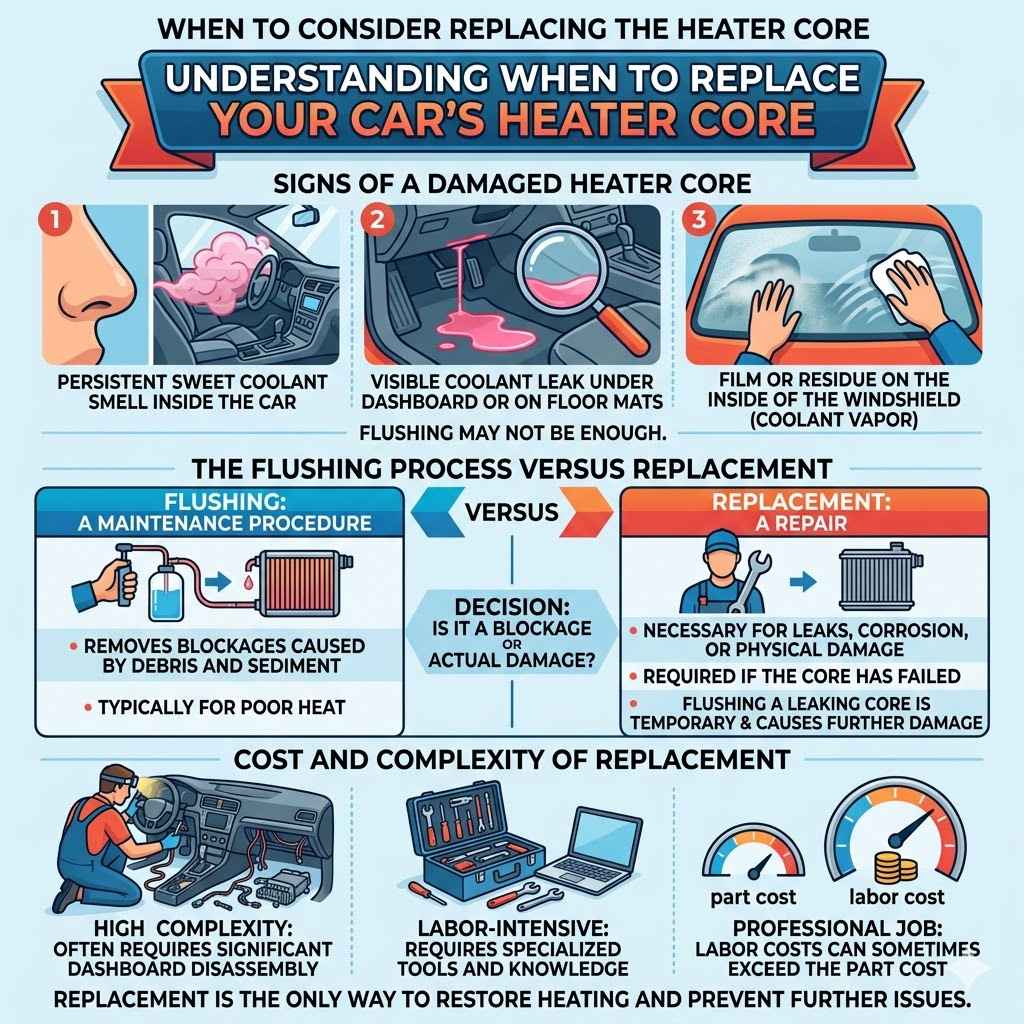
Beyond just being clogged, a heater core can develop actual physical damage. A common sign of a damaged heater core is a persistent, sweet smell of coolant inside the car, often accompanied by a visible leak of coolant under the dashboard or on the passenger side floor mats. This indicates that the heater core itself is leaking fluid.
You might also notice a film or residue on the inside of your windshield, which is coolant vapor. If the coolant level in your reservoir drops significantly over time without any other apparent leaks in the system, the heater core could be the culprit. These are signs that flushing might not be enough.
The Flushing Process Versus Replacement
Flushing is a maintenance procedure. It removes blockages caused by debris and sediment. Replacement is a repair.
It’s necessary when the heater core has failed due to leaks, corrosion, or physical damage. If you flush a leaking heater core, you might temporarily improve heat, but the leak will continue, potentially causing more damage.
A clogged heater core typically results in poor heat. A leaking heater core results in coolant loss and potential interior damage. The decision between flushing and replacing depends on whether the issue is a blockage or actual damage to the unit.
Cost And Complexity Of Replacement
Replacing a heater core is generally a more involved and costly repair than flushing it. It often requires removing a significant portion of the car’s dashboard to access the heater core. This can be labor-intensive and requires specialized tools and knowledge.
The cost of the part itself can also be a factor.
Because of the complexity, many people opt to have a professional mechanic perform the replacement. The labor costs can sometimes exceed the cost of the part. However, if the heater core is severely damaged, replacement is the only way to restore proper heating and prevent further issues.
In some vehicles, the heater core is located in a more accessible spot, making
Frequently Asked Questions
Question: How often should I flush my heater core
Answer: Flushing your heater core is not a routine maintenance item for most vehicles. It’s typically done only when you notice a problem with your car’s heating system, such as a lack of heat. If your heating system works well, there’s usually no need to flush it.
Question: Can I use plain water to flush the heater core
Answer: Yes, plain water from a garden hose is the primary flushing agent. However, after flushing with water, it is essential to refill your cooling system with the correct mixture of coolant and distilled water to protect your engine and prevent freezing.
Question: Will flushing fix a heater core that is leaking
Answer: No, flushing is designed to clear blockages. If your heater core is leaking, flushing will not repair the leak. In fact, continuing to run the engine with a leaking heater core can worsen the damage and lead to more costly repairs.
Question: What are the risks of flushing a heater core
Answer: The main risks involve potential coolant spills, which can be harmful if ingested by pets or children. Also, if done incorrectly, you could damage hoses or fittings. Ensuring the engine is cool before starting and having a drain pan ready minimizes these risks.
Question: How long does it take to flush a heater core
Answer: The actual flushing process, once the hoses are disconnected, typically takes about 30 minutes to an hour. This includes the time spent flushing in both directions until the water runs clear, and then reconnecting and refilling the system.
Conclusion
You now know how to flush a heater core with a garden hose. This method can clear blockages and restore warm air to your car. Remember to work safely and follow the steps carefully.
If your heater core is leaking, flushing won’t help, and replacement might be needed.