Infrared Patio Heater vs Gas Patio Heater: Which Works Outdoors?
Infrared patio heaters work best for seated people in breezy, targeted setups because the heat stays aimed at the bodies and surfaces in the beam. Gas patio heaters fit larger, more open groups because they spread heat wider, but they lose comfort faster when airflow gets strong. This guide compares both by layout, exposure, mounting, and fuel access.
| Decision factor | Infrared patio heater | Gas patio heater | Winner |
|---|---|---|---|
| Best outdoor layout | Best for covered patios, porches, balconies, and seating that stays under the beam. | Best for large, open, uncovered patios and decks. | Depends on layout |
| Wind exposure | Less affected by moving air because it sends radiant heat directly to people and objects, so it holds comfort better for seated bodies in targeted setups. | Warm air drifts away faster outdoors, so wind reduces comfort sooner, especially around wide-open seating. | Infrared patio heater |
| Heat spread | Directional. Comfort drops outside the beam or when seating shifts out of line of sight. | Wider area output, with more raw heat available for open seating zones. | Gas patio heater |
| Running cost | About $0.28 an hour for a 1,500-watt example. | About $1.15–$2.00 an hour for a propane example. | Infrared patio heater |
| Safety and installation | No open flame and usually works from a standard outlet. | Needs clearances and ventilation, especially on covered or semi-enclosed patios. | Infrared patio heater |
Infrared patio heater vs gas patio heater: the short answer
Infrared patio heater usually wins for covered, partially sheltered, or tightly arranged seating because it sends radiant heat straight to the people in front of it. Gas patio heater usually wins for open, windy spaces where a broader heat spread matters more than precision. The right choice follows your layout, not your fuel preference.
How each heater warms outdoor air
Infrared heat and line of sight
Radiant heat warms people and objects directly, so it depends on line of sight and aiming. That makes it less affected by air movement than warm air is, which is why infrared tends to hold up better on a porch, under a roof, or beside a wall where the beam can stay on the seating area.
Most electric infrared patio heaters use watt ratings, and competitor examples include 1,500 W, 1,800 W, and 2,300 W units. One comparison example is about 5,100 BTU, but watts and BTU are not directly comparable without context, so the number alone does not tell you which heater feels stronger in a real patio layout. For electricity cost, the usual estimate comes from power draw, local rate, and time used.
Gas heat, airflow, and wind loss
Gas patio heaters rely more on convection-style warming, which means heated air has to stay in place long enough to matter. Outdoors, that warm air drifts away, and wind strips comfort faster in fully open areas. That is why gas models are usually the stronger match for wide, uncovered decks and patios with fewer walls.
Competitor examples put gas patio heaters at about 38,000 to 61,000 BTU. Cool Group also lists a pyramid patio heater with heat radiation of 20 sqm and a mushroom patio heater with power of 5-13 kW, which shows how gas output is often aimed at covering more open space than a small electric unit.
Patio heater decision matrix
| Outdoor setup | Wind exposure | Seating layout | Power or fuel access | Typical heater placement | Recommended distance to seating | Common comfort failure by layout | Simple recommendation | Best if |
|---|---|---|---|---|---|---|---|---|
| Covered porch table | Low to moderate | Fixed table seating under a roof | Standard outlet nearby | Wall, ceiling, or corner mount aimed across the table | Close enough that the beam stays on seated bodies, not empty air | Gas may be excessive and needs more clearance than the space gives | Infrared patio heater | Use infrared when the table stays put and the seating does not shift much. |
| Open deck lounge | High | Loose seating spread across a larger area | Propane tank space available | Freestanding unit placed near the center or edge of the seating zone | Near enough to cover the chairs without forcing people into the hottest spot | Infrared can feel weak outside its beam and loses reach at the edges | Gas patio heater | Use gas when you need broader reach across a wide, open lounge. |
| Partially sheltered patio | Moderate | Mixed seating near one side wall or corner | Either outlet or tank access | Placed to face the seated area without wasting heat into open space | Close enough to keep the occupied zone inside the effective heat path | Heat can drift if the seating is too far from the source or around a corner | Infrared patio heater if seating is tight; gas patio heater if the area is broad | Use infrared for a tighter corner setup; use gas when the sheltered zone opens up. |
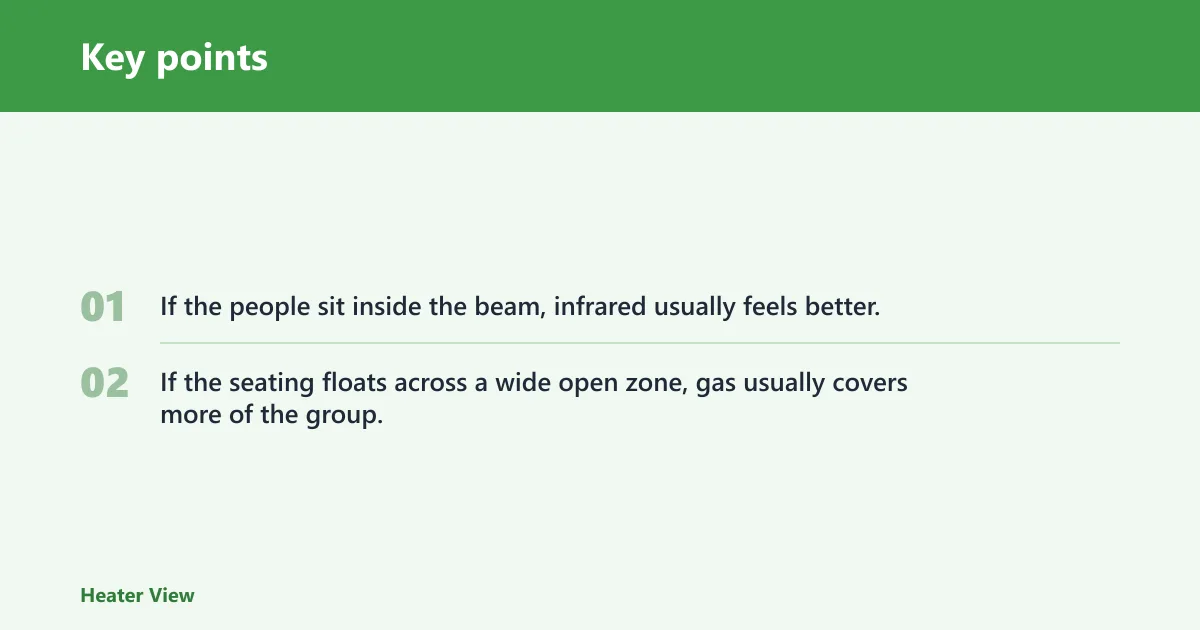
That matrix is the practical test. If the people sit inside the beam, infrared usually feels better. If the seating floats across a wide open zone, gas usually covers more of the group.
Which works better in wind?
Infrared patio heater usually works better in wind when the goal is to keep seated people comfortable in a targeted setup. Gas patio heater can still be the better choice for larger, open groups, but airflow strips its comfort faster. So the rule is simple: infrared for focused seating, gas for broader coverage.
Open deck edges
On an exposed deck, wind pushes convection heat away before it settles around the seating area. A gas unit can still be the better pick if you need broad coverage, but you should expect more heat loss near the edges and at seating positions far from the burner.
A common first-timer mistake is putting a gas heater too far from the table and expecting the whole deck to warm evenly. On a windy edge, comfort often improves more by moving the seating closer than by turning up the output.
Covered and semi-sheltered spaces
In a covered patio or porch, infrared patio heater usually keeps its comfort better because the beam lands where people sit. The cover also reduces direct wind, which helps the heater aim heat at a fixed table or bench instead of trying to warm the air in the entire space.
Which heats a larger outdoor area?
Gas patio heater usually heats a larger outdoor area because it is built around wider output, with common examples around 40,000 to 61,000 BTU. Infrared patio heater is more directional, so it can feel strong in one zone while leaving nearby seats cooler. That makes gas the broader choice, but not the more precise one.
Directional comfort from infrared
Infrared works best when the seating stays in a narrow zone and the heater can face the people directly. It is a good match for a dining table, bar counter, or porch bench where the layout does not change much from one evening to the next.
Wider coverage from gas
Gas is the better fit when you need more of a blanket effect across an open lounge. That matters on large patios with several chairs, where the goal is to make a bigger footprint usable instead of creating a hot spot directly under the unit.
Cost, power, and fuel access
Electric infrared is usually cheaper to run in the examples given here. A 1,500-watt infrared heater can cost about $0.28 an hour to run, while a propane patio heater can cost about $1.15 to $2.00 an hour to run. Those estimates depend on local electricity rate, propane refill cost, and how long the heater stays on.
The usual electricity formula is simple: power draw in kilowatts times your local rate times the hours used. Propane cost works the same way in practice, but the math starts with fuel burn rate and tank price instead of an electric bill. That is why the operating cost can swing fast when the heater runs for longer sessions.
Watts, BTU, and what they mean
Electric patio heaters are rated in watts or kilowatts, so a 1.5 kW unit and a 2.3 kW unit describe electrical demand, not direct heat equivalence with BTU. Gas patio heaters are often listed in BTU, with common examples around 40,000 to 61,000 BTU. Those numbers help compare within a fuel type, but they do not line up cleanly across both types.
Electric rates and propane refill costs
If you use the heater for short, frequent sessions, the lower hourly cost of infrared can matter more than raw output. If you heat a large open area for longer sessions, propane may still be worth it because the wider spread can reduce the need for multiple heaters. Seasonal use changes the math quickly.
-
Check your access.
Make sure the outlet or propane storage point is actually where the heater can use it without cords or hoses crossing a walkway. Placement matters because a heater that sits in the right spot but cannot connect safely is the wrong purchase. -
Estimate your hours.
Add up a typical evening, then multiply it by the hourly running cost. A few long weekends can push a higher-output propane heater into a much more expensive season than a smaller electric unit. -
Match the beam to seats.
Put the heat source where the seated area stays inside its effective zone. This matters more outdoors than indoors, because comfort drops fast when the beam misses the chair backs or table edge.
A covered patio example might mention a 6-seat dining table under a roof with a standard outlet nearby. Infrared patio heater fits that layout better because the seating is fixed and the warmth stays where people sit. Move the same heater to a wide open lounge, and the edge chairs start feeling colder unless they sit directly under the beam.
Safety, clearances, and ventilation
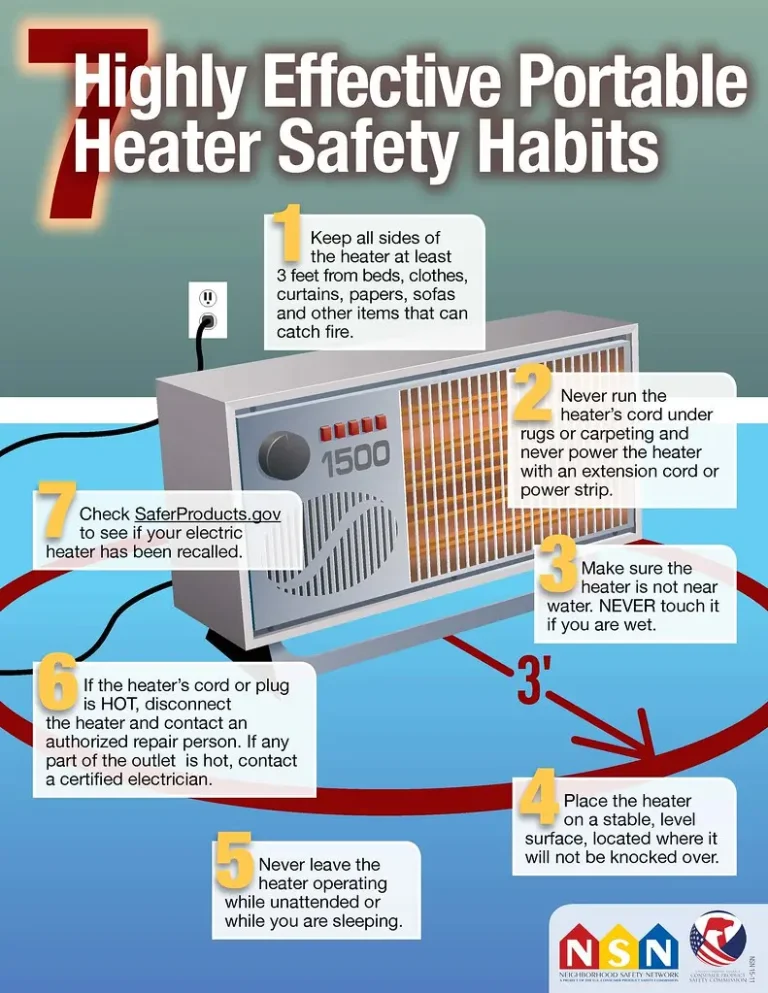
Gas patio heaters typically need clearances and ventilation, especially on covered or semi-enclosed patios. That makes it a more careful fit around rooflines, overhangs, and walls where exhaust and heat buildup can become a code or safety issue. Infrared patio heaters are often described as having no open flame and usually working from a standard outlet, which can simplify placement.
Covered patios and porches
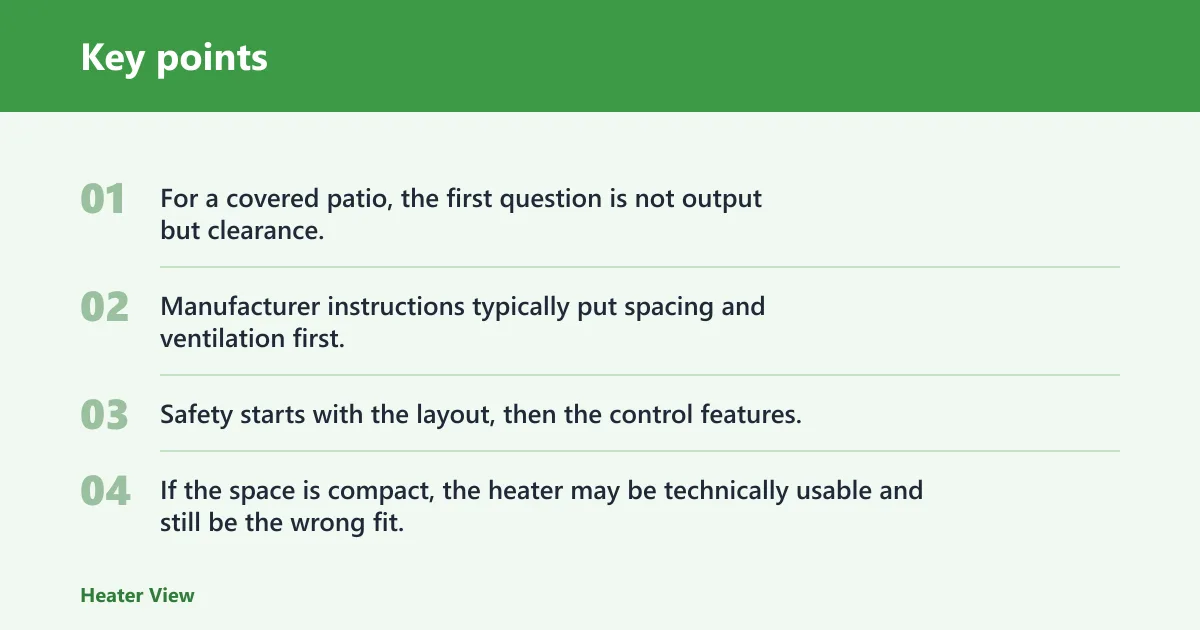
For a covered patio, the first question is not output but clearance. If the heater sits too close to a ceiling or side wall, a gas unit can become the wrong class of heater for the space even if the BTU rating looks appealing on paper. Manufacturer instructions typically put spacing and ventilation first.
Cool Group lists anti-tilt and auto shut-off as safety features, which are useful, but they do not remove the need for proper spacing. Safety starts with the layout, then the control features.
Balconies, outlets, and flame-free use
Infrared patio heater is usually the safer balcony or porch choice because there is no open flame and the unit can often plug into a standard outlet. That does not remove clearance rules, but it does reduce the concerns that come with a gas cylinder on a tighter footprint.
Gas patio heater can still work on some covered or semi-covered porches if the manufacturer allows it and the clearances are met, but it needs more room for ventilation. If the space is compact, the heater may be technically usable and still be the wrong fit.
Choose Infrared patio heater if… / Choose gas patio heater if…
Choose Infrared patio heater if your seating is under a roof, on a porch, or on a balcony; you want heat aimed at a table or bench; you have outlet access; or you want lower hourly running cost. It also fits spaces where you want direct warmth without an open flame.
Choose gas patio heater if your patio is large, open, or windy; you need wider area coverage; you have room for a propane tank; or your seating changes across a broad deck. It is the better match when spread matters more than pinpoint aim.


Frequently asked questions
Is an infrared patio heater or gas patio heater better outdoors?
Neither wins everywhere outdoors. Infrared patio heater is better for covered, partially sheltered, or tightly arranged seating where the warmth can stay aimed at people. Gas patio heater is better for large, open, uncovered patios and decks where wider output matters more than directional aim.
Which patio heater works better in wind?
Infrared patio heater usually works better in wind when the seating is close and the beam stays on people. Gas patio heater can still help in larger groups, but wind reduces comfort faster because it moves heated air away. The main difference is targeted warmth versus broader spread.
Are infrared patio heaters good for open patios?
They can work on open patios, but only when the seating stays close and inside the beam. In a fully open layout, infrared often feels uneven because warmth drops off outside the line of sight. For open, broad spaces, gas is usually the stronger fit.
How much does it cost to run a gas patio heater vs infrared?
A 1,500-watt electric infrared heater can cost about $0.28 an hour to run. A propane patio heater can cost about $1.15 to $2.00 an hour to run. Local electricity prices, propane refill size, and how many hours you use it each season can shift the result.
Can I use a gas patio heater on a covered patio?
Sometimes, but only if the manufacturer allows it and the space meets clearance and ventilation requirements. A covered patio can still be too tight for a gas heater even when the heater itself is popular. If the ceiling is low or the area is semi-enclosed, infrared is usually the safer fit.
Which patio heater is safer for a balcony or porch?
Infrared patio heater is usually safer for a balcony or porch because it has no open flame and often plugs into a standard outlet. Gas models need more ventilation and more careful clearance planning. On compact outdoor spaces, that makes infrared the easier and safer starting point.