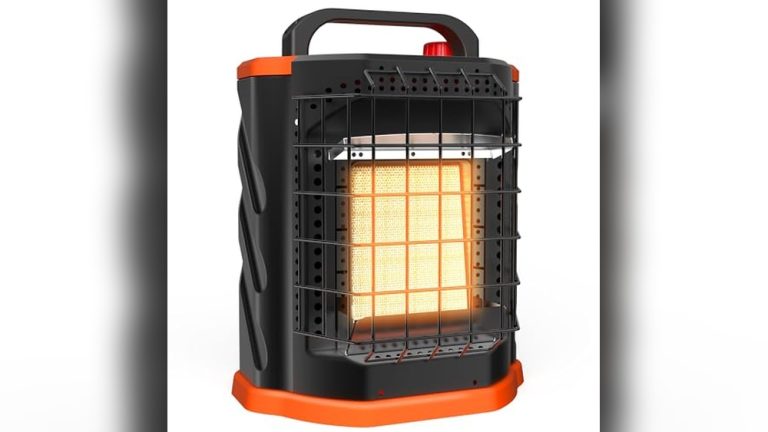
Blue Flame vs Infrared Gas Heater: Which Feels Warmer?
Infrared gas heaters often make your body feel warm faster; blue flame heaters usually warm room air more evenly, so the warmer choice can depend on draft, room size, and how close you sit. Choose the wrong type and you can burn fuel while still feeling cold. This guide compares body warmth, air warming, and draft performance so you can choose the better fit.
| Factor | Blue flame | infrared gas heater | Winner |
|---|---|---|---|
| How warmth is delivered | Usually heats room air first through convective heat transfer and then warms people as the air mixes. | Usually sends radiant heat directly to skin, furniture, and other surfaces in its line of sight. | infrared gas heater |
| First-feel comfort at startup | Usually slower at first, because the room air has to warm and circulate before you feel much change. | Usually faster at first, because radiant heat reaches occupied areas before the whole room air mass rises much. | infrared gas heater |
| Drafty-room comfort | More vulnerable to heat loss from air leaks and ceiling stratification. | Less sensitive to drafts when the person or seating area stays in the radiant beam. | infrared gas heater |
| Whole-room warmth | Better when the goal is a more even room-air temperature over time. | Less suited to even air warming; comfort stays strongest near the heater’s line of sight. | Blue flame |
| Thermostat setpoint flexibility | Comfort usually tracks room temperature more closely. | People often feel warm at a lower air temperature because surfaces and skin absorb radiant heat. | infrared gas heater |
Blue flame vs infrared: the comfort trade-off
The trade-off is plain. Blue flame targets the air, while infrared targets you and the surfaces around you. That means the same BTU rating can feel very different depending on whether you want faster body warmth, steadier room-air warmth, or better comfort in a space that leaks heat.
BTU rating still matters, but it does not tell the whole story. Output has to match room volume, insulation level, ceiling height, and how the space is used. A heater can be sized correctly on paper and still feel wrong if the room is drafty or the seating area sits far from the heat source.
What this comparison does and does not answer
This comparison focuses on perceived warmth, room conditions, and comfort at the thermostat. It does not replace the manufacturer’s listing, venting instructions, or clearance requirements for a specific model. If local code limits unvented gas appliances in your area, those rules come first.
How each heater warms a room
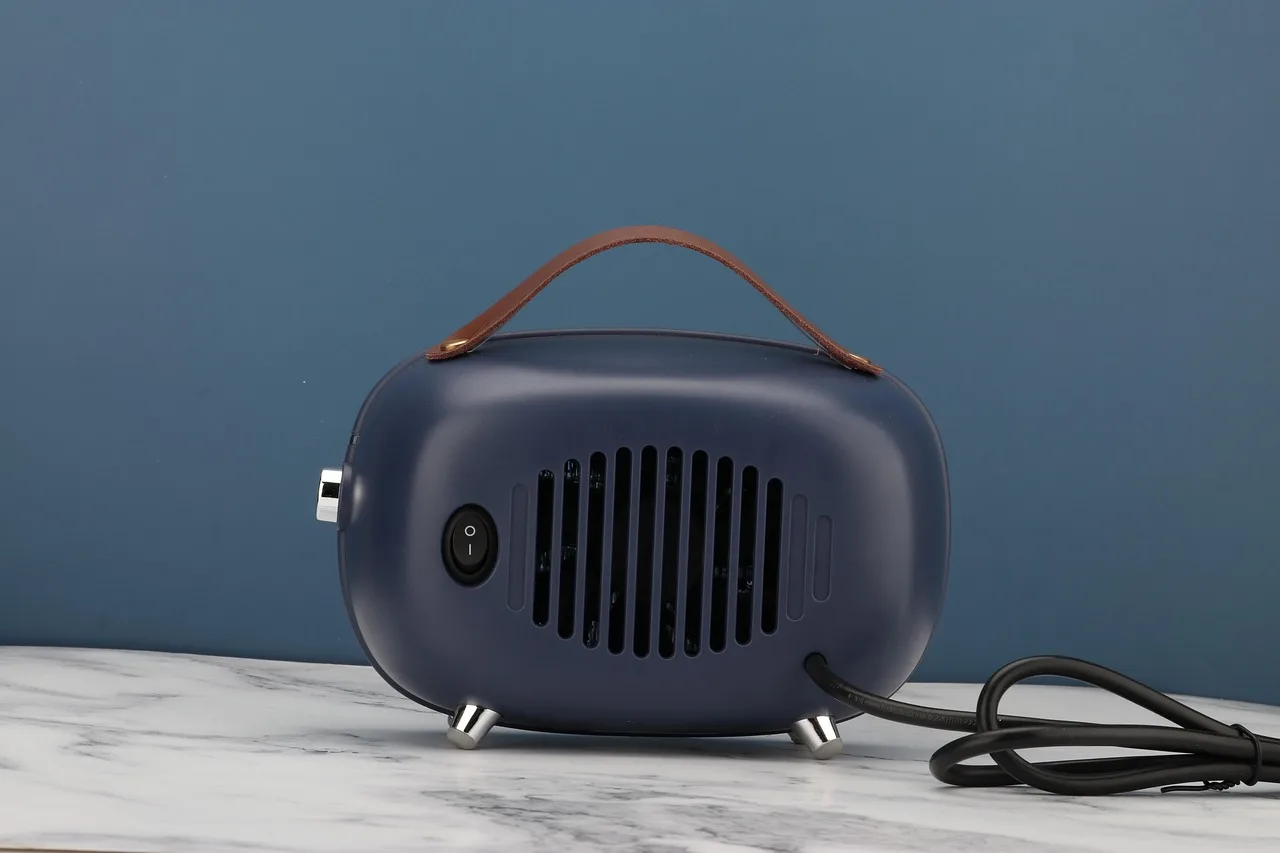
Blue flame heaters warm the air, then that warmer air moves through the room by convection. Infrared gas heaters send radiant heat in a straight path to people and objects, so they can feel warm before the room air has changed much. That difference is why one may feel warmer even at the same BTU label.
Blue flame and convective heat transfer
Convective heat transfer depends on air circulation. As the heater warms nearby air, that air rises and mixes with cooler air, which slowly evens out the room temperature. In a room with good insulation and modest ceiling height, that can give a more balanced comfort level after the startup period.
There is a trade-off. If the room has drafts, open returns, or tall ceilings, the warmed air can climb and leak away faster than you feel it at seating height. That is where a blue flame heater may seem less warm at first, even when the output is adequate.
Infrared and radiant heat transfer
Radiant heat transfer works by line of sight. The heater’s output is absorbed by skin and surfaces, much like sun-warmed pavement feels warmer than the air around it. Distance matters here: if you sit outside the radiant path, the comfort gain drops fast.
That direct warmth explains why an infrared gas heater often feels warmer at startup. The air can remain cooler than it would with a blue flame unit, yet a person in front of the heater still feels warmed. This also helps in rooms with intermittent use, where waiting for the whole air volume to warm is inefficient.
Why distance and airflow matter
Airflow helps blue flame heaters, because mixing spreads the heat through the room. Airflow can work against infrared comfort, because strong drafts can strip the warmed surface layer from your skin and make the radiant effect feel less steady. The farther you sit from either type, the less pronounced the comfort gain becomes.
Say your den is 14 by 18 feet with a low ceiling and the couch sits directly across from the heater. An infrared unit will usually feel warmer first because it heats the seating area directly, while the room air catches up later. Change one variable and the answer can shift.
Which feels warmer in a drafty room?
In a drafty room, infrared usually feels warmer first because it puts heat on the body instead of waiting for the air to settle. Blue flame can still win later if the room is small enough and the drafts are mild, but moving air tends to steal convective comfort before it reaches you.
Why drafts weaken convective comfort
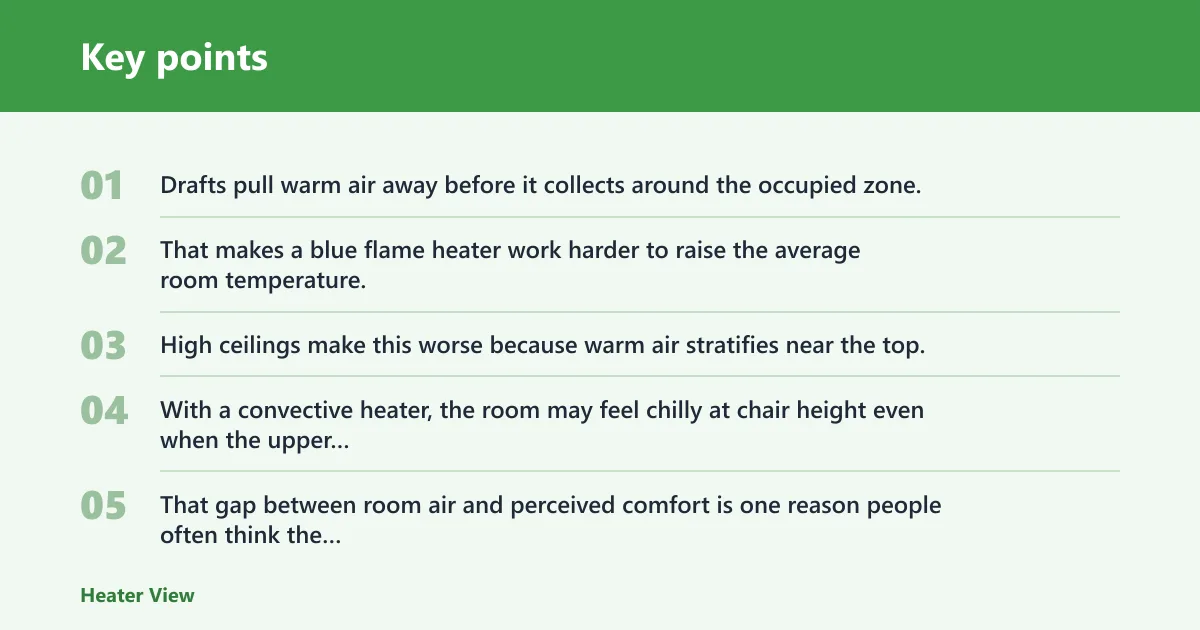
Drafts pull warm air away before it collects around the occupied zone. That makes a blue flame heater work harder to raise the average room temperature, and the comfort gain can lag behind the fuel use. High ceilings make this worse because warm air stratifies near the top.
With a convective heater, the room may feel chilly at chair height even when the upper part of the room is warmer. That gap between room air and perceived comfort is one reason people often think the heater is underperforming when the real issue is airflow.
When infrared feels warmer first
Infrared feels warmer first when the occupied area stays inside the radiant path. That includes a chair, sofa, or work table set within sight of the heater and not too far away. In that setup, the heater can make skin and nearby surfaces feel warmer even if the thermostat reads lower than expected.
A common first-timer mistake is assuming the higher-BTU model will feel warmer in a drafty sunroom just because the space is small and the windows are cold. The infrared unit may still feel better at the seating area, while a blue flame unit may spend more time warming lost air than the people using the room.
When blue flame catches up
Blue flame catches up when the room is enclosed, the insulation is decent, and the goal is warmer air rather than a hot spot. Once the room air stabilizes, the comfort can feel more even from one side of the room to the other. That is useful when several people move through the space.
Suppose a small family room is closed off from the rest of the house and used for a few hours at night. A blue flame heater can make the air feel less cold once the room has had time to mix, while the infrared unit still gives the strongest warmth where people sit.
Is infrared more efficient at lower setpoints?
Often, yes, but only when comfort comes from direct radiant warming and the room allows a lower thermostat setting without making the air feel cold. Infrared can let people feel comfortable at a lower ambient temperature, which can reduce fuel use if the room stays occupied in the same zone.
Perceived warmth versus air temperature
Perceived warmth is not the same as air temperature. With radiant heat, your body and nearby surfaces absorb energy directly, so the room can feel comfortable before the air reaches the same level a blue flame heater would need. That is why the thermostat can sometimes stay lower and still feel acceptable.
This does not mean infrared is always cheaper to run. If the room is large, leaky, or used only briefly, the lower setpoint advantage may not offset the heat lost through walls, ceilings, or repeated door opening. The room pattern matters as much as the heater type.
Thermostat setpoint and comfort
A lower thermostat setpoint with infrared is most realistic in a spot-heating setup. For example, a person sitting in one section of a den may feel fine with the air cooler than usual because the heater warms the occupied zone directly. A blue flame heater usually needs a higher air temperature to produce the same comfort feel.
That difference can matter in energy use. If you can sit comfortably at a lower setpoint, the heater may cycle less. If you keep raising the setpoint to chase a warm feeling from infrared, the efficiency benefit fades fast.
Safety, clearances, and indoor use
Safety rules matter more than comfort preference. Follow the manufacturer’s clearance requirements for walls, furniture, curtains, and ceilings, and confirm whether the model is approved for the room you want to heat. Indoor venting requirements and carbon monoxide precautions are not optional for combustion appliances.
Manufacturer clearance requirements
Clearances vary by model, so check the listing and the owner’s manual before placement. Keep combustible materials out of the required zone and do not assume a smaller heater needs less space around it. The manual also tells you whether the unit needs a particular mounting height or open area in front of it.
- Check the heater’s approved room type in the manual.
- Verify required clearances to walls, ceiling, furniture, and drapes.
- Confirm venting, combustion-air, and ignition instructions for your model.
- Place a carbon monoxide alarm where the manual and local code require it.
- Do not use the heater in a room where local rules prohibit unvented gas appliances.
Indoor venting and combustion safety
Combustion safety matters because any gas heater can produce carbon monoxide if it is misused, poorly maintained, or installed where the space cannot support safe combustion. Some jurisdictions limit or prohibit unvented room heaters in bedrooms, bathrooms, or other enclosed spaces. Check local laws before buying or installing one.
Do not assume a garage, workshop, or other space with vehicle fuel or flammable vapors is a normal fit for this category. Many manufacturers and codes restrict those uses. If the room has stored fuel, solvents, or vehicle exhaust exposure, choose a heater only if the manual and local code clearly allow it.
Gas heater decision table
This table maps common room conditions to the heater type that will feel warmer first. Use it as a comfort guide, not a substitute for the model listing, BTU sizing, or local code.
| Room draftiness | Ceiling height | Occupancy pattern | Warm-up speed | Perceived warmth | Recommended choice |
|---|---|---|---|---|---|
| High drafts | Average or tall | One or two people sitting in one zone | Fast body warmth needed | Warmth should be felt near the seat first | infrared gas heater |
| Moderate drafts | Low | Room used for longer stretches | Warm air can build over time | Even room comfort matters more than spot warmth | Blue flame |
| Low drafts | Tall | Intermittent use, short visits | Need quick comfort at startup | Heat should reach people before the whole room warms | infrared gas heater |
| Low drafts | Average | Several people moving around the room | Whole-room warming can take longer | Air temperature consistency matters more | Blue flame |
| Drafty near doors or windows | Average | Chairs and sofa stay in one area | Warmth needed while the rest of the room stays cooler | Direct warmth at the occupied zone | infrared gas heater |
Drafty or open room
In a drafty room, infrared usually gives the better first-feel comfort because it warms people before the air leaks away. Blue flame can still work if the space is small and fairly enclosed, but drafts reduce its comfort more quickly.
High ceiling or slow warm-up
For a tall room, a blue flame heater can warm the air unevenly because hot air rises and collects near the ceiling. If the goal is fast comfort where people sit, infrared tends to feel warmer sooner. If the goal is to make the whole room air feel less cold over time, blue flame has the edge.
Spot heating or intermittent use
For zoned heating, infrared is usually the better fit. It is strongest when you want one occupied area to feel warm without heating the entire space first. That makes it a better match for short, repeated use in a den, sitting room, or other room with a fixed seating area.
Choose Blue flame if… / Choose infrared gas heater if…
Choose Blue flame if you want warmer room air, more even comfort across the whole space, and a better match for longer heating sessions in a reasonably enclosed room. Choose infrared gas heater if you want faster body warmth, better comfort in a drafty room, or a lower thermostat setting that still feels warm in the occupied zone.
Blue flame is the better match
You need the room to feel evenly warm over time. You have modest drafts, average ceiling height, and people move around the space instead of sitting in one spot. You are willing to wait for the air to warm and mix before the comfort level feels right.
Infrared gas heater is the better match
You want warmth aimed at people, not just the air. The room is drafty, tall, or used in short bursts, and the seat or work area sits within the heater’s line of sight. You want the room to feel warmer before the thermostat climbs much.
Before buying, check the heater’s BTU rating against the room size, insulation, and ceiling height, then confirm the model’s clearance and venting rules. If the manufacturer or local code limits the room type, follow that limit even if the heater seems like a good comfort match.
Frequently asked questions
Does blue flame or infrared gas heat feel warmer?
Infrared gas heat usually feels warmer faster because it warms people and nearby surfaces directly. Blue flame heat usually feels warmer after the room air has had time to warm and mix. If you sit close to the heater, infrared often wins on first comfort.
Which gas heater is better for a drafty room?
Infrared is usually better for a drafty room because drafts weaken convective comfort more than radiant comfort. A blue flame heater can still help if the room is small and enclosed enough, but moving air often steals the warmth before it reaches the occupied zone.
Is an infrared gas heater more efficient than a blue flame heater?
Sometimes, but only in the right room. If infrared lets you keep a lower thermostat setpoint while still feeling warm, it can use less fuel. In a large or leaky room, that benefit can shrink because heat loss may outrun the comfort gain.
Do blue flame heaters heat the air or people?
Blue flame heaters mainly heat the air first. People feel the benefit when that warmed air mixes through the room and raises the temperature around them. They can still feel comfortable, but the path to comfort is slower than with direct radiant heat.
Are infrared gas heaters safe to use indoors?
They can be, but only if the specific model is approved for indoor use and installed with the required clearances, combustion-air conditions, and carbon monoxide precautions. Check the manual and local code before using any unvented gas heater indoors, especially in rooms where rules may restrict them.
Which type is better for zoned heating?
Infrared is usually better for zoned heating because it warms one occupied area without needing to raise the temperature of the whole room first. That works best when the seating or work area stays in one place and remains within the heater’s line of sight.
What size gas heater do I need for my space?
Use the manufacturer’s BTU guidance for the room volume, not just floor area. Ceiling height, insulation, sun exposure, and drafts all affect the match. If the listing gives a range, stay within it and avoid oversizing just to chase faster warmth.
Which gas heater is better for cold rooms with high ceilings?
Infrared often feels warmer first in a cold room with high ceilings because it warms the occupied zone directly instead of sending heat toward the upper air first. Blue flame may still work for full-room comfort, but tall ceilings make stratification a bigger problem.