What is the Most Efficient Heater for Homeowners Today?
For many homeowners, a heat pump is among the most efficient heating options. It often delivers roughly 2 to 4 units of heat for each unit of electricity. In very cold climates, or in homes with cheap gas, a high-efficiency gas system can cost less to run. Choose badly and you can sit with higher bills for years, especially if the unit fights your climate or utility rates. This guide compares heat pumps, gas central heating, and electric radiators by home type, weather, and operating cost.
Home heating efficiency is a mix of system performance, running cost, install cost, house size fit, and fuel type. A heater can waste little energy and still be a poor buy if it is oversized, badly controlled, or costly to power.
What is the most efficient heater for homeowners?
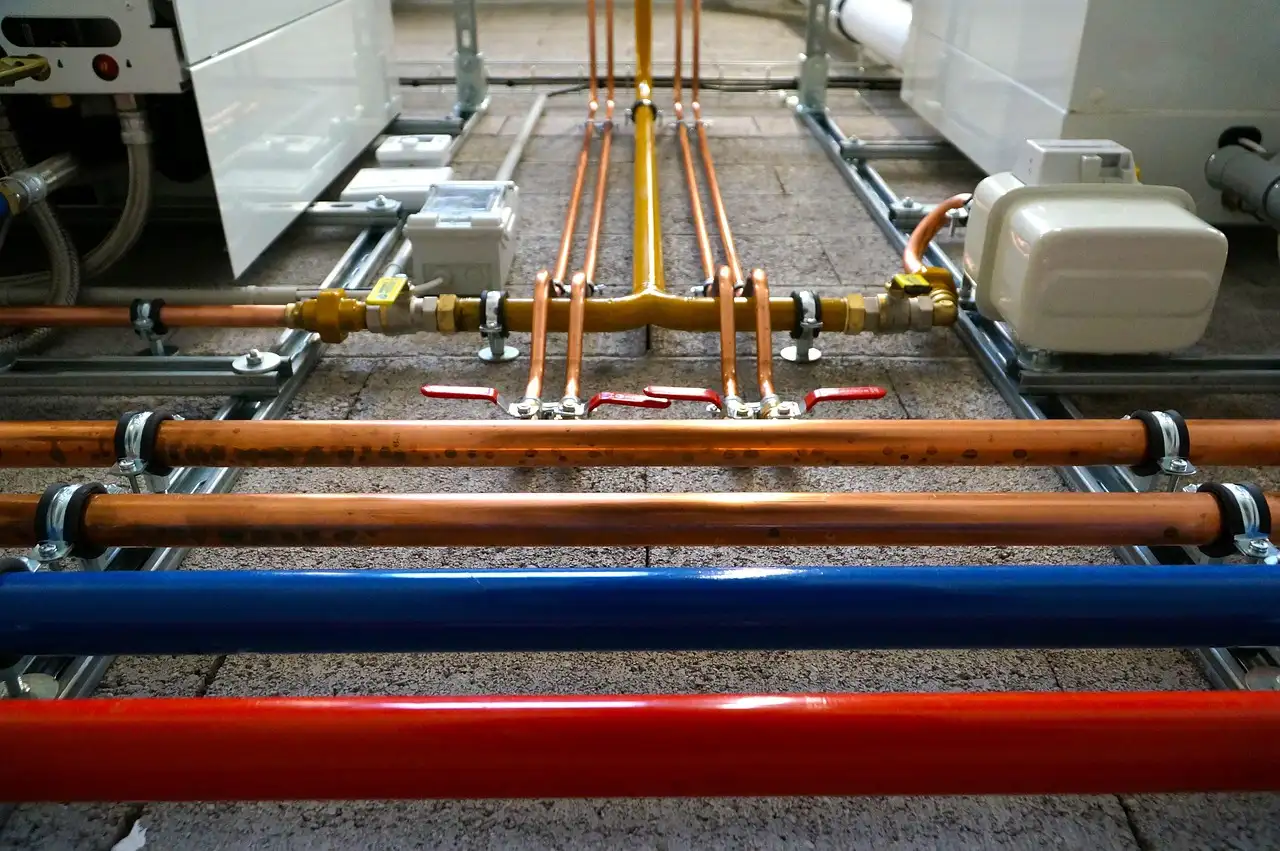
That is why the answer changes by house. A small flat with good insulation has different needs from a draughty older house, and both differ again from a larger family home with radiators already in place.
What efficiency means in a home
For a homeowner, “efficient” should mean the heater keeps the house comfortable with the least waste for the lowest total cost over time. That includes the purchase and install cost, the cost to run it, how well it matches the house size, and how the local fuel price compares with the alternatives.
Gas central heating is the common baseline in the UK. A gas boiler heats water that circulates through radiators and pipes, so the system is familiar and widely understood. Heat pumps and electric radiators can beat it in the right setting, but not in every setting.
How do heat pumps compare with gas central heating?

Heat pumps are usually more efficient in energy terms because they move heat rather than create it from combustion. Air-source and ground-source versions both run on electricity, and both can be much cleaner than gas-powered heating systems. Gas central heating can still win on cost where gas is cheap, the home already has a good wet system, and outside temperatures are low enough that a pump must work hard.
Air-source and ground-source heat pumps
Heat pumps come in two forms: air-source and ground-source. Both use electricity to extract heat from the air or ground and move it indoors. Ground-source units often need more site work and higher installation cost, while air-source units are often more common for retrofit jobs because they are easier to fit.
That difference matters. A homeowner replacing an older boiler may find an air-source unit easier to add to an existing house, while a new-build or major renovation may justify a ground-source system if the plot and budget fit.
When a heat pump beats gas on real-world cost
A heat pump often beats gas when the home is well insulated, the radiators or underfloor heating can run at lower temperatures, and electricity pricing is not extreme versus gas. In that setup, the pump’s higher efficiency can offset electricity cost and lower day-to-day bills.
It also tends to work better in homes with steady, moderate heat demand. If the building holds heat well, the system can run for longer periods at lower output, which is where heat pumps usually perform best.
When a gas boiler still makes more sense
A gas boiler can still make more sense in an older, leakier house if the heating system is already in place and the owner wants lower upfront cost. Maintenance affects performance, too. A neglected boiler, poor balancing, or weak controls can waste fuel and erase part of the advantage.
Gas prices matter as well. The article says gas is typically cheaper than electricity, so a house with high heat demand may still find gas the cheaper option to run, even if the system is less efficient in energy terms.
Are electric radiators efficient enough for a house?
Electric radiators are efficient at turning electricity into heat, but that does not make them the best whole-house choice. They are best suited to smaller homes, flats, and single rooms, especially where gas is unavailable. In larger homes, the running cost usually becomes the problem, not the heat output.
Best use cases for electric radiators
Electric radiators are described as ideal for homes without gas. They can also include Wi-Fi and smart technology, which helps with scheduling and room-by-room control. A small, well-insulated flat can use them sensibly because the heat demand is modest and the control can be precise.
The example electric radiator listed costs £79.99 and is a 1000W model. That kind of unit is useful as a local heat source, but the size and cost profile point to room heating, not a full-house replacement in a bigger property.
Why they struggle in larger homes
In bigger homes, electric radiators often lose on operating cost. Even if the unit itself is straightforward, heating multiple rooms for long periods can become expensive because the system depends directly on electricity. That makes them a weak fit where heat demand is high.
They can still play a role in part-time use, guest rooms, or a home office. But for a whole house, especially one with average or poor insulation, a homeowner usually needs a different primary system.
Where smart controls help and where they do not
Smart controls help when the main issue is wasted runtime. They can cut overheating, trim unused hours, and keep a small space warm only when it is occupied. They do not change the basic cost of electricity, so they cannot rescue an undersized or badly matched system.
If the home is large or draughty, controls help at the edges only. They improve discipline, not the fuel bill itself.
Use this homeowner decision table to pick the right heater
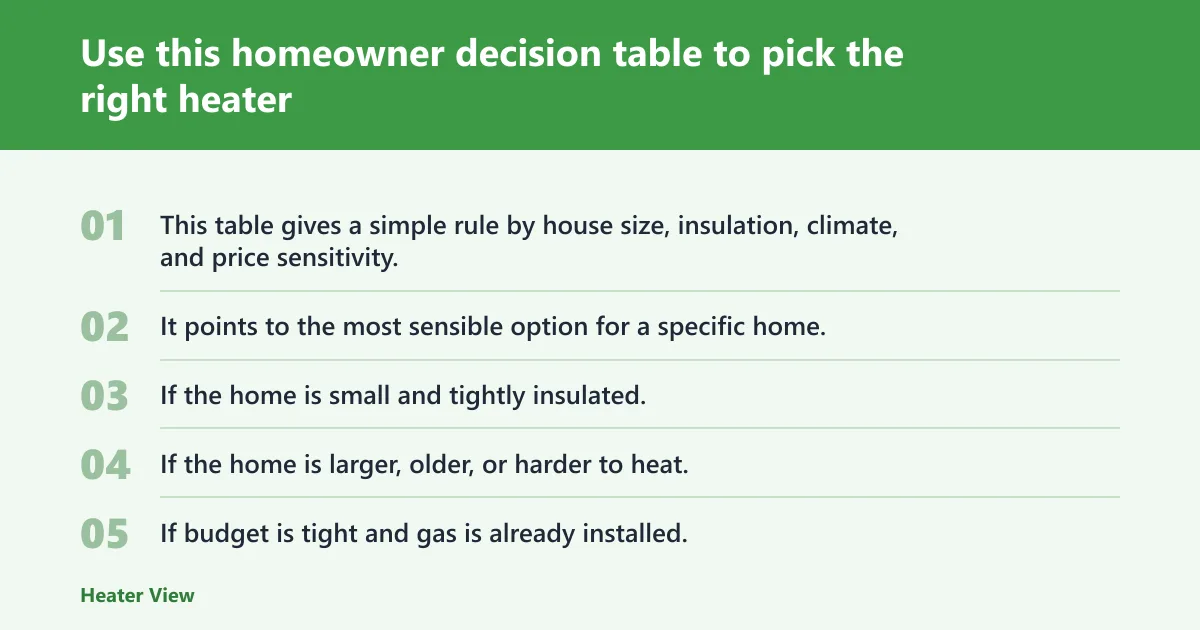
This table gives a simple rule by house size, insulation, climate, and price sensitivity. It does not pick one universal winner. It points to the most sensible option for a specific home, which is the only way to judge home heating efficiency properly.
| Home scenario | Heater type to favor | Why this fit works | Pick-the-best rule |
|---|---|---|---|
| Small flat, good insulation, mild climate, high price sensitivity | Electric radiator | Low heat demand, room-by-room use, simple install, smart control can limit waste | Choose electric if you heat a few rooms for short periods and gas is unavailable |
| Small or medium home, good insulation, moderate climate, medium price sensitivity | Air-source heat pump | Runs efficiently in well-sealed homes and can cut fuel use compared with gas | Choose a heat pump if the house can run on lower-temperature heating |
| Older larger home, average insulation, existing radiators, gas already connected | High-efficiency gas central heating | Lower upfront changeover cost and familiar wet system, especially where heat demand is higher | Choose gas if replacement cost must stay low and the home needs high output |
| Large home, better insulation after retrofit, cold climate, long heating season | Heat pump with upgraded emitters | Better fit once losses are reduced and radiators or underfloor heat can deliver steady warmth | Choose a heat pump if insulation and emitters can be upgraded together |
| Very draughty home, poor insulation, high electricity prices, low retrofit budget | Gas central heating, then improve the house first | Heat pump running cost may disappoint until the building fabric is fixed | Choose gas for now if the house cannot yet support low-temperature heating |
Simple rule for choosing the best option
If the home is small and tightly insulated, electric radiators or a heat pump may be sensible. If the home is larger, older, or harder to heat, a heat pump works best only after the fabric and emitters are checked. If budget is tight and gas is already installed, a well-maintained gas boiler can still be the practical choice.
How do energy prices change the answer?
Energy prices can flip the result. Electricity versus gas cost comparison matters as much as the heater type itself, because the cheapest system to buy is not always the cheapest system to run. Price caps and local tariffs can move the answer from one season to the next.
Why electricity vs gas pricing matters
Heat pumps use electricity, so their operating cost depends on the electricity rate versus the heat output they can deliver. Gas boilers depend on gas price and on how well the heating system is maintained. If gas is much cheaper than electricity, the running-cost edge can shrink fast.
That is why a more efficient heater does not always lower bills. A heat pump that uses less energy can still cost more per year if electricity is expensive and the home is hard to heat.
How price caps and tariffs affect running costs
Price caps can change the total cost picture without changing the house itself. A tariff shift may make a previously sensible electric setup less attractive, while a better gas rate can support a boiler-based system for longer. Homeowners should compare current unit prices, not old assumptions.
Any serious replacement choice should be checked against the local tariff, not a generic national headline.
What else affects real heating efficiency at home?
System choice is only part of the outcome. Emitters, controls, sizing, and maintenance can change real performance enough to alter the winner. A good heater fitted badly can waste energy. A modest heater fitted well can perform better than expected.
Sizing, emitters, and controls
Correct sizing matters because an oversized system can short-cycle and an undersized one can work too hard. Emitters matter because radiators or underfloor loops must be able to give off enough heat at the temperatures the system actually uses. Controls matter because they reduce wasted runtime and keep comfort steady.
This is one reason heat pumps sometimes underperform in older homes. The pump may be sound, but the emitters are too small, the controls are crude, or the design assumes a higher water temperature than the house can support efficiently.
Maintenance and system condition
Gas central heating needs maintenance to stay close to its rated performance. Sludge, poor balancing, and tired controls can all reduce real efficiency. A heat pump also needs proper setup, correct sizing, and a clean heat delivery system if it is to deliver the expected savings.
Electric radiators need less mechanical care, but that does not make them cheap to run. Their main strength is simplicity, not whole-house economy.
Retrofit checks before replacement
- Check insulation in the loft, walls, windows, and draughty gaps.
- Confirm radiator size, pipe condition, and whether the system can run at lower temperatures.
- Review thermostat placement and heating schedules.
- Flush dirty water systems and rebalance radiators if heat is uneven.
- Compare current electricity and gas tariffs before choosing a new system.
These checks can improve actual performance before a full replacement. In many homes, the cheapest “upgrade” is making the existing system work properly first.
What is the most efficient way to heat a house?
The most efficient way to heat a house is the one that matches the building’s size, insulation, climate, and fuel prices while keeping installation and maintenance realistic. For many well-insulated homes, that can mean a heat pump. For some older homes, a well-maintained gas boiler still wins on cost. For small flats, electric radiators can be enough.
Frequently asked questions
What is the most efficient heater for homeowners?
For many homeowners, a heat pump is the most efficient choice because it moves heat rather than creating it directly. The best option still depends on insulation, house size, climate, and electricity price. A gas boiler or electric radiator can be better in the right setting.
Is a heat pump more efficient than a gas heater?
Usually yes in energy terms, because heat pumps use electricity to extract heat from the air or ground. That does not always guarantee lower bills. If electricity is expensive, the house is leaky, or the emitters are undersized, a gas heater can still cost less to run.
Are electric heaters efficient enough for a house?
Electric heaters can be efficient at turning electricity into heat, but they are often best for smaller homes, flats, or single rooms. For a bigger house, the running cost often becomes too high. They make the most sense where gas is unavailable and heat demand is modest.
What heater type costs the least to run?
There is no single answer. Gas can cost less than electricity, which helps gas central heating in many homes. A heat pump can still beat gas on cost if the house is well insulated and the system is set up correctly. Local tariffs decide a lot.
Does a more efficient heater always lower my bills?
No. Bill size depends on fuel price, house heat demand, controls, maintenance, and the cost of the installation. A more efficient heater can still cost more to run if electricity is expensive or if the system is poorly matched to the home.
Are heat pumps worth it in a cold climate?
They can be, but the home must be right for them. Cold weather increases demand, so insulation, emitter size, and lower-temperature delivery become more important. In a draughty older house with high electricity prices, a gas boiler may still be the more practical choice.