
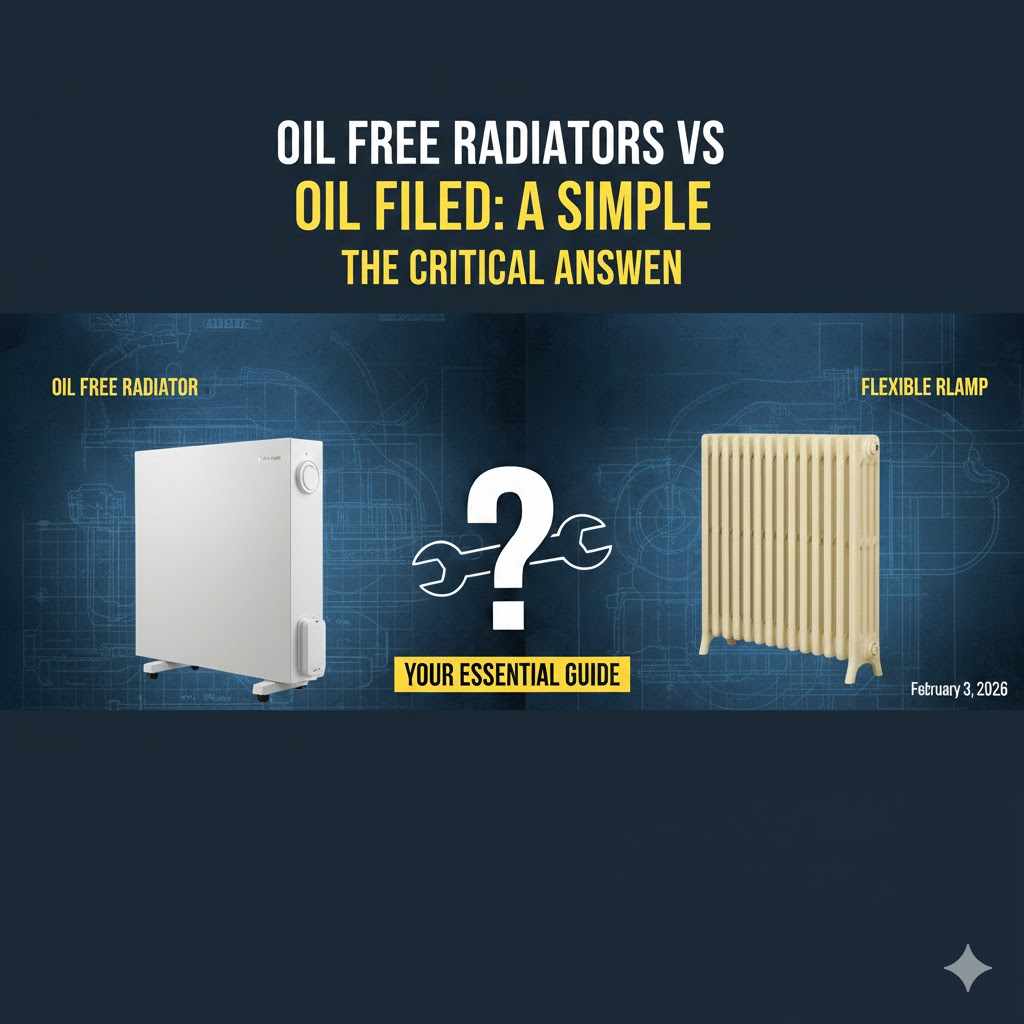
Choosing a heater can seem tough, especially if you’re new to the topic. Figuring out the difference between an Oil Free Radiator vs Oil Filled: Which Is Better? is a common question, and it’s easy to feel lost with all the options. But don’t worry! This post will break everything down into simple steps, helping you pick the right heater for your needs. We’ll explore the main differences and help you decide which heater is the better pick for you.
Understanding the Basics of Heating Systems
Before exploring the specific differences between oil-filled and oil-free radiators, it’s helpful to understand how these heating systems work in general. Both types are electric heaters, meaning they convert electrical energy into heat. They do this through a heating element that gets hot when electricity passes through it. The way that heat is then distributed is what sets them apart. This initial overview gives you a solid base for grasping the comparisons.
Electric Heating Element Operation
At the heart of both oil-filled and oil-free radiators is an electric heating element, typically made of a material with high electrical resistance, like nichrome wire. When an electric current flows through this wire, it encounters resistance, which causes the wire to heat up. This process, known as Joule heating, is the foundation of how these heaters produce warmth. The efficiency of the element is a significant factor in how effectively the heater will warm a space.
- Resistance: The primary characteristic of the heating element is its electrical resistance. A higher resistance means more heat is generated for a given current. This resistance is carefully chosen to balance heat production and energy consumption.
- Current Flow: The amount of current flowing through the element impacts the heat output. Higher current generally leads to more heat, but also increases energy usage. The heater’s design regulates the current flow to achieve the desired temperature.
- Material Composition: The type of material used for the heating element influences its durability and heat output. Nichrome is a common choice because of its high melting point and resistance to oxidation at high temperatures.
- Temperature Regulation: Thermostats play a major part in maintaining a consistent temperature. They monitor the element’s temperature and adjust the current flow to keep the temperature steady.
Heat Transfer Principles: Convection and Radiation
Heaters use two main methods of transferring heat: convection and radiation. Convection involves the movement of air, where the heater warms the air around it, and that warm air rises, circulating heat around the room. Radiation, on the other hand, is the emission of infrared waves that directly warm objects and people in the heater’s path. Different heater designs use these principles in varying proportions, influencing how quickly and evenly they warm a space.
- Convection: This method relies on the air moving around the heater. The heating element warms the air, causing it to become less dense and rise. Cooler air then replaces the warm air, creating a cycle. Convection heaters are good for warming a whole room evenly.
- Radiation: Infrared radiation travels in a straight line from the heater to objects in the room. This makes radiation heaters feel warm almost immediately. They are effective at heating specific areas or objects directly.
- Combination: Most heaters use a combination of convection and radiation. Oil-filled radiators use convection as the primary heat transfer method, while oil-free radiators often use a combination of both.
- Efficiency: The efficiency of the heat transfer method affects how quickly and evenly a space warms up. Convection can be slower but more widespread, while radiation provides faster, more direct warmth.
Safety Mechanisms in Modern Heaters
Safety is a major concern with any electric appliance. Both oil-filled and oil-free radiators have built-in safety features to prevent accidents. These can include tip-over switches, which turn the heater off if it falls over, overheat protection, which shuts the heater down if it gets too hot, and cool-touch surfaces to prevent burns. These safety features are important for protecting users and preventing fire hazards, and are essential when you are choosing a heater.
- Tip-Over Switch: This is a safety feature that automatically shuts off the heater if it is knocked over. This prevents the heater from causing a fire by contacting flammable materials while it’s in an unstable position.
- Overheat Protection: Overheat protection is a sensor that detects when the heater’s internal temperature gets too high. If the temperature exceeds a certain limit, the heater automatically turns off to prevent damage to the unit or the environment around it.
- Cool-Touch Surfaces: Many modern heaters have cool-touch surfaces that are designed to remain cool, even when the heater is operating at high temperatures. This minimizes the risk of burns if someone touches the heater accidentally.
- Flame Retardant Materials: The internal components and external casing are often made of flame-retardant materials, which reduces the chance of a fire in case of a malfunction or overheat event.
Oil Filled Radiator vs. Oil Free Radiator: A Detailed Comparison
Now, let’s explore the key differences when examining Oil Free Radiator vs Oil Filled: Which Is Better?, by breaking down their functions, benefits, and drawbacks. This comparison will assist you in making a decision based on your specific requirements and circumstances. Understanding these differences is key to choosing the right heater.
How Oil-Filled Radiators Work
Oil-filled radiators, despite their name, don’t actually burn oil. They have a sealed system filled with diathermic oil, which is a type of mineral oil that serves as a heat transfer medium. Inside, an electric heating element warms the oil. The heated oil then circulates throughout the radiator’s fins, transferring heat to the surface and warming the surrounding air through convection. The oil retains heat for a longer duration, providing a more consistent warmth even after the heater is turned off.
- Heating Element: An electric heating element, often a coil, heats the diathermic oil inside the radiator.
- Oil Circulation: The heated oil circulates within the sealed system, moving heat through the fins.
- Convection Heating: The radiator’s fins heat the surrounding air through convection.
- Heat Retention: The oil retains heat, allowing the radiator to continue radiating warmth for a period even after the heater is turned off.
How Oil-Free Radiators Operate
Oil-free radiators, unlike their oil-filled counterparts, use a different mechanism to generate and distribute heat. They heat the air directly through a heating element. The air then circulates through the unit by natural convection or by a fan. Oil-free radiators heat up more quickly than oil-filled radiators and they often feature designs that enhance both convection and radiation heating. This immediate response is a key benefit of this type of heater.
- Heating Element: An electric heating element directly heats the air.
- Air Circulation: Air moves through the unit via natural convection (rising warmed air) or by a fan to push the air through the unit.
- Convection and Radiation: These radiators often combine convection with some radiation, providing faster and more direct warmth.
- Faster Heating: These radiators generally heat up a space much faster than oil-filled models.
Key Differences: Heating Speed and Energy Consumption
One of the major differences between the two types is the speed at which they warm a room and their energy usage. Oil-free radiators tend to heat a room more quickly due to the direct heating of the air, and many have integrated fan features to assist with even heat distribution. Oil-filled radiators, while slower to heat up, often provide more sustained warmth, and their ability to retain heat can result in more energy-efficient operation in the long run. The right choice often depends on individual requirements.
| Feature | Oil-Filled Radiator | Oil-Free Radiator |
|---|---|---|
| Heating Speed | Slower to heat up | Faster to heat up |
| Heat Retention | Good (due to oil) | Lower |
| Energy Consumption | Can be more efficient with thermostat use | May consume more energy with constant operation |
| Noise Level | Generally quiet | May include fan noise |
| Portability | Heavy, may have wheels | Lighter, more portable |
Benefits and Drawbacks: Oil Free Radiator vs Oil Filled
When considering Oil Free Radiator vs Oil Filled: Which Is Better?, it’s helpful to consider the advantages and disadvantages of each type of heater. Both offer distinct benefits and drawbacks. Understanding these aspects allows you to make an informed choice that meets your specific requirements.
Advantages of Oil-Filled Radiators
Oil-filled radiators offer several benefits. They are known for their quiet operation, which makes them ideal for bedrooms and quiet environments. They provide a gentle, consistent heat that lasts even after they’re turned off due to the oil’s heat-retaining properties. Moreover, they often come with adjustable thermostats, allowing for efficient energy consumption and greater control over room temperature. These aspects make them a popular selection.
- Quiet Operation: Operates silently, making them suitable for bedrooms and quiet spaces.
- Consistent Heat: The oil retains heat, providing warmth even after the heater is turned off.
- Efficient Energy Use: Often equipped with adjustable thermostats for efficient energy consumption.
- Safety: Generally have safety features like tip-over switches and overheat protection.
- Durable: Tend to be long-lasting with minimal maintenance.
Disadvantages of Oil-Filled Radiators
While oil-filled radiators have many strengths, they also have some drawbacks. They take a longer time to heat up a room because the oil needs to be heated first. Their weight can make them challenging to move from room to room. Their large size and appearance might not suit every decor style. The main things to keep in mind about these drawbacks are the delayed start-up and portability issues.
- Slower Heating: Takes longer to heat up the room because of the oil.
- Weight: They can be heavy and difficult to move.
- Appearance: The design may not suit all interior design preferences.
- Surface Heat: The surface can get hot, requiring caution around children and pets.
- Heat Distribution: Less effective at heating a large space compared to some fan-assisted heaters.
Advantages of Oil-Free Radiators
Oil-free radiators have several advantages. They heat up much faster than oil-filled radiators, making them perfect for quickly warming up a room. They tend to be lighter and more portable, making them simple to move from one room to another. They often feature modern designs and are less likely to dry out the air, which can be a bonus for indoor comfort. These features are appealing for those who want fast, flexible heating.
- Fast Heating: Heats up quickly, perfect for immediate warmth.
- Portability: Lighter and easier to move around the house.
- Modern Design: Often come in stylish designs that blend in with any home décor.
- No Oil: Doesn’t require oil, reducing the risk of leaks.
- Fan Assist: Many have fans to distribute heat evenly.
Disadvantages of Oil-Free Radiators
Oil-free radiators have certain disadvantages. They may not retain heat as long as oil-filled radiators after they are switched off. Some models can be noisy, particularly those with fans, which might be disruptive in quiet settings. The energy use can be higher if the heater constantly cycles on and off to maintain temperature. These factors could impact your final decision.
- Shorter Heat Retention: Does not retain heat as long after being switched off.
- Noise: Some models can be noisy due to fans.
- Energy Use: Might consume more energy due to needing to constantly work to maintain the set temperature.
- Less Consistent Heat: May have uneven heat distribution without a fan.
- Durability: Can sometimes be less durable compared to oil-filled models.
Choosing the Right Heater for Your Needs
The decision of Oil Free Radiator vs Oil Filled: Which Is Better? relies on your personal requirements and preferences. Consider the points below to help you select the ideal heater for your house, taking into account factors like the room size, intended usage, and your personal needs. Making the right decision often comes down to matching your needs to the heater’s capabilities.
Factors to Consider: Room Size and Usage
The size of the room and how you plan to use it are key factors when picking a heater. For smaller rooms, an oil-free radiator may be suitable because it heats up quickly and is easy to move. For larger spaces, an oil-filled radiator could provide a more consistent warmth over time. Think about how much time you’ll spend in the room and what type of heat you need.
- Room Size: For smaller rooms (e.g., bedrooms, home offices), a quick-heating oil-free radiator might be sufficient.
- Room Size: For larger rooms (e.g., living rooms), the steady warmth of an oil-filled radiator may be preferable.
- Frequency of Use: If you need occasional heating, an oil-free radiator’s quick warm-up time might be better.
- Continuous Use: For consistent, all-day heating, an oil-filled radiator’s heat retention could be more efficient.
- Climate Conditions: If you reside in a cold place, a heater with high heat output could be a great choice.
Considering Energy Efficiency and Safety Features
Energy efficiency and safety features are important when selecting a heater. Look for units with adjustable thermostats to control the temperature and potentially reduce energy consumption. Make sure the heater has safety features, such as automatic shut-off and tip-over protection, to prevent accidents and ensure safety. These are key when selecting a heater.
- Thermostats: Look for heaters with adjustable thermostats, which can help you save on energy bills.
- Safety Features: Prioritize heaters with automatic shut-off and tip-over protection for safety.
- Energy Ratings: Some heaters will have energy-efficiency ratings; higher ratings mean lower energy consumption.
- Insulation: Better-insulated units are able to heat a room more efficiently.
- Ease of Use: Choose a heater that’s simple to operate, with clear controls.
Comparing Costs and Long-Term Value
When comparing Oil Free Radiator vs Oil Filled: Which Is Better? consider not only the initial purchase cost but also the long-term running costs. Oil-filled radiators may have a higher upfront cost but could be more energy-efficient over time, if used often, which could save you money on your energy bills. Assess the value of each option based on your needs and budget. A heater’s value consists of more than just the price tag.
- Initial Price: Compare the prices of both oil-filled and oil-free radiators.
- Running Costs: Consider energy usage, which varies between models and types.
- Maintenance: Oil-filled radiators may have a longer lifespan, leading to fewer replacement costs.
- Warranty: Check the warranty period for any repairs.
- Lifespan: Consider how long the heater is expected to last, since this contributes to its value.
Frequently Asked Questions
Question: Are oil-filled radiators safer than oil-free radiators?
Answer: Both types are designed with safety features like tip-over protection and overheat shut-off. Oil-filled units’ lower surface temperatures can minimize burn risks, but it is better to always supervise children and pets around any heater.
Question: Which type of heater is better for allergies?
Answer: Oil-free radiators are often considered to be better for allergies because they don’t use oil and tend to not dry the air out as much. This reduces dust and allergens in the air.
Question: Do oil-filled radiators need oil replacements?
Answer: No, the oil in oil-filled radiators is sealed, and you don’t need to replace it. The oil serves as a heat transfer medium and is designed to last the life of the unit.
Question: Can I use either type of heater in a humid environment?
Answer: Yes, both can generally be used in humid environments. Be sure the heater is placed away from any direct water sources or splashing.
Question: Which heater is best for a small apartment?
Answer: Oil-free radiators might be a good selection for a small apartment. They can heat up quickly, and are lighter, offering more flexibility, especially if you move between rooms.
Final Thoughts
Choosing between an Oil Free Radiator vs Oil Filled: Which Is Better? involves balancing different needs and preferences. Oil-filled radiators offer steady, quiet heating, making them suited for consistent warmth and spaces where noise is an issue. Oil-free radiators provide fast heating and mobility, which is ideal if you need warmth quickly or want to move the heater around the house. Both types have advantages, so the “best” one depends on your personal circumstances and what you’re looking for in a heater.
Explore your requirements, consider the room size, and consider your energy use. This way you’ll be able to make the best choice to ensure a comfortable and energy-efficient heating experience this year.