
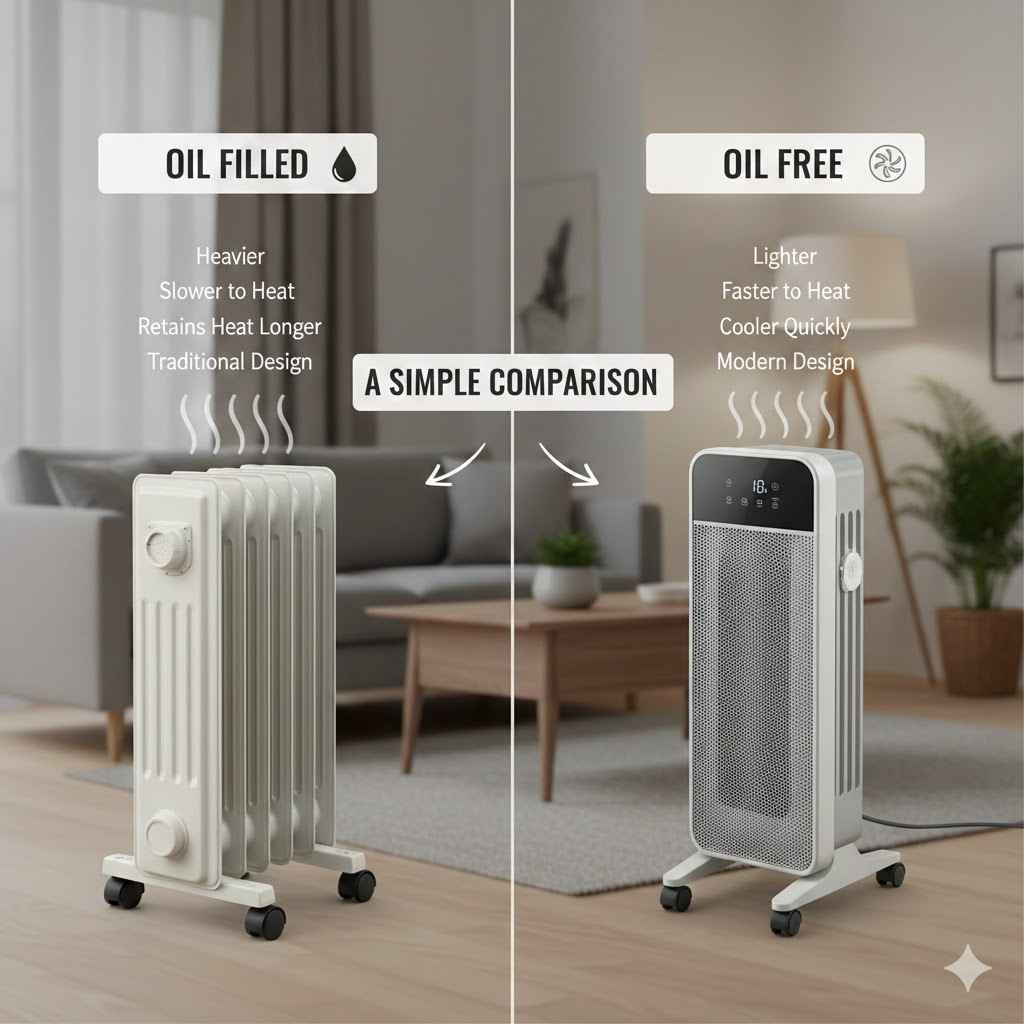
Choosing a new heater can feel tricky, especially when you’re just starting. The topic of Oil Free Radiators vs Oil Filled: Quick Comparison often confuses people because of the different technologies involved. Don’t worry, this guide will make it easy! We’ll break down the key differences and help you find the best option for your needs in a step-by-step way. We’ll start by looking at how each type of heater works and what they offer.
How Oil Free Radiators Work
Oil-free radiators, also known as dry heaters or ceramic heaters, are a modern take on space heating. They use electricity to heat internal components, often ceramic or metal fins. These fins then transfer the heat to the surrounding air. The process is generally quick, allowing for a faster warm-up time compared to some other heater types. You’ll find these heaters are usually lightweight and easy to move around.
Heating Technology Explained
The core of an oil-free radiator’s operation is the heating element. Electricity flows through a resistance wire, causing it to heat up rapidly. This heat is then transferred to a series of fins, typically made of aluminum or ceramic, which have a large surface area. This increased surface area allows the heat to be spread into the room more quickly. These heaters don’t use any oil or liquid, therefore they don’t have the same heat retention properties as oil-filled radiators. This generally means they cool down faster once turned off.
- Ceramic Heating Elements: Many oil-free radiators use ceramic heating elements. Ceramic elements are known for their efficiency and ability to heat up quickly. They often include safety features like overheat protection.
- Convection Heating: The primary way these heaters heat a room is through convection. The heated air rises, and cooler air is drawn in to take its place, creating a circular flow. This can result in a more even heat distribution throughout the space.
- Fan-Assisted Models: Some oil-free heaters include a built-in fan to help circulate the heated air and speed up the warming process. This can be especially helpful in larger rooms or areas that need to be heated quickly.
- Safety Features: Oil-free radiators are designed with safety in mind. They often include features like tip-over shut-off, which turns the heater off if it falls over, and overheat protection.
Advantages of Oil-Free Radiators
Oil-free radiators offer several benefits. They heat up rapidly, perfect if you need a quick burst of warmth. They are also usually lightweight and easy to move around your home. Many models come with adjustable thermostats, letting you control the temperature easily. They generally tend to be lower-maintenance compared to oil-filled heaters since there’s no oil to manage. They’re a good choice for smaller spaces or areas where you need quick and convenient heating.
- Fast Heating: They heat up more quickly than oil-filled radiators. This is because the heating elements are directly exposed to the air.
- Lightweight and Portable: Without oil, these heaters are lighter and easier to move around the house.
- No Oil Maintenance: You won’t have to worry about the maintenance associated with oil.
- Safer: Reduced fire risk because they heat up fast.
Disadvantages of Oil-Free Radiators
While they offer many advantages, oil-free radiators have some downsides. They might not retain heat as well as oil-filled models. When turned off, they cool down faster. Also, in very large spaces, they might struggle to provide adequate heat compared to their oil-filled counterparts. Power consumption can be slightly higher depending on the model and settings, especially if a fan is included. It is good to keep these factors in mind when making a decision.
- Shorter Heat Retention: They cool down quickly after being turned off, offering less residual heat.
- Potentially Higher Electricity Bills: If used frequently, they might consume more electricity.
- Less Suitable for Large Spaces: They may not be as effective in heating large rooms.
- Dry Air: Can potentially dry the air out more.

Understanding Oil Filled Radiators
Oil-filled radiators are a traditional style of space heater that uses oil to retain and radiate heat. These radiators have sealed chambers filled with oil, typically mineral oil. When the heater is turned on, electric current heats the oil, which then warms the metal casing of the radiator. This casing radiates the heat into the room. Oil-filled radiators are often favored for their ability to provide consistent and long-lasting heat.
They are known for their quiet operation and gentle heat distribution, making them a popular choice for bedrooms and offices. You can easily find them in various sizes and with various features, like adjustable thermostats and safety shut-off systems. Let’s explore their core functionality more carefully.
How Oil Filled Radiators Generate Heat
The core process in the operation of oil-filled radiators involves heating oil via an electrical element. The electric heating element is submerged within a closed chamber filled with a special oil, that is usually a dielectric, non-corrosive mineral oil. This arrangement is designed to maximize heat transfer, since the oil’s high thermal capacity is able to hold a significant amount of heat. As the oil warms, it circulates within the sealed system via convection, moving the heat from the heating element throughout the radiator. The hot metal surface of the radiator then emits this stored heat into the surrounding area.
- Heating Element: An electric heating element, typically a coil of resistance wire, is submerged in the oil.
- Oil Circulation: As the oil heats up, it circulates within the radiator through natural convection. This process ensures even heating throughout the appliance.
- Heat Radiation: The warmed oil heats the metal casing of the radiator, which then radiates heat into the room.
- Thermostat Control: Modern models feature thermostats, which let you set a desired temperature. The heater will cycle on and off to maintain this temperature.
Merits of Oil Filled Radiators
Oil-filled radiators have several appealing qualities. They are recognized for their heat-retaining capability. This means they continue to release heat for a while after being turned off, giving a more sustained warmth. They run quietly and often come with safety features like tip-over protection. These heaters are good for consistent heating and are particularly useful in spaces that need steady, gentle warmth. They are also generally considered safe and reliable, making them suitable for various settings, from living rooms to nurseries.
- Heat Retention: They retain heat for longer after being turned off.
- Consistent Heat: Provide a steady and even heat distribution.
- Quiet Operation: The mechanism is almost completely silent.
- Safety Features: Often include features like tip-over shut-off for added security.
Drawbacks of Oil Filled Radiators
Oil-filled radiators have a few drawbacks to consider. They tend to warm up slower than oil-free models. This can be a disadvantage if you need immediate heat. They are also heavier due to the oil inside. Their design may be less stylish, which might not fit modern interior designs. The cost may also be slightly higher compared to some oil-free options. It is important to compare these drawbacks with the benefits to find the appropriate heater for your requirements.
- Slower Heating: They take longer to warm up the room.
- Heavier: Can be more difficult to move around.
- Potentially Less Stylish: Design might not complement modern home décor.
- Maintenance: Though low, the oil needs to be checked in some instances.
Key Differences: Comparing Oil Free and Oil Filled
When selecting between an oil-free radiator and an oil-filled one, there are several key differences to consider. The main factor is the way they heat a space. Oil-free radiators heat up more rapidly, perfect for instant warmth, while oil-filled models offer more sustained, consistent heat. The weight of each type is also significant; oil-free models are lighter and easier to move. You should also consider cost, energy efficiency, and any specific preferences you may have.
Here’s a comparative summary of the main points, helping you to make a more informed decision. The better selection depends on your individual needs and the environment you plan to use them in.
| Feature | Oil Free Radiator | Oil Filled Radiator |
|---|---|---|
| Heating Speed | Fast | Slow |
| Heat Retention | Low | High |
| Weight | Lightweight | Heavier |
| Portability | Easier to move | More difficult to move |
| Heating Technology | Electric heating elements & fins | Oil heated by electrical element |
| Maintenance | Low | Low |
The above table provides a simple overview. Here’s a closer look at these points. Selecting the appropriate heater type depends on your priorities.
Heating Speed and Warmth Distribution
The heating speed varies significantly between the two types of radiators. Oil-free radiators quickly warm up the surrounding air. This fast heating makes them ideal for quickly warming a room. Oil-filled radiators, on the other hand, take longer to heat a room. However, they maintain their warmth longer. They are better suited for spaces where sustained heating is desired. The efficiency of heat distribution is also different. Oil-free models can provide even heating via convection, while oil-filled radiators offer a more gentle and even warmth.
- Heating Speed: Oil-free radiators heat up almost instantly, while oil-filled radiators take longer.
- Heat Distribution: Both offer efficient distribution, though oil-free models may have a more directed convective effect.
- Temperature Stability: Oil-filled models provide more stable, consistent heat due to their heat-retaining properties.
- Initial Warmth: Oil-free models excel when you need immediate warmth, whereas oil-filled models are better at maintaining a comfortable temperature over time.
Portability and Convenience
Portability and convenience also distinguish oil-free and oil-filled radiators. Oil-free radiators are typically lighter, making them easier to move. This is a big advantage if you need to heat different spaces. Oil-filled radiators, due to the oil, are heavier. This can make them less convenient to move around. Consider the need for maneuverability when choosing a heater. Ease of use, in terms of controls and maintenance, is fairly similar, though oil-free models might offer simpler designs.
- Weight: Oil-free models are lighter, offering greater portability.
- Mobility: Oil-filled models are heavier, making movement more difficult.
- Ease of Use: Both types are typically easy to operate, with user-friendly controls.
- Storage: The lighter design of oil-free models makes them easier to store when not in use.
Energy Consumption and Cost
Energy consumption and the initial cost are additional considerations. Oil-free radiators have the potential to consume more electricity due to their quick heating. But this may depend on usage. Oil-filled radiators often use less electricity to maintain heat because of the oil’s heat retention properties. Prices vary, but oil-free models are often more affordable upfront. When evaluating, consider both the initial cost and the possible impact on your energy bills. Think about how much you will use the heater and how long you need it to run.
- Energy Efficiency: Oil-filled radiators may be more energy-efficient over extended use.
- Electricity Usage: Oil-free models might consume more electricity during the heating phase.
- Initial Cost: Oil-free radiators are often less expensive to buy.
- Long-term Costs: Consider the potential for higher energy bills with oil-free models.
Choosing the Right Heater for Your Needs
Picking the ideal heater is based on your individual requirements. If you require immediate heating and frequently move the heater, an oil-free model might be the better option. For areas where you need steady, consistent warmth over extended periods, an oil-filled radiator could be more appropriate. You need to consider factors such as the size of the room, the need for mobility, and any special features that are important to you. Think about what your preferences are and the features you need.
Here’s how to assess your specific heating requirements:
Room Size and Heating Requirements
The size of the room is a critical factor. For smaller spaces, oil-free radiators often suffice. Their rapid heating makes them perfect for rooms like bedrooms or small offices. In larger spaces, an oil-filled radiator can be more effective. Their ability to deliver sustained heat helps keep bigger areas at a consistent temperature. For example, a living room might benefit from the consistent warmth of an oil-filled radiator, while a spare room could do well with an oil-free one.
- Small Rooms: Oil-free radiators are generally sufficient.
- Large Rooms: Oil-filled radiators may be more effective.
- Insulation: Well-insulated rooms retain heat better, regardless of the heater type.
- Usage Patterns: Consider how frequently you’ll use the heater and for how long.
Lifestyle and Personal Preferences
Your lifestyle and personal preferences play a big role. If you like the convenience of instant heat, an oil-free radiator will suit you. Its quick warm-up is good for on-demand heating. If you prefer a more gentle and even warmth, or if you sleep in a room with the heater, an oil-filled radiator is an excellent choice. Consider factors such as ease of use, design, and any special functions. The right heater is one that aligns with your everyday needs and lifestyle.
- Heating Habits: Evaluate how often you need to heat the space.
- Noise Sensitivity: Oil-filled radiators are typically quieter.
- Design Preference: Consider the aesthetic appeal of both types.
- Additional Features: Consider thermostat controls, timers, and safety features.
Safety Considerations
Safety should always be a top priority. Both types of heaters come with safety features, but you should still assess them. Most modern heaters have tip-over protection, which shuts off the heater if it is knocked over. Consider the placement of the heater and ensure it’s away from flammable materials like curtains or furniture. Always purchase heaters that meet safety standards, like those from UL or ETL. Following safety guidelines ensures a safe and comfortable heating experience. Also, ensure children and pets are kept away from the appliance.
- Tip-Over Protection: Look for models with this feature.
- Overheat Protection: Ensures the heater turns off if it overheats.
- Placement: Keep heaters away from flammable materials.
- Certification: Check for certifications from trusted safety organizations.

Frequently Asked Questions
Question: Are oil-free radiators better for allergies?
Answer: Yes, oil-free radiators typically circulate air less, which could mean less dust and allergens are circulated compared to some fan-based heaters.
Question: Do oil-filled radiators dry out the air?
Answer: Both types of heaters may slightly dry out the air, but the effect is usually minimal. You can use a humidifier if necessary.
Question: Which type of heater is cheaper to run?
Answer: It depends on usage. Oil-filled radiators may be more efficient for sustained heating, but oil-free heaters might be better for quick bursts.
Question: Are oil-free radiators safe for use around children and pets?
Answer: Yes, but it’s important to supervise and place them out of reach to avoid accidents. Always check for tip-over protection.
Question: How long do oil-filled radiators last?
Answer: Oil-filled radiators can last many years with proper care, often more than oil-free models.
Final Thoughts
When comparing Oil Free Radiators vs Oil Filled: Quick Comparison, both types of heaters have unique strengths. Oil-free radiators offer fast heating and are great for quick warmth and portability, especially if you move between rooms frequently. Oil-filled radiators excel in providing consistent, long-lasting heat and are suitable if you require steady warmth over time. Choosing depends on your specific demands, room size, and personal preferences, keeping in mind aspects like speed, heat retention, and portability. Look at how each one fits your lifestyle and what you need in terms of warmth and energy usage. By considering these points, you can choose the best option to keep your space warm and cozy this season.