Patio Heater vs Fire Pit: Which Keeps an Outdoor Space Warmer?
A patio heater can help keep a seating area warmer at a modest distance, while a fire pit feels hotter up close; choose a patio heater for directed warmth and a fire pit for shared warmth within about 6 to 10 feet. Poor placement wastes fuel and creates cold spots, and wind can make an outdoor area feel unusable fast. This guide compares heat pattern, coverage, wind performance, safety, and buying choices for patios, decks, dining tables, and backyard seating.
| Factor | Patio heater | fire pit | Winner |
|---|---|---|---|
| Heat pattern | More directional radiant heat aimed at people or a seating zone. | More open, shared heat with a larger visible flame area. | Patio heater |
| Best at distance | Holds warmth farther from the source when placed correctly. | Feels strongest close to the fire, then falls off faster. | Patio heater |
| Ambience | Usually lower flame presence and less visual heat. | Visible flame adds more ambience and a stronger focal point. | fire pit |
| Wind tolerance | Usually less affected when the emitter is aimed well and kept out of drafts. | More likely to lose heat and smoke into the seating area. | Patio heater |
| Covered-space suitability | Better for some covered or fixed installs when clearances and ventilation are respected. | Usually less suitable under partial cover because of flame, smoke, and ember risk. | Patio heater |
| Maintenance | Gas units need fuel; electric units need power access and sometimes higher voltage. | Wood models need ash cleanup; propane models still need fuel handling. | Patio heater |
Patio heater vs fire pit: the core trade-off
The main difference is how heat reaches people. A patio heater sends more of its output in a directed pattern, so it can keep a table or lounge zone warmer at a fixed distance. A fire pit spreads heat more loosely and adds flame, but that heat drops off sooner as you move away.
That means raw output is only part of the answer. Layout, wind, and seating distance decide which option feels warmer where people actually sit.
Why directed heat and shared warmth are not the same
Family Handyman describes patio heaters as radiant heat sources, which is why they work best when the warm zone is narrow and defined. A fire pit gives broader shared warmth, but that same openness makes it less exact when you want one chair, one dining table, or one corner of a sectional to stay comfortable.
Higher BTU usually means more heating potential for gas models, but BTU is not directly comparable to watts without conversion. For electric units, watts are the sizing metric, and they matter because they describe electrical output rather than fuel burn.
Why distance, wind, and layout change the answer
Heat loss grows fast outdoors. A heater that feels strong at 2 feet may feel thin at 6 feet if the seating is spread out, and wind can move that warmth away before it reaches the person who needs it.
Central placement helps either option, but the gain is larger with a patio heater because its output is more directional. A fire pit can still warm a group, yet the warmest seats will stay closest to the flame.
Patio heater comparison table
Use the table below to match the heater type to the job. The point is not which product looks nicer; it is which one puts usable heat where people sit.
| Type | Fuel or power | Typical setup | Best fit | Heat pattern |
|---|---|---|---|---|
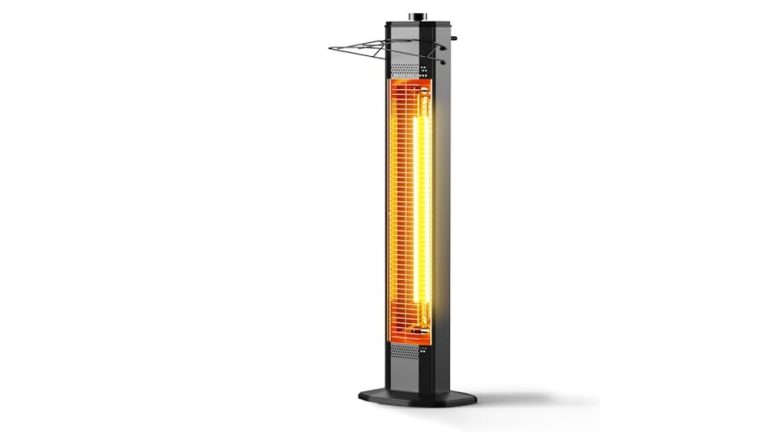
| Propane patio heater | Propane; many models run from a 20-pound tank | Freestanding tower style with wheels for portability | Open seating areas | Directed, broad cone of radiant heat |
| Electric patio heater | Watts; some models need higher voltage | Wall-mounted or freestanding | Covered or fixed installations | Directional heat without fuel combustion at the point of use |
| Wood-burning fire pit | Wood | Open bowl or pit | Open outdoor areas | Shared heat with smoke and sparks |
| Propane fire pit | Propane | Fire table or bowl | Seating areas that want flame and moderate heat | Cleaner flame with moderate, less directional heat |
Propane patio heater
Propane patio heaters often fall in the roughly 38,200 to 50,000 BTU range, and that output is commonly used for open seating areas. Many are freestanding tower units with wheels, which makes it easier to move them toward the zone that needs warmth.
The trade-off is fuel handling. Many models use a 20-pound propane tank, which can make them portable, but they still need clear space around the unit and enough ventilation for outdoor-only use.
Electric patio heater
Electric patio heaters are measured in watts rather than BTUs. That matters because wattage is the sizing number you compare directly across electric models, and it can be converted to approximate BTU equivalents when you need a rough gas comparison.
These units are often wall-mounted or freestanding, and they fit covered or fixed installations better than combustion heaters do. They can be quieter and cleaner than gas, but some installs need higher voltage, so placement and electrical capacity matter.
Wood-burning fire pit
Wood-burning fire pits deliver flame, smell, and visible ambience, but they also produce smoke, sparks, and ash. They work best in open outdoor areas where airflow can carry smoke away and where embers are less likely to land on nearby surfaces.
The warmth is less directional than a patio heater’s. That makes it useful for a loose group around the fire, but less precise for a single dining zone or a narrow patio.
Propane fire pit
A propane fire pit is cleaner than a wood-burning fire and gives more controllable flame. It is often built as a fire table or bowl, which makes it practical when you want moderate heat and a strong visual center.
It still needs a propane fuel supply, and it still creates a flame zone that must stay clear of overhead obstructions and combustible surfaces. The heat feels gentler and broader than a patio heater at the same distance.
Which keeps people warmer at a fixed distance?
At a fixed distance, a patio heater usually keeps people warmer. Its radiant pattern is easier to aim at the chairs, bench, or table that needs heat, while a fire pit spreads warmth more loosely and loses comfort faster as the seating moves outward.
Bistro set
For a 2-person bistro set, a patio heater is usually the better pick if the goal is steady warmth at the table edge. A compact fire pit can feel pleasant, but the strongest heat stays close to the flame and may not reach both seats evenly.
Picture a small café-style table on a narrow patio. If the chairs sit 4 to 6 feet from the source, the directed output from a patio heater is more likely to keep hands and laps warm without overloading the space with flame heat.
Six-seat dining
For a 6-seat dining table, a patio heater is usually the stronger choice because the heat needs to cover more than one chair at once. A centered or well-placed heater can wash the table zone with usable warmth, while a fire pit often leaves the far side of the table cooler.
The bigger the table, the more important directional heat becomes. If the seating is spread across the long edges, one central heater often works better than a low fire source at the perimeter.
Sectional lounge
For a sectional lounge, the choice depends on shape. A patio heater wins when the sectional forms a defined zone and the seating faces a single warm side. A propane fire pit can work when the group wants flame at the center and nobody is far from the bowl.
Say your lounge has deep cushions and seats arranged in a U-shape. A central fire pit can create shared warmth, but a patio heater placed just off-center may keep the outer seats more comfortable in a light breeze.
Open deck
For an open deck, a patio heater usually wins because open layouts lose heat fast to air movement. The wider the deck and the more exposed the edges, the more useful a taller, directional unit becomes.
A fire pit can still work on an open deck if the main goal is atmosphere near a small cluster of seats. But once the deck is broad and the wind rises, the warmer choice is usually the heater with the tighter heat pattern.
How many BTUs does a patio heater need for my patio?
Most patios should be sized by layout first, then by BTU. Higher BTU usually means more heating potential, but only if the heat can actually reach the seating zone without being blown away or swallowed by an oversized space.
Wayfair groups patio heaters above 50,000 BTUs as a higher-output class, and it lists under 10,000 BTUs for spaces less than 500 square inches. Those figures are not a universal rule for every patio, but they show how quickly the needed output rises as the area grows.
-
Measure the seating zone.
Focus on the area people actually occupy, not the full patio footprint. A heater should cover the table or lounge cluster, because empty square footage does not need warmth.
-
Match output to layout.
Use lower output for a tight bistro set and higher output for a larger dining or lounge zone. If the heater must cover more distance, choose a stronger unit or a more central position.
-
Account for wind exposure.
Open, drafty patios need more effective output than sheltered ones because the air strips heat away. A stronger heater placed poorly can still underperform if the wind hits the seating area head-on.
Do fire pits or patio heaters work better in windy conditions?
Patio heaters usually work better in wind because their heat can be aimed toward the seating zone. Fire pits lose more warmth to drifting air, and smoke can become a problem as soon as the wind starts pushing it across the seating area.
The bigger the gap between the source and the person, the more wind matters. A fire pit may still feel strong right beside it, but a patio heater has a better chance of keeping a wider seating area usable when conditions are moving.
What wind changes in real use
Wind does two things outdoors: it strips warmth away and it breaks up the heat path. That makes distance matter more than nameplate output alone, especially on open decks, corner patios, and exposed backyards.
The Hiland HLDS01, described by CNET as a pyramid patio heater, showed a 7.49-degree average change within 2 feet and a 4.59-degree average change within 4 feet. Those figures point to a simple truth: even strong heaters cool off as spacing grows.
Which is safer under a covered patio?

A patio heater is usually safer under a covered patio than a fire pit, but only when the unit is allowed by the manufacturer and installed with the required clearances. Fire pits are usually less suitable under partial cover because flame, smoke, and ember risk make ventilation and overhead space harder to manage.
Clearances and combustible surfaces
Portable heaters need distance from combustible materials, and that clearance matters more than convenience. Tip-over protection is also important on portable units because a falling heater can turn a warmth problem into a surface or fire hazard.
A fire pit needs even more caution around decking, railings, furniture, and low roofs. The visible flame may look contained, but radiant heat and sparks can still reach nearby materials.
Ventilation and outdoor-only use
Gas heaters and fire pits belong in outdoor settings with proper ventilation. A covered patio can still be outdoors, but it must allow heat and combustion byproducts to move away from people and surfaces.
Wood-burning models add smoke, so they are usually the least suitable choice under partial cover. Propane models are cleaner, but they still need room above and around the flame.
Tip-over and shutoff features
Safety auto shutoff matters because it stops fuel flow when a portable heater tilts. Fire Sense Performance Series, for example, is listed at 46,000 BTUs, warms about 1,600 square feet, uses a 20-pound propane tank, and includes a safety auto shut-off tilt valve.
That kind of feature does not remove clearance rules, but it adds a layer of protection if the unit is bumped or shifted. On a covered patio, that can matter as much as raw output.
Choose Patio heater if… / Choose fire pit if…
Choose Patio heater if you want the warmest seats to be a little farther from the source, such as a dining table, a bistro set, or a defined lounge zone. Choose it if wind is a problem, if you want a cleaner option under a permitted covered area, or if you need a freestanding tower that can move to where the seating changes.
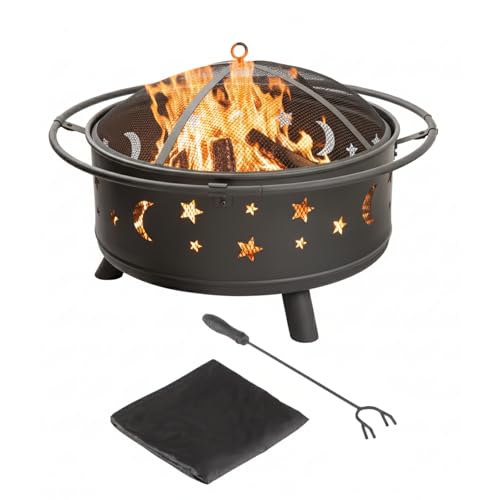
Choose fire pit if you want flame to be part of the experience, if the group sits close together, and if the space is open enough for smoke and sparks to dissipate. It fits best when shared warmth and ambience matter more than pushing heat to the far edge of a seating layout.

Frequently asked questions
Does a patio heater keep an outdoor space warmer than a fire pit?
Usually yes, if the goal is warmth at a set seating distance. A patio heater sends more directed heat toward chairs and tables, while a fire pit gives stronger heat near the flame and more shared warmth around the circle. Wind and layout still decide the final result.
How far does a patio heater warm compared with a fire pit?
A patio heater generally holds useful warmth farther from the source than a fire pit does. The exact distance depends on output, wind, mounting height, and placement, but patio heaters are better for seating zones that sit beyond the immediate edge of the flame area.
Are propane patio heaters cheaper to run than fire pits?
Not always. Propane patio heaters and propane fire pits both burn fuel, but a patio heater may spend fuel more efficiently when you only need directed warmth for a table or lounge. Wood fire pits avoid propane cost, yet they add ash cleanup and usually give less controlled heat.
What type of outdoor heater is best for a seating area with a table
A patio heater is usually the better fit for a seating area with a table because it directs heat into the zone where people sit and eat. Electric models can work well for covered or fixed installs, while propane tower units suit open dining areas.
Can you use a patio heater on a deck or under a pergola?
Often yes, but only if the unit is approved for that placement and clearances are met. Electric models are commonly used in fixed or covered settings, while gas units need outdoor ventilation and enough distance from combustible overheads and side surfaces.
Do fire pits produce more ambience than patio heaters?
Yes. Fire pits usually produce more visible flame, which adds ambience and gives the space a clear focal point. Patio heaters are generally better at moving heat to people, while fire pits are better at making the seating area feel like it revolves around the flame.