Are Radiant Heaters Efficient for Spot Heating? A Guide
Yes, radiant heaters are efficient for spot heating when their direct heat footprint matches the occupied zone. If that warm area is smaller than the space you actually use, the heater spends power on empty air or nearby surfaces. That mismatch increases runtime, comfort complaints, and operating cost. This guide explains how radiant spot heating works, how to judge coverage, and when a radiant heater is the better choice.
How Infrared Heat Works for Targeted Spaces
A radiant heater is efficient for spot heating when its infrared output reaches people or objects in the exact area you occupy. Radiant heaters send heat straight to nearby objects and people, skipping the air in between, so performance depends on line of sight, distance, and how long you stay in the zone.
That is why this question is about coverage, not just heater type. A unit can have enough output on paper and still feel weak if the beam misses your seated position or if the mounting height spreads the heat beyond the target area.
Direct infrared heat versus heating the air first
Infrared heating warms occupants and surfaces directly. Convection heating warms air first, then depends on that air to carry comfort through the room. In still air, radiant heat often feels faster because it does not wait for the whole room to warm up.
Frico describes radiant heaters as creating fast and efficient heating without heating surrounding air, and notes that spot and zone heating direct heat to where it is most needed. That fits desks, entries, and other fixed positions.
Why occupied-zone coverage matters more than whole-room output
Zone heating only works when the occupied area is small enough for the heater to cover it with direct heat. If the warm footprint is much smaller than the room, the heater may still be efficient in a comfort sense, but not in a practical sense for the space you actually use.
Think of it this way: a 1,500-square-foot house and a 12-square-foot desk corner do not need the same heating strategy. The real question is whether the heater covers the occupied zone for the time you sit, stand, or work there.
Where perceived comfort can beat higher wattage
Higher wattage does not always mean better comfort. A lower-watt radiant heater can feel more effective than a stronger convection unit if the radiant beam reaches skin and surfaces directly, because perceived warmth starts as soon as the beam hits the target area.
That is one reason radiant heating is often selected for zone heating, spot heating, and supplemental heating. The comfort gain comes from targeted delivery, not from trying to condition every cubic foot of air.
📊 The Chromalox KR spot heating assembly is rated from 0.8 to 1.8 kW. Source: Chromalox Type KR Spot Heating Assembly.
How spot heating changes the cost question
Spot heating changes the bill by changing runtime and area. A radiant heater only saves money when it lets you heat fewer square feet, for fewer minutes, than a whole-room approach would require. If the heater runs longer because the beam is poorly aimed, the expected savings shrink quickly.
Watts, runtime, and operating cost
For electric radiant heaters, watts tell you input power. A 1,500-watt unit draws about 1.5 kilowatts while running. Cost is then a simple runtime calculation: power in kilowatts multiplied by hours of use, then multiplied by your electricity rate.
Example: at a given electricity rate, a 1,500-watt heater running for 2 hours uses about 3 kWh and costs roughly $0.48. Run the same heater for 6 hours and the cost rises to about $1.44. Intermittent use matters more than peak wattage for spot heating.
When intermittent use lowers the bill
Spot heating can lower cost when the occupied zone is used in short blocks. A desk heater for a 90-minute work session, or a bathroom heater for a short morning routine, may cost less than conditioning an entire room for the same period.
That savings does not happen by default. It depends on turning the heater on only when the zone is occupied, placing it so the beam reaches the target area, and choosing a wattage large enough to create comfort without long nonstop runtime.
Radiant vs convection heating: which works better in your space?

Radiant heating usually works better when you want immediate warmth aimed at a person or surface. Convection heating usually works better when you need the room air itself to warm up and stay warm for longer periods. The right choice depends on draft, ceiling height, and how fixed the occupied zone is.
Drafty rooms and moving air
In drafty spaces, radiant heat often holds up better than convection because moving air strips heat from the room faster than a direct beam strips it from a person. Frico notes radiant heaters are suitable for offices, shops, industrial premises, outdoor environments, and public spaces, and are especially suitable for industrial facilities with high ceilings.
That said, drafts can still hurt comfort if the beam does not reach the body long enough. A radiant heater can warm you while the air stays cool, but the beam has to stay on target.
Still air and short-range warmth
In still air, radiant heating gives quick comfort with less waiting. A small seating area, a reading corner, or a workbench within the beam often benefits more from infrared heat than from an air-warming unit that spends its output on the full room.
If you need heat only while you are present, and only in one fixed spot, radiant often has the edge. If you need the whole room to feel even after you leave the heater on for a while, convection may be the better fit.
When an oil-filled heater is the better zone-heating choice
An oil-filled heater can be the better zone-heating choice when you want slower, steadier comfort in a small enclosed room and do not need instant beam heat. It warms air and surfaces gradually, which can suit bedrooms or offices where the same zone stays occupied for hours.
Radiant wins on fast, targeted warmth. Oil-filled units can win when the goal is gentle background heat with less sensitivity to line of sight. In practice, the best choice depends on whether the person or the room is the main target.
Where are radiant heaters most efficient?
Radiant heaters are most efficient in fixed, occupied zones where the beam can stay aimed at the user. They work best for targeted, immediate warmth in a specific spot, especially when the person sits or stands close enough for the infrared footprint to cover the body without spilling far into unused space.
Desks and seated work
For a desk, a radiant heater is usually the best spot-heating option when it sits low enough to reach the lower torso and legs without glare. A wall-mounted or under-desk radiant unit can work well if the user stays in one chair position and the beam is not blocked by the desk front.
Bathrooms and quick morning use
Bathrooms are a strong use case when the heater is used only briefly and the space is small. The key is fast comfort, not whole-room heating. Ceiling or wall placement often matters more than raw wattage because the heater must cover the standing area without being too close to water zones or blocked by towel bars and mirrors.
Garages, workshops, and entryways
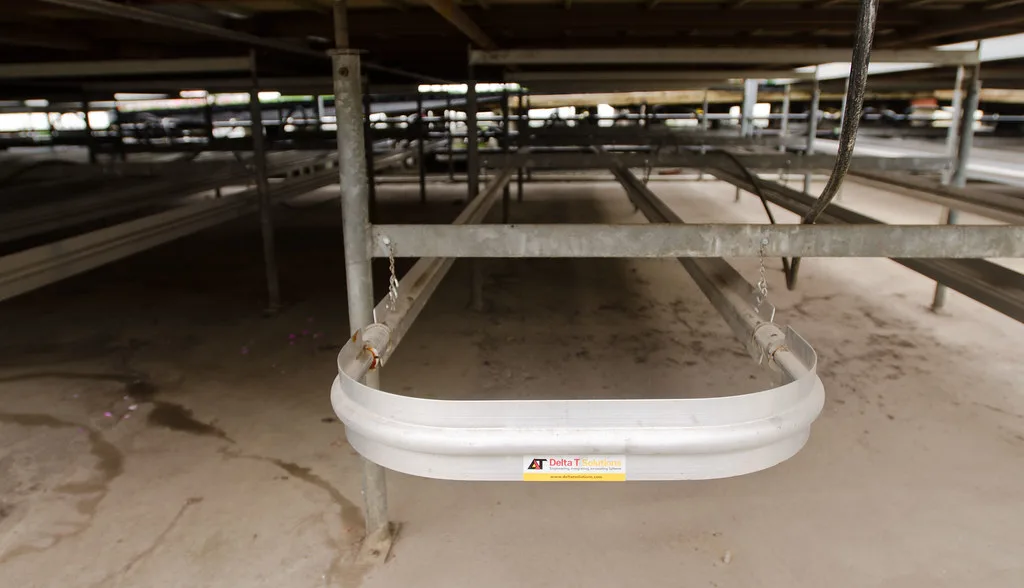
Garages and workshops benefit when the work happens at a bench or within a narrow bay. Ceiling-mounted radiant heater designs suit aisleways and entry points, and they can be mounted at angles. Chromalox lists the KR spot heating assembly for 0.8 to 1.8 kW, or 2,730 to 6,142 Btuh, and for aisleways and entryways.
That is the right kind of heating for large open areas where people pass through or stand in one place. The beam should cover the work path, not the whole garage volume.
Nurseries and other low-mobility spaces
For nurseries and similar low-mobility spaces, radiant heat can work if it is fixed, shielded from direct contact, and sized for a limited occupied zone. The goal is stable, gentle comfort where the person is located, not a broad blast of heat across the room.
Because movement is limited, distance and mounting height matter more than in a hallway or workshop. A heater that is too close may feel harsh, while one that is too far may do little at the occupied spot.
Decision matrix: match the heater to the spot
Use the room, the mounting height, and the beam pattern together. The table below gives a practical decision rule for common spot-heating jobs, along with likely failure modes that make a radiant heater feel inefficient even when the unit itself is fine.
| Use case | Ideal heater type | Typical mounting height | Expected comfort range | Likely efficiency failure modes |
|---|---|---|---|---|
| Desk | Electric radiant heater, wall or under-desk focused on legs and torso | About 2.5 to 4 ft from the seated zone, depending on layout | One chair position, roughly 3 to 6 ft from the emitter | Glare, blocked line of sight, heat aimed above the knees |
| Bathroom | Electric radiant heater for quick, short use | Ceiling or high wall placement outside splash zones | Standing area within direct beam for brief sessions | Too much distance, mirror reflections, short runtime with weak coverage |
| Garage bench | Ceiling-mounted radiant heater | High enough to clear storage, low enough to reach the bench | Narrow work bay, roughly 6 to 10 ft from the source | Beam misses the work surface, heat lost to unused floor area |
| Entryway | Ceiling-mounted radiant heater at an angle | Overhead, angled toward the path | Door area and short pass-through zone | Heat aimed into open air, repeated door opening, draft washout |
| Nursery | Fixed radiant source with careful placement and shielding | Higher wall or ceiling placement away from contact | Small occupied zone around crib or chair, as designed | Overheating one spot, direct glare, poor control of distance |
| Workshop bay | Ceiling-mounted radiant heater or industrial infrared unit | Above the bay, angled toward the standing area | Standing and tool-use zone only | High ceilings without enough output, beam spread too wide |
Suppose a 12-by-14-foot workshop has one bench against a wall. A ceiling-mounted radiant heater aimed at the bench can make that one zone comfortable without trying to heat the whole room. The same unit aimed toward the center of the room may feel weak where the person actually stands.
What wattage or BTU/h do you need for spot heating?
Use wattage or BTU/h to match output to the target zone and distance, not to guess at whole-room capacity. For electric radiant heaters, plug-in portable units commonly fall into the 1,500-watt class, while product specs for fuel or industrial units often use BTU/h. Both numbers help compare output, but they do not replace placement.
How to size by target area and distance
Start with the occupied footprint. A desk corner needs less reach than a garage bay. As distance increases, the beam covers a wider area and the direct heat on the body drops, so a heater mounted too high can feel underpowered even if the label looks large.
For ceiling-mounted radiant units, angle placement matters as much as capacity. Chromalox lists the KR heater as mountable horizontally, vertically, or at an angle, which matters because the beam must stay on the occupied zone instead of spilling into unused floor area.
Portable plug-in wattage ranges
For indoor spot heating, portable electric radiant heaters commonly sit in the lower kilowatt range used by plug-in household circuits. The important step is matching the wattage to a small zone and short runtime, not assuming more watts always means better comfort.
A 750-watt or 1,500-watt unit can be reasonable for a desk or small sitting area if the beam reaches the body. A higher wattage without better aim may simply waste more power outside the useful footprint.
What BTU/h tells you in product specs
BTU/h helps compare output across products, especially industrial or fuel-based units. The KR spot heating assembly is listed at 2,730 to 6,142 Btuh, which is useful for comparing capacity in aisleways, entries, and similar spaces.
Use BTU/h as a capacity label, then check whether the mounting location, beam angle, and ceiling height fit the zone. Output alone does not tell you whether the occupied spot is actually covered.
Common reasons a radiant heater feels inefficient
Most complaints about “inefficient” radiant heaters come from poor alignment, not from the basic technology. A heater can be fine on paper and still fail in use if the beam misses the body, the unit sits too high, or the space has more drafts and distance than the beam can handle.
Line-of-sight problems
Radiant heat needs a clear path. If furniture, cabinets, or the door frame blocks the beam, the heater may warm the wrong surface or nothing useful at all. That is a common reason a desk heater feels weak while a direct-seated setup feels comfortable.
Too much distance or mounting too high
Distance lowers the effect of radiant heat. Mounting too high spreads the beam across a larger area and reduces warmth at the target. In high-ceiling spaces, that is why ceiling-mounted radiant heaters work best when aimed at the occupied zone rather than pointed generally downward.
Glare, missed coverage, and heat loss outside the beam
Glare can make a heater unpleasant before it becomes warm enough. Missed coverage wastes input power on the wrong surfaces, and heat outside the beam does little for comfort. A common mistake is buying a larger radiant unit when a ceiling angle or closer placement would have warmed the spot more efficiently.
Frequently asked questions
Are radiant heaters efficient for spot heating?
Yes, when the beam hits the occupied area directly. Radiant heaters send heat to people and objects without first warming all the air, so they work well for desks, entries, benches, and other fixed spots. They are inefficient when the direct heat footprint misses the user or spills into unused space.
Do radiant heaters cost less to run for spot heating?
They can, but only under the right use pattern. The cost advantage comes from heating a smaller occupied zone for a shorter runtime instead of conditioning the whole room. If the heater runs longer because the beam is poorly aimed or the space is too large, savings shrink fast.
When is a radiant heater better than a convection heater?
Radiant is usually better when you need quick, direct warmth at one spot, especially in a drafty or open area. Convection is usually better when you want the room air to warm more evenly. If you sit or stand in one place, radiant often has the edge.
Are infrared heaters good for a desk, bathroom, or garage spot?
Yes, those are some of the best uses for infrared heat because the occupied zone is narrow and easy to aim at. A desk needs a low, direct beam. A bathroom needs short, quick coverage. A garage spot works best when the heater points at the bench or standing area.
Do radiant heaters work in drafty rooms or high ceilings?
They often do better than convection in drafty spaces because they heat the person directly instead of relying on warm air. High ceilings can still be a problem if the beam is too far from the occupied zone. Ceiling-mounted radiant heaters work best when angled toward aisleways, entries, or work bays.
Are radiant heaters better than oil-filled heaters for zone heating?
They are better when you want immediate, directed warmth and a defined spot. Oil-filled heaters can be better when you want slower, steadier background heat in a small room for a long stretch. The better choice depends on whether the target is the person in a spot or the room around them.
Can radiant heaters be used as supplemental heat?
Yes. Radiant heating is often selected for supplemental heat because it can add comfort without taking over the whole room. That works best when the main heating system leaves one corner cool, or when you only need extra warmth during short, occupied periods.