Are Wall Heaters Efficient for Whole-House Use?
Yes, but only in a very small home with low heat loss, tight insulation, and a wall heater matched to that load. Otherwise, it runs hard, leaves cold corners, and can wear out sooner. This guide shows when one wall heater can cover a whole house, when it cannot, and what to check before you depend on it.
Room comfort does not mean whole-house efficiency
For a tiny, tight home, a wall heater can be a workable primary heat source. For most houses, the answer is no. Electric resistance wall heaters turn electricity into heat with no combustion loss, but whole-house success depends on keeping that heat in the rooms that need it.
Why whole-house efficiency is a different question from room comfort
Warmth in one room does not mean the house is heated well. A wall heater can make the nearby space feel comfortable while hallways, bedrooms, or upstairs rooms stay cool because the heat has to travel too far, or through too many leaks.
That is why efficiency and coverage are separate questions. A heater can convert electricity to heat very well and still be a weak whole-house choice if the home is large, drafty, or divided into several zones.
📊 Installation costs for ducted heat pumps can range from about $9,000 to $24,000. Source: Consumerreports.
Wall heater decision matrix
This matrix uses home size, insulation, climate, and floorplan to separate three outcomes: a wall heater can work, a wall heater only works with zoned backup, or a wall heater should not be used as whole-house heat. The annual cost column uses one 1500 watt heater, 8 hours per day, 180 days per year, at $0.16 per kWh, which comes to about $346.
| Home conditions | Likely outcome | Annual cost example | Why |
|---|---|---|---|
| Very small home, tight envelope, mild climate, short heat path, few interior doors | Wall heater can work | About $346 for one 1500W unit | Heat stays close to the source and the load is modest. |
| Small home, decent insulation, some draft risk, one level plus short hallway | Wall heater only works with zoned backup | About $692 for two 1500W units | One unit usually leaves remote rooms short; backup heat covers the cold spots. |
| Medium or large home, open plan, stairwell, leaky envelope, cold climate | Wall heater should not be used as whole-house heat | About $1,038 for three 1500W units | Adding units raises runtime and cost fast, but does not fix heat loss or long travel paths. |
| Multi-level home with rooms far from the heater | Wall heater only works with zoned backup, often poor fit | Cost rises with each added zone | Stairs pull heat upward and distant rooms lag behind the setpoint. |
Can a wall heater heat an entire house?
Yes, but only in a very small home with low heat loss and short distances between rooms. In larger homes, the heater may warm one area while the rest of the house never catches up, especially when doors stay open, hallways are long, or the floorplan spreads heat out.
When one unit can cover a very small home
A single wall heater has the best chance in a compact home with good insulation, few rooms, limited air leakage, and mild winter weather. In that setup, the unit does less work moving heat through the building and more work holding a small interior volume at temperature.
When heat path length breaks coverage
Heat path length matters because warm air or radiant warmth has to reach every occupied space. If the thermostat is near the heater but bedrooms sit across a hallway, the nearby space can satisfy the control before the remote room ever feels comfortable.
Suppose a 700-square-foot home has one open living area near the heater and two closed bedrooms at the far end. The living area may feel fine, yet the bedrooms still need another heat source because the distance and door swings break coverage.
Why stairs, doors, and drafts matter
Open stairwells pull warm air upward. Drafty windows, leaky baseboards, and frequent door opening all pull the system off course. Convection units in particular are more affected because they depend on heating air that rises and circulates.
A common first-timer mistake is treating an upstairs landing as proof that the whole house is covered. The landing can warm quickly while the lower floor stays cold, so the system looks stronger than it really is.
What type of wall heater matters most?
The heater type changes how heat moves, but it does not change the basic rule that whole-house heating gets harder as floor area, leakage, and room separation increase. Electric resistance, infrared, and convection wall heaters each fit different jobs.
Electric resistance wall heaters
Electric resistance heaters are 100% efficient at converting electricity into heat, according to WarmlyYours. That makes them simple and predictable, and many models are hardwired or plug-in units that run on 120V or 240V circuits.
That conversion claim does not make them a strong whole-house choice. It only means nearly all the electrical input becomes heat in the room, which is useful for supplemental heat and short runs, not necessarily for heating every room all winter.
Infrared wall heaters
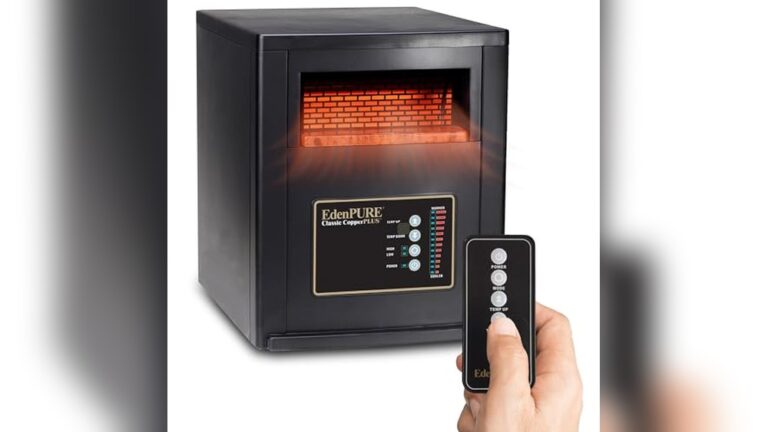
Infrared wall heaters warm objects and people directly rather than just the air. WarmlyYours describes infrared panels as silent and energy-efficient supplemental heat, which is why they can feel fast in a spot zone.
They are better for line-of-sight warming than for whole-home coverage. If the warm zone does not reach a bedroom, bathroom, or hallway, the heater may feel pleasant at the couch and still miss the rest of the house.
Convection wall heaters
Convection wall heaters warm air and let it rise and circulate. That makes them common in bathroom and small-room wall units, but it also means they warm more slowly than radiant heat and lose performance when drafts and open doors keep disrupting airflow.
For a closed, compact room, convection can be practical. For a house with many openings, it usually needs help from other heat sources.
How many wall heaters do you need?
In most homes, the right question is not how many heaters fit the wall. It is how many separate zones need heat, and whether a wall heater can serve each zone without overloading the circuits or driving up runtime. More units often mean higher cost before they mean better comfort.
Sizing by room count, not guesswork
Start with the coldest occupied rooms and map the floorplan. If one heater can handle the main living area but not the bedroom wing, you may need zoned backup rather than a whole-house wall-heater plan.
- Count the rooms that must stay comfortable at the same time.
- Note doors, hallways, and stairwells between those rooms.
- Check whether the home is tight, average, or drafty.
- Decide whether a single zone can reach every occupied area.
- Use backup heat for rooms that sit far from the main unit.
Why wattage and circuit capacity set the ceiling
Wattage is the electrical input, so it tells you both running cost and circuit load. A common 1500 watt space-heater example gives a useful benchmark because many small heaters fall near that level, and output increases only so far before the circuit becomes the limiting factor.
For a wall heater, adding units is not free. Two or three heaters can solve a coverage issue in a small home, but they also multiply electric draw, wiring needs, and the chance that one room gets overheated while another still lags.
When zoning is better than adding more units
Zoned backup works better when the house has clearly separated areas. A wall heater can handle one zone, while a ducted system, mini-split, or other backup handles the rest. That usually beats trying to force one or two wall units to do every job.
Are wall heaters cheaper to run than central heat?
Sometimes in the short term, but often no across a full heating season. Electric resistance wall heaters are simple to operate, yet their cost depends on wattage and runtime. If a cold climate makes the heater run for many hours every day, the bill can climb fast.
Wattage, runtime, and electric rate
Cost is easy to estimate. A 1500 watt heater uses 1.5 kWh for each hour it runs. At $0.16 per kWh, that is $0.24 per hour.
If the home needs two or three heaters to cover separate zones, that example becomes about $692 or $1,038. That is why adding wall heaters to solve a whole-house problem often increases cost faster than comfort.
Annual cost comparison versus a ducted heat pump
A ducted heat pump is the more relevant whole-house comparison because it is built for full-home heating and cooling. Heat pumps use less energy than traditional heating and cooling systems, and Consumer Reports tested six ducted heat pump systems for heating and cooling performance in houses about 1,500 to 1,800 square feet.
That same whole-house job is where wall heaters struggle. A wall heater may still be useful in a tight house, but if the home needs many hours of heat across multiple rooms, a ducted heat pump usually has the better cost profile over the season. Installation costs for ducted heat pumps can range from about $9,000 to $24,000, so the upfront price is higher even when operating cost is lower.
Output terms that readers mix up
People often mix output and efficiency labels, which leads to bad comparisons. BTU tells you heating output, wattage tells you electrical input, AFUE applies to furnaces and boilers, and UEF applies to water-heating equipment. They do different jobs.
BTU and what it measures
BTU is a heat output measure. It helps compare how much heat a wall heater can deliver, and manufacturers often pair it with room coverage guidance. It does not tell you whether the heater is a fit for whole-house use.
For example, the Cadet Com-Pak CSC151TW delivers 5120 BTU at 120 volts and uses 1500 watts. The Cadet Com-Pak CSC202TW offers 6825/5120 BTU with 2000/1500 watt options. Those numbers help with sizing and circuit planning, not with boiler or water-heater comparisons.
Wattage and what it measures
Wattage is the electrical input. It matters because it affects both circuit load and operating cost. A heater with higher wattage usually delivers more heat, but it also draws more power, which can shorten runtime on a limited circuit or raise the bill.
AFUE and UEF are for other equipment
AFUE is used for furnaces and boilers, not wall heaters. UEF is used for water heaters, including tankless propane examples such as a 0.93 UEF rating. Danbury Renovation also lists a condensing gas boiler for whole home heating at 60,000 BTU and another model described with 98% thermal efficiency and an energy factor of 0.81.
Those ratings help with the right equipment, but they should not be used to judge a wall heater as if it were a boiler or water heater. Mixing them only muddies the whole-house decision.
Frequently asked questions
Are wall heaters efficient for whole-house use?
Only in a very small home with low heat loss and short heat paths. Electric resistance wall heaters convert electricity to heat efficiently, but whole-house use depends on coverage, heat loss, and runtime. In larger or draftier homes, the heater may be efficient at producing heat and still a poor main system.
How many wall heaters do I need for my house?
Think in zones, not just square footage. One small zone may need one heater, while a split layout may need backup heat for bedrooms or upstairs rooms. If you need two or three heaters to cover the house, the electric cost and installation complexity rise quickly.
What size wall heater do I need for a room or house?
Use room size, insulation, and layout before you choose wattage or BTU. A heater that fits one bathroom may be too small for a bedroom wing or open living area. Check the electrical circuit, then compare the heater’s BTU and wattage against the heat loss you need to cover.
Are infrared wall heaters better than convection heaters?
Neither is always better. Infrared units warm people and objects directly, so they feel fast in a spot zone. Convection units heat air and are common in small rooms and bathrooms, but they are slower and more sensitive to drafts and open doors.