Heater Troubleshooting After Storms or Surge Damage
If a heater will not start after a storm, check the breaker once, the emergency shutoff, and the error code. If it still stays dead, stop resetting it and suspect surge damage. Ignoring that can burn a control board or leave a gas heater unsafe to relight. This guide shows a safe post-storm decision tree for portable corded heaters and hardwired furnaces that will not start, will not heat, or act erratically.
What changed after the storm?

- NIST-traceable calibration certificate included
- White-backlit LED screen for visibility
- Compact size for one-handed use
A heater that fails after a storm can be facing a simple restart problem, moisture intrusion, or real electrical damage. The first split is whether power was lost and the unit just needs normal recovery, or whether lightning, a surge, repeated breaker trips, or water got into the system.
Outage restart versus surge damage
An outage can clear thermostat memory, trip a safety switch, or leave a control waiting for a proper call for heat. A surge can damage a control board, fuse, igniter circuit, or thermostat transformer. Restart issues usually leave normal indicators once power returns. Surge damage often leaves no lights, no codes, or odd behavior that keeps coming back.
Moisture, lightning, and breaker trips
Storms can bring wet venting, damp wiring, flooded utility spaces, and lightning-related spikes. Moisture can trip a GFCI, corrode terminals, or short a board. Repeated breaker trips matter because they suggest overload, a short, or a failing component that should not be kept on and off.
What should you check first?
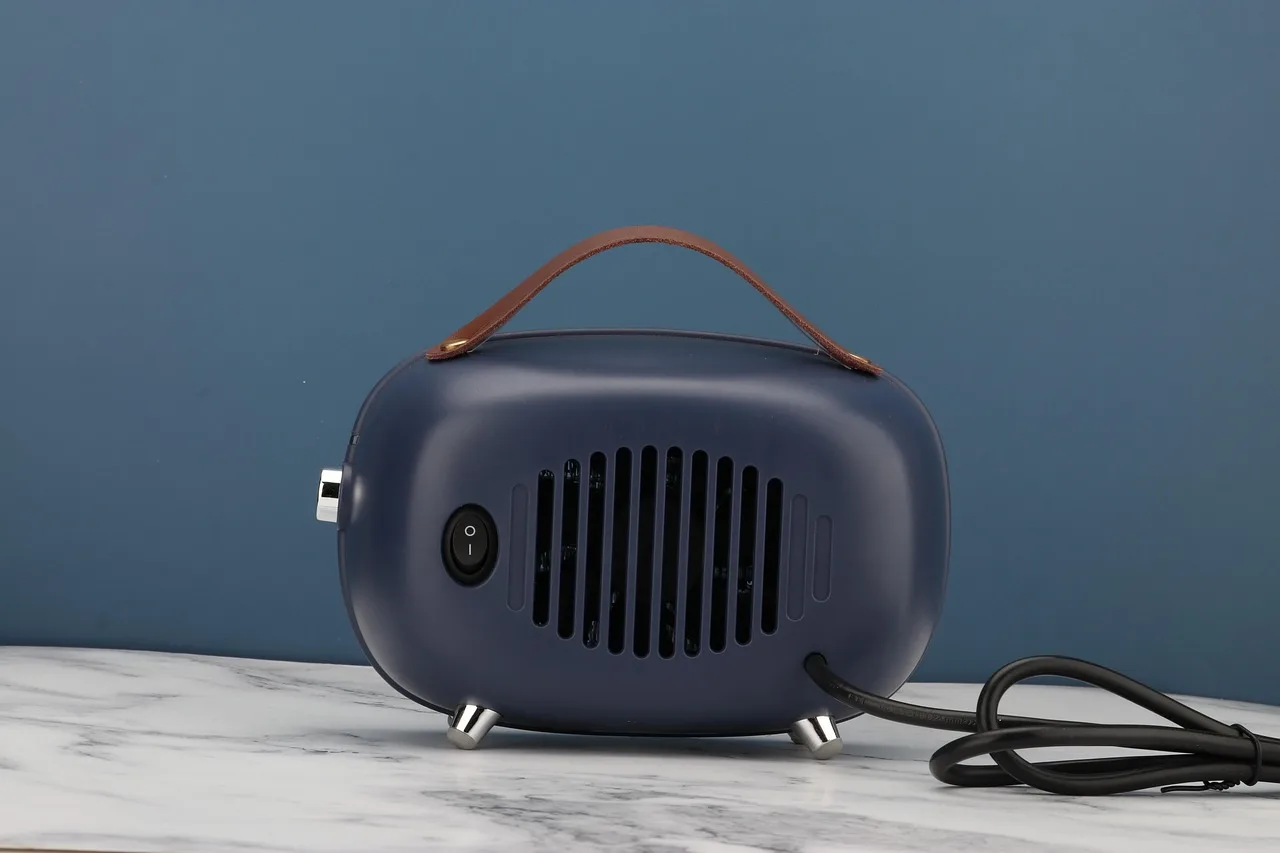
Start with the outside power path, such as the breaker, emergency shutoff, outlet, and GFCI, before opening anything. Then check the thermostat settings and batteries, then visible damage and burning odor. If the heater still looks dead after those checks, do not keep cycling power.
Breaker, disconnect, outlet, and GFCI
- Check the breaker once. For a hardwired furnace, look at the panel and move a tripped breaker fully off, then back on once. If it trips again, stop there; repeated trips usually point to a fault rather than a reset issue.
- Inspect the disconnect. Many furnaces have a nearby service switch or pull-out disconnect. Confirm it is on and seated properly before assuming the furnace itself failed.
- Test the outlet or GFCI. Corded heaters may be on a receptacle that tripped after moisture or a surge. Reset the GFCI if the heater is on a GFCI circuit, then verify the outlet has power with a voltage tester.
Thermostat settings and batteries
A thermostat can lose its setting after an outage, especially battery-backed models. Confirm heat mode, setpoint, and fan setting. If the display is dim or blank, replace the batteries if the model uses them. A hardwired thermostat may still lose its call for heat signal even when the screen is on.
Visible damage and burning odor
Stop right away if you see scorch marks, melted insulation, or wet access panels, or if you smell burning plastic. Those are not restart issues. They point to damaged wiring, a failed board, or moisture where electricity should not be present.
Storm heater triage table
The table below separates common symptoms from the parts most likely involved and shows the safest next step for corded space heaters and hardwired furnaces.
| Symptom | Likely damaged component | Safe homeowner check | Red-flag signs | Recommended next action |
|---|---|---|---|---|
| No power at all | Breaker, outlet, fuse, control board | Check breaker once; test outlet or GFCI with a voltage tester; inspect plug and cord on corded heaters | Repeated tripping, scorch marks, melted plug, dead furnace display | Stop if the breaker trips again or the furnace stays dead; call a technician for hardwired units |
| Display works, no heat | Thermostat, igniter, flame sensor, high-limit switch | Confirm heat mode, setpoint, batteries, and call for heat | Igniter never glows, burner locks out, high-limit trips repeatedly | Do not keep resetting; schedule service |
| Intermittent operation | Control board, loose terminal, moisture intrusion | Look for water, corrosion, or loose visible wiring at accessible points only | No LED codes, random shutdowns, burning odor | Shut off power and call an HVAC technician |
| Heater trips GFCI | Moisture, cord damage, internal short | Reset only if the heater is actually on a GFCI circuit; inspect for dampness | Wet unit, damaged cord, repeated GFCI trip | Leave it off until it dries and is inspected |
| Runs but no heat | Igniter, flame sensor, element, fuse, control board | Verify thermostat call and visible indicators; on corded units, confirm the element is not damaged | No glow, no flame, breaker or fuse damage | Stop if internal parts need access; call service |
Can you plug a heater into a surge protector?
A surge protector is generally not recommended for corded space heaters. Plug high-wattage portable heaters directly into a wall outlet unless the heater manual explicitly allows a different setup. It does not make an undersized circuit safe, and it is not a fix for a hardwired furnace. A furnace needs proper electrical diagnosis, not a plug-in accessory.
Corded space heaters
Most portable heaters should be plugged directly into a wall outlet, and many manufacturers advise against extension cords, power strips, and surge protectors because the current draw is high. If the heater draws 1,500 watts on 120 volts, that is about 12.5 amps, which leaves little margin on a 15-amp circuit.
Hardwired furnaces
Hardwired furnaces do not benefit from a plug-in surge protector. The vulnerable parts are inside the system: board, transformer, inducer, igniter, and control wiring. If a surge affected those parts, a protector on a separate outlet will not repair them.
Load and rating limits
Match the protector’s rating to the heater’s actual load, and do not daisy-chain strips. If the heater manual prohibits power strips, follow the manual. A protector that is under-rated can become part of the problem.
Which parts fail after a surge?
Surge damage tends to hit electronics first, then low-voltage controls, then ignition or safety circuits. The most common problem parts are the furnace control board, fuse, igniter, flame sensor, thermostat, and sometimes the high-limit switch if the unit also overheated. A heater can fail with no obvious broken part visible from the outside.
Control board and fuse
A furnace control board is vulnerable to voltage spikes. After a surge it may show no lights, no error codes, or erratic behavior. A blown fuse is also common in many heaters and furnaces. If a fuse is clearly identified as serviceable in the manual and accessible without opening sealed panels, check continuity with a multimeter, then replace it only with the exact same amperage and voltage rating.
Do not install a higher-rated fuse just to see whether it holds. That can move the failure deeper into the system and create more damage.
Igniter and flame sensor
In gas furnaces, the igniter can fail after a surge and leave the unit trying to start with no flame. Ceramic and silicon carbide igniters can crack or go out of spec. The flame sensor can also be misread after a control fault, which may look like repeated ignition attempts and lockout. Cleaning is only for an accessible sensor that can be reached safely after power is off.
High-limit switch
The high-limit switch may trip when airflow is restricted or when the furnace overheats. Some models have a manual reset, but many do not. If the limit trips repeatedly, the furnace is warning about heat buildup or airflow trouble, not asking for repeated resets.
A common first-timer mistake is to reset a furnace three or four times after a storm because the thermostat still has power. That can turn a simple fault into a hotter failure, especially if the blower, board, or limit switch is already stressed.
What can you test safely yourself?
You can confirm power, basic thermostat operation, and accessible fuse continuity without opening sealed or live parts. Use a voltage tester or multimeter only on exposed test points you can reach safely. If a panel has to come off a hardwired furnace, stop unless the manual clearly allows homeowner access for that component.
Using a voltage tester or multimeter
- Confirm power presence. Test the outlet for a corded heater or the furnace service switch for a hardwired unit. A true power loss points you back to the breaker, disconnect, or outlet before any internal repair.
- Check thermostat call. Raise the setpoint above room temperature and listen for the furnace to respond. If the display works but there is no call for heat, the problem may be thermostat power, batteries, or low-voltage wiring.
- Measure accessible fuse continuity. If the manual clearly identifies a serviceable fuse and allows homeowner access, use the continuity setting with power off, then match the replacement’s amperage and voltage exactly if it is open.
Signs that stop the test
Stop immediately if you find water in the cabinet, a burnt smell, melted insulation, or a breaker that trips again as soon as power returns. Those signs point to a real electrical fault. Do not bypass a safety switch, jump a fuse, or keep retrying a damaged board.
When should you call an HVAC technician?
Call a technician when the heater shows repeated breaker trips, no lights, no codes, lockout after ignition attempts, water intrusion, or visible damage. Those patterns often mean the problem is beyond a homeowner-safe reset. A technician can test the board, transformer, ignition circuit, and safety controls under controlled conditions.
Repeated breaker trips
If the breaker trips more than once, the circuit or heater is drawing more current than it should. Do not keep resetting it. Repeated trips can mean a shorted motor, damaged board, or moisture-related fault.
No lights, no codes, or lockout
A furnace with no lights or codes after a surge often has a failed control board or lost low-voltage power. A unit that lights and then locks out may have an igniter, flame sensor, or gas ignition issue. Those are repair problems, not reset problems.
Water intrusion or visible damage
If storm water reached the heater, ductwork, or nearby electrical parts, leave the unit off. Corroded terminals and wet components can fail later even if the heater seems to work once. Visible scorch marks or melted parts mean the system needs inspection before it is used again.
Frequently asked questions
Why did my heater stop working after a storm or power surge?
A storm can trip the breaker, wet a GFCI circuit, erase thermostat settings, or damage the control board. A surge can also kill a fuse, igniter, or low-voltage transformer. If the heater is dead after power returns, separate simple restart issues from parts that were electrically damaged.
What should I check first if my heater won’t turn on after a surge?
Check the breaker once, the emergency shutoff, and the thermostat settings first. Then look for a blank display, dead batteries, a tripped GFCI, or visible damage. If the breaker trips again or the unit has burn marks, stop and call for service.
How do I know if the breaker, fuse, or control board was damaged?
A breaker that trips once may only need a reset, but repeated trips point to a fault. A blown fuse should show no continuity on a multimeter. A dead control board often leaves no lights, no codes, or erratic operation even when power is present.
What heater parts are most often damaged by lightning or power surges?
The control board is one of the most common failures, followed by fuses, thermostat circuitry, igniters, and sometimes flame sensors. In gas furnaces, a surge can leave the unit trying to start without ignition or lock it out after a failed sequence. Moisture can add more damage at the same time.
What can I test myself without voiding the warranty or making things worse?
You can check the breaker, outlet, GFCI, thermostat settings, batteries, and visible damage. You can also use a multimeter on accessible fuses and obvious power points if the manual allows it. Do not open sealed panels or bypass safeties, because that can worsen the failure and complicate warranty claims.