How Flameless Air Heaters Work Without Open Flame
Flameless air heaters provide safe, efficient warmth without open flames, using a chemical reaction to generate heat. They’re a fantastic, beginner-friendly solution for supplemental heating needs where traditional methods might be unsafe or impractical.
Is the thought of keeping your home cozy this winter giving you a chilly feeling? You’re not alone! Many of us worry about finding a heating solution that’s not only effective but also safe and easy to use. Traditional heaters can sometimes feel complicated or even a little risky, especially if you’re new to managing them. But what if there was a way to get comfortable warmth without the worry of an open flame? Well, there is! Flameless air heaters are a brilliant invention that brings warmth to your space in a unique and reliable way. We’re going to break down exactly how these clever devices work, making it simple for you to understand and enjoy a warmer home.
Understanding Flameless Air Heaters: A Warm Innovation
Flameless air heaters might sound a bit futuristic, but they’re a practical and increasingly popular choice for supplemental heating. Imagine needing heat in a place where a traditional heater just won’t do – maybe a workshop, a garage, a tent, or even a temporary outdoor event space. These heaters offer a genius solution because they bypass the need for combustion, which is how most heaters (like furnaces or portable propane heaters) produce heat. This means no flames, no smoky fumes, and a significantly reduced fire risk, making them a top contender for safety-conscious individuals and families.
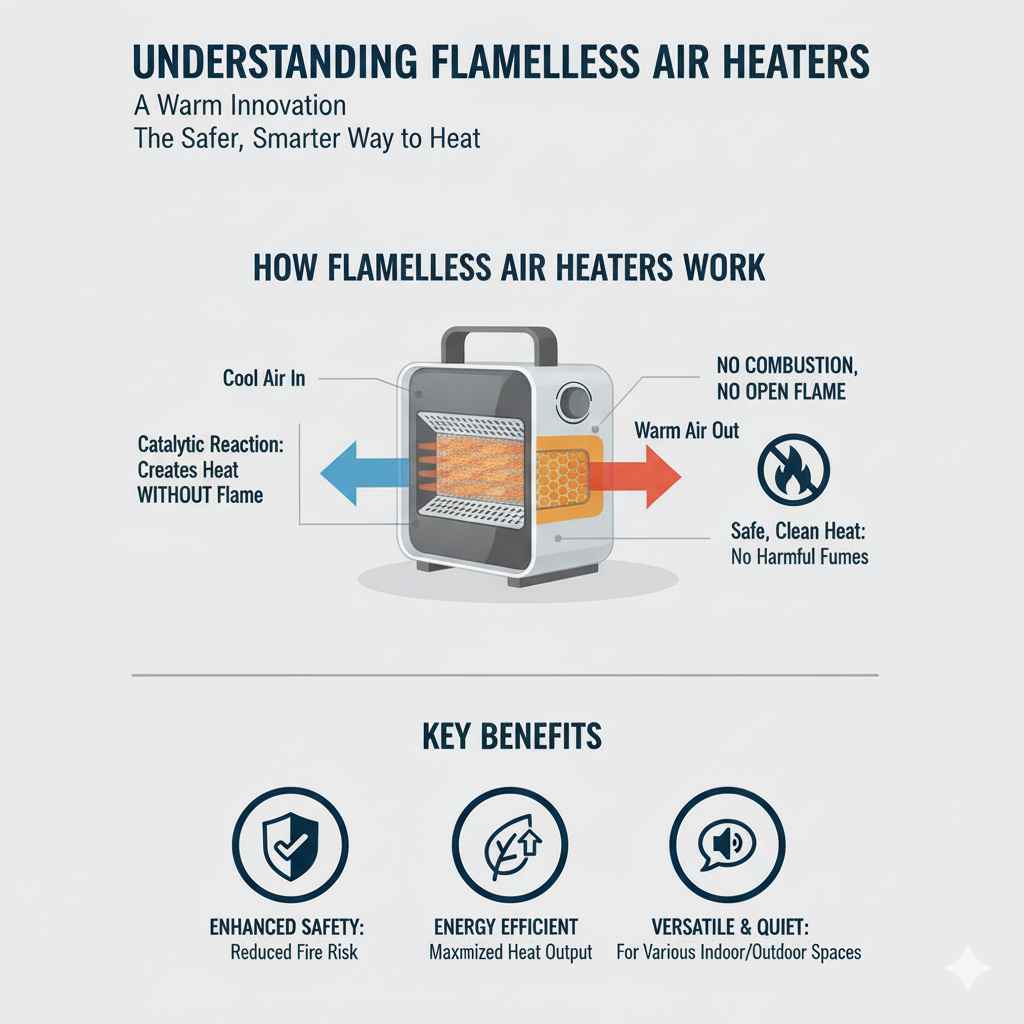
The core principle behind a flameless air heater is a carefully controlled chemical reaction. Instead of burning fuel like propane or natural gas, these heaters utilize a reaction that releases heat energy. This reaction is often triggered by introducing a specific element to a catalyst or by a simple change in atmospheric conditions. The beauty of this system is its simplicity and safety. You don’t need to worry about ventilation in the same way you would with a combustion heater, as there are no harmful byproducts of burning to contend with.
How Do Flameless Air Heaters Work? The Science Made Simple
Let’s dive into the “how” of flameless air heaters. The most common type relies on a process called catalytic oxidation. Don’t let the fancy name scare you; it’s quite straightforward! Think of it like this:
The Catalytic Oxidation Process
- The Fuel: Many flameless heaters use a fuel like propane (LPG). But instead of burning it, they vaporize it.
- The Catalyst: Inside the heater, there’s a special material, often a platinum-based catalyst. This material is like a helper – it speeds up a chemical reaction without being used up itself.
- The Reaction: When the vaporized fuel comes into contact with the hot catalyst, it oxidizes, which is a type of slow burning. However, this oxidation happens without a visible flame.
- Heat Release: This controlled chemical reaction releases a significant amount of heat energy.
- Airflow: A fan or a convection system then pushes the heated air out into your space, warming it up.
It’s similar to how some catalytic converters in cars work, but designed specifically to generate heat for your comfort. The efficiency comes from the fact that the reaction is very complete and controlled, meaning less energy is wasted.
Other Flameless Technologies
While catalytic oxidation is the most prevalent, you might encounter other flameless technologies. For instance, some heaters might use exothermic chemical reactions involving sealed cartridges. These are often designed for very specific, portable, or emergency heating needs. However, for general supplemental home use, catalytic heaters are the most common type of flameless air heater you’ll find.
Key Components of a Flameless Air Heater
To truly understand how these heating marvels work, let’s look at the essential parts:
| Component | Function | Why It’s Important |
|---|---|---|
| Fuel Source (e.g., Propane Tank) | Provides the chemical energy for the heating process. | Without fuel, there’s no reaction and no heat. Needs to be properly connected and monitored. |
| Vaporizer/Regulator | Converts liquid fuel into a gas and controls the flow rate. | Ensures the fuel is in the correct state and amount for the catalytic reaction. |
| Catalytic Element (often ceramic with platinum) | Initiates and sustains the flameless oxidation reaction. | This is the heart of the “flameless” operation, facilitating heat generation without a visible flame. |
| Igniter (Piezo or Electric) | Starts the initial reaction by providing a small burst of heat to activate the catalyst. | Gets the process going. Once running, the catalytic reaction sustains itself. |
| Air Intake | Draws in surrounding air to be heated. | Essential for the convection system to distribute warmth. |
| Fan/Blower | Circulates air over the heated catalytic element and pushes it into the room. | Ensures efficient and even distribution of warm air. |
| Casing/Housing | Encloses all components, providing safety and directing airflow. | Protects the internal workings and ensures safe operation. Often includes safety features like tip-over switches. |
| Safety Features (e.g., Oxygen Depletion Sensor, Tip-Over Switch) | Monitors conditions for safe operation and shuts off the heater if unsafe. | Crucial for preventing accidents, especially in enclosed spaces. An ODS is a vital safety device for propane heaters. You can learn more about propane safety from authoritative sources. |
Setting Up and Using Your Flameless Air Heater: A Simple Guide
Getting your flameless heater ready to warm your space is usually a breeze, designed for ease of use for homeowners. Here’s a general step-by-step guide:
- Choose a Safe Location:
- Place the heater on a stable, level surface.
- Ensure it’s at least a few feet away from any flammable materials like curtains, furniture, bedding, or paper.
- Avoid placing it in an area with poor ventilation if your model has specific ventilation requirements (though most are designed for enclosed spaces with minimal ventilation).
- Never place it directly on carpet or upholstered surfaces; use a heat-resistant mat if necessary.
- Connect the Fuel Source:
- For propane models, securely attach the propane tank regulator to the heater’s inlet valve. Ensure the connection is tight but don’t overtighten.
- Verify that the propane tank valve is closed before attaching.
- Once attached, slowly open the propane tank valve.
- Check for Leaks:
- This is a crucial safety step! Mix a small amount of dish soap with water.
- Apply the soapy water to all connections where the propane tank meets the regulator and the regulator meets the heater.
- Look for bubbles. If you see any bubbles forming, it means there’s a leak. Immediately shut off the propane valve, disconnect, and re-seal or replace the faulty connection. Do not use the heater if you suspect or detect a leak.
- Ignite the Heater:
- Follow your specific model’s instructions. Typically, you’ll turn the control knob to the “pilot” or “ignite” setting.
- Press and hold the igniter button (usually a red or black button). You might hear a clicking sound.
- Keep holding the igniter down until the catalytic element begins to glow red. This indicates the flameless reaction has started.
- Once the element is glowing, release the igniter and slowly turn the control knob to your desired heat setting.
- Adjust Heat Output:
- Most flameless heaters have adjustable heat settings. Turn the control knob to select the level of warmth you need.
- The fan speed may also be adjustable on some models.
- Monitor Operation:
- Keep an eye on the heater and the area around it.
- Ensure the catalytic element maintains its glow.
- Periodically check the area for any safety concerns.
- Turning Off the Heater:
- Turn the control knob to the “off” position.
- Close the valve on the propane tank completely.
- Allow the heater to cool down completely before moving or storing it.
Safety First! Important Considerations for Flameless Heaters
Safety is paramount with any heating device, and flameless air heaters are no exception. While they offer enhanced safety due to the absence of open flames, it’s essential to use them correctly. These heaters still consume oxygen and can produce water vapor as a byproduct of the chemical reaction. Therefore, proper usage and awareness are key.
Critical Safety Features to Look For:
- Oxygen Depletion Sensor (ODS): This is a vital safety mechanism, especially for propane heaters. It detects when oxygen levels in the air drop below a safe threshold and automatically shuts off the heater. Always ensure your heater has this feature if it uses fuel like propane.
- Thermelectric Auto Shut-Off: This shuts off the gas supply if the pilot flame (or catalytic reaction in this case) goes out.
- Tip-Over Switch: If the heater is accidentally knocked over, this switch will automatically shut it off, preventing a potential hazard.
- High-Quality Construction: Look for heaters from reputable brands with strong safety records.
Smart Usage Tips for Safety:
- Ventilation is Still Key: While they don’t produce carbon monoxide from combustion, these heaters do use oxygen. In well-sealed, enclosed spaces, ensure some form of minimal ventilation. A slightly open window or door can make a big difference.
- Never Use in Sleeping Areas: Unless the heater is specifically designed and certified for sleeping quarters and used with appropriate ventilation and monitoring, avoid using it in bedrooms or other areas where people sleep.
- Keep Clearances: Always maintain the recommended clearances from walls, furniture, and other combustible materials. Check your owner’s manual for specific distance requirements.
- Regular Maintenance: Keep your heater clean and perform any recommended maintenance. A clean heater functions more efficiently and safely.
- Carbon Monoxide Detectors: It’s always a good idea to have working carbon monoxide and smoke detectors in your home, especially when using any type of fuel-burning appliance, even those designed for safety like flameless heaters. You can find excellent carbon monoxide safety information from the Consumer Product Safety Commission.
Pros and Cons of Flameless Air Heaters
Like any heating solution, flameless air heaters have their advantages and disadvantages. Understanding these will help you decide if it’s the right fit for your needs.
Advantages (The Pros):
- Safety: No open flame significantly reduces the risk of accidental fires.
- No Fumes: Catalytic oxidation produces primarily water vapor and carbon dioxide, with minimal to no harmful carbon monoxide.
- Portability: Many models are lightweight and designed for easy transport, making them ideal for workshops, garages, camping, or temporary heating.
- Efficiency: They can be very efficient at converting fuel into usable heat, especially when compared to some older heating technologies.
- Quiet Operation: Often, the fan is the only source of noise, making them quieter than loud furnace systems.
- Ease of Use: Simple setup and operation make them beginner-friendly.
Disadvantages (The Cons):
- Dependence on Fuel: Requires a supply of fuel like propane, which needs to be purchased and refilled.
- Not for Whole-Home Heating: They are typically designed for supplemental or spot heating, not for heating an entire house.
- Moisture Production: The catalytic process releases water vapor. In very small, unventilated spaces, this could lead to condensation issues.
- Initial Cost: Some models can have a higher upfront cost compared to basic electric heaters.
- Catalyst Lifespan: The catalytic element can degrade over time and may eventually need replacement, although this typically happens after years of use.
When to Use a Flameless Air Heater: Perfect Spot Heating Scenarios
The genius of flameless air heaters truly shines when you need targeted warmth in specific situations. They excel as supplemental heat sources. Here are some common and effective uses:
- Garages and Workshops: Keep your workspace comfortable during cold months without the risks associated with open-flame heaters.
- Boats and RVs: Provide warmth without the need for extensive ventilation systems.
- Camping and Tent Heating: A safer alternative to other portable heaters when enjoying the outdoors, provided you maintain adequate ventilation in your tent.
- Construction Sites: Temporary heating solutions for off-grid or utility-limited sites.
- Event Tents and Outdoor Gatherings: Offer a cozy environment for guests during cooler evenings.
- Emergency Preparedness: A reliable way to stay warm if your main heating system fails during a power outage (if fuel supply is maintained).
- Basements and Crawl Spaces: For occasional use to take the chill off in less frequently used areas, ensuring proper placement and minimal ventilation.
It’s important to reiterate that for any prolonged use, especially in smaller, enclosed spaces, understanding ventilation requirements and using safety features like an ODS is crucial. Always consult your specific heater’s manual for the most accurate advice.
Maintaining Your Flameless Heater for Longevity
To ensure your flameless air heater keeps you warm and safe for years to come, a little regular maintenance goes a long way. Most of it is quite simple and doesn’t require special tools.
Simple Maintenance Steps:
- Cleaning the Exterior: Regularly wipe down the outside of the heater with a damp cloth to remove dust and debris. Ensure the unit is cool and disconnected from the fuel source before cleaning.
- Checking the Fan Grille: The fan intake and outlet grilles can accumulate dust. Gently clean them with a soft brush or a vacuum cleaner attachment to ensure good airflow.
- Inspecting Fuel Connections: Periodically check the propane hose and regulator for any signs of wear, cracks, or damage. Replace them if you notice any issues.
- Checking Safety Sensors: If accessible, gently clean around the O2 sensor (if your model has one) with a dry, soft brush. Never use solvents.
- Storage: When storing the heater for the off-season, disconnect the fuel source, ensure the unit is clean and dry, and store it in a well-ventilated area away from any potential hazards.
- Professional Servicing: While most maintenance can be DIY, consider having your heater professionally inspected every few years, especially if you use it heavily. A professional can check the catalytic element and internal components for optimal performance and safety.
Always refer to your owner’s manual for specific maintenance instructions relevant to your model. For more in-depth information on appliance maintenance, resources like those from the Department of Energy can offer general guidance on maintaining home heating systems for better efficiency and safety.

Frequently Asked Questions About Flameless Air Heaters
Q1: Are flameless air heaters safe for indoor use?
A: Yes, many flameless air heaters are designed specifically for indoor supplemental heating. Their safety comes from the absence of an open flame. However, it’s crucial to ensure your model has safety features like an Oxygen Depletion Sensor (ODS) and to use it with adequate ventilation, as they consume oxygen. Always follow the manufacturer’s instructions.
Q2: What fuel do flameless air heaters use?
A: The most common fuel source for flameless air heaters is propane (LPG). Some specialized models might use other fuels or chemical cartridges, but propane is standard for most portable and residential-use versions.