How Do Forced Air Heaters Work in Your Home?
Forced air heaters work by heating air and then using a blower fan to push that warm air through a system of ducts to heat your home. It’s a common and efficient way to keep your living space cozy.
Feeling the chill and wondering how your home magically gets warm? If you have a forced air heating system, you’re likely relying on a process that’s both ingenious and incredibly effective. It might seem complex, but understanding how it works is simpler than you think! Many homeowners aren’t quite sure about the inner workings of their heating system, leading to confusion when it comes to maintenance or potential issues. This guide is here to help! We’ll break down the steps in a way that’s easy to understand, no technical background needed. Get ready to feel more confident about your home’s warmth!
How Do Forced Air Heaters Work: A Simple Explanation
At its heart, a forced air heating system is like a warm breeze generator for your entire house. It’s a circulation system, taking in cooler air, warming it up, and then smartly distributing that comfort to all your rooms. This method is popular because it can also be used for cooling (with an air conditioner) and ventilation, making it a versatile all-in-one system for your home’s climate control.
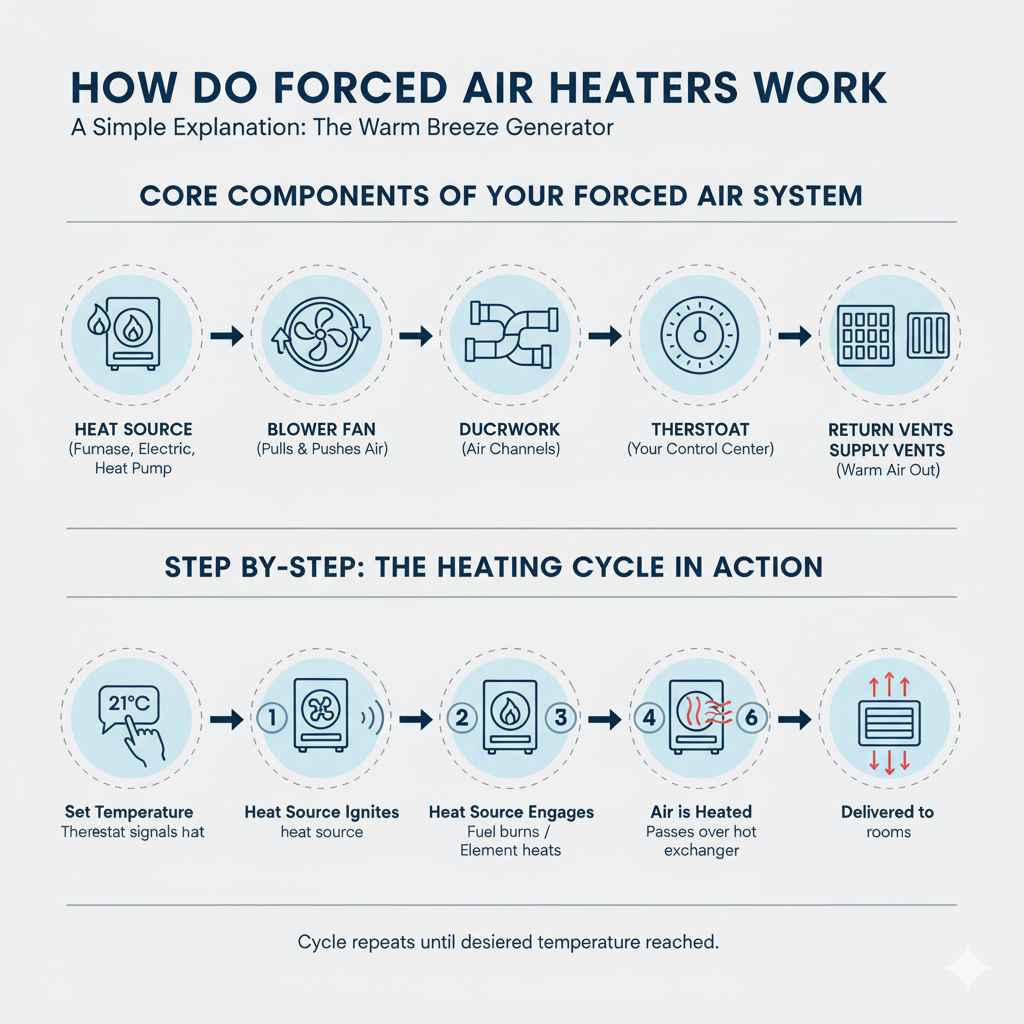
The Core Components of Your Forced Air System
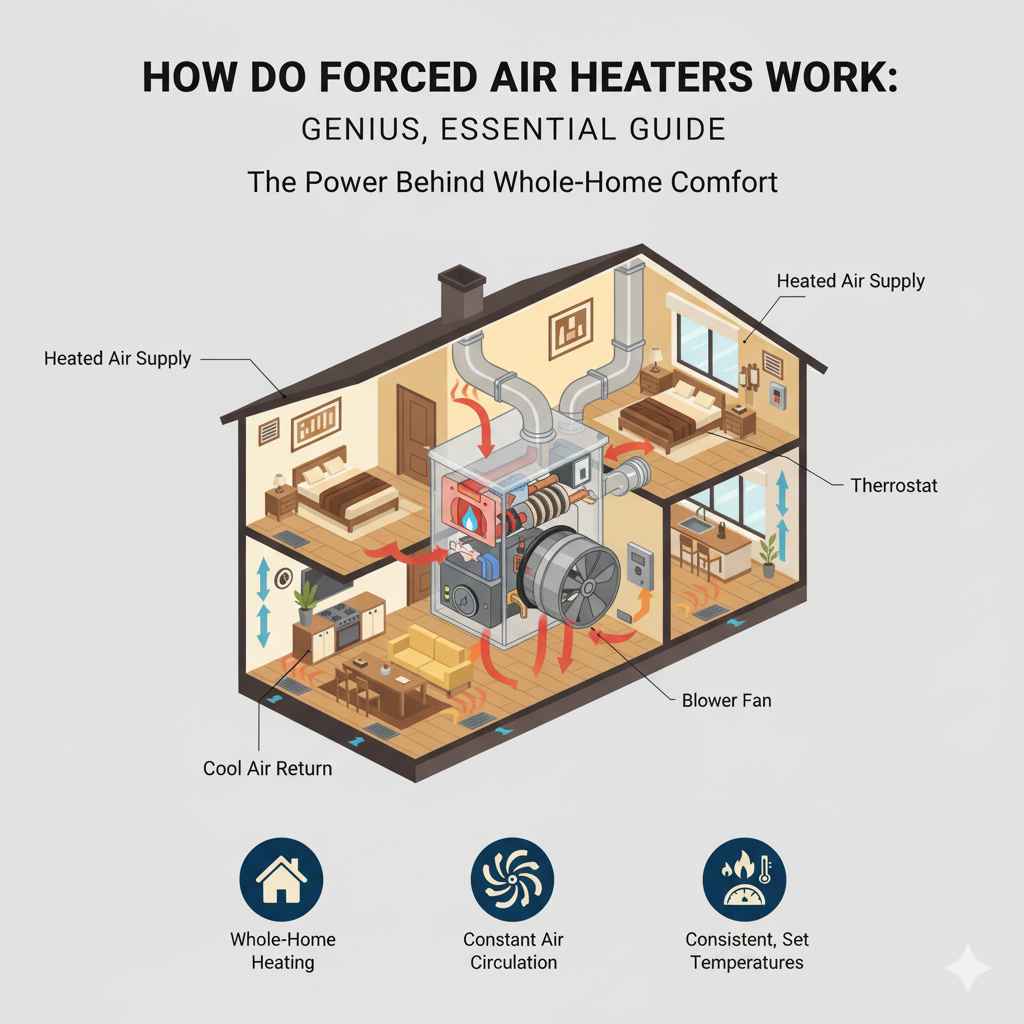
To understand how the magic happens, let’s look at the main players in the forced air game:
- The Heat Source: This is where the ‘heat’ in your heating system comes from. It could be a furnace (burning natural gas, propane, or oil), an electric resistance heater, or a heat pump.
- The Blower Fan: Think of this as the engine of your system. It’s a powerful fan that sucks in air and then pushes the heated air out.
- The Ductwork: These are the network of pipes and channels that run throughout your home, delivering the warm air to where you need it and bringing cooler air back.
- The Thermostat: This is your control center! It tells the system when to turn on, when to turn off, and what temperature you want.
- Return Vents: These are the grilles where cooler air from your rooms is drawn back into the heating system to be reheated.
- Supply Vents (or Register): These are the grilles where the warm, conditioned air is blown into your rooms.
Step-by-Step: The Heating Cycle in Action
Let’s follow the journey of air through your forced air system when you want to warm up your home:
- You Set the Temperature: You fiddle with your thermostat, setting it to your desired cozy temperature.
- The Call for Heat: When the room temperature drops below your set point, the thermostat signals the heat source to start working.
- Fuel is Ignited (or Electric Elements Heat Up):
- Furnace: If you have a gas or oil furnace, it ignites its burner. This heats up a heat exchanger, a metal component that transfers heat from the burning fuel to the air passing over it.
- Electric Heater: If it’s an electric system, the electricity flows through resistance coils, making them glow hot – much like a toaster!
- Heat Pump: A heat pump works a bit differently by extracting heat from the outside air or ground and moving it inside.
- The Blower Fan Engages: Once the heat source is producing warmth, the blower fan kicks in. Its job is to pull the cooler air from your home through the return vents.
- Air is Heated: As the cool air is drawn into the system, it passes over the hot heat exchanger (in a furnace) or through the heated elements (in an electric system).
- Warm Air is Pushed Out: The now-warm air is then pushed by the blower fan into the supply ducts.
- Comfort is Delivered: This warm air travels through the ductwork and is released into your living spaces through the supply vents, raising the temperature in your rooms.
- The Cycle Continues: The system keeps running, circulating air and warming your home until the thermostat senses that your desired temperature has been reached. Then, it cycles off and waits for the temperature to drop again.
Types of Forced Air Heating Systems
While they all work on the same principle of circulating heated air, the “heat source” part can vary. This is an important distinction for understanding efficiency, fuel costs, and environmental impact.
Furnaces: The Classic Choice
Furnaces are the most common type of heat source for forced air systems. They generate heat by burning fuel.
- Natural Gas Furnaces: Very popular due to natural gas being relatively inexpensive and widely available. They are efficient and provide consistent heat.
- Propane Furnaces: A good option for homes not connected to a natural gas line. Propane is stored on-site in a tank.
- Oil Furnaces: Similar to propane furnaces, they require an on-site storage tank. Historically common, they are often seen as less efficient and more labor-intensive than gas.
- Electric Furnaces: These use electric resistance coils to generate heat. They are generally less expensive to install but can be more costly to run due to electricity prices, especially in colder climates.
Heat Pumps: The Efficient All-Rounder
Heat pumps are incredibly versatile because they can both heat and cool your home. They don’t generate heat by burning fuel; instead, they transfer heat from one place to another.
- How they work: In heating mode, a heat pump extracts heat from the outside air (even when it’s cold!) or from the ground (geothermal) and transfers it inside your home. In cooling mode, it reverses the process, moving heat from inside your home to the outside.
- Efficiency: Heat pumps are known for their energy efficiency, especially in moderate climates. They can provide several units of heat for every unit of electricity used.
- Considerations: In very cold climates, traditional heat pumps may need a supplemental heat source (often electric resistance coils) to keep up.
For more detailed information on how heat pumps work, the U.S. Department of Energy offers excellent resources. You can explore their efficiency and types here: Energy.gov Heat Pumps.
The Importance of the Heat Exchanger (For Furnaces)
For gas, propane, and oil furnaces, the heat exchanger is a critical component. It’s a metal chamber through which the combustion gases pass, transferring their heat to the air that the blower fan will circulate. It’s designed to keep the exhaust gases separate from the air that goes into your home. A cracked or damaged heat exchanger is a serious safety concern, as it can allow dangerous carbon monoxide gas to enter your home. This is why annual inspections are so important.
Advantages and Disadvantages of Forced Air Systems
Like any home system, forced air heating has its pros and cons. Knowing these can help you make informed decisions about your comfort and budget.
Pros of Forced Air Heating
Forced air systems are popular for good reasons:
- Fast Heating: Because air is moved quickly through ducts, rooms can heat up relatively fast once the system is running.
- System Versatility: The same ductwork can be used for air conditioning, humidifiers, dehumidifiers, and air purifiers, offering comprehensive climate control.
- Even Heat Distribution: When properly designed and maintained, forced air systems can provide consistent temperatures throughout the home.
- Relatively Affordable Installation: Compared to some other heating systems, especially radiant floor heating, the initial cost of a forced air system is often lower.
- Improved Air Quality: The system naturally filters the air as it circulates, and you can easily add high-efficiency filters or other air quality accessories.
Cons of Forced Air Heating
There are a few downsides to consider:
- Can be Noisy: The sound of air rushing through vents, especially if ductwork is undersized or not insulated, can be noticeable.
- Dry Air: Forced air systems can sometimes dry out the air, especially in the winter. This might require the use of a humidifier.
- Ductwork Maintenance: Ducts can accumulate dust and allergens, requiring regular cleaning. Leaky ducts can also significantly reduce efficiency.
- Requires Fuel Source: Depending on the furnace type (gas, oil, propane), you need access to that fuel source, which can affect operating costs.
- Not Ideal for All Homes: Homes without existing ductwork may find installation expensive and disruptive.
Maintaining Your Forced Air System for Optimal Performance
Keeping your forced air system running smoothly not only ensures comfort but also saves you money on energy bills and prevents costly repairs. Regular maintenance is key!
Regular Filter Changes: Your System’s Lungs
This is the simplest and most crucial maintenance task. Your air filter traps dust, pollen, pet dander, and other particles. A dirty, clogged filter restricts airflow, making your system work harder, reducing efficiency, and potentially causing damage.
- How often? Check your filter monthly and replace it every 1-3 months, depending on the filter type and household conditions (e.g., pets, allergies).
- What type? Standard fiberglass filters are basic, while pleated filters (like MERV 8-13) offer better filtration. Higher MERV ratings filter more, but make sure your system can handle the increased resistance.
Annual Professional Tune-Ups
Just like your car needs an oil change and check-up, your heating system benefits greatly from an annual visit by a qualified HVAC technician. They will:
- Inspect the heat exchanger for cracks (safety first!).
- Clean burners and pilot assembly (for gas/oil furnaces).
- Check electrical connections and components.
- Lubricate moving parts.
- Test safety controls.
- Measure airflow and gas pressure.
- Check refrigerant levels (for heat pumps).
- Ensure overall system efficiency and performance.
Keeping Vents Clear
Ensure that furniture, rugs, or other obstructions don’t block your supply and return air vents. Good airflow is essential for the system to distribute warm air effectively and for return air to be drawn back efficiently.
Ductwork Inspection
Over time, ductwork can develop leaks, especially at the joints and seams. Leaky ducts can waste a lot of energy by allowing heated air to escape into unconditioned spaces like attics or crawl spaces. You can often feel drafts or hear air leaks. While professional duct sealing is the most effective solution, a visual inspection is a good start.
According to Energy.gov, leaky ducts can account for significant energy loss in homes.
Understanding Energy Efficiency and Your Forced Air System
When choosing or maintaining a forced air system, energy efficiency is a big factor. It impacts your utility bills and your environmental footprint.
Annual Fuel Utilization Efficiency (AFUE)
For furnaces, AFUE is the standard measure of efficiency. It represents the percentage of fuel that is converted into usable heat over a heating season. For example, a furnace with 90% AFUE converts 90% of the fuel’s energy into heat, and the other 10% is lost through exhaust.
| AFUE Rating | Efficiency Level | Description |
|---|---|---|
| 80% | Standard Efficiency | Older furnaces or basic new models. Meets minimum federal standards. |
| 80-90% | Mid-Efficiency | Good balance of cost and efficiency for many homeowners. |
| 90%+ | High Efficiency (Condensing Furnaces) | These furnaces recapture heat from exhaust gases, making them very efficient. They require a condensation drain. |
When purchasing a new furnace, look for units with higher AFUE ratings to save on energy costs over time.
Energy Star® Certified Systems
Many modern heating systems, including furnaces and heat pumps, are available as Energy Star® certified models. These products have met strict energy performance guidelines set by the U.S. Environmental Protection Agency. Choosing an Energy Star® model often means investing a bit more upfront but can lead to significant savings on energy bills throughout the lifespan of the appliance.
You can learn more about Energy Star® ratings and how to find certified products at EnergyStar.gov.
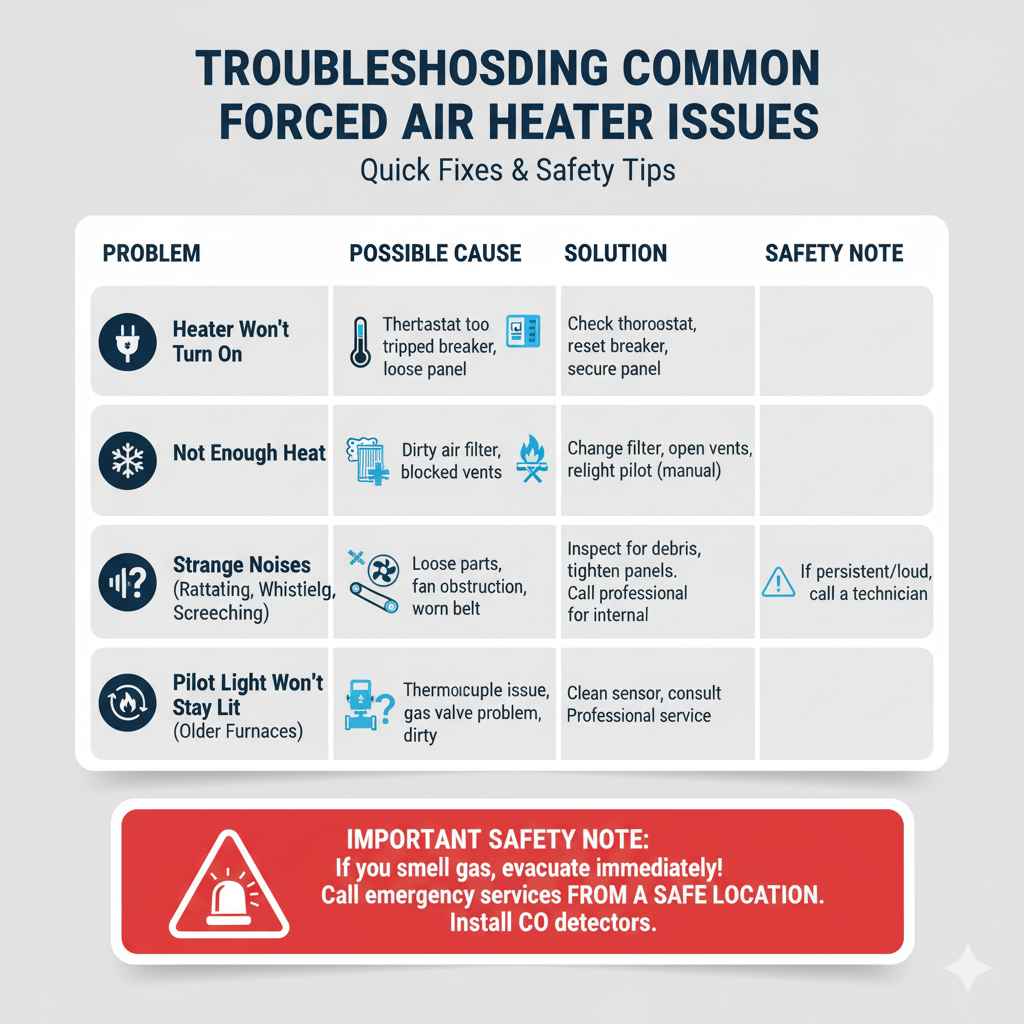
Troubleshooting Common Forced Air Heater Issues
Even with good maintenance, you might run into a minor issue now and then. Here are a few common problems and their simple solutions:
- Heater Won’t Turn On:
- Check your thermostat settings. Ensure it’s set to “Heat” and the temperature is higher than the current room temperature.
- Check your circuit breaker or fuse box. A tripped breaker can cut power to the furnace.
- Ensure the furnace access panel is securely closed, as many have a safety switch that prevents operation if the panel is ajar.
- Not Enough Heat:
- Check your air filter. A dirty filter is the MOST common cause of low heat output.
- Ensure all supply vents are open and not blocked.
- If you have a furnace, check if the pilot light is on (if you have an older model with one).
- Consider if your system is appropriately sized for your home and the current weather.
- Strange Noises:
- Rattling: Could be loose ductwork or components.
- Banging: Might indicate system imbalance or issues with the blower.
- Whistling: Often due to a dirty filter or restricted airflow.
- Screeching/Squealing: Could indicate a problem with the blower motor or fan belt.
- Note: Persistent or alarming noises should be investigated by a professional.
- Pilot Light Won’t Stay Lit (Older Furnaces):
- This could indicate an issue with the thermocouple, gas valve, or a need for professional cleaning and adjustment.
Important Safety Note: If you ever smell gas or suspect a carbon monoxide leak, turn off your furnace immediately, evacuate your home, and call emergency services or your gas company from a safe location. Install carbon monoxide detectors throughout your home.
Frequently Asked Questions About Forced Air Heaters
Q1: How often should I change my air filter?
You should check your air filter monthly and plan to replace it every 1 to 3 months. This depends on the type of filter you use, whether you have pets, and if anyone in your home has allergies.
Q2: Is a forced air system energy efficient?
Forced air systems can be very energy efficient, especially when equipped with high-efficiency furnaces (90%+ AFUE) or modern heat pumps. Regular maintenance and proper system sizing also play a big role in efficiency.
Q3: Can I install a forced air system myself?
While some minor maintenance tasks like changing filters or clearing vents are DIY-friendly, installing a forced air system is a complex job involving electrical, plumbing, and gas lines. It’s best left to qualified HVAC professionals to ensure safety and proper function.
Q4: Why is my heating bill so high with a forced air system?
High heating bills can be caused by several factors: a dirty air filter restricting airflow, leaks in your ductwork, an old or inefficient heating unit, poor insulation in your home, or thermostat settings that are too high.
Q5: What’s the difference between a furnace and a forced air heater?
A furnace is a component that generates heat (usually by burning fuel or using electric resistance). A forced air system includes the furnace (or heat pump), a blower fan to circulate air, and ductwork to distribute that warmed air throughout the home. So, the furnace is the heat source within a forced air system.
Q6: How long do forced air heaters typically last?
With regular professional maintenance, most forced air furnaces can last between 15 to 25 years. Heat pumps generally have a lifespan of 10 to 15 years, though this can vary.
Q7: What is the most common fuel source for forced air furnaces?
Natural gas is the most common fuel source for forced air furnaces in areas where it’s available, due to its relatively low cost and consistent supply.