
Keeping your attic or roof space cool is important. When it gets too hot up there, it can make your whole house uncomfortable and raise your energy bills. Many people find it tricky to figure out How to Remove Heat from Roof Space Efficiently, especially if they’re new to home maintenance.
Don’t worry, it’s simpler than you might think! We’ll walk you through easy steps to cool down that space.
Understanding Roof Space Heat Buildup
The space above your ceiling, often called the attic or roof space, can get really hot during warm weather. This happens because the sun heats up your roof, and that heat travels down. Without good airflow, this heat gets trapped, making your home feel like an oven.
This trapped heat can also stress your air conditioning system, making it work harder and use more electricity.
How Sun Exposure Impacts Roof Heat
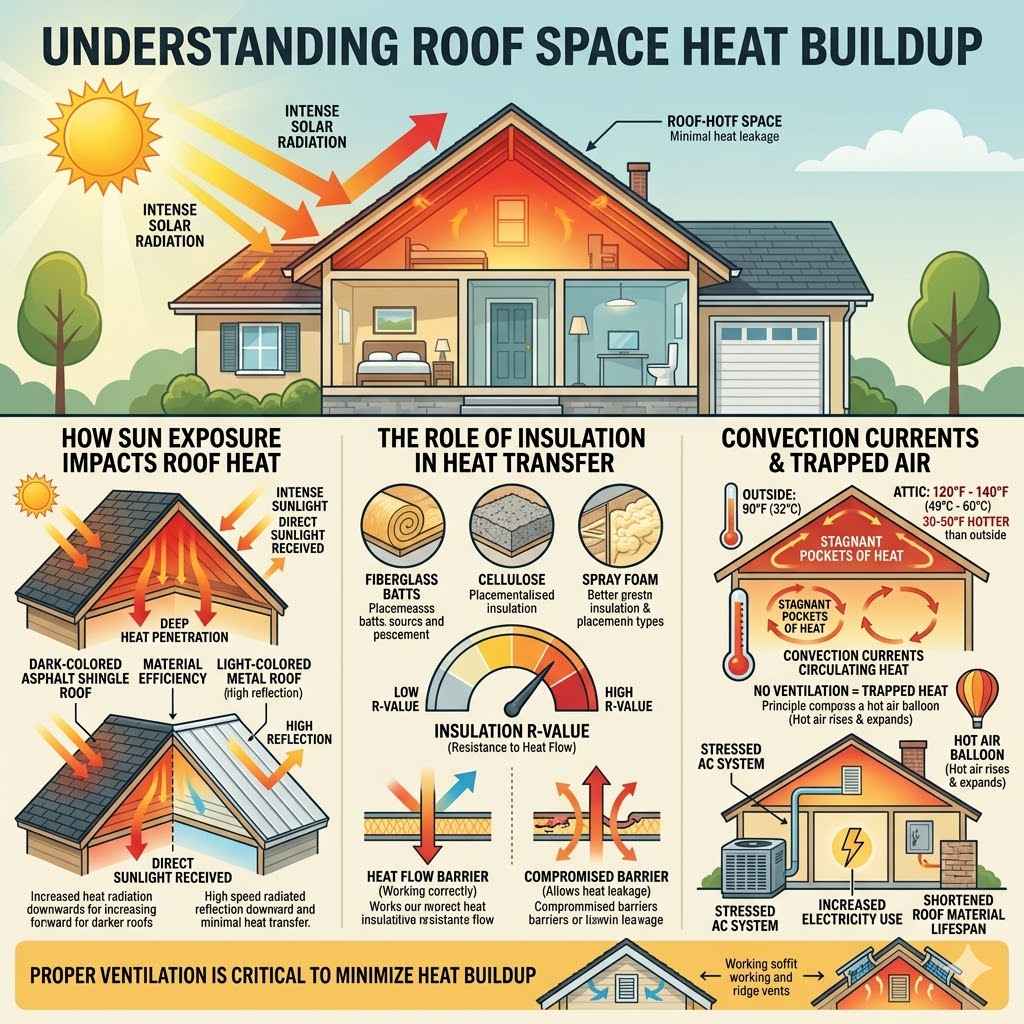
Your roof acts like a giant solar panel. When sunlight hits it, especially dark-colored roofs, a lot of heat is absorbed. This absorbed heat then transfers through the roofing materials and into the attic space below.
Factors like the color of your roof, its material, and the amount of direct sunlight it receives throughout the day all play a big role in how much heat builds up.
Darker roofs absorb more sunlight than lighter ones. For example, a black asphalt shingle roof can get much hotter than a white metal roof. This extra heat then radiates downwards into your attic.
Older roofs may also have compromised insulation, allowing more heat to pass through.
The Role of Insulation in Heat Transfer
Insulation is key to preventing heat transfer. In the summer, good attic insulation acts as a barrier, stopping heat from the roof space from entering your living areas. Conversely, in the winter, it keeps the heat from your home inside.
When insulation is old, damaged, or insufficient, heat can easily find its way in or out.
The R-value of insulation measures its resistance to heat flow. A higher R-value means better insulation. Common insulation materials include fiberglass batts, cellulose, and spray foam.
Each has different performance characteristics and installation methods.
Convection Currents and Trapped Air
Even with good insulation, trapped air can still cause problems. Hot air rises. In a poorly ventilated attic, this hot air has nowhere to go.
It can create stagnant pockets of heat, increasing the temperature significantly. This creates convection currents, where hot air circulates within the attic but doesn’t escape.
Without proper ventilation, the temperature in an attic can be 30 to 50 degrees Fahrenheit hotter than the outside air. This excess heat not only affects comfort but can also shorten the lifespan of your roofing materials and increase cooling costs. Imagine a hot air balloon; the principle is similar, hot air wants to rise and expand.
Ventilation Strategies for Cooler Attics
Proper ventilation is one of the most effective ways to combat heat buildup in your roof space. It allows hot air to escape and cooler, fresh air to enter. This constant exchange of air prevents heat from accumulating and keeps your attic temperature much closer to the outside air temperature.
Think of ventilation like breathing for your attic. When it can breathe, it stays healthier and cooler. There are several types of ventilation systems, and often a combination works best.
Understanding these options will help you choose the right one for your home.
Ridge Vents and Soffit Vents
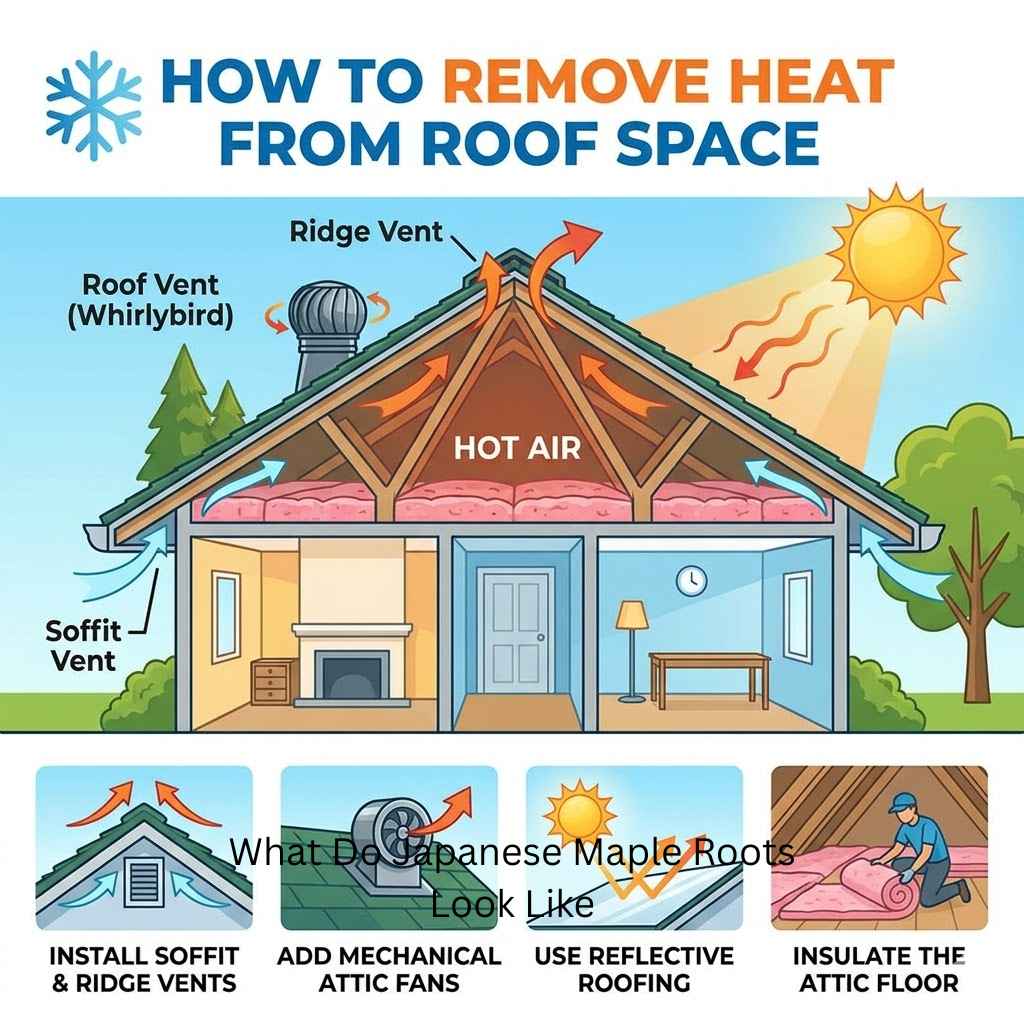
A common and effective ventilation system uses ridge vents and soffit vents working together. Ridge vents are installed along the peak of your roof. They allow hot air that rises to the highest point to escape.
Soffit vents are located under the eaves of your roof, in the overhangs.
These soffit vents allow fresh, cooler air to enter the attic. As the cooler air comes in through the soffit vents, it pushes the hotter air up and out through the ridge vent. This creates a natural airflow pattern, like a gentle breeze through your attic.
It’s a passive system that relies on the physics of air movement.
- Ridge Vents: These are installed along the highest point of the roof. They are often continuous strips that blend in with the roofing material. They let the hottest air escape easily.
- Soffit Vents: These are placed in the overhangs of the roof. They allow cooler outside air to enter the attic space. It’s important that these vents are not blocked by insulation or debris.
Gable Vents and Their Function
Gable vents are typically installed on the triangular end walls of a house, often called the gable. They are usually louvred openings that allow air to pass through. While they can help with ventilation, they are generally less effective on their own compared to a ridge and soffit system.
Gable vents work by allowing air to enter and exit through the same general area. If the wind is blowing in a certain direction, they can create some airflow. However, they don’t provide the continuous, passive airflow that a ridge and soffit combination does.
They are often found in older homes.
Powered Attic Fans
Powered attic fans, also known as attic ventilators, use electricity to actively move air out of the attic. These fans can be very effective at quickly reducing attic temperatures, especially in very hot climates or during periods of extreme heat. They can be installed on the roof or in the gable end of the house.
These fans create a strong suction that pulls hot air out of the attic, forcing cooler air to be drawn in through soffit or other intake vents. They can significantly reduce the workload on your air conditioning system. However, they do consume electricity and require maintenance.
Some are solar-powered, reducing energy costs.
- Installation Options: Can be mounted on the roof as a vent or in the gable wall.
- Energy Consumption: Requires electricity to operate, though some models are solar-powered.
- Effectiveness: Can significantly reduce attic temperatures quickly.
Attic Heat Vents and Wind Turbines
Attic heat vents, like wind turbines, are designed to capture natural forces to ventilate the attic. Wind turbine vents are rotating vents that spin with the wind, drawing air out of the attic. They are a passive ventilation method that doesn’t use electricity.
The spinning action creates a vacuum effect, pulling hot air out. They are effective when there is wind. However, their effectiveness can vary depending on wind speed.
They are a good option for those looking for a low-maintenance, no-electricity solution. They are often seen on older homes and commercial buildings.
Improving Insulation for Heat Management
Beyond ventilation, having the right insulation is crucial for managing heat in your roof space. Insulation acts as a barrier, preventing the heat that does build up in the attic from transferring into your living areas. Without adequate insulation, your efforts to ventilate might not be enough.
The type and condition of your insulation matter a great deal. Over time, insulation can settle, compress, or even be damaged by pests or moisture, reducing its effectiveness. Regularly checking and upgrading your insulation can make a significant difference in your home’s comfort and energy bills.
Types of Attic Insulation
There are several common types of insulation used in attics. Each has its pros and cons regarding cost, installation, and performance. Understanding these differences can help you make an informed decision.
- Fiberglass Batts: These are pre-cut rolls or sections of fiberglass insulation. They are relatively inexpensive and easy to install for DIYers. However, they can be itchy and require protective gear. They can settle over time.
- Cellulose Insulation: Made from recycled paper products, cellulose is blown into the attic. It fills gaps well and offers good thermal resistance. It’s considered eco-friendly.
- Spray Foam Insulation: This is a liquid foam that expands and hardens, creating an excellent air seal. It offers superior insulation performance but is typically the most expensive option and often requires professional installation.
- Mineral Wool Batts: Similar to fiberglass but made from mineral fibers. It offers good fire resistance and soundproofing qualities.
Assessing Your Current Insulation Levels
To know if you need more insulation, you need to assess what you currently have. The recommended insulation levels vary by climate zone. You can typically find charts from government energy departments that suggest the R-value needed for your area.
For many regions, attics should have an R-value of R-38 to R-60. You can measure the depth of your existing insulation and compare it to recommendations. For example, if you have R-19 fiberglass batts and they are only 6 inches thick, you likely need more.
Look for signs of damage, moisture, or settling, as these indicate reduced performance.
Example Scenario: Imagine you have 6 inches of fiberglass batts in your attic. Fiberglass typically has an R-value of about R-3 per inch. So, 6 inches would give you an R-value of R-18.
If your climate zone recommends R-49, you are significantly under-insulated and heat will easily transfer into your home during the summer.
Adding More Insulation
Adding insulation is often a straightforward process, especially if you are just topping up existing insulation. If your current insulation is in good condition but insufficient, you can simply add another layer on top. It’s important to ensure that you don’t cover any existing ventilation baffles, which allow air to flow from the soffits into the attic.
If you are installing new insulation or dealing with damaged insulation, it might be necessary to remove the old material first. Professional installers can help determine the best type and amount of insulation for your specific needs and climate. Adding insulation is one of the most cost-effective ways to improve home energy efficiency.
- Preparation is Key: Clear the attic of stored items. Wear protective clothing, gloves, and a mask.
- Install New Layers Carefully: If adding batts, place them perpendicular to the existing ones if possible. If blowing insulation, ensure even coverage.
- Protect Ventilation: Use baffles to ensure soffit vents remain open for airflow.
The Impact of Air Leaks
Besides direct heat transfer through materials, air leaks are a major pathway for heat to enter your home from the attic. These are gaps and cracks where conditioned air can escape upwards or unconditioned air can enter. Common spots include around light fixtures, plumbing vents, attic hatches, and where walls meet the ceiling.
Sealing these air leaks before adding insulation is a crucial step. It’s often more effective to seal leaks than to just add more insulation if leaks are significant. Think of it like putting a lid on a leaky pot – it won’t hold water very well.
Caulking and weatherstripping are common materials for sealing these leaks.
Advanced Solutions for Extreme Heat
For homes in particularly hot climates or those experiencing persistent issues with roof space heat, more advanced solutions might be considered. These can offer significant improvements in comfort and energy efficiency by directly addressing the heat problem at its source or by enhancing the attic environment.
These methods often involve integrating technology or using specialized materials. They can be more costly upfront but provide long-term benefits. Exploring these options can help you achieve optimal cooling performance in your home.
Radiant Barriers in the Attic
A radiant barrier is a type of insulation material that reflects radiant heat. It’s typically installed in attics, under the roof decking. Instead of resisting conductive heat flow like traditional insulation, it works by reflecting the heat away from your home.
During hot weather, a significant amount of heat comes from the sun directly heating your roof. A radiant barrier reflects a large portion of this solar heat downwards, preventing it from entering the attic space. It’s particularly effective in hot, sunny climates.
It needs an air space to reflect heat effectively.
- How It Works: Reflects radiant heat, reducing the amount of heat absorbed by the attic.
- Installation: Typically installed beneath the roof sheathing, facing an air space.
- Effectiveness: Best in hot, sunny climates where solar radiation is high.
Cool Roof Technology
Cool roofs are designed to reflect more sunlight and absorb less heat than standard roofs. This is achieved through specialized roofing materials, coatings, or colors. The surface of a cool roof stays significantly cooler under direct sunlight, thus reducing the heat transfer into the attic.
Cool roof materials can be made from reflective coatings applied to existing roofs, white or light-colored shingles, or specialized metal roofing. They can reduce attic temperatures by as much as 30 degrees Fahrenheit. This technology is becoming increasingly popular for its energy-saving benefits and its contribution to reducing urban heat island effects.
Statistic: According to ENERGY STAR, cool roofs can reduce a building’s cooling energy needs by up to 30%.
Attic Fans vs. Whole House Fans
It’s important to distinguish between attic fans and whole house fans. Attic fans are designed to ventilate the attic space only. A whole house fan, on the other hand, is installed in the ceiling of the top floor and pulls air from throughout the house, exhausting it through attic vents.
It’s used to cool the entire house down, especially during milder weather.
While both involve air movement, their purpose and installation are different. A whole house fan can be used instead of or in conjunction with air conditioning. It brings in cooler outside air during the evening or early morning, making the house feel more comfortable.
This can reduce the reliance on air conditioning.
Ventilation Baffles
Ventilation baffles, also known as rafter vents or airflow channels, are essential components of a well-ventilated attic. They are typically made of plastic or cardboard and are installed between the rafters at the eaves. Their job is to ensure that air coming in through the soffit vents can flow freely into the attic space and not be blocked by insulation.
When insulation is blown or installed, it can sometimes obstruct the path of airflow from the soffit vents. Baffles create a clear channel, ensuring that fresh air can reach the peak of the attic and effectively push out hot air. They are a small but critical part of an efficient ventilation system, preventing “hot spots” caused by blocked airflow.
- Purpose: To maintain an open air channel from soffit vents to the attic peak.
- Material: Usually plastic or treated cardboard.
- Importance: Prevents insulation from blocking airflow, ensuring effective ventilation.
Maintenance and Best Practices
Even with the best systems in place, regular maintenance is key to ensuring your roof space stays cool and your home remains comfortable. Over time, things can get clogged, damaged, or simply need a check-up. Proactive care can prevent problems before they become expensive repairs.
Making a habit of checking your attic’s ventilation and insulation will save you money and hassle in the long run. It also contributes to the overall health and longevity of your home’s structure.
Annual Attic Inspections
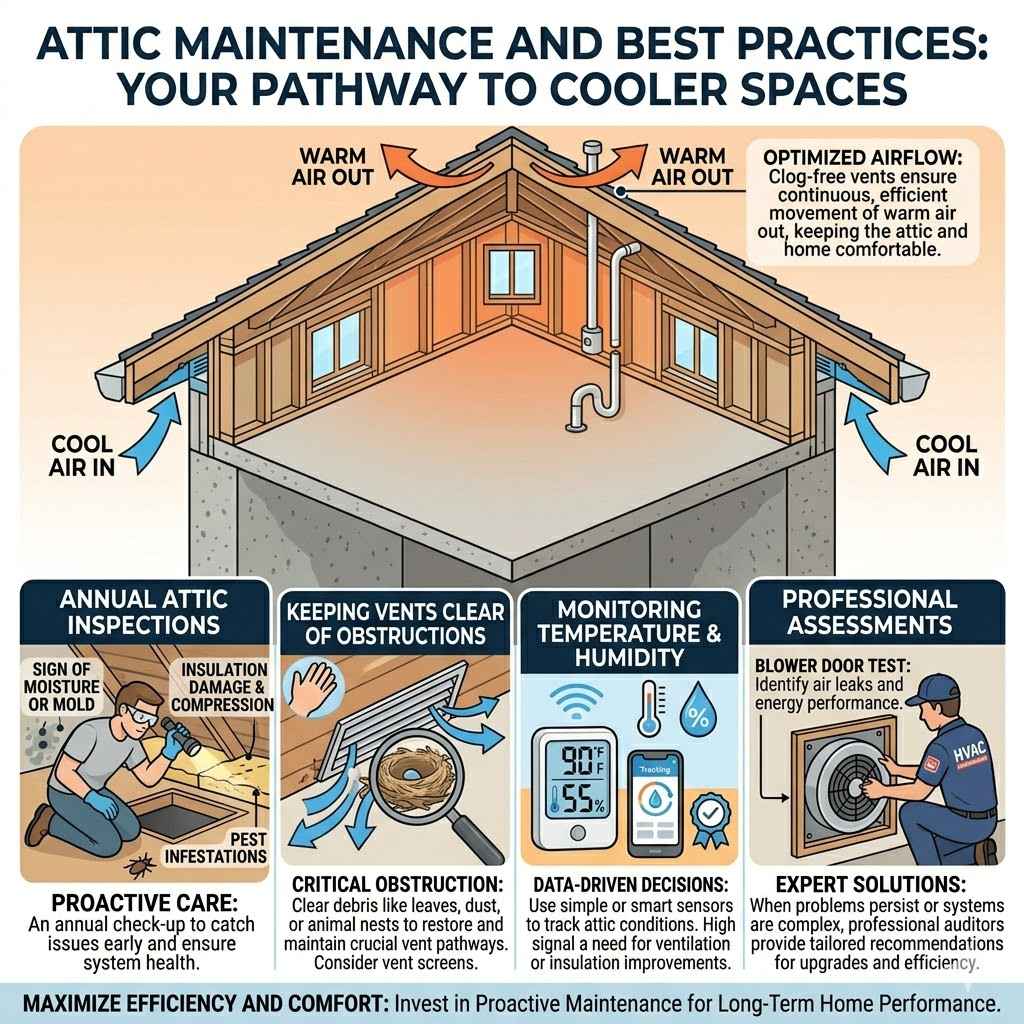
An annual inspection of your attic space is highly recommended. This is the best way to catch any potential issues early. Look for signs of water damage, mold, pest infestations, or damage to insulation and ventilation components.
Check that your soffit vents are clear of debris like leaves or nesting materials. Ensure your ridge vent is intact and not damaged by weather or animals. Inspect insulation for any compressed areas or moisture.
If you have powered fans, check that they are operating correctly.
Real-life Example: A homeowner noticed their upstairs rooms were still hot despite having good ventilation. During their annual attic inspection, they found that a bird’s nest had completely blocked one of their main soffit vents. Clearing it immediately improved airflow and lowered the attic temperature significantly.
Keeping Vents Clear of Obstructions
Soffit vents, ridge vents, and any other intake or exhaust vents are critical. It’s easy for leaves, dust, insulation, or even small animal nests to accumulate and block these pathways. If your vents are blocked, the entire ventilation system becomes ineffective.
During your inspection, gently clear away any debris. If you notice significant blockage, consider installing vent covers or screens designed to prevent large debris and pests while still allowing airflow. This is a simple yet vital maintenance task.
Monitoring Temperature and Humidity
Using a simple thermometer or a combined thermometer/hygrometer in your attic can help you monitor conditions. You can track how hot the attic gets during summer and how humid it is. This data can help you gauge the effectiveness of your ventilation and insulation strategies.
High humidity in the attic can lead to moisture problems, mold growth, and can degrade insulation over time. If you consistently see very high temperatures or humidity levels, it might indicate a need for improved ventilation or a more aggressive cooling solution. Many smart home systems can also monitor attic conditions.
Professional Assessments
If you’re unsure about the state of your attic’s insulation or ventilation, or if you’re experiencing persistent heat problems, consider a professional assessment. Energy auditors or HVAC professionals can perform detailed tests, such as blower door tests, to identify air leaks and assess your home’s overall energy performance.
They can provide expert recommendations tailored to your specific home and climate. This might include upgrading your insulation, installing a more efficient ventilation system, or suggesting other solutions like reflective barriers. Investing in professional advice can lead to the most effective and long-term solutions.
Frequently Asked Questions
Question: Why does my attic get so hot in the summer
Answer: Your attic gets hot because the sun heats your roof, and that heat transfers down. Without good airflow and insulation, the heat gets trapped, making the space very warm.
Question: How much insulation do I need in my attic
Answer: The amount of insulation needed varies by climate. Generally, attics in most regions require an R-value between R-38 and R-60. Check local recommendations for your specific area.
Question: Can I install attic vents myself
Answer: Some types of vents, like gable vents or simple roof vents, can be DIY projects. However, complex systems like ridge vents or powered fans often require professional installation for best results and safety.
Question: Will a radiant barrier work in any climate
Answer: Radiant barriers are most effective in hot, sunny climates where solar heat gain is a major issue. In cooler climates, their effectiveness might be limited or even detrimental in winter.
Question: How often should I check my attic vents
Answer: It’s a good idea to check your attic vents at least once a year, ideally in the spring before the hot weather starts, to ensure they are clear and functioning properly.
Conclusion
Cooling your roof space is achievable. By ensuring proper ventilation with systems like ridge and soffit vents, and by having adequate insulation, you can significantly reduce attic heat. Sealing air leaks is also a key step.
For extreme heat, consider advanced options like radiant barriers or cool roofs. Regular maintenance keeps everything working well.