Is Spray Foam Safe Round Heaters to Buy in 2026?
Finding The Right Spray Foam For Safe Heating
When considering spray foam insulation around round heaters, many people hesitate. You might wonder if the foam is safe to use near heat sources or how it affects energy efficiency and safety. These concerns are common because spray foam products vary widely in formulation and fire resistance.
Choosing spray foam insulation can be tricky. You need to balance thermal performance, fire safety, ease of application, and environmental factors. Some foams offer better heat resistance but come at a higher price. Others might be more affordable but less durable or less suitable for certain surfaces.
This guide will help you understand the key points to consider when selecting spray foam insulation for use near round heaters. It aims to clear up confusion and highlight what matters most for safety and effectiveness.
What To Keep In Mind About Spray Foam And Heat Safety
Not all spray foam insulation is created equal, especially when it comes to heat exposure. Fire ratings and thermal resistance can vary, affecting how well the insulation performs near heaters. It’s important to know whether the foam is rated for fire safety and how it behaves under heat.
Also, consider the installation process and how the foam seals gaps. A proper seal can prevent heat loss and improve comfort, but improper application can lead to problems like moisture buildup or reduced effectiveness.
Common Misunderstandings About Spray Foam Use Around Heaters
Many buyers assume that all spray foam insulation can be safely applied near heat sources, but this isn’t always true. Fire-rated foams provide extra protection but may cost more or require specific application conditions. Overlooking these differences can lead to safety risks or poor insulation results.
Another frequent mistake is focusing only on price or R-value without considering the foam’s suitability for the intended environment. The best choice depends on your specific needs, surfaces, and safety concerns.
Next, you’ll find a selection of spray foam insulation products that address these points in various ways. They were chosen based on their balance of safety, performance, and usability for insulating around round heaters.
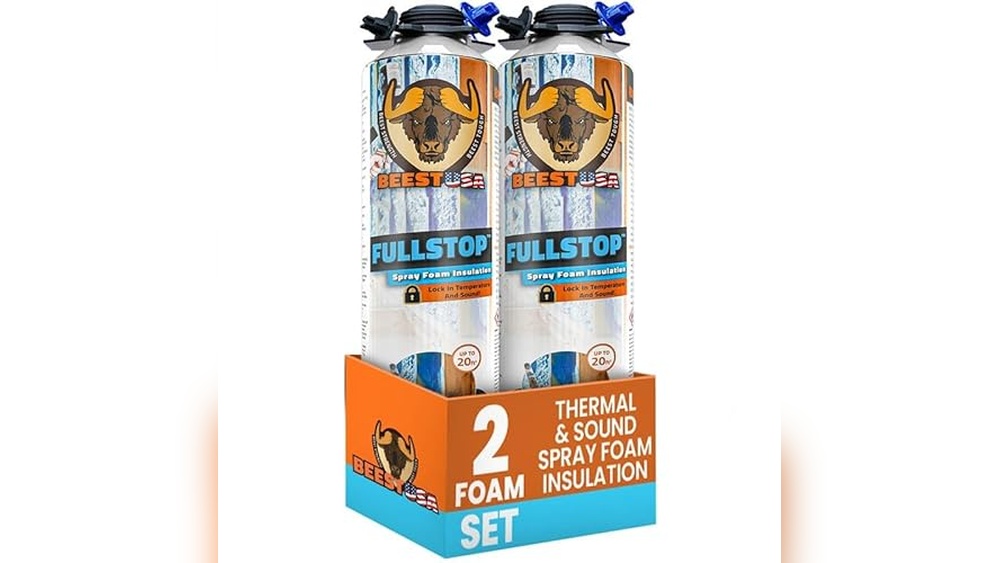
Beest Fullstop Spray Foam Insulation
Is Spray Foam Safe Round Heaters? This BEEST insulation offers reliable sealing and thermal protection ideal for users needing safe, effective heat and soundproofing.
The BEEST FullStop Spray Foam Insulation is a one-component polyurethane foam designed for walls and attics, providing both heat retention and soundproofing. It seals gaps and cracks effectively, helping to reduce energy bills by maintaining consistent indoor temperatures. Its hybrid formula offers strength and flexibility to adapt to various surfaces including wood and concrete.
Using this spray foam feels straightforward and reliable, expanding evenly for a consistent seal without complicated mixing or preparation. It is moisture-cured and environmentally safe, giving you confidence that it won’t harm your home or surroundings once applied and cured.
Key Advantages of This Spray Foam
- High R-Value of 8.14 for effective thermal insulation
- Hybrid formula combines closed-cell strength with flexible open-cell core
- Adheres well to many surfaces including metal, glass, and drywall
- Moisture-cured and ozone-safe for long-lasting, safe use
- Can be painted or coated after curing to blend with décor
- Seals air leaks and prevents moisture infiltration efficiently
Considerations Before Buying
- Recommended application temperature between 68–77°F limits use in colder environments
- Requires a 2-inch thickness for optimal insulation performance
- Not a prime-eligible product which might affect shipping speed
When This Product Works Well
This spray foam is best for homeowners or DIYers looking to improve home insulation and soundproofing without professional help. It removes the guesswork about coverage thanks to its consistent expansion and hybrid formulation. To get the best results, apply within the recommended temperature range and ensure proper thickness for a full seal.
Its durability and environmental safety provide peace of mind for those concerned about long-term effects and indoor air quality. If you value straightforward application and dependable insulation, this product fits naturally into your project plan.
| Best for | Why |
|---|---|
| Sealing gaps in walls and attics | Expands evenly to fill hard-to-reach areas with a strong, airtight seal |
| Soundproofing rooms | Provides acoustic proofing through dense foam structure |
| Home energy efficiency upgrades | High R-Value reduces heat loss and lowers energy bills |
| Users needing safe, moisture-resistant insulation | Moisture-cured formula prevents mold and resists moisture damage |
Kraken Bond Fastcoat Spray Foam
Is Spray Foam Safe Round Heaters? This fire-rated spray foam offers safe, high-efficiency insulation ideal for heat and acoustic needs.
This is a closed-cell expanding spray foam insulation kit designed to provide both heat and acoustic insulation. Its Class-A fire rating and high R-value make it suitable for improving energy efficiency and safety in attics, walls, and crawl spaces.
Using this spray foam kit is straightforward thanks to the included application gun and cleaner. The dual-nozzle system helps ensure good coverage, while its eco-friendly formula gives confidence in safe and effective insulation results.
Key Advantages for Insulation Projects
- Class-A fire rated to meet strict safety standards
- High thermal performance with R-Value 5.66 per inch
- Includes complete kit with gun, cleaner, and protective gear
- Effective for both heat and acoustic insulation
- Adheres to most building materials creating airtight seals
- Works well in a wide temperature range for flexible use
- Eco-friendly formula prevents thermal bridging and moisture issues
Considerations Before Buying
- Requires temperature acclimation for best application results
- Not prime-eligible and sold in a 6-pack format
- May be more than needed for very small or simple jobs
When This Works Best
This spray foam kit suits DIYers and professionals tackling insulation in difficult-to-reach or larger areas where safety and performance matter. It removes guesswork by including all necessary tools and safety gear for immediate use.
A useful tip is to keep the cans at about 68°F before application to ensure consistent foam expansion and adhesion. This product provides peace of mind with its fire rating and eco-conscious design, making it a reliable choice for home comfort upgrades.
| Best for | Why |
|---|---|
| Attic and Wall Insulation | Offers high R-value and fire resistance for energy savings and safety |
| Soundproofing Rooms | Provides acoustic insulation to reduce noise transmission |
| DIY Home Improvement | Complete kit with tools and safety gear for hassle-free application |
| Cold or Variable Climates | Effective within a broad temperature range for reliable results |
Choosing The Right Spray Foam Insulation
When selecting spray foam insulation, consider the specific needs of your project rather than just product features. Think about the size of the area, desired insulation thickness, and whether fire rating or acoustic properties are priorities. Also, evaluate the ease of application and if the kit includes necessary accessories.
Application Area and Coverage
Smaller projects or spot repairs may benefit from single-can options, while larger areas might require multi-pack kits for efficiency. Check coverage estimates in board feet to match your insulation needs.
Thermal and Acoustic Performance
Look for products with appropriate R-values for your climate zone. Some formulations also improve soundproofing, which is useful for shared walls or noisy environments.
Fire Rating and Safety
If fire resistance is important, choose insulation with a Class-A fire rating and certifications that meet building codes. Always follow safety guidelines during application, including ventilation and protective gear.
Common Buyer Concerns And Clarifications
Is spray foam insulation safe for indoor use?
Once fully cured, spray foam is generally safe and stable. Proper ventilation during application is crucial to avoid inhaling fumes. Choose moisture-cured and ozone-safe products to minimize environmental impact.
Can spray foam be applied on all surfaces?
Most spray foam products adhere well to common building materials like wood, concrete, metal, and drywall. However, surface preparation and cleanliness affect adhesion and final performance.
What is the ideal temperature for application?
Most spray foam kits recommend an application temperature range around 68–77°F. Some products can be applied in broader temperature ranges but check manufacturer instructions to ensure optimal expansion and curing.
Common Mistakes To Avoid During Installation
Improper application can reduce insulation effectiveness and cause issues. Avoid these errors:
- Applying too thin or too thick layers—stick to recommended thickness for proper curing and R-value.
- Skipping surface cleaning and prep, which can lead to poor adhesion.
- Using spray foam in unventilated spaces without protective gear.
- Not allowing sufficient curing time before finishing or painting.
Usage And Maintenance Tips
After application, maintain insulation performance by:
- Painting or coating spray foam surfaces to prevent discoloration and UV damage if exposed.
- Regularly inspecting for gaps or damage that may reduce effectiveness over time.
- Following manufacturer guidelines for storage of unused cans to prolong shelf life.
Frequently Asked Questions
Can spray foam insulation be painted?
Yes, once cured, spray foam can be painted or coated to match décor and protect from UV exposure.
How long does spray foam insulation last?
Properly applied spray foam can last decades without significant degradation when protected from direct sunlight and physical damage.
Is spray foam insulation moisture resistant?
Closed-cell spray foam forms a moisture-resistant barrier, helping prevent air leaks and condensation issues.
Can I install spray foam insulation myself?
Many kits are designed for DIY use, but proper preparation, safety precautions, and following instructions are essential for good results.
Does spray foam insulation prevent pests?
The airtight seal created by spray foam can block entry points for pests, but it is not a pest control solution by itself.
Final Thoughts
Selecting spray foam insulation requires weighing project size, performance needs, and safety considerations. Understanding application conditions and proper installation helps achieve lasting insulation and comfort. With careful planning and attention to detail, spray foam can be an effective solution for improving energy efficiency and soundproofing.