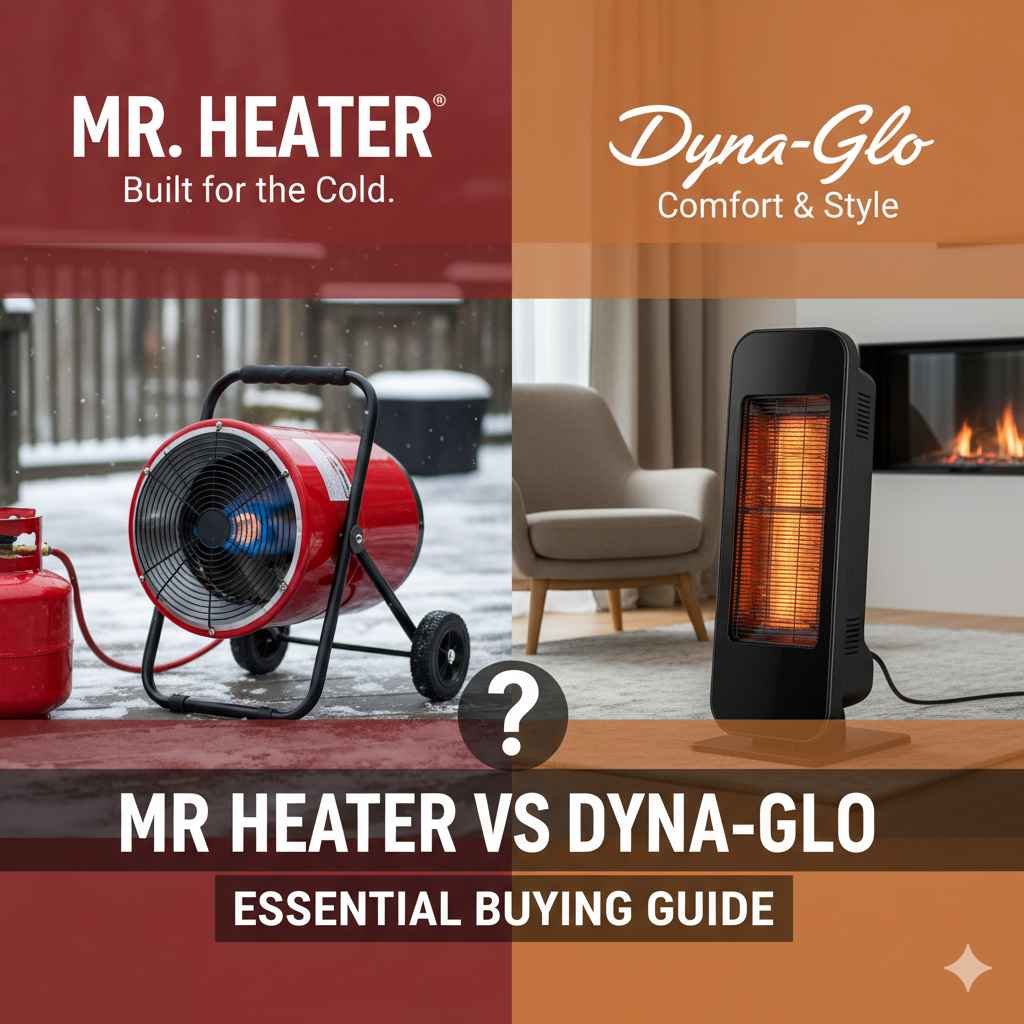
Mr Heater Vs Dyna-Glo: Essential Buying Guide
Choosing between Mr. Heater and Dyna-Glo can feel daunting, but it doesn’t have to be! Both brands offer reliable heaters, but the best choice depends on your specific needs. This guide breaks down what makes each stand out, helping you pick the perfect heater for your space and budget with confidence.
If cost, wattage, or efficiency matters, Are Gas Pool Heaters Expensive to Run? adds a useful comparison before choosing a heater.
For space-specific heating decisions, Swimming Pool Heaters: Gas vs Heat Pump – gives readers another practical setup to compare.
For a closely related heater topic, Dyna-Glo Vs Mr. Heater gives readers a useful next step.
Are you tired of chilly rooms and high energy bills? Getting your home warm and comfortable shouldn’t be a puzzle. Many homeowners feel overwhelmed by the options when looking for a new heater, unsure of where to start. But don’t worry! We’re here to make choosing your ideal heating solution simple and stress-free. We’ll look at two popular brands, Mr. Heater and Dyna-Glo, and guide you through each step, so you can enjoy a cozy home all season long.
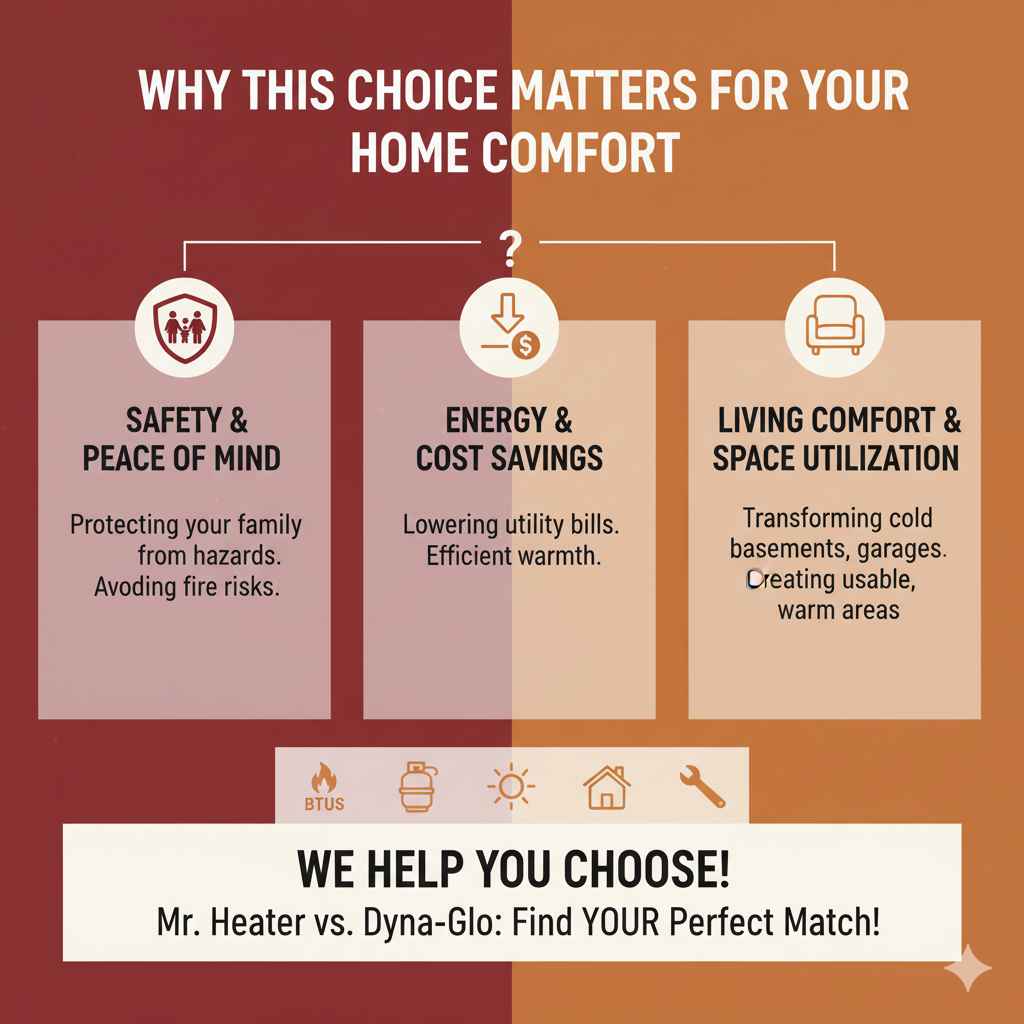
Why This Choice Matters for Your Home Comfort
Selecting the right heater is more than just picking a box that gets warm. It’s about ensuring the safety of your family, keeping your energy costs down, and creating a comfortable environment in your home. A good heater can make a world of difference, turning a cold basement into a usable space or a drafty garage into a workshop haven. On the flip side, a poorly chosen or misused heater can be a source of worry, fire hazards, or simply a drain on your wallet.
We understand that terms like BTUs, propane, and radiant heat can sound complicated. That’s why we aim to clear all that up. By the end of this guide, you’ll have a clear picture of what Mr. Heater and Dyna-Glo offer, how they compare, and exactly which one will best suit your needs, whether you’re heating a small apartment, a large garage, or an outdoor patio.
Understanding Your Heating Needs: The First Step
Before we dive into the specifics of Mr. Heater and Dyna-Glo, let’s think about what you actually need your heater to do. This is the most important part of making a smart purchase.
What space are you heating? A huge garage needs a different kind of heat than a small, enclosed sunroom. Measure the square footage of the area you want to heat.
How often will you use it? Will it be for occasional use during cold snaps, or will it run for hours every day?
What fuel source do you prefer or have available? Propane, natural gas, electricity, or kerosene? Each has its own pros and cons.
What’s your budget? Think about both the initial purchase price and the ongoing fuel costs.
What safety features are you looking for? Overheat shut-off, tip-over protection, and oxygen depletion sensors are crucial, especially for indoor use.
Portability vs. Fixed installation: Do you need to move the heater from room to room, or will it stay in one place?
Answering these questions will give you a solid foundation for comparing the models offered by both Mr. Heater and Dyna-Glo.
Mr. Heater: A Trusted Name in Portable Warmth
Mr. Heater is a brand that many people recognize, especially for their iconic “Little Buddy” and “Big Buddy” portable propane heaters. They are known for making comfortable, reliable heating solutions accessible to average homeowners.
Mr. Heater’s Strengths
Portability: Many of their popular models are designed to be easily moved from one spot to another. This is great if you need to heat a garage one day and a patio the next.
Ease of Use: Mr. Heater products are generally very user-friendly. They often feature simple controls and clear instructions, making them ideal for beginners.
Variety of Fuel Sources: While they are well-known for propane, Mr. Heater also offers electric and natural gas options.
Safety Focus: They consistently emphasize safety features, which is a big plus for any home appliance.
Brand Recognition: As a well-established brand, parts and accessories are often easy to find.
Common Mr. Heater Product Types
Portable Propane Heaters: These are their most famous items, ranging from small personal heaters to larger units for garages and workshops.
Infrared Heaters: These work by directly heating objects and people in their path, much like the sun, rather than just warming the air. This can be very efficient for targeted heating.
Electric Heaters: For indoor use where ventilation might be a concern, Mr. Heater offers electric options.
Outdoor Heaters: Designed for patios and decks, these help extend the usability of your outdoor spaces.
Key Mr. Heater Features to Look For
One-Touch Ignition: Makes starting the heater quick and effortless.
Thermostat Control: Allows you to set and maintain a desired temperature.
Oxygen Depletion Sensor (ODS): An essential safety feature that shuts off the heater if oxygen levels drop too low.
Tip-Over Safety Shut-Off: Automatically turns the heater off if it’s knocked over.
Adjustable Heat Settings: Lets you control the intensity of the heat.
Dyna-Glo: Power and Versatility for Larger Spaces
Dyna-Glo is another strong contender in the heating market, often recognized for its robust performance and versatility, particularly for larger areas like garages, workshops, and outdoor spaces. They offer a range of both portable and permanently installed heaters.
Dyna-Glo’s Strengths
Powerful Heating: Dyna-Glo heaters are often designed to provide high heat output (measured in BTUs), making them suitable for larger or draftier spaces.
Durability: Many of their products are built to withstand tougher conditions, common in garages or workshops.
Propane and Infrared Options: They have a strong lineup of both propane-powered units and powerful infrared models.
Specific Application Focus: Dyna-Glo often targets users who need to heat specific, often larger, zones effectively.
Common Dyna-Glo Product Types
Propane Heaters: Similar to Mr. Heater, they offer various portable propane heaters, including “forced air” models that use a fan to distribute heat quickly.
Infrared Propane Heaters: Known for their efficiency in heating objects directly, making them great for workshops or uncovered outdoor areas.
Propane Tank Top Heaters: These attach directly to a propane tank and are very portable and common for temporary heating needs.
Gas Heaters: Including both liquid propane (LP) and natural gas (NG) models, offering flexibility based on fuel availability.
Key Dyna-Glo Features to Consider
High BTU Output: Essential for heating larger spaces quickly.
Adjustable Heat Settings: From low to high, allowing for precise temperature control.
Quiet Operation: Some models are designed to operate with minimal noise.
Durable Construction: Built with robust materials for longevity.
Safety Features: Including ODS and tip-over switches on many of their indoor-safe models.
Mr. Heater vs. Dyna-Glo: A Direct Comparison
Let’s put these two popular brands side-by-side to help you see the differences more clearly. We’ll look at common categories to help you make an informed decision.
| Feature | Mr. Heater | Dyna-Glo |
|---|---|---|
| Best For | Portability, ease of use, personal heating, smaller to medium spaces, budget-conscious buyers. | Larger spaces, workshops, garages, high heat output needs, durability, zone heating. |
| Typical BTU Range | 3,000 – 40,000 BTUs (depending on model) | 10,000 – 75,000+ BTUs (depending on model) |
| Common Fuel Types | Propane, Electric, Natural Gas | Propane (LP), Natural Gas (NG) |
| Ease of Use | Generally very high, beginner-friendly. | Good, but some higher output models might require a bit more setup. |
| Portability | Excellent. Many models are lightweight and have carrying handles. | Good, though some higher BTU models can be bulkier. Tank-top models are highly portable. |
| Durability | Good for general home and recreational use. | Often noted for robust construction, suitable for workshops. |
| Price Range | Generally mid-range, with very affordable entry-level options. | Mid-range to higher-end, reflecting higher output and durability. |
| Safety Features | Standard ODS, tip-over shut-off, often praised for these. | Standard ODS, tip-over shut-off on indoor-safe models. Check specifications carefully. |
When to Choose Mr. Heater
You need a heater for a smaller room or enclosed patio.
Portability is your top priority. You want to move it from room to room or take it camping.
You’re new to using space heaters and want something simple.
You’re looking for an affordable, reliable option for occasional use or consistent comfort in a smaller area.
You prefer electric heaters for maximum safety indoors.
When to Choose Dyna-Glo
You need to heat a large garage, workshop, or basement.
High heat output (BTUs are critical) is essential.
You need a durable heater that can handle more demanding environments.
You want a powerful infrared heater to efficiently warm specific zones.
You have access to natural gas and want to consider NG models for potentially lower running costs.
Key Features to Look For in Any Heater
Regardless of whether you lean towards Mr. Heater or Dyna-Glo, certain features are crucial for safety and efficiency. Always prioritize these when making your final choice.
BTU Output: This is the measure of heat. Too little, and it won’t warm the space. Too much, and it’s inefficient and potentially unsafe. A common rule of thumb is 20 BTUs per square foot for well-insulated spaces. For less insulated areas like garages, you might need more. For example, a 500 sq ft poorly insulated garage might need around 20,000 BTUs (500 sq ft x 40 BTUs/sq ft).
Fuel Type:
Propane (LP): Very common for portable heaters. You’ll need to buy or rent tanks. Good for areas without natural gas.
Natural Gas (NG): Requires a gas line connection. Generally cheaper to run than propane for continuous use.
Electric: Convenient if you have enough electrical capacity. Often safer for smaller indoor spaces as there are no combustion byproducts. However, they can be less powerful and more expensive to run for large areas.
Kerosene: Powerful, but produces strong fumes and requires more ventilation. Less common for general home use within Mr. Heater and Dyna-Glo’s popular lines.
Safety Certifications: Look for certifications from recognized testing laboratories like UL (Underwriters Laboratories) or CSA (Canadian Standards Association). These ensure the product has met rigorous safety standards.
Oxygen Depletion Sensor (ODS): Absolutely essential for any indoor-safe propane or gas heater. It monitors oxygen levels and shuts off the unit if they drop too low, preventing carbon monoxide issues.
Tip-Over Switch: This feature automatically shuts off the heater if it’s accidentally knocked over, preventing fires.
Thermostat and Heat Settings: Provides control over the temperature and heat output, leading to greater comfort and energy efficiency.
Fan vs. Radiant Heat:
Fan-forced (or convection): Heats the air and uses a fan to circulate it. Good for quickly warming a whole room.
Radiant: Emits infrared rays that heat objects and people directly. More efficient for targeting specific areas or for use in drafty spots where the air might escape quickly.
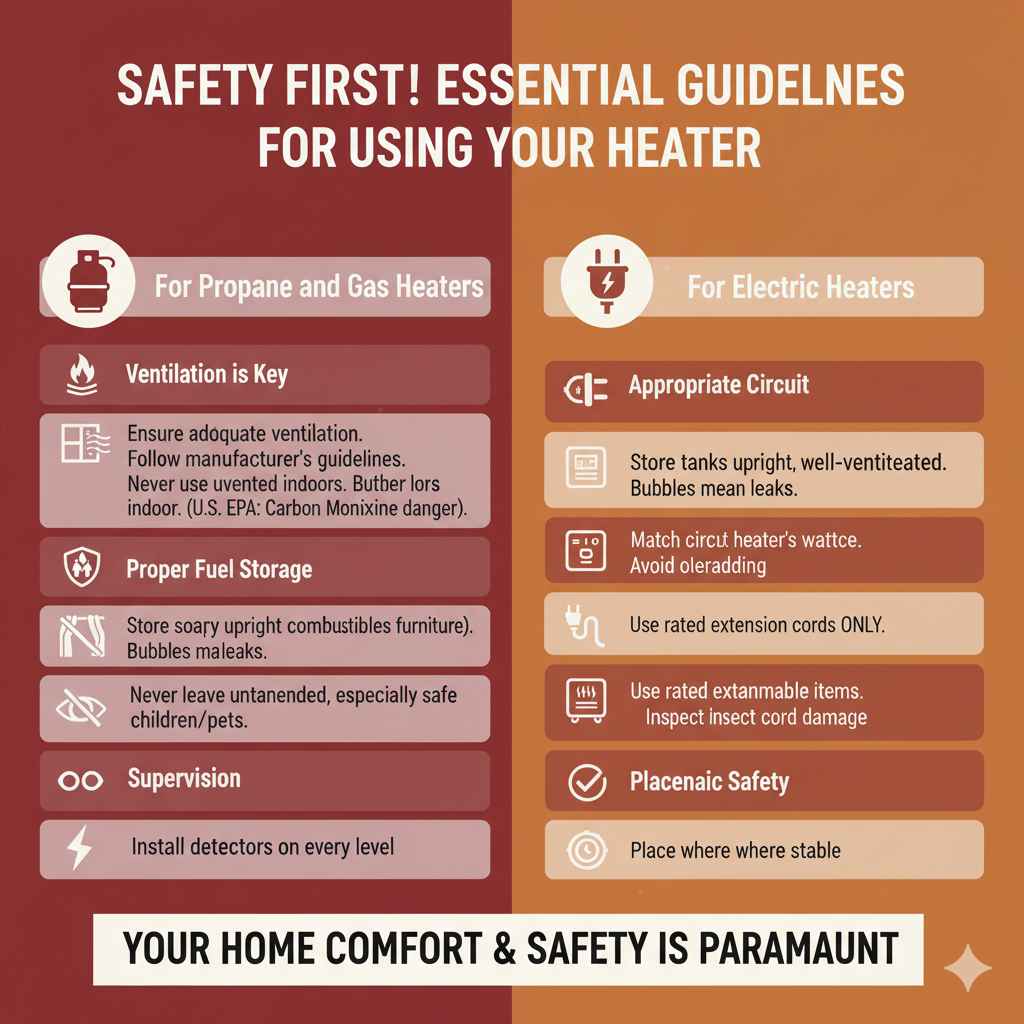
Safety First! Essential Guidelines for Using Your Heater
No matter which brand you choose, using your heater safely is paramount. Here are some vital tips.
For Propane and Gas Heaters
1. Ventilation is Key: Always ensure adequate ventilation. For indoor use, follow the manufacturer’s guidelines strictly regarding room size and minimum ventilation requirements. Never use a propane heater not rated for indoor use inside your home. The U.S. Environmental Protection Agency (EPA) stresses the dangers of carbon monoxide.
2. Check for Leaks: Before each use, check all connections for propane tanks and hoses using soapy water. Bubbles indicate a leak that needs immediate attention.
3. Proper Fuel Storage: Store propane tanks upright in a well-ventilated area, away from heat sources and living spaces.
4. Placement: Never place a heater directly against curtains, furniture, walls, or any combustible materials. Maintain a safe distance as recommended by the manufacturer.
5. Supervision: Never leave a portable heater operating unattended, especially around children or pets.
6. Carbon Monoxide Detector: Install and maintain a working carbon monoxide detector on every level of your home, with a particular focus on areas where you will be using any fuel-burning appliance.
For Electric Heaters
1. Appropriate Circuit: Ensure the electrical circuit can handle the heater’s wattage. Overloading a circuit can cause breaker trips or even fires.
2. Cord Safety: Never use an extension cord unless it’s specifically rated for the heater’s wattage. Inspect the power cord for any damage before use.
3. Placement: As with other heaters, keep them away from curtains, bedding, and other flammable items. Avoid placing them where they can be easily knocked over.
Frequently Asked Questions (FAQ)
Q1: Which is safer, Mr. Heater or Dyna-Glo?
Both brands prioritize safety and include essential features like Oxygen Depletion Sensors (ODS) and tip-over shut-off switches on their indoor-rated models. The safety of any heater ultimately depends on proper usage, adequate ventilation, and maintaining safe clearances from flammable materials. Always check the specific model’s rating and follow the manufacturer’s instructions.
Q2: Can I use a Mr. Heater propane heater in my garage?
Yes, Mr. Heater offers many propane models specifically designed for garages, workshops, and other semi-enclosed or outdoor spaces. These units are typically rated for indoor/outdoor use when adequate ventilation is provided. Always confirm the specific model’s rating and follow the ventilation guidelines in the owner’s manual. For example, their “Mr. Heater Buddy” is a popular choice for garages.
Q3: Which brand offers more powerful heaters?
Dyna-Glo generally offers a wider range of high-BTU heaters, many designed for industrial or large workshop applications, often exceeding 50,000 BTUs. Mr. Heater also produces powerful units, but their brand is perhaps more widely known for its popular portable heaters that cover a broad spectrum from 4,000 to 40,000 BTUs, focusing on a balance of power and portability.
Q4: Do I need a carbon monoxide detector with a Mr. Heater or Dyna-Glo propane heater?
Absolutely, it is highly recommended and often considered essential by safety organizations like the CDC (Centers for Disease Control and Prevention). Any appliance that burns fuel, including propane heaters, can produce carbon monoxide, an odorless and deadly gas. A working carbon monoxide detector is your best defense.
Q5: Which type of heater is more energy-efficient?
This depends heavily on the type of heater and how you use it. Infrared heaters (offered by both brands) can be very efficient for heating specific areas because they heat objects directly, not just the air. For heating larger, enclosed spaces, propane or natural gas heaters are often more cost-effective to run than electric heaters due to the price of electricity. However, for smaller, well-insulated rooms or when safety is the absolute top priority, electric heaters can be a good choice despite potentially higher running costs.
Q6: What’s the difference between a forced-air propane heater and an infrared propane heater?
A forced-air heater pulls in the surrounding air, heats it, and then uses a fan to push the warm air into the space. This is great for quickly warming an entire room. An infrared heater emits radiant heat that travels in waves, directly warming objects and people it encounters, much like the sun.