Gas Pool Heaters Can Be Expensive to Run
Gas pool heaters can be expensive to run, but their operating cost depends heavily on natural gas or propane prices, your pool size, desired temperature, and how often you use it. By understanding these factors and using smart strategies, you can significantly manage and reduce running costs.
Having a warm pool ready for a swim anytime is pure bliss, isn’t it? But when it’s time to heat things up, many homeowners wonder about the costs. Specifically, “Are gas pool heaters expensive to run?” It’s a common question, and understandably so! You want to enjoy your pool without a sky-high energy bill. The good news is, you don’t need to be an expert to figure this out. We’re going to break down exactly what affects the cost and share simple tips to keep your pool toasty warm without breaking the bank. Let’s dive in and make your pool heating both comfortable and affordable!
Understanding Gas Pool Heaters: How They Work
Before we talk about cost, let’s quickly understand how a gas pool heater works its magic. Think of it like a giant kettle for your pool water. Water from your pool is pumped into the heater, where it passes through a heat exchanger. A burner ignites, heating up the exchanger, which in turn heats the water. The warmed water then returns to your pool, step by step, raising its temperature.
There are two main types of gas used for these heaters: natural gas and propane. Natural gas is typically piped directly to your home, while propane is stored in a tank on your property. The energy source you choose will influence your running costs, as the prices for natural gas and propane can differ significantly.
What Makes a Gas Pool Heater’s Running Cost Go Up (or Down)?
Several factors play a big role in how much you’ll spend to run your gas pool heater. It’s not just about the price of gas; it’s a combination of things. Let’s look at the main players:
1. Fuel Type: Natural Gas vs. Propane
This is a big one!
- natural gas: Generally, natural gas is more affordable than propane. It’s delivered directly to your home, so you don’t have the added cost of propane delivery or tank rental. Its price tends to be more stable, too.
- Propane: Propane is often more expensive per unit of energy than natural gas. You also need to consider the cost of the propane tank, its upkeep, and delivery fees. Prices can fluctuate more based on demand and seasonal availability.
The U.S. Energy Information Administration (EIA) provides helpful data on average energy prices, which can give you a good baseline for your region. For example, you can check their weekly retail gasoline and diesel prices to get an idea of fuel cost trends, and they also track natural gas prices. Remember to look for local data if available.
2. The Size of Your Pool
A bigger pool holds more water, which means the heater has to work harder and longer to bring it up to temperature and keep it there. A small backyard splash pool will cost much less to heat than a large Olympic-sized swimming pool.
3. Desired Pool Temperature
This might seem obvious, but it’s worth stating: the hotter you want your pool, the more energy it will take. Heating your pool to a warm 85°F (29°C) will cost more than keeping it at a comfortable 80°F (27°C). Every extra degree requires more heating effort.
4. Ambient Air and Water Temperature
If you’re trying to heat your pool on a chilly evening in the spring or fall, or if the average daily temperature is low, the heater will have to combat heat loss to the environment more aggressively. This means it will run longer and use more fuel. Heating a pool during a warm summer spell is much more efficient.
5. Wind Exposure and Pool Covers
Wind is a pool’s enemy when it comes to temperature! Wind blowing across the surface of your pool causes significant heat loss through evaporation. A strong gust can chill the surface water quickly. Similarly, a pool without a cover will lose heat much faster. Using a pool cover when the pool isn’t in use is one of the most effective ways to cut down on heating costs.
A good quality solar cover can reduce heat loss by up to 75%!
6. Heater Efficiency
Just like cars, heaters can vary in how efficiently they use fuel. Newer models are generally more efficient than older ones. An older heater might have an Annual Fuel Utilization Efficiency (AFUE) of around 80%, while high-efficiency models can reach 95% or even higher. This percentage tells you how much of the fuel’s energy is actually used to heat the water, compared to how much is lost as exhaust. For gas pool heaters, efficiency is often measured by the Continuous Efficiency rating, typically in BTUs per hour.
7. Usage Patterns
How often you heat your pool and for how long directly impacts your bill. Are you heating it just for weekend dips, or do you want it warm every single day? The more hours the heater runs, the higher the cost.

Estimating Your Gas Pool Heater Running Costs
It’s tough to give an exact figure, as your costs will be unique to your situation. However, we can look at some general estimates and how to calculate your own. Pool heaters are rated in BTUs (British Thermal Units). A BTU is a measure of heat energy. The higher the BTU rating, the faster the heater can heat your pool. Common sizes range from 100,000 BTUs to 400,000 BTUs or more.
Let’s take an example. Suppose you have:
- A 15,000-gallon pool
- You want to raise the temperature by 10°F (5.5°C)
- You have a 250,000 BTU natural gas heater
- The cost of natural gas is $2.00 per therm (1 therm = 100,000 BTUs)
To heat 15,000 gallons of water by 10°F requires roughly 500,000 BTUs of energy (this is a general calculation; actual needs can vary). If your heater is 80% efficient, it needs to consume approximately (frac{500,000}{0.80} = 625,000) BTUs of gas.
Since 1 therm is 100,000 BTUs, you’d need 6.25 therms of gas. At $2.00 per therm, this initial heat-up would cost about $12.50.
Keeping the pool warm is where regular usage costs add up. If you need to maintain the temperature daily against heat loss, this can add significantly to your bill. A very rough estimate is that heating a typical backyard pool can add anywhere from $50 to $300 or more per month to your utility bills, depending on all the factors we’ve discussed.
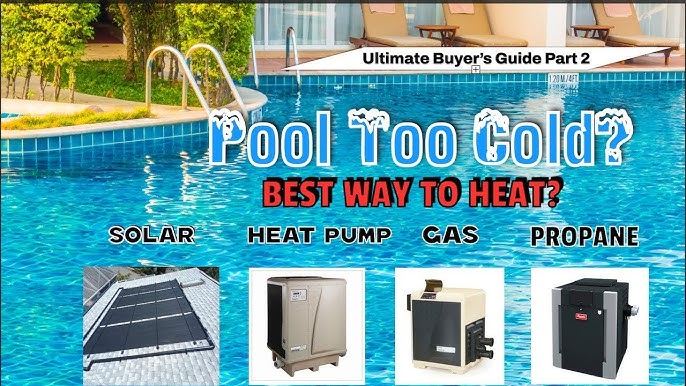
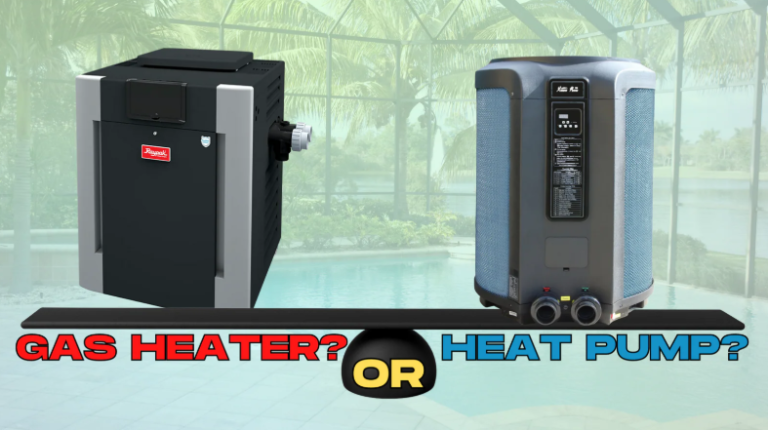
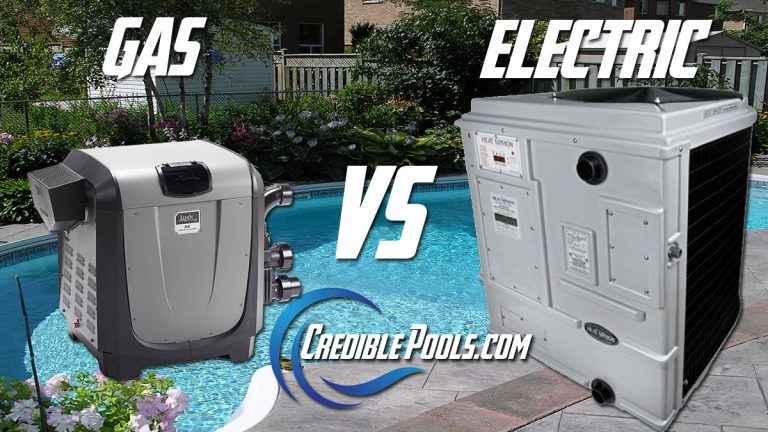
Cost Comparison: Gas Heater vs. Alternatives
It can be helpful to see how gas heaters stack up against other pool heating options:
| Heater Type | Typical Installation Cost | Typical Running Cost | Pros | Cons |
|---|---|---|---|---|
| Natural Gas Heater | $$$ | $$ (can be $50-$300+/month) | Fast heating, works in all weather, relatively lower fuel cost than propane. | Requires gas line, can be more expensive than electric resistance, less efficient than heat pumps. |
| Propane Heater | $$$ | $$$ (can be $75-$400+/month) | Fast heating, works in all weather, good for occasional use or where natural gas isn’t available. | Higher fuel cost than natural gas, requires tank and propane delivery. |
| Electric Heat Pump | $$$ | $ (very efficient, can be $30-$150+/month) | Very energy-efficient, lower running costs long-term. | Slower heating, less effective in very cold weather (<45°F), higher upfront cost. |
| Solar Heater | $$ | $ (minimal electricity for pump, fuel is free) | Lowest running cost, environmentally friendly. | Slowest heating, dependent on sunshine, requires significant roof/ground space, ineffective at night or on cloudy days. |
| Electric Resistance Heater | $ | $$$$ (most expensive to run) | Lowest upfront cost, heats quickly, works in any weather. | Extremely high running costs, not practical for large pools or frequent heating. |
Note: Cost indicators ($ – $$$$) are relative. Actual costs vary greatly by location and specific product.
Tips to Reduce Your Gas Pool Heater’s Running Costs
Feeling concerned about the costs? Don’t be discouraged! There are many practical ways to keep your heating expenses in check:
1. Use a Pool Cover Religiously
This is your #1 weapon against heat loss. A good solar cover or a solid safety cover traps heat exceptionally well. Put it on as soon as you’re done swimming and only take it off when you’re ready to swim. This drastically reduces evaporation, your biggest enemy.
According to the U.S. Department of Energy, using a pool cover can reduce your heating costs by 50-70%!
2. Optimize Your Pool’s Temperature Setting
Do you really need the water at 90°F (32°C)? Often, a few degrees lower makes a big difference in energy consumption without sacrificing comfort. Experiment with a slightly lower temperature – you might find it perfectly enjoyable and save money in the process.
3. Strategic Heating Only When Needed
Instead of keeping the pool at your ideal temperature constantly, consider heating it only a few hours before you plan to use it. If you only swim on weekends, for example, you might only need to run the heater for a few hours on Saturday and Sunday. This is especially effective if you use a pool cover overnight.
4. Consider Windbreaks
If your pool is in a particularly windy spot, consider planting some hedges or installing a fence to create a windbreak. Reducing wind exposure will significantly cut down on evaporative heat loss.
5. Regular Heater Maintenance
A well-maintained heater runs more efficiently. Schedule annual check-ups with a qualified technician. They can clean out debris, check gas pressure, and ensure everything is working as it should. A dirty or malfunctioning heater uses more fuel to do the same job.
6. Upgrade to a High-Efficiency Heater (Long-Term)
If your current heater is old (10+ years), it’s likely much less efficient than newer models. While the upfront cost of a new heater is significant, a high-efficiency model can offer substantial savings on your running costs year after year. Look for AFUE ratings and consider condensing gas heaters if available in your region, which can be over 90% efficient.
7. Group Your Heating Needs (If Possible)
If your gas meter also serves other appliances, and you know your utility company has tiered pricing (where the rate increases after a certain usage threshold), try to schedule pool heating during off-peak hours or when your other gas usage is low, if that’s feasible and if your utility offers such plans.
8. Insulate Your Pool Plumbing
For longer pipe runs, especially those exposed to cooler air, consider insulating them. This helps prevent heat loss as the water travels between the heater and the pool pump. This is a more advanced DIY or professional job but can offer small improvements.
Is a Gas Pool Heater Right for You?
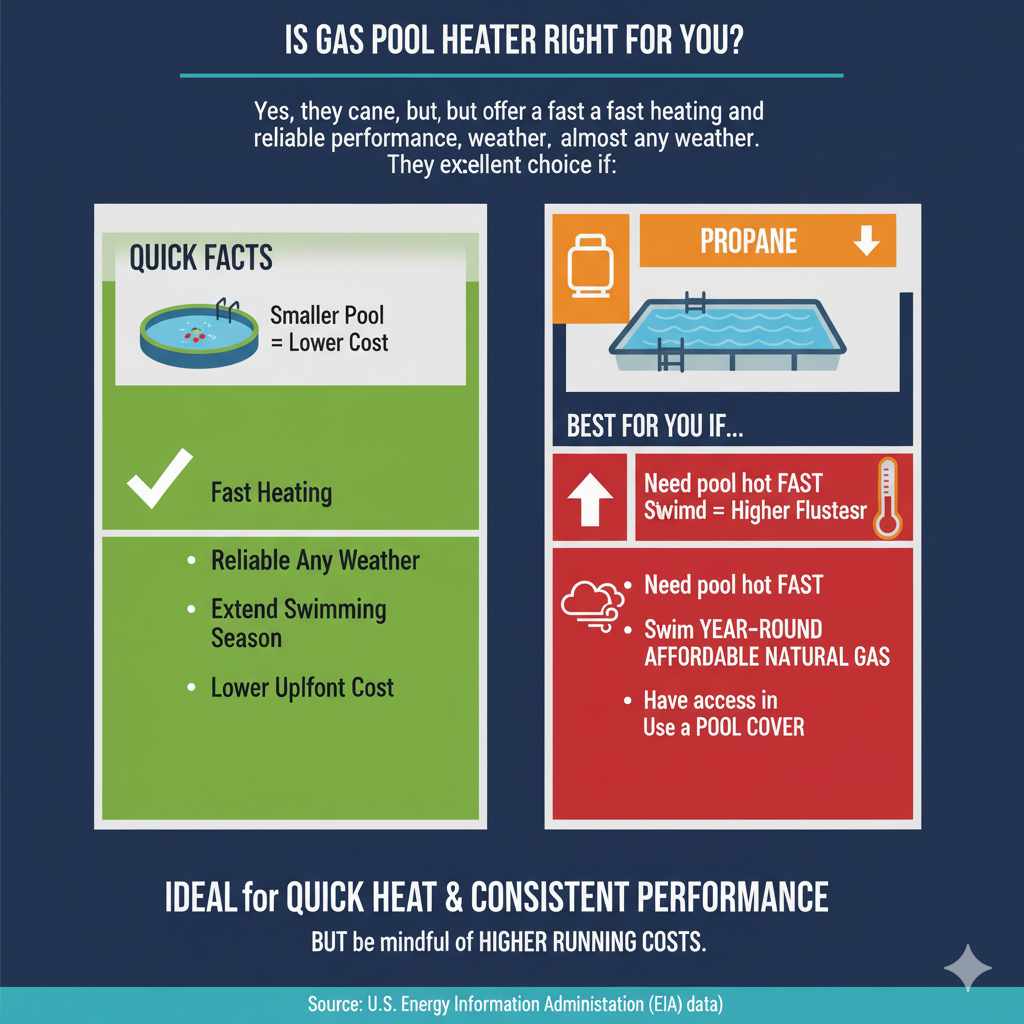
So, are gas pool heaters expensive to run? Yes, they can be, but they offer the benefit of fast heating and reliable performance in almost any weather. They are an excellent choice if:
- You want to heat your pool quickly.
- You plan to use your pool year-round or extend your swimming season significantly, even in cooler weather.
- You have access to affordable natural gas or a good deal on propane.
- You’re committed to using energy-saving practices like pool covers and moderate temperature settings.
If your priority is the absolute lowest running cost and you don’t need rapid heating, an electric heat pump or a solar pool heater might be a better long-term investment, despite their higher upfront costs or limitations with weather.
Frequently Asked Questions (FAQ)
Q1: How much does it typically cost to heat a pool with a gas heater per month?
The monthly cost can range from $50 to over $400, depending heavily on natural gas or propane prices, pool size, desired temperature, weather conditions, and usage habits. Using a pool cover is critical for managing these costs.
Q2: Which is cheaper to run: natural gas or propane for a pool heater?
Natural gas is almost always cheaper to run than propane, primarily because propane is typically more expensive per unit of energy, and you also incur costs for the propane tank and deliveries.
Q3: How long does it take a gas heater to heat a pool?
A gas heater can heat a pool relatively quickly. For example, a 100,000 BTU heater might raise the temperature of a 10,000-gallon pool by 5-10°F (2.8-5.5°C) in about an hour. Larger heaters and pools will take longer.
Q4: Are gas pool heaters efficient?
Modern gas pool heaters have efficiencies ranging from about 80% to over 90% (for high-efficiency condensing models). While this is good, they are generally less energy-efficient than high-quality electric heat pumps, but they heat much faster.
Q5: Can I heat my pool with a gas heater in the winter?
Yes, gas pool heaters are excellent for winter use because they generate heat directly and are not dependent on ambient air temperature like heat pumps. However, running costs will be significantly higher in colder weather due to increased heat loss.
Q6: What is the most effective way to lower gas pool heater running costs?
The single most effective way is to use a pool cover whenever the pool is not in use. This dramatically reduces heat loss from evaporation, which is the largest contributor to heating expenses.
Conclusion
Worrying about whether gas pool heaters are expensive to run is a valid concern for any homeowner looking to maximize their pool enjoyment while managing their budget. As we’ve explored, the cost isn’t a simple yes or no answer. It’s a dynamic equation influenced by fuel prices, your pool’s specific needs, and how you choose to operate your heating system. By understanding these variables and implementing smart strategies, especially the consistent use of a pool cover, maintaining a comfortably warm pool doesn’t have to lead to shock at the end of the month.
We’ve covered the key factors like fuel type, pool size, desired temperature, and environmental conditions. Remember that regular maintenance ensures your heater runs at its peak efficiency, and strategic heating schedules can make a significant difference. By combining these practices, you can confidently enjoy your pool, extending your swimming season and increasing your home’s appeal, all while keeping those running costs as low as possible. Happy swimming!