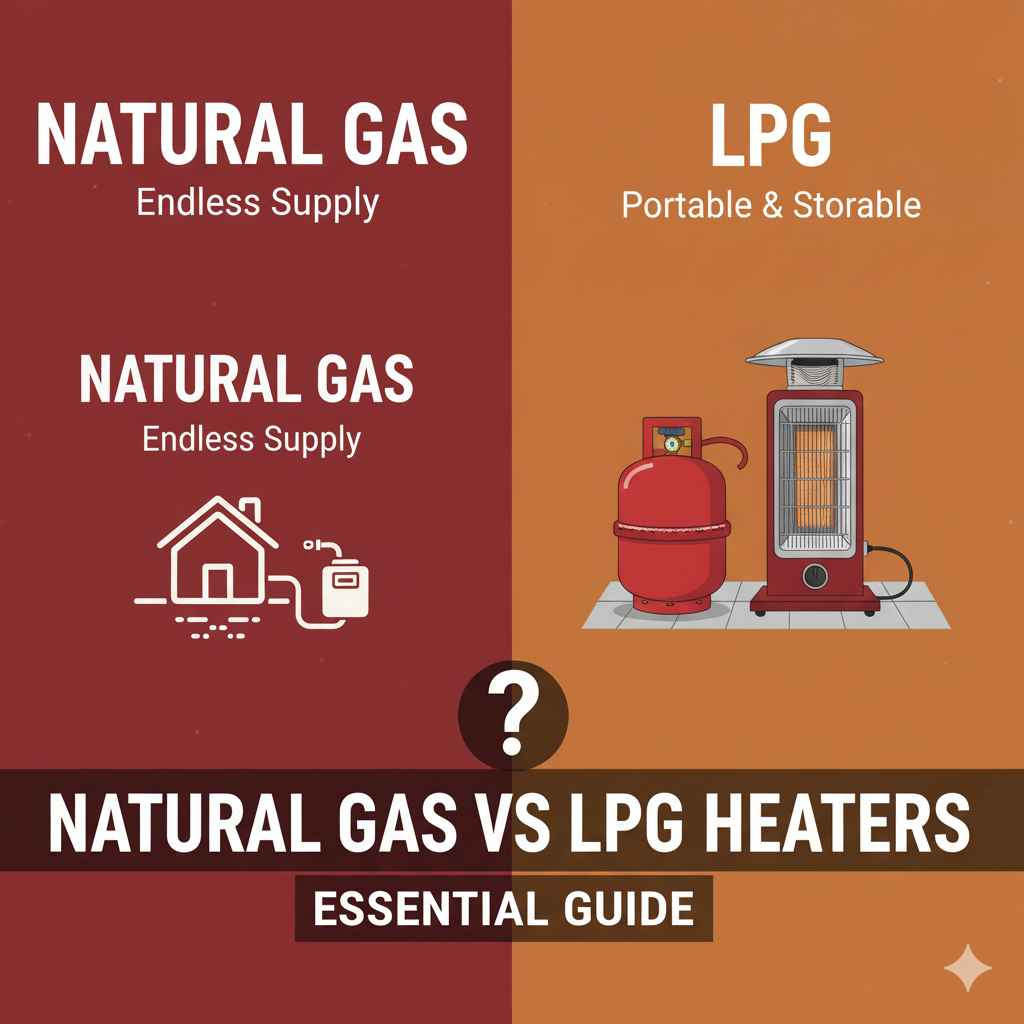
Natural Gas Vs LPG Heaters: Essential Guide
Choosing between natural gas and LPG heaters is crucial for an energy-efficient, safe, and cozy home. Both offer reliable heating, but their availability, cost, and installation differ. This guide simplifies the choice, helping you find the best fit for your home and budget with confidence.
If cost, wattage, or efficiency matters, Are Gas Pool Heaters Expensive to Run? adds a useful comparison before choosing a heater.
For space-specific heating decisions, Swimming Pool Heaters: Gas vs Heat Pump – gives readers another practical setup to compare.
For space-specific heating decisions, Natural Gas Vs Electric Patio Heaters gives readers another practical setup to compare.
Choosing the right heating system can feel like a puzzle. Many of us just want to stay warm and comfortable when it gets chilly, but the options can seem confusing. Two popular choices are natural gas heaters and LPG (Liquefied Petroleum Gas) heaters. You might be wondering what makes them different and which one is the better pick for your home. Don’t worry, I’m here to help! We’ll break down everything you need to know in simple terms, so you can make a smart decision about keeping your home toasty without any fuss. Later, we’ll even tackle some of your common questions about these heating systems.
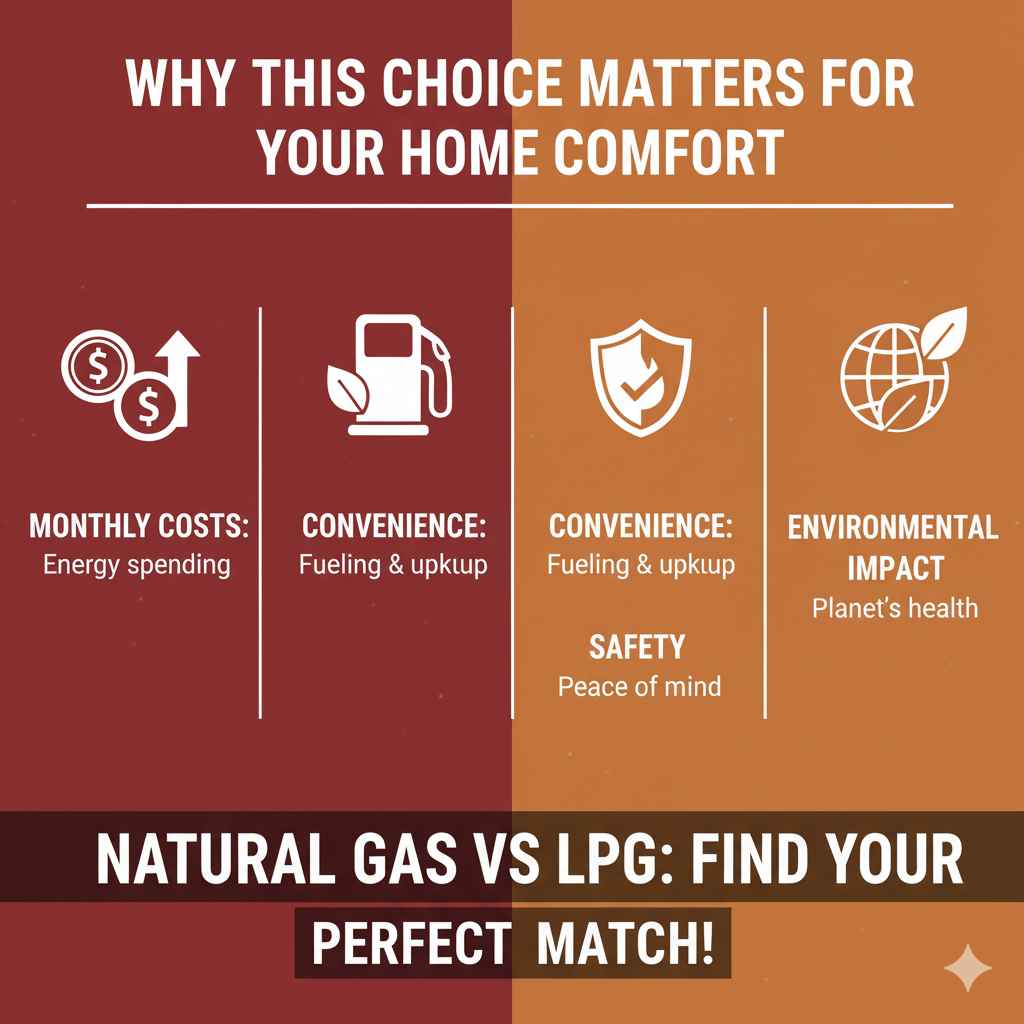
Why This Choice Matters for Your Home Comfort
Your home’s heating system is more than just a way to stay warm; it’s about creating a comfortable living space for you and your family. The type of fuel your heater uses – whether it’s natural gas or LPG – has a big impact on several things:
Monthly Costs: How much you spend on energy.
Convenience: How easily you can get the fuel and keep your system running.
Safety: Ensuring your heating is safe for your home.
Environmental Impact: How the fuel affects our planet.
Understanding the differences between natural gas and LPG heaters will help you make a choice that’s right for your home, your wallet, and your peace of mind.
What Exactly Are Natural Gas and LPG?
Let’s get to know our two main players. While both are fossil fuels and both are used for heating, they have distinct characteristics.
Natural Gas: The Connected Option
Natural gas is a fossil fuel composed primarily of methane. It’s the most widely used heating fuel in many parts of the world, especially in areas with established underground pipeline networks.
How it works: Natural gas is delivered directly to homes through a network of underground pipes, similar to how water or electricity is supplied.
Availability: If your home is connected to a natural gas pipeline, you have access to this fuel. It’s common in urban and suburban areas.
Storage: No on-site storage is needed, as it’s supplied continuously.
LPG (Propane): The Versatile Alternative
LPG, or Liquefied Petroleum Gas, largely consists of propane and butane. It’s a portable fuel that is stored on-site in tanks.
How it works: LPG is delivered as a liquid under pressure and turns into a gas when you need it for your heater.
Availability: LPG is available virtually anywhere. If your home isn’t connected to a natural gas line, LPG is likely your best gaseous fuel option.
Storage: You’ll need a storage tank on your property to hold the LPG supply. These can be rented or purchased.
Natural Gas Heaters: Pros and Cons
Natural gas heaters are a popular choice for good reason. They’re reliable and efficient when you have access to a gas line.
The Upsides of Natural Gas Heaters
Using natural gas for heating comes with several perks, making it a dream for many homeowners.
- Consistent Supply: As long as the gas mains are operational, you’ll have uninterrupted heating. No need to worry about running out or scheduling deliveries.
- Cost-Effective: In many regions, natural gas is cheaper per unit of energy than LPG, leading to lower heating bills over time.
- Environmentally Friendlier: Compared to some other fossil fuels, natural gas burns cleaner, releasing fewer greenhouse gases. It’s considered one of the cleaner fossil fuels. For more details on fuel impacts, the U.S. Energy Information Administration (EIA) offers comprehensive data.
- No On-Site Storage: You don’t need to dedicate space for a storage tank or worry about its maintenance or refilling schedule.
- Efficient Heating: Natural gas heaters are known for their high efficiency, converting a large percentage of fuel into heat.
The Downsides of Natural Gas Heaters
While fantastic, natural gas isn’t without its limitations for some homes.
- Limited Availability: The biggest drawback is that it’s only an option if your home is connected to a public natural gas pipeline. Many rural or remote areas don’t have this infrastructure.
- Installation Costs: If your home isn’t already set up for natural gas, the initial cost of connecting to the main line and running pipes through your house can be significant.
- Potential for Interruptions: While rare, supply can be affected by major outages or maintenance on the gas network.
- Not Portable: You can’t easily move a system that relies on natural gas to another location.
LPG Heaters: Pros and Cons
LPG heaters offer a flexible and viable heating solution for homes not connected to natural gas lines. It is often referred to as propane heating systems.
The Upsides of LPG Heaters
LPG heaters are a fantastic choice, especially where natural gas isn’t an option.
- Widespread Availability: LPG can be delivered and used almost anywhere. Whether you’re in a remote countryside spot or a suburban area without gas lines, LPG can work for you.
- On-Demand Supply: With your own tank, you control your supply. You can order refills as needed, ensuring you always have fuel on hand.
- Versatile Uses: Besides heating, LPG can also power stoves, water heaters, dryers, and even BBQs, offering a single fuel solution for many home needs.
- Cleaner Burning than Oil/Coal: LPG burns more cleanly than heating oil or coal, making it a relatively better choice for air quality among fossil fuels.
- Portable: While the tanks are fixed, LPG itself can be transported, making it a fuel for mobile homes or temporary structures if needed.
The Downsides of LPG Heaters
Here are some points to consider when opting for an LPG heating system.
- Storage Tank Required: You’ll need space on your property for an LPG tank, and this tank needs regular maintenance and professional inspection.
- Delivery Costs & Scheduling: You might have to plan and pay for deliveries. Running out of gas can be a real problem if you don’t monitor your tank levels carefully.
- Higher Fuel Costs: LPG can be more expensive per unit of energy than natural gas, which can lead to higher heating bills, especially in colder climates where consumption is high. The exact pricing can vary based on global markets and local suppliers.
- Price Volatility: LPG prices can fluctuate more than natural gas, influenced by global supply and demand.
- Space Requirement: The tank itself takes up space and must be installed according to safety regulations, usually requiring a certain distance from the house and property lines.
Key Differences at a Glance: Natural Gas vs. LPG
To help you visualize the distinctions, here’s a straightforward comparison of natural gas and LPG heaters.
| Feature | Natural Gas Heaters | LPG Heaters |
|---|---|---|
| Fuel Type | Primarily Methane | Propane and Butane |
| Delivery Method | Underground pipeline network | Delivered by truck to on-site tank |
| Availability | Requires connection to municipal gas lines (common in urban/suburban areas) | Available virtually anywhere; requires tank installation |
| On-Site Storage | No storage needed | Requires an LPG storage tank |
| Typical Cost (per BTU/unit) | Often lower in areas with infrastructure | Often higher than natural gas |
| Installation Complexity | Can be high to connect to mains if not already present | Requires tank placement and connection; simpler if no underground piping is needed |
| Environmental Impact | Burns cleaner than LPG, coal, or oil | Burns cleaner than coal or oil, but slightly more so than natural gas |
| User Management | Continuous supply, minimal user input needed | Requires monitoring tank levels and scheduling refills |
Installation: What to Expect
The installation process for each type of heater differs significantly and will depend on your existing home infrastructure.
Natural Gas Heater Installation
If your home is already connected to a natural gas line:
- Appliance Selection: Choose a natural gas heater (furnace, boiler, or direct vent heater) that fits your home’s size and heating needs.
- Professional Installation: A certified HVAC technician will install the unit. This usually involves connecting it to your existing gas line and venting system.
- Permits and Inspection: Depending on your local regulations, you might need permits, and the work may require an inspection to ensure safety standards are met.
If your home is NOT connected to a natural gas line:
- Utility Connection: You’ll need to arrange for your utility provider to extend a gas line to your property. This can be a costly and time-consuming process.
- Internal Piping: Once the main line is at your property, internal pipes will need to be run throughout your house to the heater location.
- Appliance and System Installation: The heater itself is then installed and connected to the new piping and venting system.
Regulations for natural gas installation are often managed by local authorities and gas utility companies to ensure safety and compliance. For guidance on safe natural gas installation practices, you can refer to resources from organizations like the National Fuel Gas Code (NFGC) in the United States, which sets standards for safe gas piping and appliance installations.
LPG Heater Installation
LPG installation is more straightforward if you don’t have existing gas infrastructure:
- Appliance Selection: Choose an LPG heater model that suits your needs.
- Tank Installation: An LPG supplier will install a storage tank on your property. This typically involves:
- Choosing a location for the tank (must meet specific safety setbacks from buildings, property lines, and ignition sources).
- Preparing the ground for the tank (often a concrete pad).
- Installing the tank securely.
- Connecting the Heater: A qualified technician will run a gas line from the tank to your heater and install the appliance. This connection is usually simpler than extending a municipal gas line.
- Safety Checks: The installer will perform leak tests and ensure all safety features are functioning correctly.
The installation of LPG tanks and systems is strictly regulated for safety. It’s essential to use a licensed LPG supplier and installer. They will be knowledgeable about local codes and best practices for safe tank placement and system operation. You can find more information on safe LPG handling and storage from organizations like the Liquefied Petroleum Gas Association (LPGA) in the UK or the National Propane Gas Association (NPGA) in the US.
Understanding Costs: Installation, Fuel, and Maintenance
When comparing natural gas and LPG heaters, it’s important to look at the total cost of ownership, not just the initial purchase price.
Initial Installation Costs
Natural Gas: If you have an existing gas line, installation is usually more affordable, focusing on the heater unit and its connections. If a new line needs to be run to your property, this can be a substantial expense.
LPG: The cost here often involves the tank – whether you buy it outright or pay a monthly rental fee. Installation of the tank and the pipework from the tank to the house typically falls under the supplier’s service, and this cost is often factored into your contract or a one-time setup fee.
Ongoing Fuel Costs
Natural Gas: Generally, natural gas is cheaper per therm (a unit of energy) than LPG, which can lead to lower monthly heating bills, especially in colder climates where the heater runs for extended periods.
LPG: LPG prices can be more volatile and are often higher per therm. This means your heating bills might be more expensive, particularly if you use your heater frequently.
Maintenance Costs
Both natural gas and LPG heaters require regular maintenance for safety and efficiency. This typically includes:
Annual Servicing: A professional check of the heating unit, burner, and safety controls by an HVAC technician.
LPG Tank Maintenance: The LPG tank itself will need periodic inspections and may have rental fees associated with it.
Filter Replacement: Air filters for forced-air systems need regular replacement.
As a general rule, expect ongoing maintenance costs to be similar for both types of systems, with LPG potentially having an added cost for tank rental or a slightly more involved yearly inspection.
Safety First: What You Need to Know
Safety is paramount when it comes to any home heating system. Both natural gas and LPG are combustible fuels, so proper installation and maintenance are key.
Natural Gas Safety
Detection: Install carbon monoxide (CO) detectors on every level of your home, especially near sleeping areas. Natural gas itself is odorless, but utility companies add a distinct smell (like rotten eggs) to help detect leaks.
Leak Detection: If you smell rotten eggs, evacuate the house immediately and call your gas company or emergency services from a safe distance. Never use a phone, light switches, or appliances inside a gas-filled environment.
Professional Installation: Always use qualified professionals for any work involving natural gas lines or appliances.
Venting: Ensure your natural gas heater is properly vented to the outside to prevent the buildup of dangerous exhaust gases.
LPG Safety
Detection: Similar to natural gas, CO detectors are essential. LPG has a strong, distinctive odor added to make leaks noticeable.
Leak Detection: If you smell gas, turn off the main valve on the LPG tank if it’s safe to do so, open doors and windows to ventilate, and leave the area immediately. Call your LPG supplier or 911 from a safe location.
Tank Safety: LPG tanks must be installed by professionals, kept clear of flammable materials, and regularly inspected for damage or leaks.
Venting: Like natural gas heaters, LPG appliances require proper external venting.
For comprehensive safety information, you can consult resources from your local fire department or government safety agencies. For example, the U.S. Consumer Product Safety Commission (CPSC) provides valuable tips on home heating safety, including information on CO poisoning and safe fuel use.
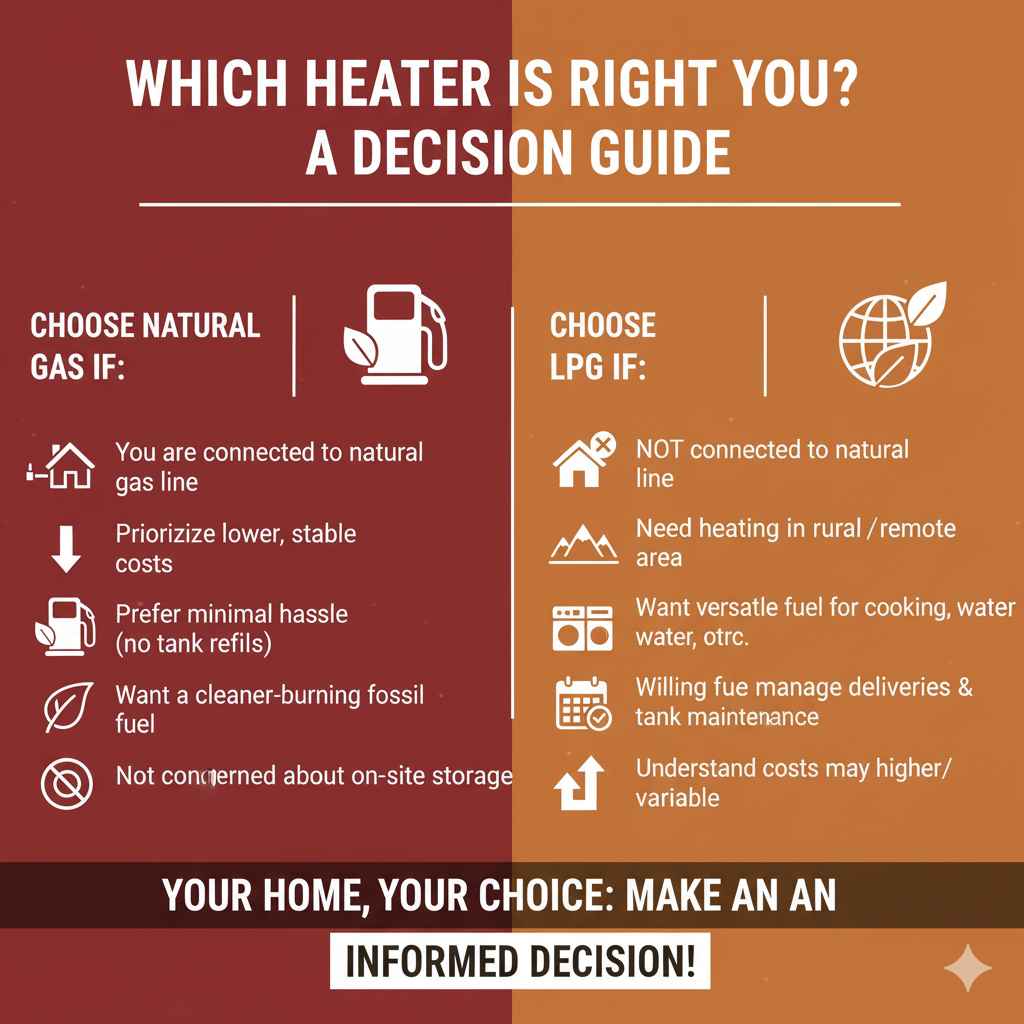
Which Heater is Right for You? A Decision Guide
The choice between natural gas and LPG heaters largely depends on your home’s location and your priorities.
Choose Natural Gas If:
You are connected to a natural gas line: This is the most significant factor.
You prioritize lower, more stable fuel costs: Natural gas is typically cheaper per unit of energy.
You prefer minimal hassle with fuel supply: No need to worry about tank levels or deliveries.
You want a cleaner-burning fossil fuel option: It has a lower environmental impact compared to LPG.
You are not concerned about on-site storage: As there is no tank, it requires no space.
Choose LPG If:
You are NOT connected to a natural gas line: This is the most common reason for choosing LPG.
You need heating solutions in a rural or remote area: LPG is available everywhere.
You want a versatile fuel for multiple appliances: It can power cooking, water heating, and more.
You are willing to manage fuel deliveries and tank maintenance: This requires a bit more planning.
You understand that fuel costs might be higher and more variable: This is a trade-off for its availability.
Frequently Asked Questions (FAQ)
Here are some common questions beginner homeowners ask about natural gas and LPG heaters.
Q1: Can any heater run on both natural gas and LPG?
No, not usually. Most heating appliances are designed to run on either natural gas or* LPG. They use different gas pressures and require specific burner configurations. If you switch fuels, the appliance often needs conversion kits and a qualified technician, or you might need a completely different unit.
Q2: How often does an LPG tank need refilling?
This depends on your usage, the size of the tank, and the weather. A 500-gallon (approx. 1900-liter) tank might last an average family for several months during winter. It’s good practice to monitor your tank’s gauge (many suppliers offer remote monitoring) or get refill reminders from your supplier to avoid running out.
Q3: Is natural gas or LPG better for the environment?
Natural gas is generally considered slightly better for the environment than LPG. Both are fossil fuels, but natural gas (primarily methane) burns cleaner and produces fewer greenhouse gas emissions per unit of energy than LPG (propane/butane). Both are significantly better than coal or oil.