
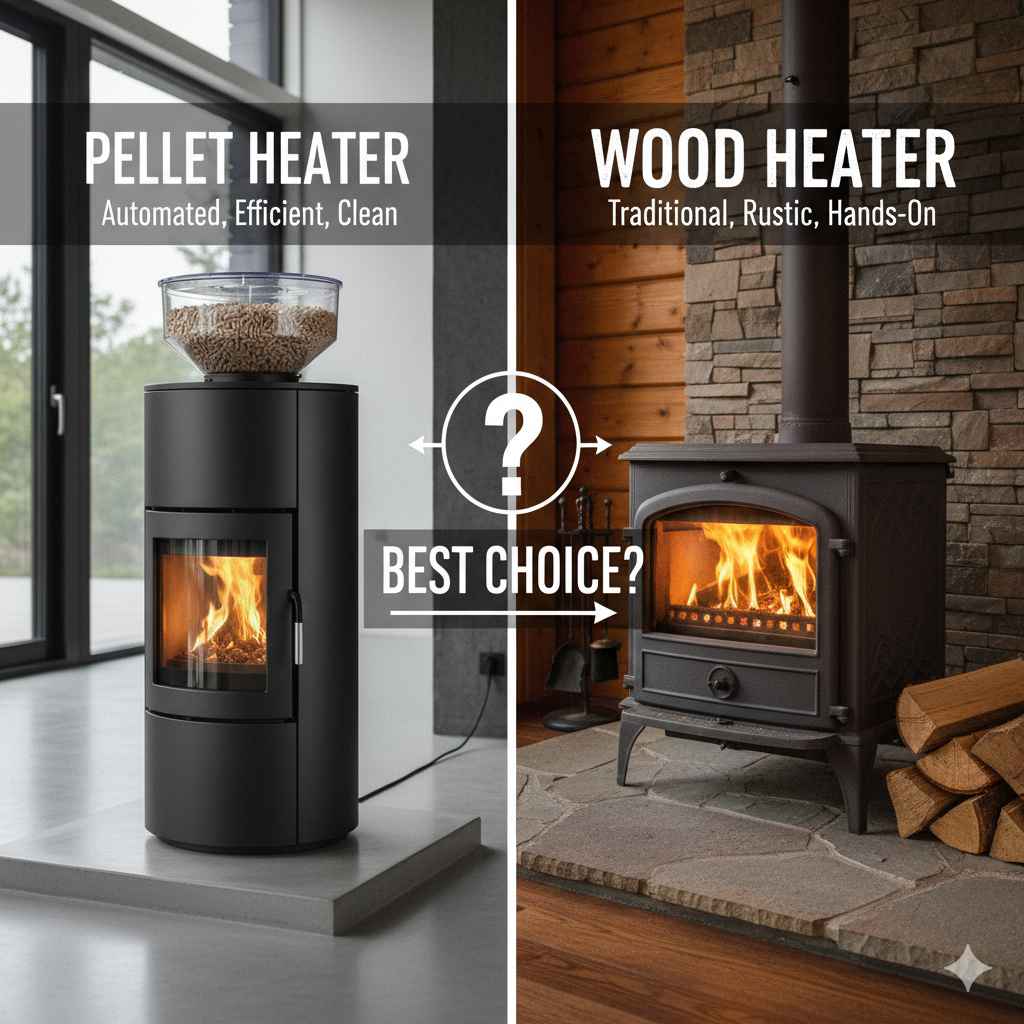
Pellet heaters offer cleaner, more automated heating with consistent temperature control and less effort, making them a top choice for convenience. Wood heaters provide a classic, rustic ambiance and are often cheaper to run if you have access to free wood, but require more manual effort and attention. The best choice depends on your priorities for ease of use, fuel availability, and desired atmosphere.
Feeling the chill and thinking about a new heater? It’s a common puzzle for many homeowners: should you go for the classic charm of a wood heater or the modern convenience of a pellet heater? Both can bring warmth and coziness to your home, but they work quite differently. If you’re feeling a bit lost in the options, you’ve come to the right place. I’m here to guide you, step-by-step, through understanding the differences. We’ll break down what each type offers, how they stack up, and help you figure out which one is the best fit for your home. Get ready to feel confident about making your choice and enjoying a toasty warm space all season long!
Understanding the Basics: What Are They?
Imagine a warm, crackling fire – that’s the magic of a wood heater. They burn logs to produce heat. On the other hand, a pellet heater uses small, compressed wood pellets. Think of it as a more refined way to enjoy the warmth of wood. Let’s dive a bit deeper into each.
Wood Heaters: The Traditional Choice
Wood heaters, often called wood-burning stoves or fireplaces, are a beloved choice for many. They’ve been warming homes for centuries. Their appeal often lies in the ambiance they create – the sight, sound, and smell of a real wood fire can be incredibly comforting. They work by burning seasoned firewood in a controlled chamber, heating your home through radiation and convection.
How Wood Heaters Work
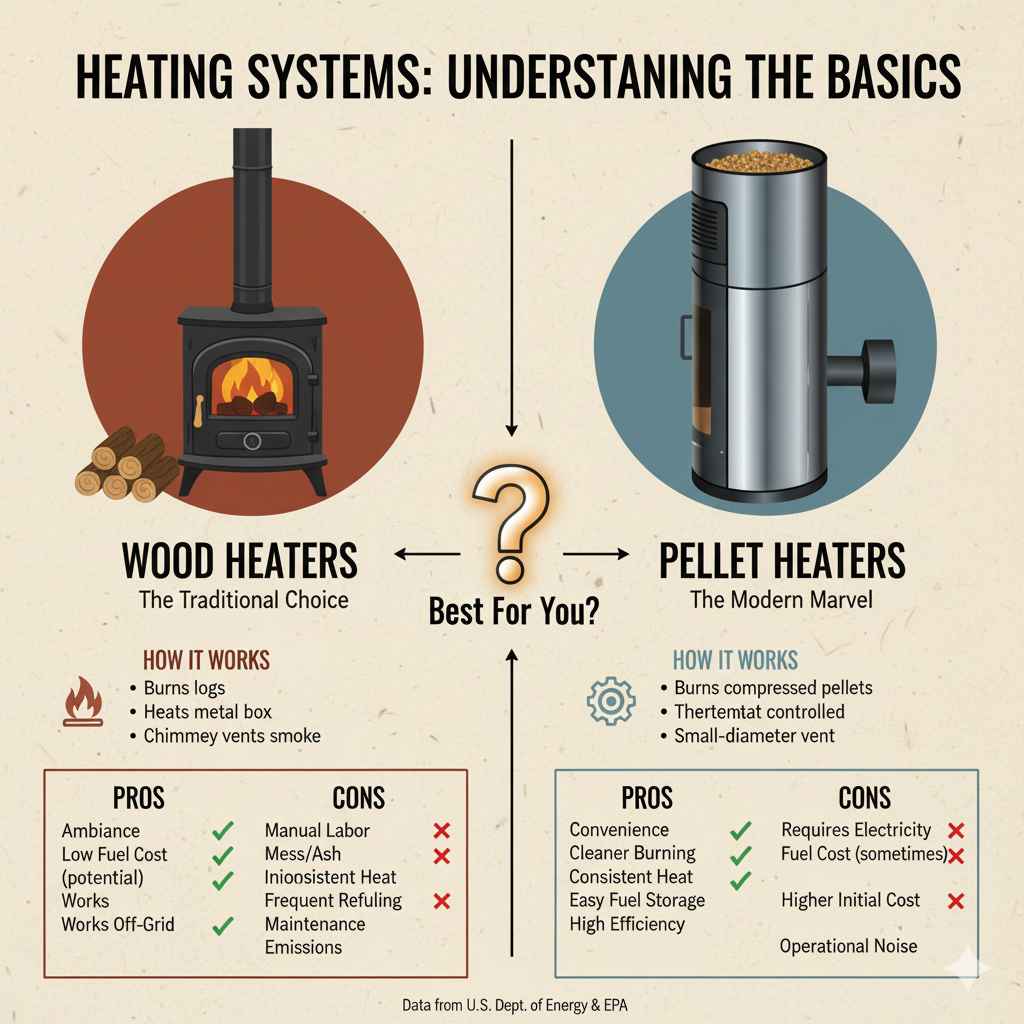
At its core, a wood heater is a metal box with a firebox inside. You load wood into the firebox, light it, and the fire heats the metal. This heat then radiates into your room. A chimney or flue pipe carries smoke and gases safely outside. Modern wood heaters are designed to burn wood much more efficiently and cleanly than older models. They often feature airflow controls that allow you to manage the burn rate and heat output. For the most efficient burn, it’s important to use dry, seasoned wood. You can learn more about proper wood seasoning and its importance for efficient burning from resources like the U.S. Department of Energy.
Pros of Wood Heaters
- Ambiance: The look and sound of a real wood fire are unmatched.
- Fuel Cost (Potentially): If you have access to free or cheap firewood, running costs can be very low.
- Independence: They can work even during power outages.
- Lower Initial Cost (Sometimes): Basic wood stoves can be less expensive upfront than quality pellet stoves.
Cons of Wood Heaters
- Manual Labor: Requires chopping, stacking, seasoning, and carrying wood.
- Mess: Wood can be dirty, leaving ash and dust.
- Inconsistent Heat: Maintaining a steady temperature can be tricky; it’s harder to set and forget.
- Frequent Refueling: You’ll need to add logs regularly for continuous heat.
- Maintenance: Regular cleaning of the firebox and chimney is essential.
- Emissions: Can produce more particulate matter if not operated correctly.
Pellet Heaters: The Modern Marvel
Pellet heaters, also known as pellet stoves, are a more recent innovation. They use fuel made from compressed sawdust and other organic materials called pellets. These pellets are fed automatically from a hopper into a burn pot, where they are ignited and burned. This system allows for much more precise control over heat output and a cleaner burn.
How Pellet Heaters Work
Pellet stoves are essentially automated biomass burners. You fill a hopper with wood pellets. An electric auger system then moves pellets from the hopper to the burn pot as needed. An igniter starts the fire, and sensors monitor the temperature, adjusting the auger and fan speeds to maintain your desired heat setting. Exhaust gases are vented through a small-diameter pipe, similar to a dryer vent. Because they are often electric, they do require a power source to operate. You can find more details on how they work and their efficiency from sources like the U.S. Environmental Protection Agency.
Pros of Pellet Heaters
- Convenience: Automated feeding and temperature control make them very easy to use.
- Cleaner Burning: Generally produce fewer emissions and less ash than wood stoves.
- Consistent Heat: Easy to set a thermostat and forget it for steady warmth.
- Less Fuel Handling: Pellets are easier to store and handle than logs.
- Efficiency: Can be highly efficient at converting fuel to heat.
- No Chimney Needed (Often): Many models can be vented directly through an outside wall.
Cons of Pellet Heaters
- Requires Electricity: Won’t work during a power outage unless you have a backup generator.
- Fuel Cost: Pellets can sometimes be more expensive than firewood, especially if you don’t have a local source.
- Initial Cost: Pellet stoves can have a higher purchase price.
- Noise: The fan and auger can produce some operational noise.
- Maintenance: Still requires regular cleaning, though often less frequent than wood stoves.
Pellet Heater vs Wood Heater: A Direct Comparison
To make your decision easier, let’s put them head-to-head on key factors important to homeowners. This comparison will highlight the core differences and help you weigh what matters most for your home and lifestyle.
| Feature | Pellet Heater | Wood Heater |
|---|---|---|
| Fuel Type | Compressed wood pellets | Seasoned firewood logs |
| Operation | Automated (electric auger, thermostat control) | Manual (loading logs, adjusting dampers) |
| Convenience | High (set and forget) | Low (requires constant attention) |
| Heat Consistency | Excellent | Fair to Good (requires practice) |
| Ambiance | Less rustic, more controlled heat | High (visual and auditory appeal of fire) |
| Emissions | Lower (cleaner burn) | Higher (can vary greatly with wood quality and operation) |
| Ash Production | Low | Moderate to High |
| Fuel Storage | Requires dry storage for bags of pellets | Requires space for stacked, seasoned logs |
| Installation | Often simpler venting, needs power outlet | Typically requires a full chimney system |
| Power Requirement | Yes (for igniter, auger, fans, thermostat) | No (unless it has an electric blower assist) |
| Maintenance | Regular cleaning of burn pot, heat exchanger, ash pan. Annual professional servicing recommended. | Regular ash removal, firebox cleaning, chimney sweeping (at least annually). |
| Noise | Some operational noise from fans and auger | Minimal operational noise (unless it has a blower) |
| Typical Lifespan | 15-20 years with proper maintenance | 20+ years for good quality stoves |
Factors to Consider for Your Best Choice
Choosing between a pellet heater and a wood heater isn’t just about the technology; it’s about how it fits into your life. Think about these important aspects:
Your Lifestyle and Time Commitment
How much time and effort are you willing to put into heating your home? If you have a busy schedule or prefer minimal fuss, a pellet heater’s automated operation is a huge advantage. You can set it and go. If you love the ritual of tending a fire, enjoy being outdoors and preparing your own fuel, or find joy in the hands-on process, a wood heater might be more appealing.
Fuel Availability and Cost
This is a major deciding factor for many. Are you lucky enough to have access to affordable or even free firewood? If so, a wood heater can be incredibly cheap to run. If not, you’ll need to factor in the cost of purchasing firewood, which can add up considerably. For pellet heaters, you’ll need a reliable source for wood pellets. Prices can fluctuate, so it’s wise to research local suppliers and compare costs. Sometimes, bulk purchases can offer savings.
Home Layout and Installation Requirements
Both types of heaters require proper ventilation. Wood stoves typically need a full chimney system that extends above the roofline. This can be a significant and costly installation, especially in homes without an existing fireplace. Pellet stoves, on the other hand, often use a simpler direct-vent system that can exit through an exterior wall, sometimes requiring less complex and expensive installation. However, pellet stoves do need a dedicated electrical outlet to function, so proximity to power is key.
Desired Ambiance
For many, the appeal of a wood heater is the visual and auditory experience of a real fire – the dancing flames, the crackling sounds, and the unique scent of burning wood. This can create a very cozy and traditional atmosphere. Pellet stoves provide warmth, but they don’t offer the same kind of traditional fire experience. The flame is often less dynamic and less visible through the glass, and there’s no crackling sound.
Environmental Concerns
Both pellet and wood heaters, when operated correctly and maintained well, can be environmentally friendly heating options, especially when compared to fossil fuels. Pellet stoves are generally considered cleaner burning due to their consistent fuel quality and controlled combustion, resulting in lower emissions. Modern wood stoves are also designed for high efficiency and reduced emissions, but their environmental impact is more dependent on the type of wood burned and how the stove is operated. Using certified, low-emission wood stoves can significantly reduce their environmental footprint. The EPA’s Burn Wise program offers excellent guidance on choosing and using wood stoves efficiently.
Installation and Maintenance: What to Expect
Once you’ve made your choice, understanding the installation and ongoing maintenance is crucial for safety and performance.
Wood Heater Installation
Installing a wood heater is a significant project. It usually involves:
- Choosing the right stove: Consider size, efficiency, and heating capacity for your space.
- Clearance to combustibles: Ensuring adequate safety distances from walls, furniture, and other flammable materials is paramount. This often requires specific heat shields.
- Proper venting: Installing a code-compliant chimney system is essential for safely expelling smoke and gases. This is often the most complex and costly part.
- Hearth protection: A non-combustible floor protector is needed under and around the stove.
It’s highly recommended to have wood heaters installed by a certified professional to ensure safety and compliance with local building codes. Organizations like the Chimney Safety Institute of America (CSIA) offer resources and can help you find certified professionals.
Pellet Heater Installation
Pellet heater installation is often more straightforward:
- Placement: Like wood stoves, pellet stoves require clearances from combustible materials.
- Venting: Most pellet stoves use a direct-vent system that can go through an outside wall horizontally or vertically with specialized venting kits. This often avoids the need for a full chimney.
- Power: An electrical outlet is needed for the stove’s operation.
- Fuel Storage: You’ll need a dry, accessible place to store bags of pellets.
While simpler, it’s still wise to consult the manufacturer’s instructions and consider professional installation, especially for venting, to ensure optimal performance and safety.
Maintenance for Both
Regular maintenance is key for both types of heaters:
Wood Heater Maintenance Checklist:
- Ash Removal: Daily or as needed.
- Firebox Cleaning: Weekly or as needed to remove creosote buildup.
- Gasket Checks: Inspect door and glass gaskets for wear and tear to maintain airtightness.
- Annual Chimney Sweep: Essential for safety to remove creosote and prevent chimney fires.
- Inspection of Baffles and Firebricks: Check for damage.
Pellet Heater Maintenance Checklist:
- Burn Pot Cleaning: Daily or every few days, depending on usage.
- Ash Pan Emptying: As needed.
- Heat Exchanger Cleaning: Weekly or bi-weekly.
- Hopper Cleaning: Periodically, to prevent moisture absorption.
- Fan and Auger Inspection: Keep them clear of debris.
- Annual Professional Servicing: Recommended for checking electrical components, seals, and overall performance.
Making Your Final Decision
By now, you should have a much clearer picture of pellet heaters vs wood heaters. The ‘best’ choice is incredibly personal. Here’s a quick way to think about it:
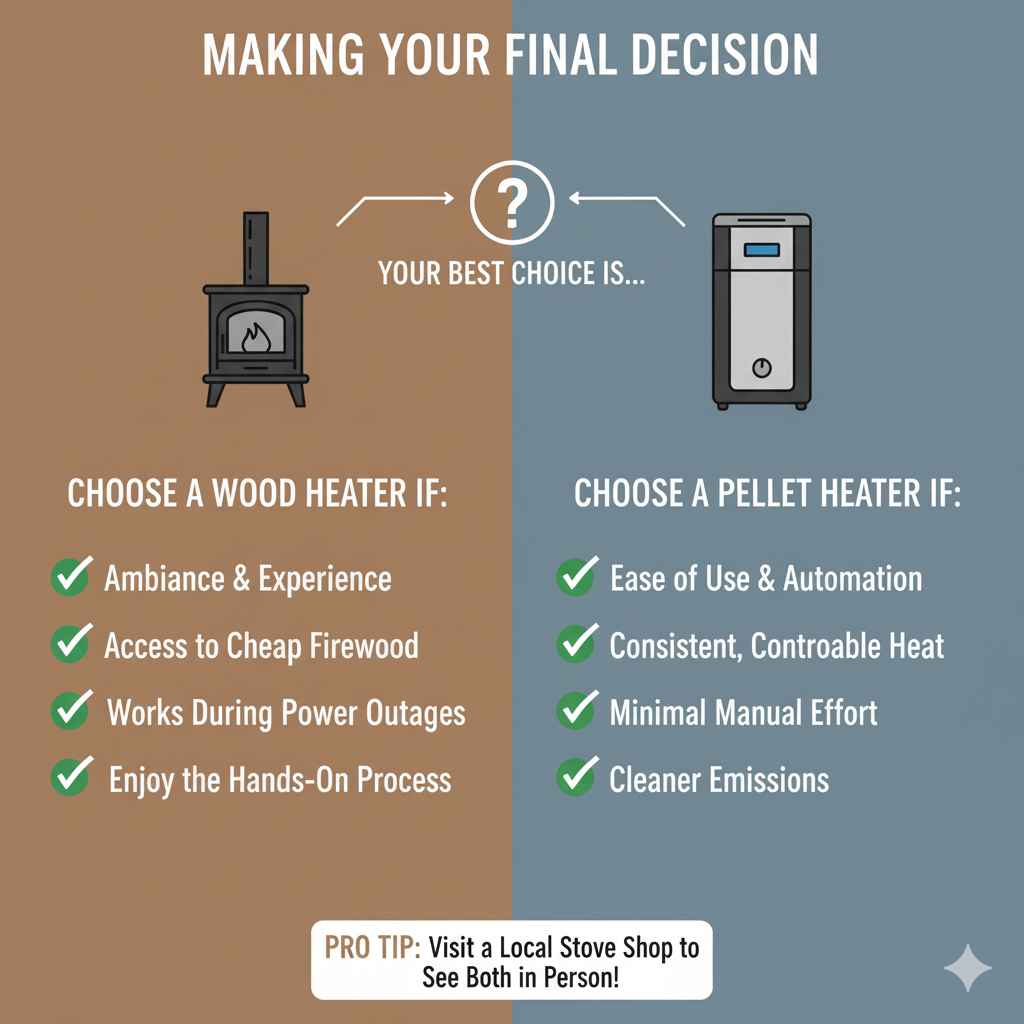
- Choose a Pellet Heater if: You prioritize ease of use, consistent and controllable heat, minimal manual effort, and cleaner emissions. You don’t mind the reliance on electricity and their operational sounds.
- Choose a Wood Heater if: You value the rustic ambiance of a real wood fire, have easy access to affordable firewood, enjoy the hands-on process of heating, and want a backup heat source during power outages. You’re prepared for the physical effort and regular maintenance.
Consider a quick visit to a local fireplace or stove shop. Seeing both types in person, where possible, can offer valuable insights into their size, aesthetics, and operation. Don’t hesitate to ask questions – they’re there to help you find the perfect fit for your home.
Frequently Asked Questions (FAQ)
Q1: Which type of heater is safer, pellet or wood?
Both can be very safe when installed and operated correctly according to manufacturer instructions and local codes. Pellet stoves are often considered slightly safer due to their controlled burn and lower risk of chimney fires if maintained. However, wood stoves with proper installation and regular chimney cleaning are also very safe.
Q2: Do pellet heaters need a chimney?
Many pellet heaters use a direct vent system that can exit through an exterior wall, similar to a clothes dryer vent. This means they often don’t require a traditional chimney. However, they must still be vented safely outside according to manufacturer specifications.
Q3: How much space do I need for fuel storage?
Wood requires a significant amount of space for stacking logs, ideally in a dry, well-ventilated area to ensure proper seasoning. Pellets are more compact and typically come in bags, requiring a dry space, but generally less overall volume than an equivalent amount of firewood.
Q4: Can I use a pellet heater as my primary heat source?
Yes, many pellet heaters are designed to heat entire homes, especially when properly sized for the space. Their consistent, controllable heat output makes them excellent primary heating options. Wood heaters can also serve as primary heat sources, but require more attention to maintain consistent temperatures.
Q5: What happens if the power goes out with a pellet heater?
Most pellet heaters require electricity to operate their igniter, fans, and auger that feeds the pellets. If the power goes out, the stove will shut down. Some models may have battery backup options, or you can use a generator to keep it running.
Q6: How often do I need to clean a wood stove vs. a pellet stove?
Wood stoves require frequent ash removal and regular cleaning of the firebox. Chimneys need professional sweeping at least annually. Pellet stoves need daily or every-other-day cleaning of the burn pot and regular emptying of the ash pan, along with periodic cleaning of the heat exchanger. An annual service check is also recommended for pellet stoves.
Q7: Are pellet stoves noisy?
Pellet stoves have fans and sometimes an auger motor, which produce operational noise. While modern stoves are designed to be as quiet as possible, you will likely hear them running. Wood stoves are generally quieter unless they have an electric blower assist.