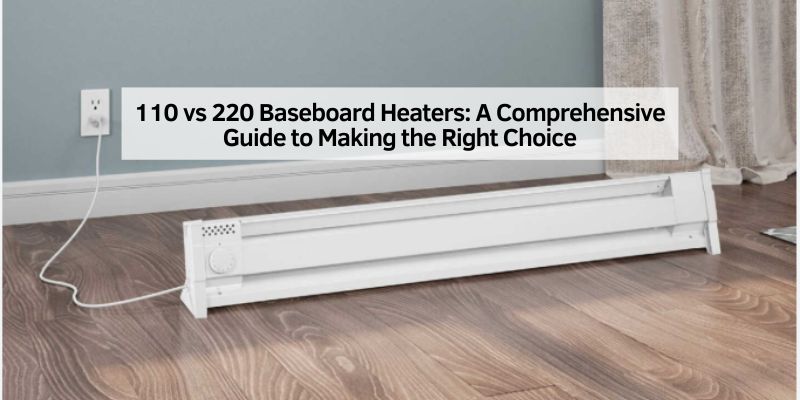
110 vs 220 Baseboard Heaters: A Comprehensive Guide to Making the Right Choice
Hey there! If you’re reading this, you’re probably trying to figure out whether a 110-volt or a 220-volt baseboard heater is the best fit for your home. I get it—choosing the right heater can feel overwhelming, especially when you’re bombarded with technical terms like voltage, wattage, and efficiency. I’ve been down this road myself, researching and comparing these two types of heaters for my own home. Let me share what I’ve learned in a way that’s easy to understand, so you can make an informed decision without the headache. Whether you’re heating a cozy bedroom, a chilly basement, or a new addition to your house, this guide will break down everything you need to know about 110 vs 220 baseboard heaters. Let’s dive in!
What Are Baseboard Heaters, and Why Do They Matter?
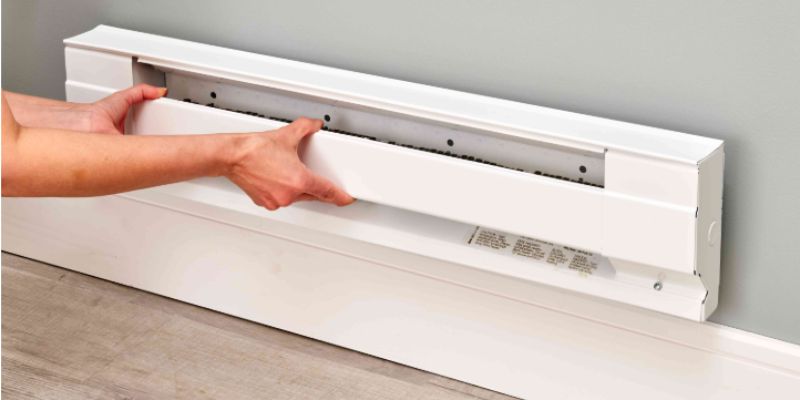
Before we get into the nitty-gritty of 110 vs 220, let’s talk about what baseboard heaters are. These are electric heaters installed along the base of your walls, usually under windows, to provide steady, gentle heat. They work by using electrical resistance to heat up a metal element inside, which then radiates warmth into the room. I love how they blend into the background—no bulky vents or noisy fans, just quiet, consistent heat.
Baseboard heaters are perfect for zoned heating. This means you can heat specific rooms without cranking up a central furnace. In my experience, they’re a lifesaver for spaces like guest rooms or home offices that don’t need constant heating. But here’s the big question: should you go with a 110-volt (also called 120-volt) or a 220-volt (also called 240-volt) model? The voltage makes a difference, and I’ll explain why as we go.
Understanding Voltage: 110V vs 220V Explained
Let’s start with the basics. Voltage is like the pressure that pushes electricity through your home’s wiring. In the U.S., most homes have both 110V and 220V circuits. Your standard outlets, like the ones you plug your phone charger into, are typically 110V. Bigger appliances, like dryers or ovens, often use 220V because they need more power.
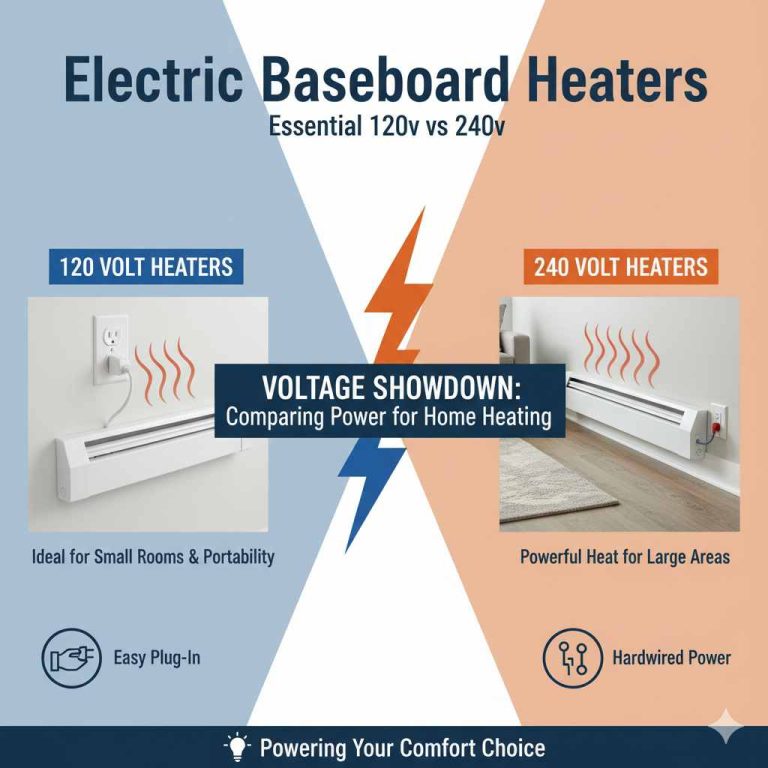
For baseboard heaters, the voltage determines how much electricity the heater can handle and how it’s wired. A 110V heater plugs into a standard outlet or is wired to a single-pole breaker. A 220V heater, on the other hand, requires a dedicated circuit with a double-pole breaker. When I was choosing heaters for my home, I found that understanding this difference was key to picking the right one.
Heat Output: Does Voltage Affect How Much Heat You Get?
One of the first things I wondered was whether a 110V heater produces less heat than a 220V one. Here’s the deal: the heat output depends on the wattage, not the voltage. A 1000-watt 110V heater will produce the same amount of heat as a 1000-watt 220V heater. Watts are a measure of power, and in electric heaters, all that power turns into heat. So, a 1500-watt heater, whether it’s 110V or 220V, will give you the same warmth.
However, 220V heaters often come in higher wattage options. For example, I found 220V models that go up to 4000 watts, while 110V heaters typically max out around 1500 watts because of circuit limitations. This means a 220V heater can heat a larger space faster. In my guest room, I went with a 1500-watt 110V heater because it was enough for the space, but for my drafty basement, I needed a 2500-watt 220V model to keep things cozy.
Efficiency: Is 220V Really More Efficient?
I kept hearing that 220V heaters are more efficient, so I dug into it. The truth? Both 110V and 220V baseboard heaters are 100% efficient at turning electricity into heat. Every watt of power becomes heat, so there’s no waste in the heater itself.
But here’s where it gets interesting. Efficiency can also depend on how electricity travels from your breaker to the heater. With a 220V heater, the current (measured in amps) is lower for the same wattage. For example, a 1500-watt 110V heater draws about 12.5 amps, while a 1500-watt 220V heater draws only 6.25 amps. Lower current means less energy is lost as heat in the wires. In my house, the wiring to my basement heater runs about 40 feet from the breaker. With a 220V heater, I lose less energy in the wires, which saves a tiny bit on my electric bill.
That said, the savings are small—maybe a few dollars a year for most homes. Unless you have a very long wire run (say, over 50 feet), the efficiency difference is negligible. I decided 220V was worth it for my larger heaters, but for smaller rooms, 110V worked just fine.
Installation: What’s the Difference?
When I installed my first baseboard heater, I was surprised by how different the process was for 110V versus 220V. Let’s break it down.
110V Baseboard Heaters
These are easier to install if you’re a DIYer like me. Most 110V heaters can plug into a standard outlet, though hardwiring is an option. If you’re hardwiring, you’ll need a 20-amp circuit with 12-gauge wire. Many homes already have 110V circuits, so you might not need new wiring. In my bedroom, I used an existing 20-amp circuit, and the installation took less than an hour.
The downside? You’re limited to about 1500 watts per circuit because of the higher amperage. If you need more heat, you’ll need multiple heaters on separate circuits, which can get complicated.
220V Baseboard Heaters
These require a dedicated 220V circuit with a double-pole breaker. You’ll also need 12-gauge or 10-gauge wire, depending on the wattage. In my basement, I had to hire an electrician to run a new 220V circuit because my panel didn’t have one nearby. This added to the cost—about $200 for the electrician and materials.
The upside is that 220V circuits can handle higher wattage heaters, so you can heat a larger space with fewer units. Plus, the lower amperage means you can use slightly thinner wire, which can save money on long runs.
My Take
If your home already has 220V circuits (check your breaker box for double-pole breakers), installing a 220V heater is straightforward. If not, the extra cost of wiring might make 110V more practical for smaller spaces. Always check local codes and consider hiring a pro if you’re unsure about electrical work.
Cost to Install and Operate
Let’s talk money. When I was budgeting for my heaters, I looked at both upfront costs and long-term operating costs.
Installation Costs
For a 110V heater, you might spend $50–$150 on the heater itself, plus $20–$50 for wiring materials if you’re hardwiring. If you’re using an existing outlet, your cost could be as low as the heater’s price. My 110V bedroom heater cost $80, and I plugged it into an existing outlet—no extra cost.
For a 220V heater, expect to pay $75–$200 for the heater, plus $100–$300 for wiring and a double-pole breaker if you need a new circuit. My basement heater cost $120, plus $200 for the electrician to run a new circuit. If you’re installing multiple heaters, 220V can save money because you can put more wattage on a single circuit.
Operating Costs
Here’s the good news: the cost to run a 110V or 220V heater is the same for the same wattage. A 1500-watt heater costs about 15–20 cents per hour to run, depending on your electricity rate. I pay about 12 cents per kilowatt-hour, so my 1500-watt heater costs $0.18 per hour whether it’s 110V or 220V.
The catch? If you need multiple 110V heaters to heat a large space, you might end up using more total watts than a single 220V heater. In my basement, one 2500-watt 220V heater replaced two 1500-watt 110V heaters, saving me about $50 a year because it runs less often to maintain the same temperature.
Safety Considerations
Safety was a big concern for me, especially with kids in the house. Both 110V and 220V baseboard heaters are safe when installed correctly, but there are differences.
110V Safety
These heaters are often plug-in models, which can be convenient but risky if the outlet isn’t rated for the heater’s amperage. I made sure my 110V heater was on a 20-amp circuit to avoid overloading. Plug-in models also have cords, which can be a tripping hazard. My 110V heater has a tip-over switch, which I love for peace of mind.
220V Safety
These are usually hardwired, so there’s no cord to worry about. However, 220V circuits carry more voltage, so improper wiring can be more dangerous. I double-checked that my electrician followed code for the 220V circuit in my basement. Also, 220V heaters often require a double-pole thermostat, which can be more expensive but ensures a complete shutoff.
My Advice
For bathrooms or areas near water, consider a 110V heater with a GFCI (ground-fault circuit interrupter) breaker for extra safety. For 220V heaters, make sure the circuit is dedicated and properly grounded. Always keep flammable items like curtains away from any baseboard heater.
Sizing Your Heater: Getting the Right Fit
Choosing the right size heater is crucial. An undersized heater will run constantly and still leave you cold, while an oversized one wastes money. Here’s how I figured out the right size for my rooms.
The rule of thumb is 10 watts per square foot for rooms with 8-foot ceilings and average insulation. For example, my 100-square-foot bedroom needed a 1000-watt heater. Here’s a quick table to help:
| Room Size (sq ft) | Wattage Needed (8-ft ceilings) | Wattage for 10-ft ceilings (+25%) | Wattage for Poor Insulation (+25%) |
|---|---|---|---|
| 100 | 1000 | 1250 | 1250 |
| 150 | 1500 | 1875 | 1875 |
| 200 | 2000 | 2500 | 2500 |
| 300 | 3000 | 3750 | 3750 |
For my basement (300 square feet with poor insulation), I needed a 3750-watt 220V heater because 110V circuits couldn’t handle that much power on a single circuit. For smaller rooms, a 110V heater is often enough.
Aesthetics and Space Considerations
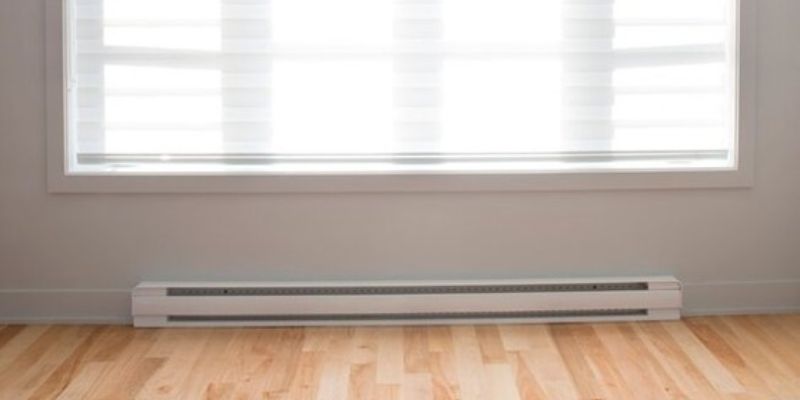
Baseboard heaters aren’t exactly stylish, but they’re discreet. Both 110V and 220V models look similar—long, low units along the wall. However, 220V heaters can be longer and cover more wall space because they handle higher wattage. In my living room, I chose a 6-foot 220V heater to avoid installing two shorter 110V units, which would’ve cluttered the space.
If you’re tight on wall space, 110V plug-in models can be more flexible since you can move them if needed. My portable 110V heater in the office is great because I can tuck it away when I don’t need it.
Maintenance and Longevity
I was pleasantly surprised by how low-maintenance baseboard heaters are. Both 110V and 220V models need occasional dusting to keep airflow clear. I use a vacuum with a brush attachment every few months. The heating elements last 10–20 years with proper care, and I haven’t noticed a difference in lifespan between the two voltages.
One thing to watch: 110V plug-in heaters can wear out outlets over time due to the higher amperage. Hardwired 220V heaters avoid this issue. My 220V basement heater has been trouble-free for three years, while I had to replace an outlet for my 110V heater after two years of heavy use.
Environmental Impact
If you’re eco-conscious like me, you might wonder about the environmental impact. Both 110V and 220V heaters use electricity, which can be less green than gas or heat pumps. However, the slight efficiency edge of 220V heaters (less wire loss) means a tiny reduction in energy use. I also paired my heaters with a programmable thermostat to save energy by lowering the heat when no one’s home.
If your electricity comes from renewable sources, like solar or wind, the environmental impact is even lower. I’m considering solar panels to offset my heater usage, but that’s a story for another day!
Which Should You Choose?
After installing both types in my home, here’s my take. Choose a 110V heater if:
- You’re heating a small room (under 150 square feet).
- You want a plug-in option for flexibility.
- Your home doesn’t have 220V circuits, and you want to avoid new wiring.
Go with a 220V heater if:
- You’re heating a larger space (over 150 square feet).
- You want to minimize wiring costs for multiple heaters.
- You already have 220V circuits available.
For me, 110V was perfect for my bedroom and office, while 220V was the way to go for my basement and living room. Your choice depends on your home’s layout, electrical setup, and budget.
Conclusion
Choosing between 110V and 220V baseboard heaters doesn’t have to be a headache. I’ve been through the process, and I can tell you it’s all about matching the heater to your needs. Both types deliver reliable heat, but 220V heaters shine for larger spaces and slightly better efficiency, while 110V heaters are simpler for small rooms and quick setups. Think about your room size, existing wiring, and long-term costs before deciding. With the right choice, you’ll stay warm and cozy without breaking the bank. I hope this guide helps you find the perfect heater for your home—let me know how it goes!