Can a Block Heater Run Through a Power Outage Backup?
Yes, if the backup can supply the heater’s continuous watts, plus startup surge, for the full outage; a 400–1,500 watt block heater usually needs at least a 1,000-watt inverter or generator with headroom. I’ve seen undersized backup power trip breakers, run hot, or leave an engine too cold to start cleanly. This guide covers wattage, runtime, inverter and generator sizing, and the safest backup choices.
Can a block heater run on backup power?
Yes, but only when the backup source can carry the heater’s steady load without sagging and can handle the short startup spike. A block heater is a plain resistive load, so the real question is not whether it can run, but whether the backup source can run it long enough and safely in the cold.
The short answer by backup source
- Portable generator: usually yes, if the generator’s continuous output clears the heater wattage with margin.
- Standby generator: usually yes, if the system is maintained and starts reliably after the outage.
- Battery station or inverter: sometimes yes for low-watt heaters, but runtime becomes the limiting factor fast.
- UPS: usually no for heating loads, even when the wattage label looks close.
- Extension cord: not a backup source by itself; it only delivers power already available somewhere else.
Where the answer changes: wattage, surge, runtime, and temperature
Colder air means more heater output is needed. I plan for that twice, once for the heater itself and again for the backup source. A heater that works on a mild night can fall short in deep cold, while a larger heater can drain a battery station far faster than most people expect.
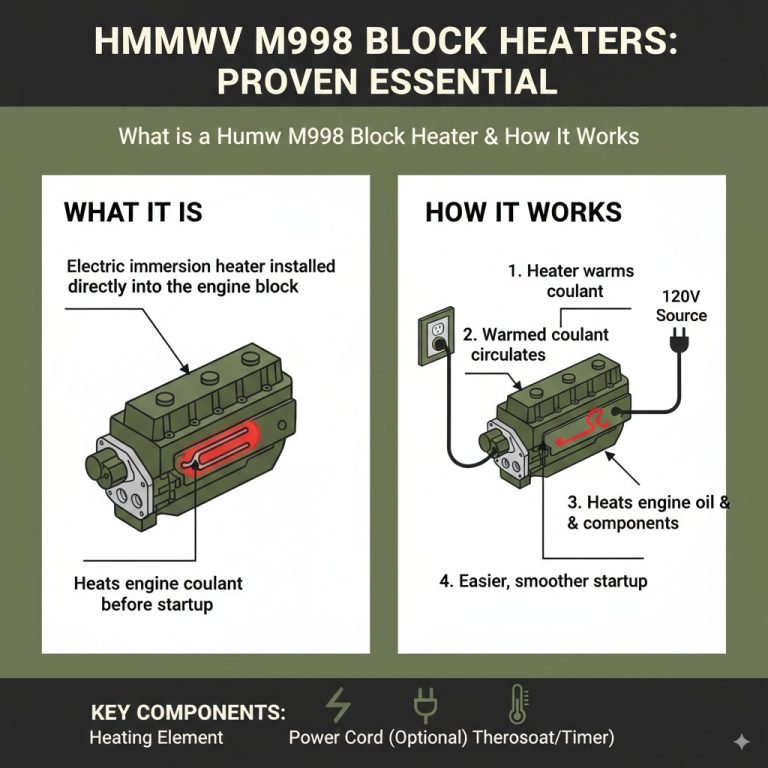
Block heaters are also called engine pre-heaters and generator water jacket heaters. They warm the engine block, and on some systems the water or hydraulic fluid, so oil pressure comes up faster and the engine is less likely to drag or wear hard on startup. Engine block heaters are often used to start up generators in an extremely cold environment or during a power outage.
📊 Critical generators must start and reach operating conditions within 10 seconds of a power outage. Source: Generator Basics: Engine Block Heaters.
How much power does a block heater use?
Block-heater power depends on engine size, heater type, and outside temperature. Normal heating situations may require 3 watts per cubic inch of compression space, while colder applications may go up to 5 watts per cubic inch. That is why a small passenger vehicle and a diesel generator do not belong in the same sizing bucket.
Common wattage ranges for vehicles, diesels, and generator engines
Many passenger-car block heaters fall in the lower range, while diesel and generator engines often need more. Bigger engines hold more heat, and colder air pushes the demand higher. Generator engine block heaters also warm the engine block, specifically the water or hydraulic fluid, so the load can be more than people expect.
Startup load vs steady draw
Most block heaters do not have a huge motor-style surge, but the first few seconds still matter. Long cords, weak inverters, and overloaded generators can sag at startup and trip a breaker even when the nameplate wattage looks acceptable. The steady draw is what dictates runtime; the startup moment is what exposes a weak setup.
What backup power options actually work?
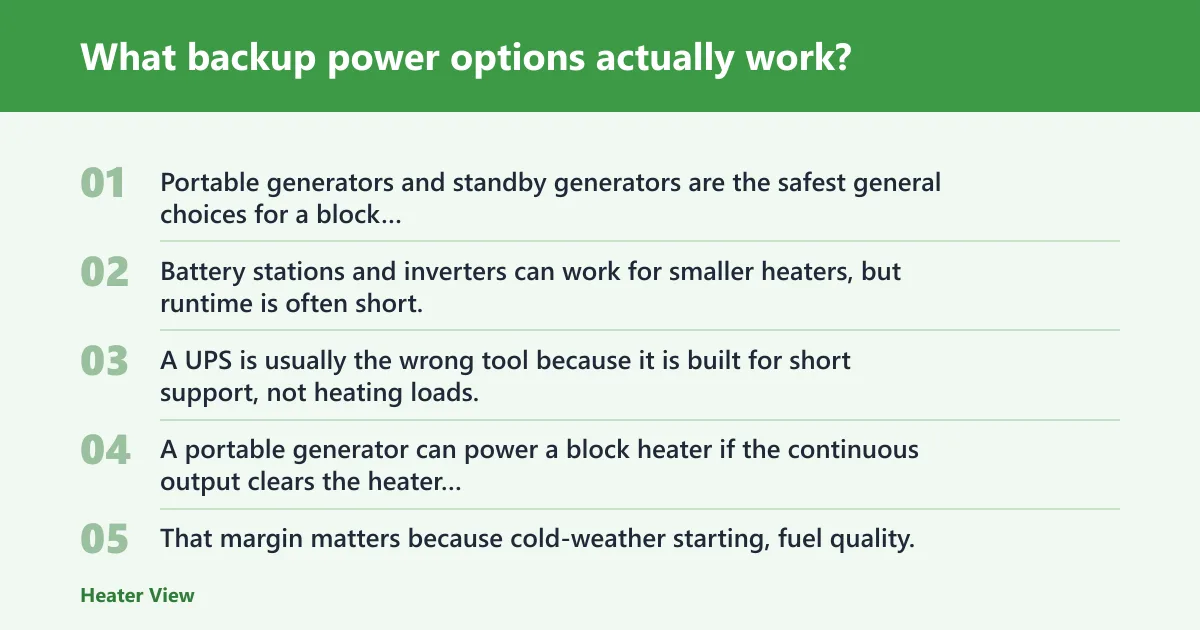
Portable generators and standby generators are the safest general choices for a block heater, provided they are sized correctly and kept in reliable starting condition. Battery stations and inverters can work for smaller heaters, but runtime is often short. A UPS is usually the wrong tool because it is built for short support, not heating loads.
Portable generator
A portable generator can power a block heater if the continuous output clears the heater wattage with extra capacity. That margin matters because cold-weather starting, fuel quality, and other loads on the same circuit can reduce usable output. If the generator is also feeding a battery charger, sump pump, or lights, the block heater should not be treated as the only load.
Standby generator
Standby generators may include block heaters, especially in cold climates where starting reliability matters. Standby generators need to be installed and maintained properly so they start when the outage hits and keep running as expected. For critical generators, the start-and-run window is tight: they must start and reach operating conditions within 10 seconds of a power outage in NFPA 110 context.
Battery station, inverter, and UPS limits
A battery station or inverter can power a block heater only if its inverter rating and battery capacity match the load. The missing piece is usually runtime. A UPS may keep electronics alive, but heating loads drain it quickly and can cause shutdown on overload or low battery long before the engine is warm enough.
Extension cord limits in winter
An extension cord is part of the power path, not the power source. In winter use, cord length and gauge matter because voltage drop rises as current rises. A long, light-gauge cord can make a heater run weakly, run hot at the plug, or trip a breaker. For outdoor use, the cord must also be rated for the temperature and moisture conditions.
How big does the generator need to be?
For a block heater alone, the generator must supply continuous watts above the heater’s nameplate load, plus a practical margin for cord losses and any other loads. A small inverter generator may be enough for a modest heater. For a diesel or large engine heater, the generator should be sized with more headroom and a plan for winter starting.
Minimum continuous output for a block heater
A practical rule is to choose a generator with somewhat more continuous output than the heater’s rated draw, often on the order of a quarter to half again as much. That extra capacity helps with cold-weather derating, other small loads, and startup nuisance trips. If the heater is around 1,000 watts, a generator that can reliably deliver about 1,250 to 1,500 watts continuously is a safer minimum.
When a small inverter generator is enough
A small inverter generator can be enough when the block heater is modest and the circuit is otherwise empty. It is most realistic for passenger vehicles with lower-watt heaters. Once the heater load climbs, or the ambient temperature drops hard, the smallest units leave too little margin for anything else.
Why critical generators need reliable start and run behavior
For critical systems, the first problem is not capacity alone. It is whether the generator starts on time, picks up load, and stays stable. That is why maintenance matters so much. A generator that has not been kept ready may fail when the outage starts, and then the block heater cannot do anything useful.
Decision table: wattage, source, and runtime
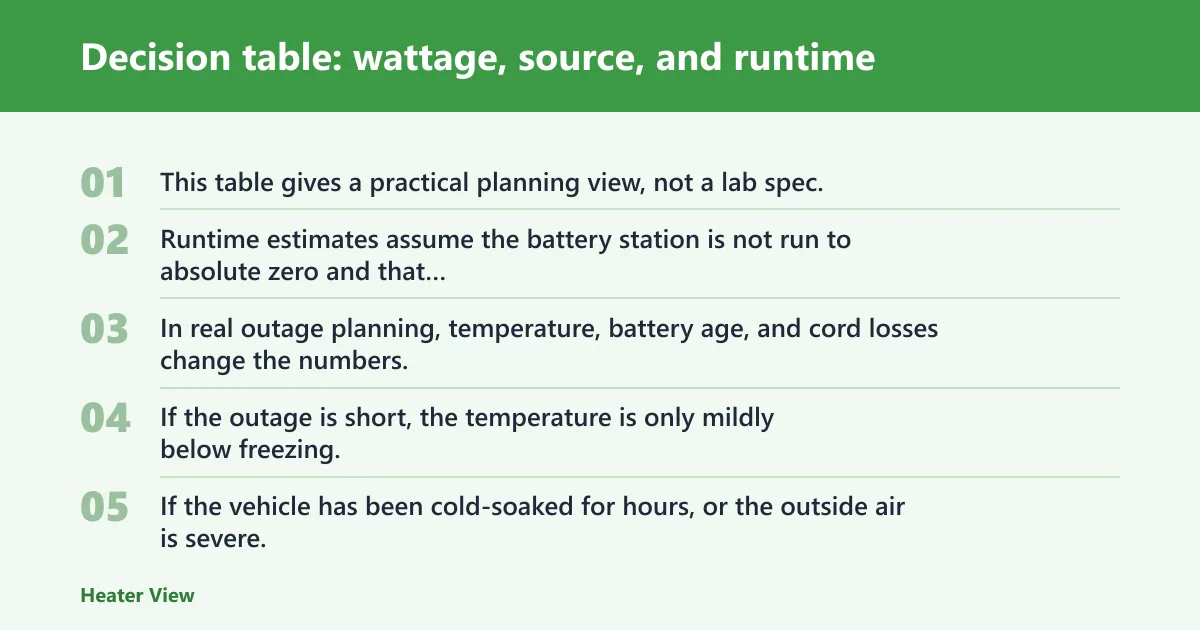
This table gives a practical planning view, not a lab spec. Runtime estimates assume the battery station is not run to absolute zero and that inverter losses are present. In real outage planning, temperature, battery age, and cord losses change the numbers.
| Block-heater wattage | Safe source type | Minimum generator output | Estimated runtime on 500 Wh battery station | Estimated runtime on 1,000 Wh battery station | Estimated runtime on 2,000 Wh battery station |
|---|---|---|---|---|---|
| 300 W | Small inverter generator, medium battery station, heavy-duty cord | 500 W continuous or more | About 1.3 hours | About 2.7 hours | About 5.4 hours |
| 400 W | Inverter generator, battery station only for short runs | 600 W continuous or more | About 1.0 hour | About 2.0 hours | About 4.0 hours |
| 750 W | Portable generator preferred; large battery station only for brief heating | 1,000 W continuous or more | About 0.5 hour | About 1.1 hours | About 2.2 hours |
| 1,000 W | Generator recommended; battery station is usually too short for practical use | 1,250 W continuous or more | About 0.4 hour | About 0.8 hour | About 1.7 hours |
| 1,500 W | Portable or standby generator only | 2,000 W continuous or more | Not practical | Not practical | About 1.1 hours |
When to skip heating and save power
If the outage is short, the temperature is only mildly below freezing, and the engine was already warm before the outage, it may be smarter to skip the heater and save runtime for essentials. If the vehicle has been cold-soaked for hours, or the outside air is severe, the heater becomes more valuable and the runtime tradeoff changes.
What type of block heater do you have?
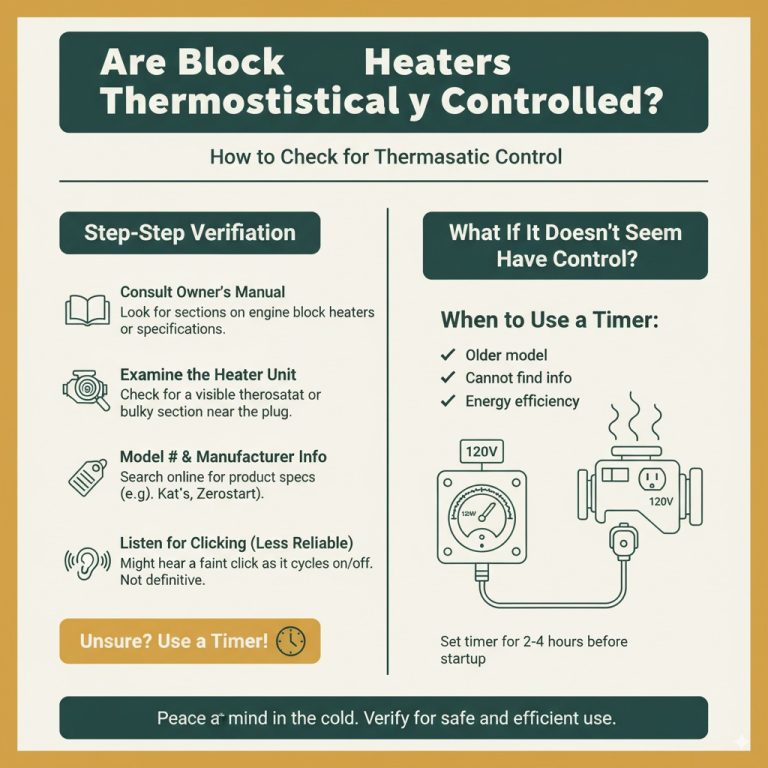
Heater type changes how fast it warms coolant and how the load behaves on backup power. Thermosiphon heaters, also known as natural convection heaters, use heat-driven circulation and are common in the coldest winter climates. Forced circulation heaters use a pump to move coolant and may include integrated controls and sensors or screen monitors to show temperature.
Thermosiphon heaters
Thermosiphon heaters are mounted compact engine heaters that help circulate coolant without complicated requirements. They are simple and durable, which helps when power is limited. Because circulation depends on heat movement rather than a pump, they are often found on systems that are meant to sit ready for hard winter use.
Forced circulation heaters
Forced circulation heaters can warm coolant faster in some setups because the pump moves fluid through the engine more actively. That can be helpful when the outage is short and the goal is to get the engine ready quickly. Integrated controls and sensors can also make temperature tracking easier when every watt matters.
Built-in and immersed heaters
Some heaters are built into the engine or immersed in coolant paths. For backup planning, the key question is still wattage, not mounting style. A compact heater can still need a large source if the engine is big or the ambient operating temperature is very low.
How long should you run it during an outage?
Run time should match the engine’s cold-soak condition, the outside temperature, and how long the outage is expected to last. There is no useful one-size answer. If the engine is already near starting temperature, long heating wastes backup power. If it is deeply cold-soaked, short heating may not help much.
Cold-soak time, outside temperature, and outage length
The colder the air, the more powerful the heater required, and the longer the engine usually needs. A vehicle parked overnight in deep cold may need more preheat time than a generator engine that only sat idle for a few hours. If the outage is long, the block heater may need to stay on until just before startup rather than for the full event.
When heating helps and when it wastes backup power
Block heaters are most useful when they are just enough to improve starting and reduce wear, not when they try to hold an engine warm all day on limited battery power. Engine temperature coolants maintained between 100 and 120 degrees keep oil pressure elevated enough for lubrication. If backup power is scarce, the best use is often a targeted warmup before the expected start.
Can a block heater run on a generator during a power outage?
Yes, if the generator has enough continuous output and is maintained properly. A block heater is a steady electrical load, so a generator does not need to be huge, but it does need margin. If the heater shares the circuit with other loads or the generator is undersized, the breaker may trip or the heater may run poorly.
How many watts does a block heater use on startup and while running?
Most of the load is the running load. Startup is usually less dramatic than a motor start, but the first seconds still matter because weak sources sag first. For planning, size to the heater’s full wattage and then add headroom for cord loss, cold derating, and anything else on the same source.
What size generator do I need for a block heater?
Choose a generator that can handle the heater’s continuous wattage plus at least 25% to 50% extra margin. That keeps the system from running at the edge and helps avoid nuisance trips. A small inverter generator may work for a low-watt heater, but diesel and large-engine heaters usually need more capacity.
Can I plug a block heater into a battery backup or UPS?
Sometimes a battery station can run a small block heater for a short time, but a typical UPS is usually too small for the job. Heating loads drain battery capacity quickly, and inverter losses shorten runtime further. For anything beyond brief preheat, generator power is usually the safer choice.
Is it safe to run a block heater from an extension cord and backup power source?
Yes, if the cord is correctly rated, kept as short as practical, and matched to the load. In winter, voltage drop and brittle insulation become real problems. The cord should be viewed as part of the system, not as a substitute for proper backup sizing.
Will a block heater help a generator start in cold weather?
Yes. Engine block heaters are often used to start up generators in an extremely cold environment or during a power outage. That is one of their best uses. A generator that starts easier in cold weather is more likely to meet the reliability window needed for critical loads.
What backup power options are safest for an engine block heater?
The safest choices are a properly sized portable generator or a maintained standby generator. A battery station can work only for smaller loads and short runtimes. A UPS is usually the least suitable. Whatever the source, the safest plan is to size for the heater, the temperature, and the full outage length.