How to Tell if a Used Vehicle Has a Block Heater
Look for a cold-weather power cord at the front of the vehicle, usually near the grille or bumper, then confirm it in the owner’s manual, window sticker, or service records. Ask the seller to point to the plug before you buy. Miss it, and a winter morning can mean slow starts, battery strain, and an extra repair or retrofit bill. This guide shows the exterior clues, paperwork checks, and seller questions that confirm whether a used vehicle has a block heater.
What you are trying to confirm before you buy
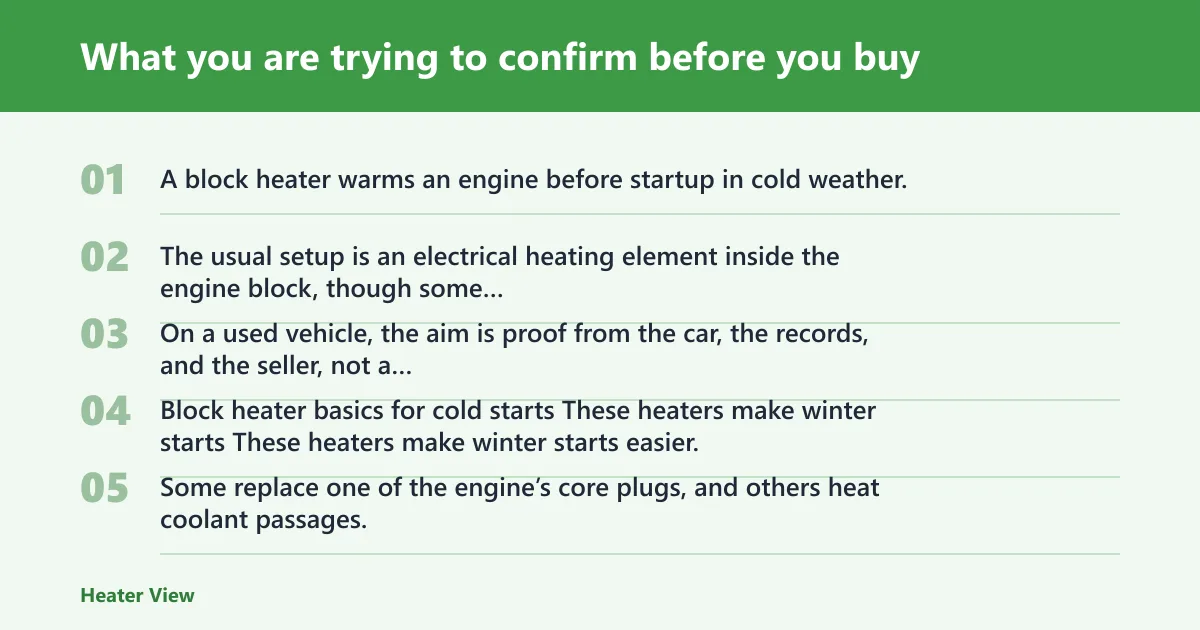
A block heater warms an engine before startup in cold weather. The usual setup is an electrical heating element inside the engine block, though some units are added later by an aftermarket shop. On a used vehicle, the aim is proof from the car, the records, and the seller, not a guess.
Block heater basics for cold starts
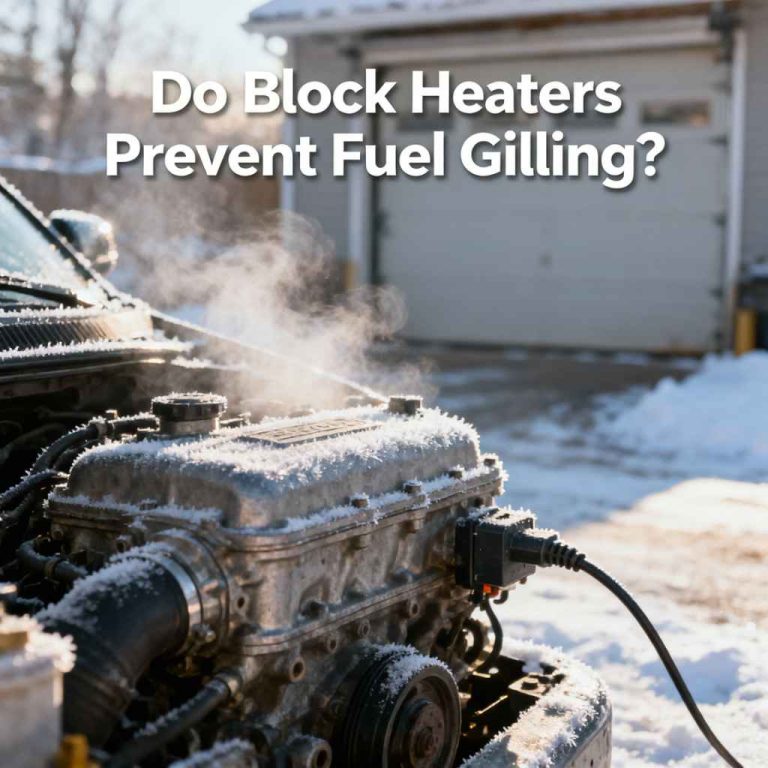
These heaters make winter starts easier. Some replace one of the engine’s core plugs, and others heat coolant passages. They usually run from an AC cord that must be plugged in before starting, often for a few hours. Testing in the 1970s found little benefit from running a block heater for more than four hours before starting, and coolant temperature rose by almost 20 °C during the first four hours. (en.wikipedia.org)
Factory-installed versus aftermarket setups
Factory units are usually noted in the vehicle paperwork or option history. Aftermarket units can work well, but they may route the cord differently, place the plug somewhere else, and leave no trace in the original build data. That difference matters because a buyer can confirm a factory package through records, while an aftermarket install often needs a close look and seller disclosure.
Why proof matters on a used vehicle
A missing cord can mean three different things: the heater was never installed, the cord was removed, or the plug is hidden. That is why one clue is weak evidence. A good buyer checks the car, the documents, and the answer from the seller or dealer before calling the vehicle confirmed, likely, or unverified.
According to Block heater — Testing in the 1970s found little benefit from operating a block heater for more than four hours prior to starting. (source)
How to tell if a used vehicle has a block heater from the outside
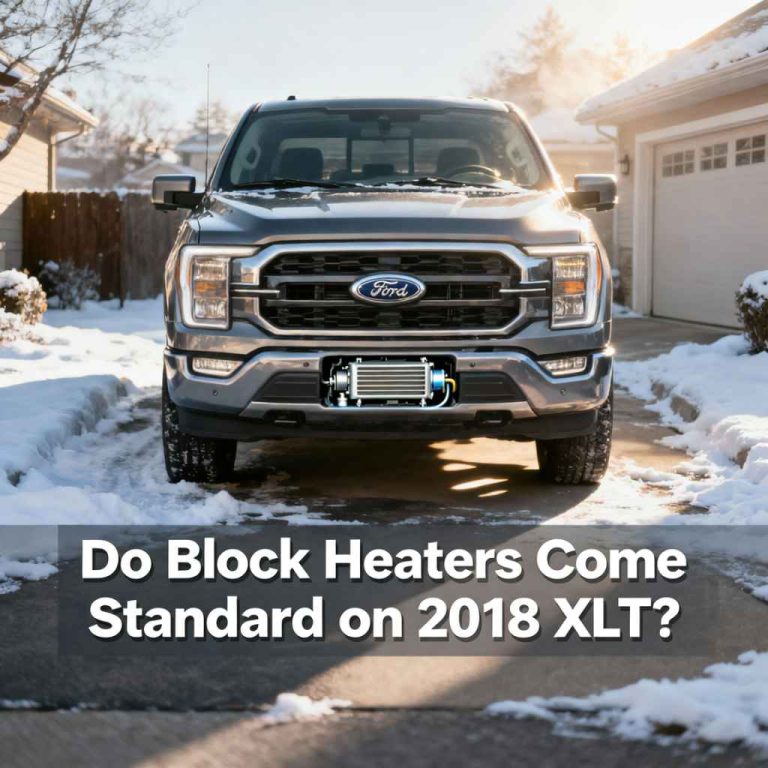
The fastest check is visual. Look for a cold-weather power cord at the front of the vehicle, often by the grille or bumper. Some block heaters may use a weatherproof inlet near the front of the vehicle instead of a loose cord end. If nothing is visible, keep going; hidden or tucked-away plugs are common.
Look for a 120-volt power cord at the front
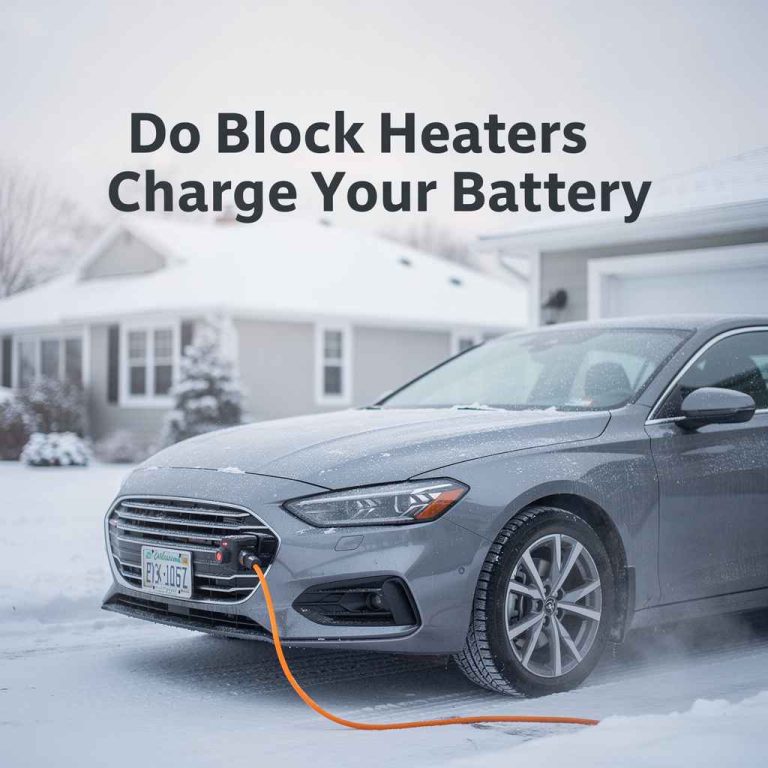
A visible external power cord is often the strongest quick clue. One basic checklist says a car has a block heater if you can see that cord, often routed through the grille. That cord may hang slightly, be clipped near the bumper, or sit behind a small cover near the front of the vehicle.
Check the grille, bumper, and tow-hook area
Start at the grille, lower bumper openings, and any tow-hook opening. On some vehicles, the cord exits low and is easy to miss unless you crouch and look straight at the front of the car. Trucks and SUVs may hide the cord deeper in the front end because of larger bumpers and plastic trim.
Watch for a hidden weatherproof inlet behind a cover
Some heaters use a weatherproof inlet rather than a loose visible cord end. The inlet may sit behind a small flap or cap near the front of the vehicle. If you see a capped round socket where an exterior cord could connect, treat it as a strong clue, then confirm it against records.
What does a block heater cord look like?
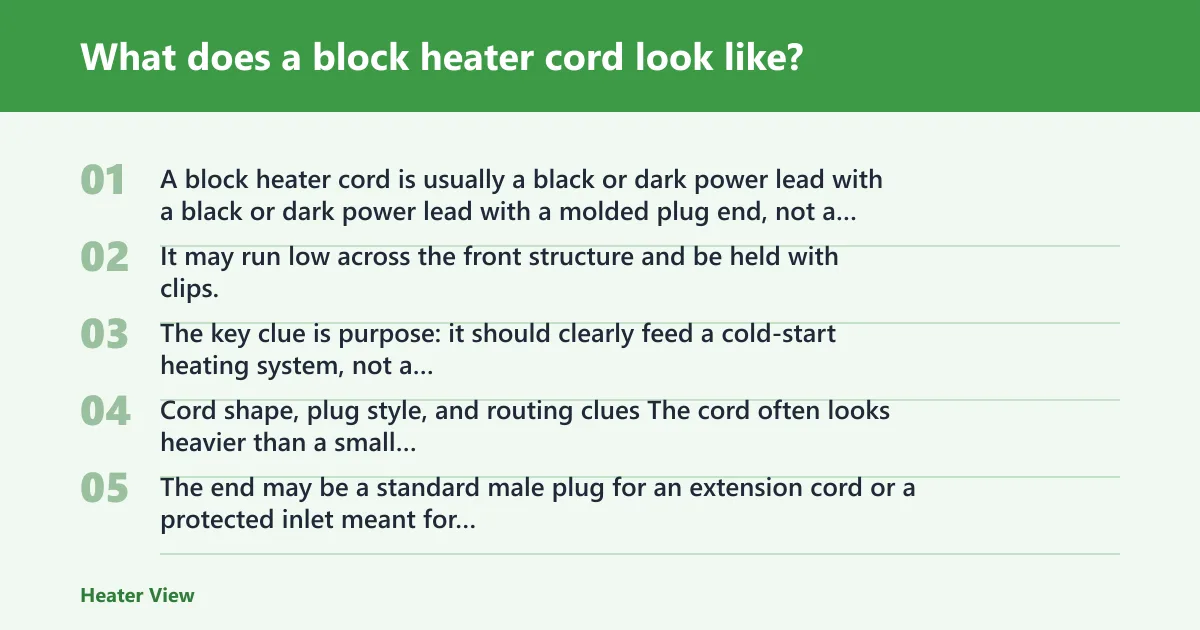
A block heater cord is usually a black or dark power lead with a molded plug end, not a thin sensor wire or loose accessory lead. It may run low across the front structure and be held with clips. The key clue is purpose: it should clearly feed a cold-start heating system, not a random electrical accessory.
Cord shape, plug style, and routing clues
The cord often looks heavier than a small accessory wire because it carries household power. The end may be a standard male plug for an extension cord or a protected inlet meant for outdoor use. Routing that runs toward the front of the vehicle and then disappears into the grille area is a common sign.
Signs that suggest an aftermarket install
Aftermarket work may look less integrated. The cord may be secured with generic clips, pass through a rough opening, or enter the engine bay where a factory wire path would not. Some add-on kits also leave a visible splice point or a separate cord route that does not match the rest of the vehicle’s wiring.
Common items people confuse with a heater cord
People often mistake battery maintainers, engine-bay accessories, tow wiring, grille-light leads, and even electric fan wiring for block heater parts. A true heater cord should be tied to the front-starting system and trace back toward the engine block or coolant circuit. If it powers something else, it is not proof.
Where to check under the hood and in the engine bay
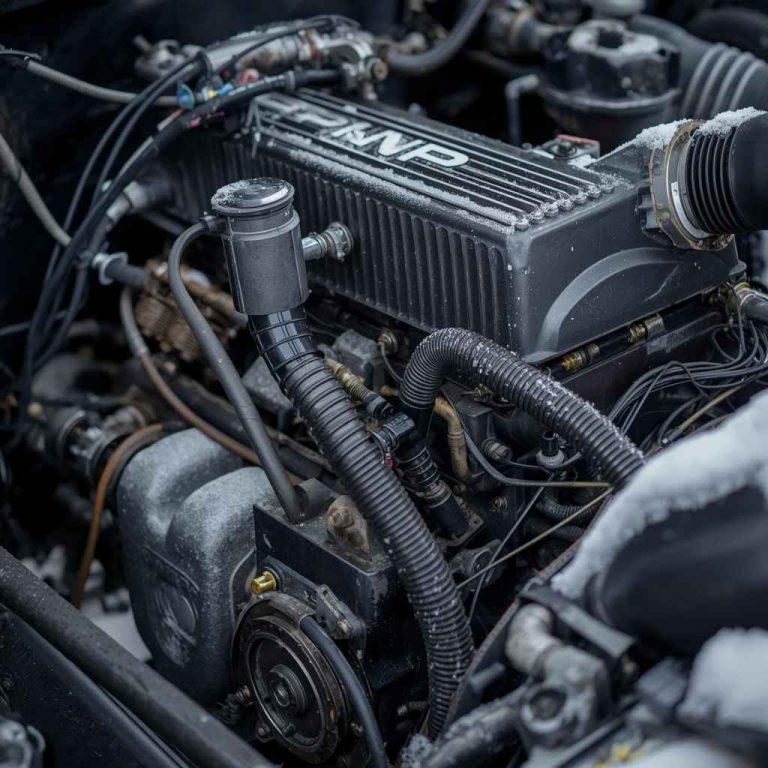
If the exterior is unclear, open the hood and follow the wiring toward the front of the engine. Look for a cord tied off near the radiator support or routed down toward the block. A tidy factory route usually follows existing wire paths and avoids loose, dangling sections.
Follow wiring toward the front of the engine
Block heater wiring often heads toward the block, the coolant area, or the front of the engine bay. If the lead disappears below the intake or along the lower front structure, that is worth a closer look. A technician can often spot a heater cord faster than a shopper can, but the routing still tells a story.
Look for a cord tied off near the radiator support
A cord secured near the radiator support is common because it gives the owner front access for plugging in. The tie-off should look intentional, not improvised. Loose zip ties and awkward mounting can point to an aftermarket job, while neat clips and protected routing more often fit factory work.
What a tidy factory route often looks like
Factory-installed cords usually look planned from the start. They are often clipped to existing mounts, kept away from hot or moving parts, and placed where a driver can reach them without opening the hood every time. Even then, some factory plugs are hidden behind covers, so absence in the grille does not end the search.
How to use paperwork and VIN data to confirm it
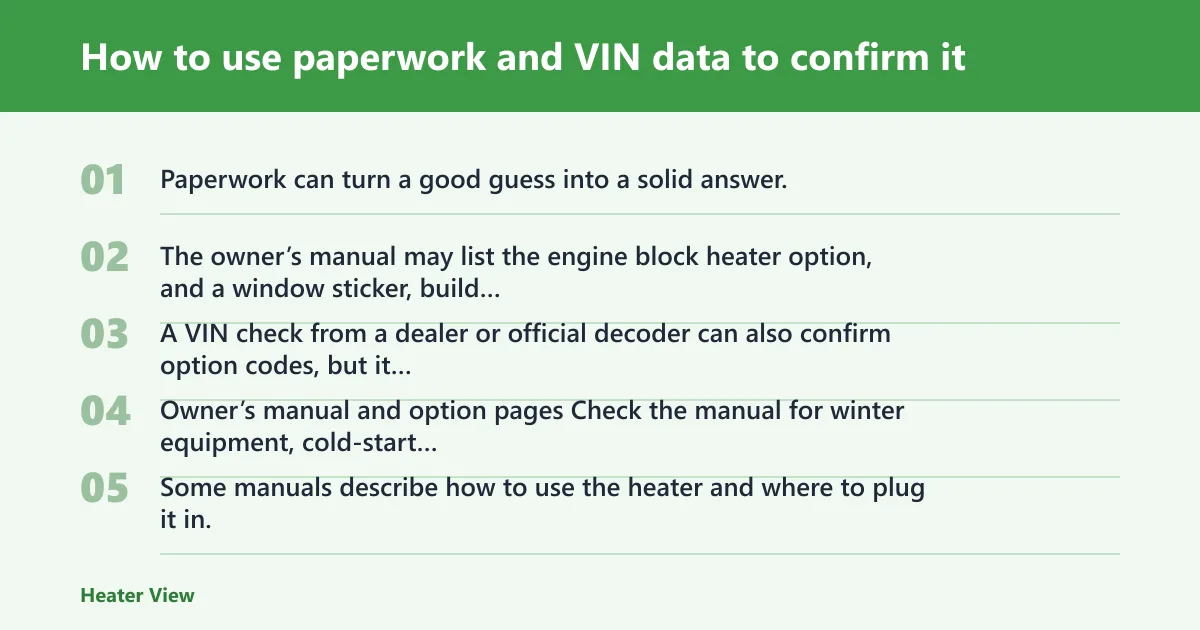
Paperwork can turn a good guess into a solid answer. The owner’s manual may list the engine block heater option, and a window sticker, build sheet, or dealer printout may name a cold-weather package. A VIN check from a dealer or official decoder can also confirm option codes, but it should support the vehicle inspection, not replace it.
Owner’s manual and option pages
Check the manual for winter equipment, cold-start options, or a block heater entry if that information is included. Some manuals describe how to use the heater and where to plug it in. That is useful because it confirms the vehicle was built or sold with that hardware, even if the cord is missing from the car at the moment.
Window sticker, build sheet, or dealer printout
A window sticker or build sheet is stronger than a verbal claim because it can list the cold-weather package or the block heater by name. When buying used, ask for a copy of the original sales paperwork or the dealer’s option printout. If the seller cannot produce it, ask where the original documents went.
VIN check and cold-weather package codes
A VIN check can help confirm a factory option package, especially on vehicles sold in cold-weather regions. Ask the dealer to look up option codes tied to the VIN, then compare those codes with the physical car. A package code is useful only if the hardware on the vehicle matches it.
| Evidence source | What to look for | How much weight it carries |
|---|---|---|
| Visible cord or inlet | 120-volt cord, front inlet, or hidden plug cover near the grille or bumper | Strong physical clue |
| Documentation | Owner’s manual, window sticker, build sheet, service record, or VIN option code | Strong record clue |
| Seller or dealer confirmation | Direct answer plus a shown plug location or written option lookup | Strong verbal clue |
A simple three-source checklist to score the evidence
Use three evidence sources: visible hardware, documentation, and seller or dealer confirmation. Confirmed means you have visible hardware plus paperwork or dealer confirmation. Likely means you have one strong source and one supporting clue. Unverified means the vehicle and records do not line up, or the plug cannot be found.
- Score visible hardware. Give one point for a clear cord, inlet, or plug cover at the front of the vehicle.
- Score paperwork. Give one point if the manual, window sticker, build sheet, service record, or VIN option code mentions the heater or cold-weather package.
- Score confirmation. Give one point if the seller or dealer shows the plug location or confirms the option in writing.
- Classify the result. Three points: confirmed. Two points: likely. Zero or one point: unverified.
How to separate factory and aftermarket evidence
Factory-installed systems usually leave a paper trail and a neat routing path. Aftermarket systems can still be legitimate, but they may lack window-sticker proof. If the cord looks added later, ask for the installation receipt, service record, or technician note. Without that, treat the car as likely at best.
What to ask the seller or dealer when the plug is missing
If you cannot find the plug, ask whether the heater was removed, hidden, or never installed. Request option codes, service records, or delivery paperwork before you accept a verbal answer. If the seller says the heater is there but will not show the plug, pay for a quick technician inspection before the sale closes.
Ask whether the heater was removed, hidden, or never installed
Those three answers are very different. Removed means the car may need a replacement cord or inlet. Hidden means the hardware may still be there, just tucked away. Never installed means you should stop assuming the vehicle has winter equipment and price the car accordingly.
Request option codes, service records, or delivery paperwork
Ask for anything that proves the original build or later installation. Service records may show a heater repair, cord replacement, or block heater note. Delivery paperwork can be just as useful if it lists the cold-weather package. If the seller cannot produce any records, the vehicle stays unverified.
When to pay a technician for a quick inspection
If the car is being bought from a distance, if the cord is hidden, or if the seller’s story and the paperwork do not line up, a technician inspection may be worth the cost. Ask the shop to check the front routing, the block, and the engine bay for a heater cord or inlet. That is cheaper than discovering the absence after winter starts.
What if I cannot find the block heater plug?
Do not assume the vehicle lacks a block heater just because you cannot see the plug. The cord may be tucked behind a cover, routed low in the bumper, or disconnected for presentation. If the exterior is clean and the paperwork is blank, move to engine-bay inspection and records before you decide.
False positives and hidden hardware
Some front-end electrical leads are not block heater parts at all. A tow-wiring lead, battery tender lead, or accessory power line can look similar from a distance. A true block-heater setup should connect to the engine-heating system and have some evidence in the paperwork or dealer lookup.
Trucks, SUVs, and imported used vehicles
Pickup trucks and SUVs often place cords where road debris and snow are less likely to snag them. Imported used vehicles can be trickier because winter equipment packaging may differ from local market versions. For those vehicles, the best approach is physical inspection plus option-code confirmation, not assumptions based on the badge or country of origin.
Does every used car in Canada have a block heater?
No. Block heaters are especially common in cold-weather regions, but that does not mean every used car has one. Some vehicles were sold without the option, some had aftermarket installs, and some no longer have visible cords. The only safe answer is to verify the vehicle in front of you.
Regional patterns are not proof
Cold climates make block heaters more common, but common is not universal. A seller may assume every vehicle in a snowy area has one, then be wrong. Treat regional habit as a clue, not evidence. The proof still comes from the cord, the paperwork, and the dealer or seller’s confirmation.
Is a block heater the same as a coolant heater?
No. A block heater is a cold-start aid that warms the engine block or coolant passages before starting, while some coolant heaters are different devices with different mounting and wiring. Buyers should not use the term loosely. Ask what hardware is installed, where it plugs in, and whether the documentation names the exact system.
Why the distinction matters on a used vehicle
Different winter-start aids can look similar from outside the car. A buyer who only hears “heater” may miss that the vehicle has a different setup or no heater at all. The safest move is to match the physical cord or inlet with the exact wording in the records.
Frequently asked questions
How do I know if my used car has a block heater?
Start with the front of the car. Look for a 120-volt cord, a weatherproof inlet, or a covered plug near the grille or bumper. Then check the owner’s manual, build sheet, or window sticker, and ask the seller to point out the hardware before you agree to buy.
Where is the block heater plug on a vehicle?
It is often near the grille, lower bumper, or tow-hook area, but it can also be hidden behind a small cover. Some vehicles route the cord low in the front fascia, while others leave the inlet tucked away. That is why a quick glance is rarely enough.
Can a dealer check if my car came with a block heater?
Yes. A dealer can usually check the VIN for option codes and see whether the car left the factory with a cold-weather package or block heater. Ask for the result in writing if possible, then compare it with the actual vehicle so the paperwork and hardware match.