Radiant Gas Heater vs Convection Gas Heater: Which Is Better?
Choose radiant gas heaters for fast heat aimed at the occupied zone, and convection gas heaters for steadier heat across the room; if the space is drafty, open, or used in short bursts, start with radiant, and if it stays closed and occupied for long stretches, choose convection. The wrong pick can leave the sitting area cold, waste gas, or create hot and chilly swings. This guide compares both heater types by room use, drafts, heat spread, and cost so you can match the heater to the space.
| Decision factor | Radiant gas heater | convection gas heater | Winner |
|---|---|---|---|
| Speed of felt warmth | Heats people and objects directly with infrared radiation for immediate warmth. | Warms room air first, so the room feels warm more gradually. | Radiant gas heater |
| Whole-room temperature control | Can leave larger rooms cooler away from the line of sight. | Better for even distribution of heat throughout a space. | convection gas heater |
| Draft tolerance | Comfort is less dependent on air circulation, so drafts hurt less. | Air leakage can dilute warm air and slow room recovery. | Radiant gas heater |
| Placement sensitivity | Needs a clear line of sight to the occupied zone. | Needs space for airflow and should not be boxed in by furniture or barriers. | tie |
| Noise potential | Often quiet in simple radiant models, though burner noise varies. | Natural convection is quiet; fan-assisted models add blower noise. | tie |
| Best-fit use case | Spot heating in drafty, open, or intermittently occupied spaces. | Stable warmth in enclosed rooms that stay occupied longer. | Depends on room |
Match the heater to your room layout and how often you stay
Radiant gas heaters give direct comfort in the area you occupy. Convection gas heaters are generally designed to raise and maintain the air temperature across a room. The better choice is usually the one that matches how long you stay in the space, how closed the room is, and how far the heat can move without getting blocked.
A small workshop with the door opening every few minutes usually works better with targeted radiant heat. A bedroom or living room that stays closed for hours usually works better with convection.
How each heater type warms a room
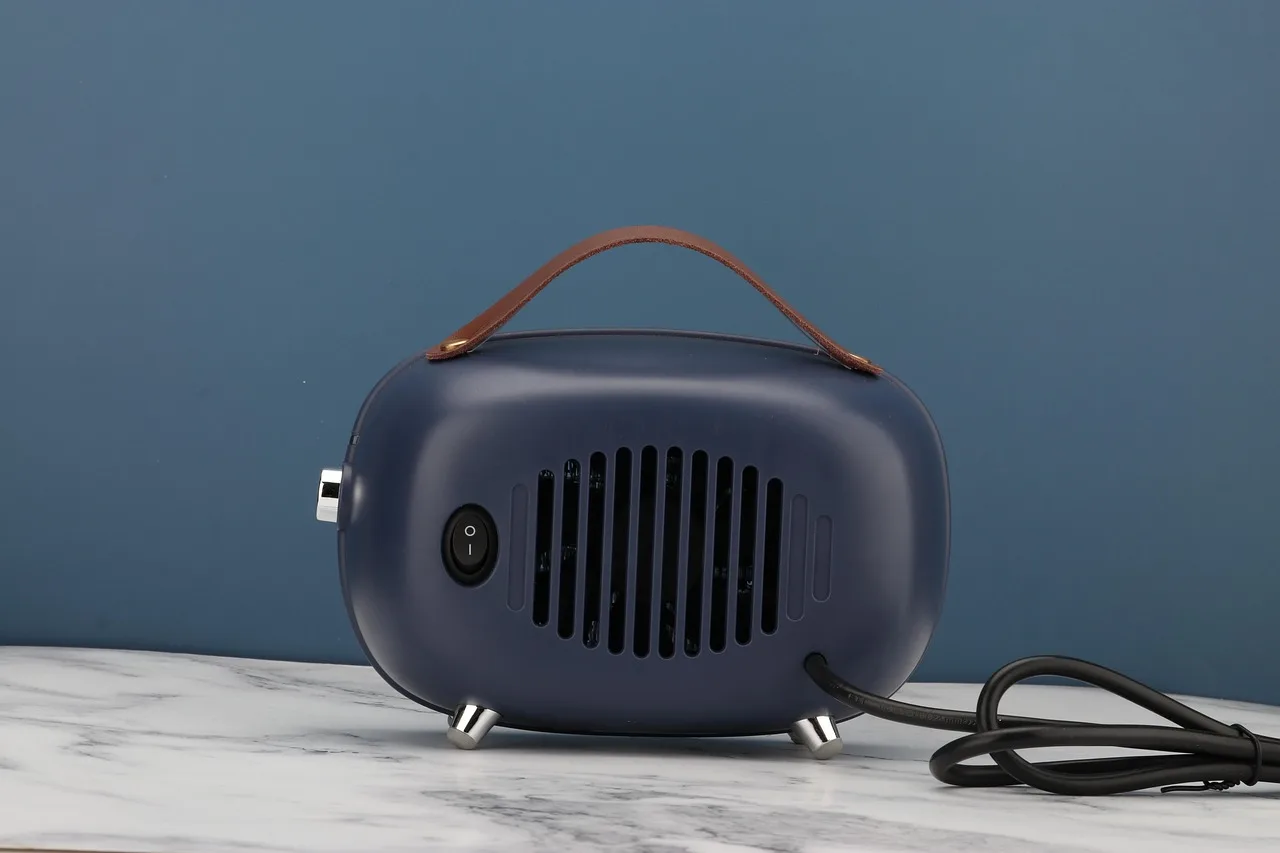
Radiant gas heater
Radiant gas heaters emit infrared radiation for immediate warmth. The heat reaches people and objects directly in line of sight, so the comfort change is fast even when the surrounding air has not fully warmed.
This makes radiant heating feel strong near the unit and weaker farther away. If furniture, partitions, or a vehicle block the line of sight, the effect drops off.
Convection gas heater
Convection gas heaters warm the air to create a circulating heat pattern. Warm air rises, cool air moves toward the heater, and the room gradually evens out over time; fan-assisted convection speeds distribution but usually adds noise.
This works best in enclosed spaces where air can stay in the room long enough to heat. In drafty spaces, the warmed air may be replaced before the room fully stabilizes.
Why perceived warmth and room air temperature can tell different stories
A radiant unit can make a person feel warm almost instantly while the thermostat still shows a cool room. A convection unit can make the room temperature climb while the person near the far wall still feels chilly until the heat spreads.
That difference matters. If you care about comfort at a desk, bench, or sitting area, perceived warmth may matter more than full-room recovery. If you want the whole room to settle at a steady temperature, air temperature matters more.
Side-by-side comparison
| Factor | Radiant gas heater | convection gas heater | Winner |
|---|---|---|---|
| Felt warmth near the unit | Very fast because it heats people and objects directly. | Slower because it waits on warmed air to circulate. | Radiant gas heater |
| Room-wide recovery | Can leave far corners cooler. | Better at holding steady ambient warmth in enclosed rooms. | convection gas heater |
| Draft resistance | Comfort holds up better when air leaks or doors open often. | Heat loss hurts more because the heater is trying to warm air. | Radiant gas heater |
| Quiet operation | Often quieter, but burner noise still varies by model. | Natural convection can be quiet; fan models are louder. | tie |
| Placement sensitivity | Needs clear line of sight to the occupied area. | Needs airflow space and fewer blockages around the unit. | tie |
Speed of felt warmth
Radiant gas heater output feels quicker because infrared radiation warms surfaces and people directly. Convection gas heater output feels slower because the room air has to heat up and move around first. That difference is most obvious in spaces where you want instant comfort for a short stay.
Room-temperature recovery
Convection gas heater units are stronger when the goal is a stable room temperature, not just a warm spot. Radiant heaters can feel excellent at the chair, workbench, or sitting area, but they may leave the back of a larger room behind.
Draft tolerance
Drafts punish air-heating systems more than direct heaters. If doors open often, or if the room leaks badly, a radiant gas heater usually keeps comfort where people are seated while convection may spend more effort replacing lost warm air.
Noise
Noise is not a clean radiant-versus-convection split. A simple natural-convection unit may be quiet, but a fan-assisted convection heater will usually sound louder than a non-fan model. Radiant units can also make burner noise, so check the exact model rather than assuming silence.
Placement sensitivity
Radiant heat loses effectiveness when something blocks the line of sight. Convection loses effectiveness when furniture, curtains, or tight clearances limit airflow around the heater. In both cases, placement can change the result as much as the heating method.
Which is better in a drafty room or open space?
Radiant gas heater models usually feel more effective in drafty rooms or open spaces because they warm people directly instead of relying on warm air staying put. Convection gas heater models can still work, but their comfort depends more on keeping heated air in the room.
That difference matters in spaces with frequent door opening, loose seals, or partial openings to adjoining areas. In those cases, convection may never fully catch up, while radiant still delivers usable comfort near the occupied zone.
Suppose a single-car garage has a heater mounted on one wall, but the parked car blocks most of the view to the work area. The radiant unit can feel strong beside the car and weak behind it because the line of sight is broken.
Which is better for whole-room heating?
Convection gas heater models are often a better fit for whole-room heating because they are designed to warm the air and circulate that heat through the space. In enclosed rooms, that gives more even comfort from wall to wall.
Natural convection uses rising warm air and pulled-in cool air to circulate heat. Fan-assisted convection moves that air faster, which can help a room recover sooner, but the blower adds noise and moving parts. A radiant unit can still be a good choice if the room is small and the goal is mostly to warm the occupied zone.
Say your living room stays closed most evenings and the sofa, chairs, and thermostat all sit in one open area. A convection unit is usually the cleaner fit because the goal is steady ambient warmth, not just comfort at one seat.
Gas wall heater placement and room fit
Gas wall heaters come in both radiant and convection styles, but placement rules differ. Radiant models need a clear path to the people or objects you want to warm, while convection models need room for air to move in and out of the unit.
Ceiling height and room volume matter because they affect how heat spreads and how fast warm air stratifies. Furniture placement matters too. A tall cabinet or a couch placed too close to the heater can block airflow for convection or line of sight for radiant.
- Check the product manual for room type, ventilation, clearance, and approved installation locations.
- Map where people actually sit or work, not just the room’s center.
- Look for blockers: furniture, partitions, parked equipment, or hanging items.
- Decide whether you need spot comfort or room-wide temperature control.
- Confirm that the heater type is approved for the space before buying or installing.
Choose radiant gas heater if… / Choose convection gas heater if…
Choose radiant gas heater if you want fast, targeted comfort where people sit or work, the room is drafty or partly open, the heater can face the occupied zone directly, or the space is used in short bursts. It also fits better when the back of the room does not need to match the front immediately.
Choose convection gas heater if you want steadier whole-room warmth, the room is enclosed, the heater can run long enough to settle the air temperature, or the space is a bedroom or living room that stays occupied for longer stretches. It is usually the better fit when even distribution matters more than instant comfort.
Radiant gas heater vs convection gas heater decision table
| Room type | Draft level | Ceiling height | Occupancy pattern | Best heater type | Why |
|---|---|---|---|---|---|
| Living room | Low to moderate | Standard | Long stretches | convection gas heater | Better for even, steady room warmth. |
| Bedroom | Low | Standard | Long stretches | convection gas heater | Whole-room temperature control matters more than spot heat. |
| Garage | Moderate to high | Often higher than a home room | Intermittent | Radiant gas heater | Direct warmth holds up better when doors open and air leaks. |
| Workshop | Moderate | Varies | Intermittent, task-based | Radiant gas heater | Best for warming the work zone without waiting on the full room. |
| Sunroom | Moderate to high | Often high | Mixed | Radiant gas heater | Glass and drafts make direct comfort more reliable than air heating. |
| Enclosed family room | Low | Standard | Long stretches | convection gas heater | Enclosed spaces favor stable ambient temperature. |
| Partially open den | Moderate | Standard | Mixed | Radiant gas heater | Comfort survives better when some air escapes. |
| Utility room | Low to moderate | Low to standard | Short visits | Radiant gas heater | Spot heating is usually enough. |
Simple scoring rubric for 8 common home scenarios
Use this quick rubric when the choice is not obvious. Score Radiant gas heater and convection gas heater on each line below, then pick the higher total.
- Drafty or open space: Radiant +2, convection +0.
- Enclosed room with long occupancy: Radiant +0, convection +2.
- Fast comfort in a seating or work zone: Radiant +2, convection +0.
- Need for even room temperature: Radiant +0, convection +2.
- Frequent door opening: Radiant +2, convection +0.
- Line-of-sight blocked by furniture or equipment: Radiant +0, convection +2.
- Fan noise is a concern: Radiant +1, convection +0 or +1 if natural-convection only.
- Spot heating for intermittent use: Radiant +2, convection +0.
8-scenario totals: In most drafty, intermittent, or partially open situations, radiant comes out ahead. In most enclosed, longer-use situations, convection wins because it keeps the room temperature more even.
Quick verdicts by room
Bedrooms: convection gas heater, but only if the specific product is approved for that room and installed within its clearance and ventilation rules.
Living rooms: convection gas heater for steady comfort; radiant only if the seating area is the main target and the room stays drafty.
Garages: radiant gas heater if the model is approved for the space and there are no fuel, vapor, or ignition-source conflicts.
Workshops: radiant gas heater for task zones, with a careful check for dust, ventilation, and model approval.
Sunrooms: radiant gas heater when glass and drafts make air heating hard to hold.
Frequently asked questions
Is a radiant gas heater better than a convection gas heater?
It depends on the heating job. Radiant gas heater models are better when you want immediate comfort in a specific occupied area, while convection gas heater models are better when you want the whole room to settle to a steadier temperature. The room’s draft level usually decides which one works better.
Which gas heater warms a room faster, radiant or convection?
Radiant gas heater units usually feel faster because they emit infrared radiation for immediate warmth. Convection gas heater units warm the air first, so the room usually feels comfortable later. If your goal is quick comfort at a chair, bench, or desk, radiant is the faster-feeling option.
Are radiant gas heaters cheaper to run than convection heaters?
There is no honest one-line answer without the exact model, fuel input, and room conditions. Radiant units often feel efficient in intermittent use because they deliver comfort quickly where people are sitting. Convection units can be more efficient for longer, enclosed-room heating because they build and hold room temperature better.
Which heater is better for a drafty room or garage?
Radiant gas heater units are usually the better fit for drafty rooms or garages because they warm people directly and depend less on air staying put. Convection gas heater units can struggle when doors open often or the space leaks badly. Check the model’s approval, ventilation, and clearance rules before choosing.
Do convection gas heaters heat a whole room better than radiant heaters?
Yes, in enclosed spaces they usually do. Convection gas heater units warm the air and spread that heat through the room, so they are better for steady ambient temperature control. Radiant gas heater units can leave the far side of a larger room cooler if the line of sight is limited.
Which type is quieter, radiant or convection gas heater?
Neither type wins every time. A natural-convection heater can be quiet, while a fan-assisted convection unit adds blower noise. Radiant heaters are often quiet in simple designs, but burner noise still varies by model, so the product matters more than the category label.
Which gas heater is safer for a bedroom or living space?
Safety depends on the exact product, installation, and local rules, not just the heating method. Many gas heaters are not approved for every bedroom or living-room setup, and some require strict ventilation and clearance limits. Check the manual and local code before buying or installing.
Should I buy a radiant or convection wall heater for spot heating?
Choose a radiant gas heater for spot heating. It gives quick, line-of-sight warmth to the occupied zone, which is the point of spot heat. Choose a convection gas heater only if the “spot” is actually the whole room and you need the air temperature to rise evenly.