Radiant Heaters vs Infrared Heaters: Best Choice
Deciding between radiant heaters and infrared heaters can feel a bit tricky at first. Many people wonder which one is the best choice for their home, especially when looking for a solution nearby. It’s a common question because both types heat your space in similar, but also different, ways.
Don’t worry, this guide will make it super simple. We’ll walk you through everything you need to know, step by step. Get ready to discover how to pick the perfect heater for you and your family.
We’ll cover all the important parts to help you make a smart decision.
Radiant Heaters vs Infrared Heaters What’s the Difference
Understanding the core difference between radiant and infrared heaters is key to making the right choice. Both technologies aim to warm spaces, but they achieve this through distinct methods of heat transfer. This distinction impacts how they feel, how quickly they warm you, and where they are best used.
For anyone new to home heating options, grasping these fundamental principles is the first big step. It helps demystify the options and points you toward the solution that best fits your needs. This section will break down the science in a way that’s easy to follow.
How Radiant Heaters Work
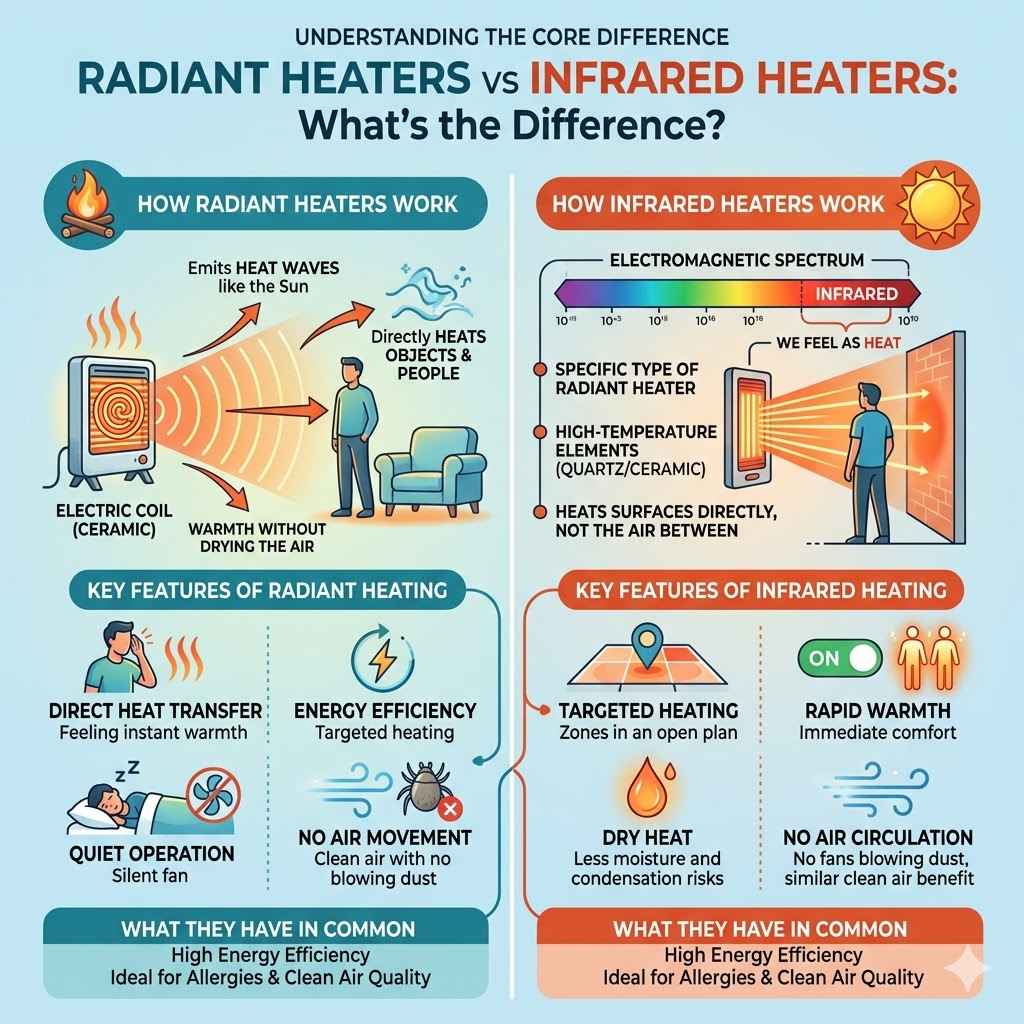
Radiant heaters are designed to emit heat that travels in waves, much like the sun’s rays. These waves directly heat objects and people in their path, rather than the air itself. This means you feel the warmth almost instantly when you stand in front of one, even if the air temperature around you is cooler.
The heat produced is often described as a cozy, gentle warmth that doesn’t dry out the air as much as forced-air systems can.
The process starts with a heating element, which can be electric coils, ceramic elements, or gas burners. When this element gets hot, it releases infrared radiation. This radiation then travels outwards.
It’s absorbed by surfaces it hits, like walls, furniture, and your skin. This absorbed energy then turns into heat, warming those objects and people. It’s a direct and efficient way to feel warm.
Think of it like standing near a warm campfire. You feel the heat directly on your face and body, even though the air might still be cool. This is the essence of radiant heating.
It’s a very natural and comfortable way to experience warmth. The technology is older than you might think, with roots in understanding how heat travels.
Key Features of Radiant Heating
Direct Heat Transfer
Radiant heaters warm objects and people directly. This means you feel warm almost instantly when exposed to the heat waves. It’s different from heaters that warm the air first.
This direct warmth can feel very comfortable and is not easily lost to drafts.
Energy Efficiency
Because they heat specific areas and people rather than trying to warm an entire room’s air volume, radiant heaters can be very energy efficient. You don’t waste energy heating empty spaces or the air that might escape through vents or cracks.
Quiet Operation
Most radiant heaters, especially electric ones, operate silently. There are no fans to create noise. This makes them ideal for bedrooms, offices, or any space where quiet is important.
You get warmth without the distracting hum of other heating systems.
No Air Movement
Unlike convection heaters that rely on air circulation, radiant heaters don’t blow air. This is beneficial for people with allergies or respiratory issues, as it doesn’t stir up dust, pollen, or other airborne particles. It helps maintain cleaner indoor air quality.
How Infrared Heaters Work
Infrared heaters are a specific type of radiant heater. The term “infrared” refers to the wavelength of the electromagnetic radiation they emit. These are wavelengths that we feel as heat.
So, while all radiant heaters emit infrared radiation, not all radiant heaters are specifically categorized or optimized for the infrared spectrum in the same way.
The heating element in an infrared heater, often made of quartz or ceramic, heats up to very high temperatures. It then radiates infrared energy. This energy travels through the air until it strikes an object.
When the infrared waves hit a surface, such as your skin, furniture, or a wall, the energy is absorbed and converted into heat. This makes the object feel warm.
The key takeaway is that infrared heaters heat surfaces and people directly. They do not heat the air between the heater and the target. This makes them very efficient for targeted heating.
You can warm yourself up quickly without needing to heat the entire room. This is a major advantage in many situations.
Consider the warmth you feel from the sun on a cool day. That’s infrared radiation at work. Infrared heaters mimic this natural phenomenon to provide comfortable and efficient heat.
They are often praised for their speed in providing warmth.
Key Features of Infrared Heating
Targeted Heating
Infrared heaters are excellent at heating specific zones or people. They emit heat waves that travel in a straight line. This allows you to direct the warmth precisely where it’s needed, making them ideal for spot heating or open-plan areas.
Rapid Warmth
You’ll feel the heat from an infrared heater almost immediately after turning it on. This is because the infrared waves don’t need to warm the air first. They directly warm the surfaces they reach, providing instant comfort.
Dry Heat
Infrared heaters produce a dry heat. While this can be a drawback in very dry climates, for many, it means less moisture in the air, which can be beneficial. It also means less risk of condensation or mold issues related to excess humidity.
No Air Circulation
Similar to other radiant heaters, infrared units don’t use fans. This means they don’t blow dust or allergens around the room. This can be a significant benefit for individuals with allergies, asthma, or other respiratory sensitivities, promoting better indoor air quality.
Radiant Heaters vs Infrared Heaters Best Choice Near You Considerations
Choosing between radiant heaters and infrared heaters involves looking at several factors to ensure you get the Radiant Heaters vs Infrared Heaters: Best Choice Near You. Both are excellent options for direct warmth, but their specific applications and benefits can vary. When you’re looking for the best choice near you, it’s important to think about your room size, how quickly you need heat, your budget, and any specific comfort needs you might have.
This section will help you weigh these points to make an informed decision.
Room Size and Heat Distribution
The size of the space you want to heat is a crucial factor. Radiant heaters, in general, can be quite effective in warming an entire room, especially smaller to medium-sized ones. They heat surfaces and objects, which then radiate heat back into the air, creating a more uniform warmth throughout the space over time.
Infrared heaters, on the other hand, excel at targeted heating. They are fantastic for warming a specific person or area within a larger room. If you have a large living room and only need to warm the seating area, an infrared heater can do that efficiently without wasting energy on the rest of the space.
For very large or open-plan areas, using multiple infrared heaters can be more practical than trying to warm the whole volume with a single, larger radiant heater.
When deciding, imagine how you use the space. Do you need to heat the entire room evenly, or do you just want to feel warm while you’re sitting in a particular spot? The answer will guide you towards the better option.
Comparing Heat Distribution Patterns
Radiant Heaters for Whole Room Warmth
Radiant heaters tend to distribute heat more broadly. While they still heat objects directly, the accumulated heat in surfaces and the slight air warming they induce can lead to a more generally comfortable temperature across a smaller room. They are a good choice if you want to warm the entire atmosphere of a bedroom or office.
Infrared Heaters for Zone Heating
Infrared heaters are precise. They send heat waves directly to where you aim them. This makes them perfect for spot heating, like warming your feet under a desk or heating only the couch area in a living room.
They are highly efficient for personal comfort in larger spaces.
Effectiveness in Drafty Areas
In rooms that tend to be drafty or have poor insulation, infrared heaters can be more effective. Because they heat objects directly, the warmth isn’t as easily lost to incoming cold air. Radiant heaters might struggle more in such conditions as they rely more on ambient air warming.
Speed of Heating and Comfort
One of the most noticeable differences when comparing radiant heaters and infrared heaters is the speed at which you feel the warmth. Both are significantly faster than traditional convection heaters, but infrared often has a slight edge.
Infrared heaters deliver heat almost instantaneously. As soon as you feel their rays, you begin to warm up. This is ideal for situations where you need immediate comfort, like stepping into a cold garage or warming up after being outside.
It’s like stepping into a patch of sunlight.
Radiant heaters also provide quick warmth, but it might take a minute or two for the heating element to reach its peak temperature and for the radiated waves to effectively warm surfaces. The feeling is still very direct and pleasant, but perhaps not quite as immediate as infrared.
For personal comfort, the choice depends on your preference. Some people enjoy the instant blast of heat from infrared, while others prefer the gentler, more pervasive warmth that builds with radiant heaters.
Instant vs. Gradual Warmth
Immediate Heat Sensation
Infrared heaters offer the quickest sensation of warmth. Their waves travel directly to your skin, providing an instant feeling of being heated. This is a key advantage when quick comfort is a priority, such as in workshops or garages.
Progressive Comfort
Radiant heaters offer a warmth that builds. While still fast, it might take a moment for the heating element to fully warm up and for the radiated heat to start noticeably warming objects. This creates a comfortable, enveloping warmth that spreads through the space.
Personal Preference
Your personal preference plays a big role. Do you like to feel the heat hit you right away, or do you prefer a more gradual warming of your surroundings? Both offer a pleasant heating experience, but the timing of the heat can influence your overall comfort.
Energy Efficiency and Cost
When it comes to energy efficiency, both radiant and infrared heaters are generally more efficient than many other heating methods, especially when used correctly. Their ability to heat objects directly and people rather than just the air means less energy is wasted.
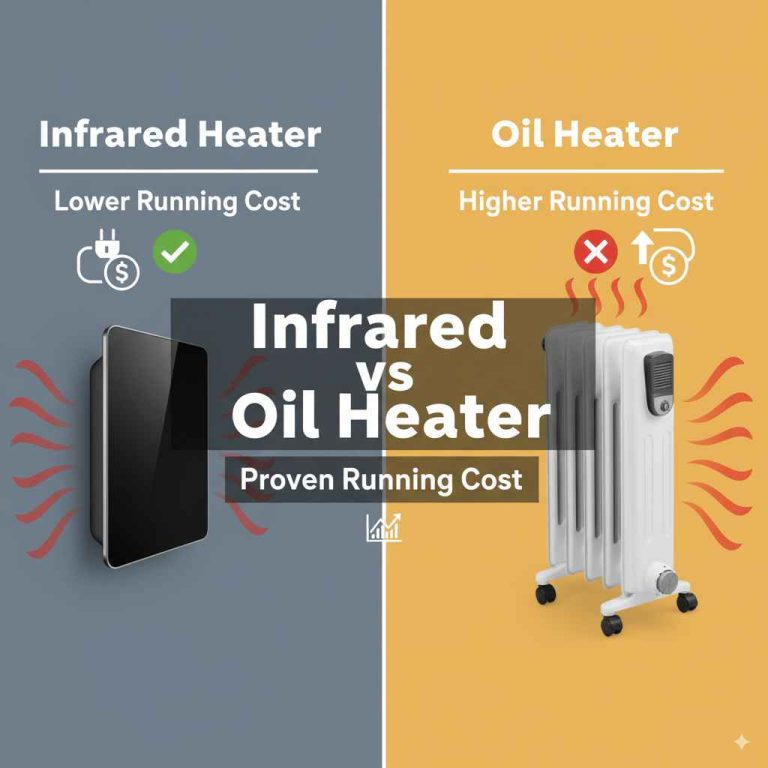
Infrared heaters are often considered slightly more energy-efficient for targeted heating. Because they can heat a specific spot without warming the entire room, you only use energy when and where you need it. This makes them very economical for personal comfort or heating small, often-used areas.
Radiant heaters can also be very efficient, particularly for heating smaller, well-insulated rooms. Their ability to provide a more uniform warmth can be beneficial if you need to maintain a consistent temperature in a specific space. The initial cost of both types can vary, but electric models are often more affordable upfront than gas-powered ones.
Running costs depend on electricity or gas prices in your area, as well as how often and how long you use the heater. For spot heating, infrared often wins on running costs due to its precision.
Cost Comparison and Energy Usage
| Feature | Radiant Heaters | Infrared Heaters |
|---|---|---|
| Targeted Heating Efficiency | Good for warming general areas. | Excellent for specific spot heating, leading to higher efficiency in targeted use. |
| Overall Energy Use | Efficient for warming smaller rooms uniformly. | Can be very efficient by only heating desired areas. |
| Initial Purchase Cost | Varies widely, can be moderate to high. | Varies widely, can be moderate to high. |
| Running Costs | Depends on usage and energy prices. | Often lower for spot heating due to precise energy use. |
A study by Energy Star found that spot heating with efficient technologies like infrared can reduce overall energy consumption by up to 15% compared to heating a whole room with less efficient methods. This highlights the potential savings when using these direct heating solutions strategically.
Installation and Portability
The ease of installation and how portable a heater is can also be a deciding factor, especially when looking for the best choice near you. Many radiant and infrared heaters are designed for user-friendliness.
Electric radiant heaters, especially portable models or panel heaters, often require very little installation. You simply plug them into a standard outlet. Wall-mounted or ceiling-mounted radiant heaters, particularly gas ones, may require professional installation for safety and compliance.
Infrared heaters are also very portable. Many are designed as freestanding units that you can easily move from room to room. Some are even designed to be mounted on walls or ceilings, similar to radiant heaters, but again, electric portable models are the most common for simple plug-and-play use.
When considering “near you,” portability is key if you plan to use the heater in different locations. If you need a permanent solution for a specific room, installation might be less of a concern.
Portability and Setup Options
Plug-and-Play Models
Many electric radiant and infrared heaters are designed to be used straight out of the box. You simply find a suitable spot, plug them into a wall socket, and they start working. This is incredibly convenient for immediate heating needs.
Wall and Ceiling Mounting
For a more permanent or space-saving solution, both types can be mounted on walls or ceilings. This often requires more involved installation but provides a cleaner look and can improve heat distribution in some cases. Always check manufacturer instructions and local building codes.
Freestanding Units
Freestanding models offer the most flexibility. You can easily move them from room to room, or even from indoors to outdoors (if designed for it). Their portability makes them a versatile choice for many different heating scenarios.
Choosing the Best Radiant Heaters vs Infrared Heaters For Your Home
Now that you understand the differences, let’s talk about how to put this knowledge to work to find the Radiant Heaters vs Infrared Heaters: Best Choice Near You. It’s about matching the heater’s capabilities to your specific needs and environment. We’ll go through some common scenarios and give you practical advice on which type might be the better fit.
Scenario 1 Heating a Small Home Office
If you have a small home office that gets chilly during the day, both radiant and infrared heaters can work well. However, consider how you use the space. If you sit at a desk for long periods and want to feel warm without heating the entire room, an infrared heater is an excellent choice.
Its direct, targeted warmth can keep you comfortable and can be turned off when you leave the office, saving energy.
On the other hand, if your home office is a smaller, enclosed space and you want to maintain a generally comfortable temperature while you’re working, a small electric radiant panel heater could be ideal. These can be wall-mounted or placed on a desk and provide a steady, pleasant warmth without significant air movement, which is great for concentration.
The key here is efficiency and comfort for a specific activity. If you’re working for several hours, a radiant heater might provide a more constant, less intense warmth. If you need quick heat for shorter bursts or very targeted comfort, infrared is often preferred.
Office Heating Solutions
Targeted Comfort with Infrared
An infrared heater is perfect for direct warmth at your desk. You feel the heat immediately on your body, so you don’t need to heat the whole room. This is energy-saving and highly effective for long work sessions.
Steady Warmth with Radiant Panels
A small radiant panel heater can maintain a consistent, comfortable temperature in a compact office. It warms the surfaces around you, creating an even feel. This is a good option if you want the entire small space to be cozy.
Portability for Different Spots
Both types offer portable options. If you sometimes work in different areas of your home, a freestanding infrared or electric radiant heater can be moved easily. This gives you flexibility to heat wherever you are working.
Scenario 2 Warming a Large Living Room
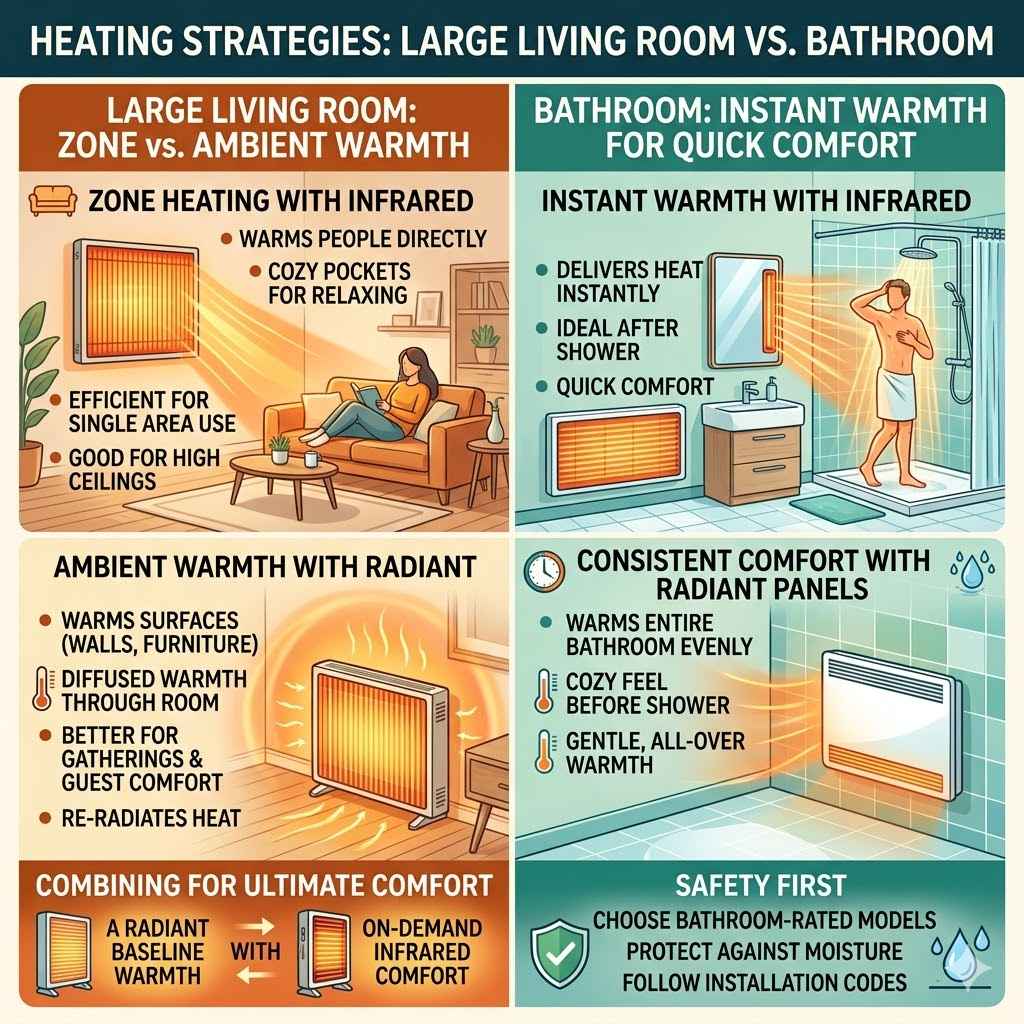
For a large living room, especially one that’s open-plan or has high ceilings, heating the entire space can be a challenge. Infrared heaters can be very effective here for creating cozy zones. You could place an infrared heater near your main seating area, providing warmth directly to the people on the couch or in armchairs.
This allows you to enjoy comfort without trying to heat the whole volume of the room, which would be inefficient.
Radiant heaters can also contribute to warming a large living room, particularly if you choose a more powerful unit. They will warm the walls, furniture, and other surfaces, which then re-radiate heat. This can create a more ambient and widespread warmth than a single infrared heater might provide.
However, for very large spaces, you might need multiple radiant heaters or a combination of radiant and infrared to achieve consistent comfort.
Consider how you use the living room. If it’s mostly for relaxing in one area, infrared is probably more efficient. If you entertain frequently or want the whole room to feel warm for gatherings, a radiant approach might be better, or even a supplement to other heating.
Large Living Room Heating Strategies
Zone Heating with Infrared
In a big living room, an infrared heater can create a warm “pocket” where you are. This is great for evenings when only a few people are in the room. You get comfort without heating unused areas.
Ambient Warmth with Radiant
Radiant heaters can help warm up the overall feel of a large room by heating surfaces. This creates a more diffused warmth. It’s a good way to take the chill off the space without necessarily heating every corner intensely.
Combining Heat Sources
For ultimate comfort in a large living area, you might consider using both. A radiant heater could provide a baseline warmth, and then an infrared heater could be used for direct, on-demand comfort in specific seating areas.
Scenario 3 Heating a Bathroom
Bathrooms are often smaller spaces where quick, direct heat is desired. Infrared heaters are excellent for bathrooms because they provide instant warmth. You can turn one on as you get ready to shower, and the heat is felt almost immediately, making the experience much more pleasant.
Many infrared heaters are designed with safety features suitable for bathrooms, such as splash-proofing.
Radiant heaters, particularly smaller electric ones, can also be used. A wall-mounted radiant panel can provide a consistent, comfortable warmth to the entire small bathroom. Some people prefer this gentle, all-over warmth.
However, the heat-up time might be slightly longer than with infrared, which could be a consideration if you’re stepping out of a shower and want immediate warmth.
Safety is paramount in bathrooms. Ensure any heater you choose is rated for bathroom use and installed according to manufacturer guidelines and local electrical codes. Both types can be good choices depending on how quickly you need the heat and if you prefer direct warmth or ambient comfort.
Bathroom Comfort Solutions
Instant Warmth for Quick Comfort
An infrared heater is ideal for bathrooms because it delivers heat instantly. This is perfect for stepping out of a shower when you want to feel warm right away. Look for models designed for bathroom safety.
Consistent Comfort with Radiant Panels
A small electric radiant panel can warm the entire bathroom evenly. This provides a comfortable ambient temperature. It’s a good choice if you want the room to feel cozy before you even get in the shower.
Safety First
Always choose a heater that is specifically designed for bathroom use. They will have features to protect against moisture and ensure safe operation. Follow all installation and usage instructions carefully.
Frequently Asked Questions
Question: Are infrared heaters safer than radiant heaters
Answer: Both types can be safe when used correctly according to manufacturer instructions and local safety codes. Infrared heaters often provide more targeted heat, so their intense heat is focused on specific areas. Radiant heaters can warm a broader space.
Always look for safety features like tip-over protection and ensure they are suitable for the intended room, especially bathrooms.
Question: Can I use radiant heaters in my bedroom
Answer: Yes, radiant heaters can be very comfortable in bedrooms. They provide a gentle warmth without noise from fans, which is ideal for sleep. Electric radiant panel heaters are a popular choice for bedrooms due to their quiet operation and ability to maintain a steady temperature.
Question: Do infrared heaters dry out the air
Answer: Infrared heaters do not significantly dry out the air because they heat objects directly, not the air moisture. Unlike some forced-air systems, they don’t tend to reduce humidity. This can be a benefit for many people, especially those with dry skin or respiratory issues.
Question: Which is better for a garage radiant or infrared
Answer: For a garage, an infrared heater is often preferred if you only need to heat yourself while working for short periods. It provides instant warmth. If you want to maintain a generally warmer temperature in a smaller garage, a radiant heater might be more suitable.
Question: Can I use a radiant heater as a primary heat source
Answer: For smaller, well-insulated spaces, electric radiant heaters can sometimes serve as a primary heat source. However, for larger homes or colder climates, they are often used as supplementary heat sources to reduce the load on your main heating system and create warm zones.
Summary
Choosing between radiant and infrared heaters boils down to your specific needs. Infrared offers quick, targeted warmth perfect for spot heating and immediate comfort. Radiant heaters provide a more ambient, even warmth that’s great for small rooms.
Consider your space size, how fast you need heat, and where you’ll be using it. Both are efficient and can be excellent additions to your home heating solutions.