Best Heater Efficiency for Drafty Homes
For drafty rooms, the best heater is usually the one that warms the occupied zone first and cycles accurately enough to avoid wasting heat through leaks. DOE Energy Saver guidance emphasizes that portable heaters are best used for spot heating, not as a substitute for sealing air leaks or heating an entire home. In practice, that means a well-controlled 1500W electric heater—usually ceramic for quick recovery, oil-filled for steady quiet heat, or infrared for direct line-of-sight warmth—works best when matched to room size, leak severity, and occupancy pattern.
Best heater for drafty homes
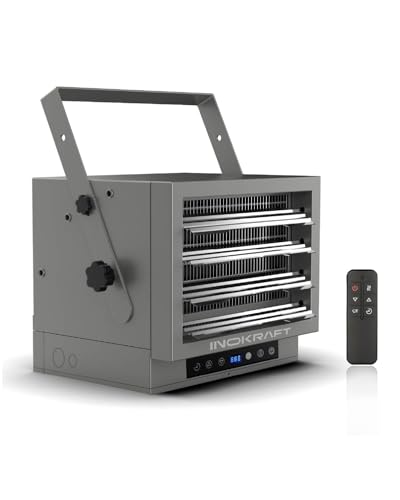
For most drafty rooms, a 1500W PTC ceramic space heater is the best starting point because it heats fast, reacts quickly to thermostat changes, and can use fan-forced circulation to push warm air into cold corners. In very leaky rooms, the best choice shifts toward direct warmth or residual heat, depending on how long you stay in the room.
The tradeoff is straightforward: fan-forced ceramic heat fills a room quickly, oil-filled heat stays steady longer, and infrared heat wastes less energy on empty air when you sit in one zone. None of them can overcome major leakage on their own. DOE Energy Saver notes that space heaters are most effective for localized heating, while uncontrolled drafts can defeat comfort and raise runtime.
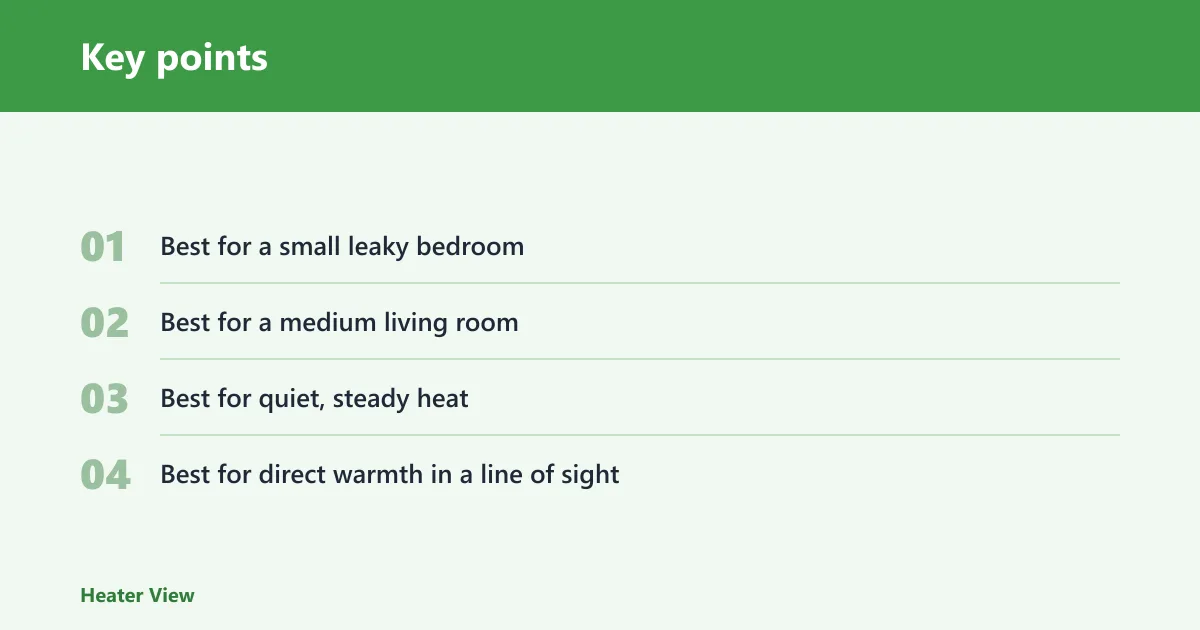
Quick picks for drafty rooms
- Best for a small leaky bedroom: 1500W PTC ceramic with precise thermostat control, ECO mode, and tip-over and overheat protection.
- Best for a medium living room: Oil-filled radiator with 1500W output, adjustable thermostat, and a programmable timer for long, steady heat.
- Best for quiet, steady heat: Oil-filled radiator, especially where silence matters more than rapid warm-up.
- Best for direct warmth in a line of sight: Infrared heater, especially for a couch, desk, or workbench area that stays occupied.
Why drafty rooms change heater efficiency
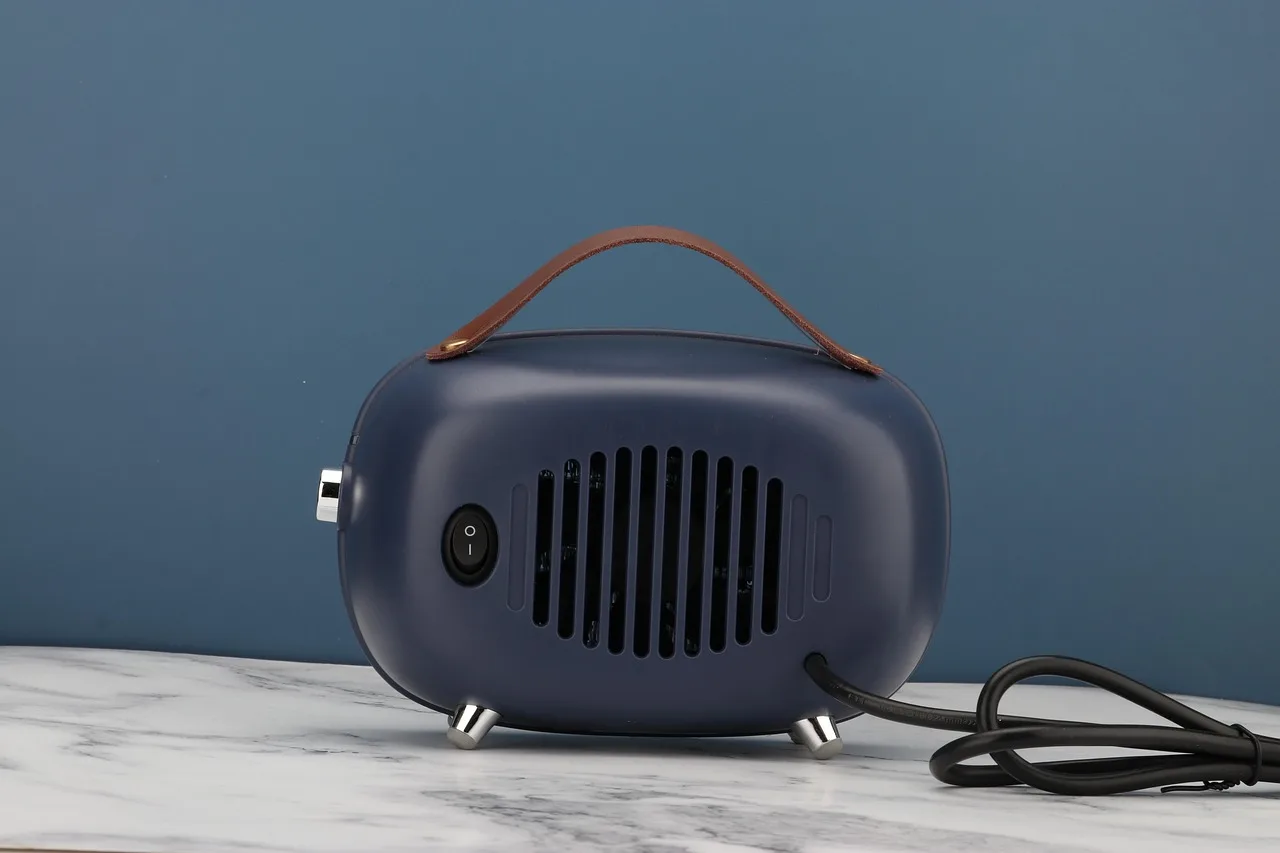
Drafty rooms lose heated air through gaps, loose windows, leaky doors, and uninsulated cavities. The same source explains that air sealing and insulation reduce the work a heating system has to do; for portable heaters, that same principle means the appliance has to replace heat that leaves the room before the room, walls, and furniture can hold it. In a sealed room, a lower-watt unit can feel enough. In a leaky room, the same unit may run nearly nonstop.
Wattage alone does not solve that problem. A 1500W heater can produce the same electrical output in either room, but the drafty room may never reach the thermostat target or may cycle on and off so often that comfort stays uneven. Runtime rises, and so does the utility bill.
Many electric heaters are effectively 100% efficient at the point of use because nearly all input electricity becomes heat in the room. The real question is not conversion efficiency. It is how much useful warmth remains where you need it after leakage, cycling, and uneven airflow.
Running time matters more than label efficiency
A heater that runs longer costs more, even if the appliance itself converts power to heat very efficiently. In drafty spaces, the most efficient setup is often the one that reaches the target zone fastest, cycles correctly, and avoids pushing heat into empty areas that lose it immediately. DOE’s heating guidance also makes clear that reducing air leakage and using zoning/spot heating are practical ways to control operating cost.
Which heater type works best in a drafty room?
The best type depends on whether you need quick room recovery, steady background heat, or direct warmth in a seated zone. PTC ceramic works best for rapid warm-up and active circulation. Oil-filled radiators work best for quiet, steady heat in rooms you occupy for hours. Infrared works best when the room is leaky but your body or workspace is the real target.
PTC ceramic space heater
A 1500W PTC ceramic space heater is the strongest all-around pick for many drafty rooms. It heats up quickly, uses fan-forced circulation to move warm air, and often includes ECO mode plus precise thermostat control. Safety features commonly include tip-over and overheat protection. Buyers should verify listing marks such as UL or ETL and read the manufacturer’s specification sheet for wattage, thermostat range, oscillation angle, and timer length.
Choose this type when you need the room to feel warmer fast, when the draft moves around the room, or when you want the heater to react quickly to temperature changes. Product examples should be taken from current manufacturer spec sheets.
Oil-filled radiator
An oil-filled radiator suits drafty rooms where silence and steady output matter more than speed. A 1500W model gives off heat quietly, then keeps releasing residual heat after shutdown. That helps smooth temperature swings caused by intermittent leakage or door openings.
Look for an adjustable thermostat and a programmable timer. A timer matters because a drafty room often needs preheating before use, not all-day operation. This type is a strong fit for bedrooms, offices, and other spaces where background comfort matters more than quick blasts of heat.
Infrared heater
Infrared heaters warm objects and people directly instead of trying to raise every cubic foot of air. That makes them useful in drafty rooms with a clear line of sight, such as a sitting area, desk zone, or workshop corner. Quartz tube variants are common in this category.
For electric infrared models, the practical question is still placement: if the beam is blocked or the user moves around, comfort drops fast. When reviewing fuel-burning examples, use manufacturer documentation for BTU output, tank size, and stated runtime rather than generic marketing claims. Safety guidance from CPSC and NFPA is especially important for fuel-burning portable heaters because combustion products, clearance, and ventilation requirements differ from electric units.
Drafty room decision table
This table ties leak level, room size, and use case to the heater type that usually wastes the least useful heat. It also flags the failure mode that often ruins performance in real rooms. Treat the wattage and coverage values as manufacturer-claim targets that should be verified against the current spec sheet before purchase.
| Leak severity | Room size | Best heater type | Recommended wattage band | Control features to seek | Likely failure mode to avoid |
|---|---|---|---|---|---|
| Low to moderate drafts | Up to 200 sq ft | PTC ceramic | 1500W output | Precise thermostat, ECO mode, auto cycling, tip-over and overheat protection | Leaving it on full power with no thermostat control |
| Moderate drafts | Up to 250 sq ft | Oil-filled radiator | 1500W output | Adjustable thermostat, programmable timer, residual heat after shutdown | Expecting instant warm-up in a cold room |
| Multi-direction drafts | Up to 280 sq ft | PTC ceramic with oscillation | 1000W to 1500W | Oscillation, fan-forced circulation, ECO mode, precise thermostat control | Static heat aimed at one spot while cold air moves across the room |
| Severe drafts, occupied zone only | Up to 400 sq ft | Infrared or large convection mica | Varies by model | Direct-heat aim, automatic climate control, timer, stable placement | Trying to heat the whole room evenly without sealing gaps |
Room size changes the useful ceiling
Coverage claims are not the same as drafty-room performance. A heater rated for up to 400 sq ft may still feel weak in a leaky room because the heat escapes before it builds. In practice, the bigger the room and the leakier the shell, the more important control precision becomes. Manufacturer coverage numbers should be treated as ideal-condition estimates, not guarantees in a drafty home.
Does oscillation help in drafty rooms?
Yes, if the problem is uneven airflow. Oscillation helps spread heated air across cold spots, so one corner does not stay cold while the area near the heater overheats. It is most useful in rooms with drafts from multiple directions or furniture that blocks direct airflow.
When 70° sweep is enough
A moderate sweep can be enough for small rooms or for situations where the cold spot sits close to the heater. It helps if the room has one main draft path, such as a door gap or a leaky window on one side. Use the manufacturer’s angle claim from the spec sheet to confirm the actual sweep range.
When 120° sweep helps more
A wider sweep helps in wider rooms or in spaces with several draft sources. If a manufacturer specifies wide oscillation, that can reduce the hot-and-cold striping that often happens in open layouts or long rooms. For this reason, oscillation is a distribution feature, not a substitute for sealing leaks.
Where fans beat still heat
Fan-forced ceramic heat is better when you need the room to feel warmer quickly and when moving air helps pull heat away from the unit and into the room. Still heat, like an oil-filled radiator, is better when you want less noise and fewer abrupt temperature swings. If sound matters, compare manufacturer noise claims or independent tester data rather than assuming all fan heaters sound alike.
How do you choose the right heater size?
Pick size from room volume, leak level, and how long the heater will run. For many drafty rooms, the practical target is not maximum coverage on the box. It is enough output to keep the occupied area comfortable without running continuously at full blast. DOE Energy Saver guidance supports this logic: reduce the load first, then size the heater to the space you actually occupy.
Coverage targets by room size
As a rough guide, small leaky bedrooms often fit heaters covering up to 200 sq ft, medium rooms up to 250 sq ft, and larger common areas up to 280 sq ft or more if leakage is modest. If a manufacturer claims up to 400 sq ft, verify the room assumptions behind that number; real-world draftiness can cut useful coverage sharply.
Use controls before adding more watts
Before buying a larger heater, choose better control features. A thermostat with a precise adjustable range lets the heater cycle more precisely. ECO temperature holding reduces waste by backing off once the room reaches the target. A 12-hour or 24-hour timer prevents overnight overrun. Verify these claims against current manufacturer spec sheets rather than relying on marketing summaries.
A common first-timer mistake is to buy a bigger heater when the room is leaking around the window frame. That may raise the electric bill without fixing comfort. Better control often beats extra wattage. DOE’s air-sealing guidance makes the same point at the whole-home level: the leak is part of the load.
How do I improve heating efficiency in a drafty home?
Start with sealing and placement before size. In a drafty home, the cheapest efficiency gains usually come from stopping air leaks, using the heater in the right zone, and keeping the unit matched to the room instead of trying to brute-force the whole space.
Heater efficiency checklist
- Close and latch windows fully.
- Check door gaps and add a draft stopper where needed.
- Seal obvious leaks around window trim and outlets with appropriate materials.
- Move the heater away from curtains, bedding, and furniture that block airflow.
- Use the heater in the occupied zone, not in a far corner.
- Set the thermostat to hold a steady target instead of running at maximum output.
- Use ECO mode or a timer when the room is empty.
Running-cost controls that matter
ECO mode, automatic climate control, and manual wattage switching all reduce wasted runtime. A heater that can step down from 1500W to a lower level, or cycle automatically after reaching the setpoint, usually costs less to run than one left on full power.
Suppose a 180 sq ft bedroom has a loose window and one cold wall. A 1500W PTC heater with a precise thermostat may hold the bed area comfortably warm if the door stays shut. The same room with the door open may never stabilize, no matter how good the heater is. That is why airflow control matters as much as heater selection.
Safety features for drafty rooms
Drafty rooms can tempt people to overcompensate with bigger heaters, longer extension cords, or placement too close to flammable items. The safest portable heaters are UL or ETL listed, include tip-over and overheat protection, and use flame-retardant materials where applicable. For placement and unattended-use guidance, CPSC and NFPA both advise keeping portable heaters clear of combustibles, using them on stable surfaces, and never leaving them unattended while operating.
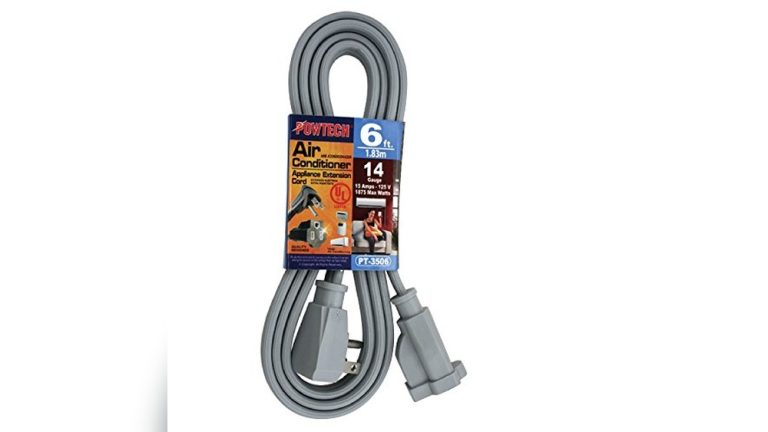
Do not use an extension cord or power strip with a portable space heater. Poor outlet quality and overloaded circuits can turn a simple room-heating setup into a hazard. Small rooms can also overheat quickly if the heater is oversized and the thermostat placement is poor.
If a heater is noisy, hot to the touch, or cycling erratically, treat that as a warning sign rather than a comfort issue. Safety belongs in the purchase decision, not after the room is already warm.
Frequently asked questions
What is the best heater efficiency for drafty homes?
The best result usually comes from a heater that warms the occupied zone fast, then holds it with precise thermostat control. In a drafty home, that often means a 1500W PTC ceramic unit for active heat or an oil-filled radiator for long, quiet use. Leak control matters as much as heater type. DOE Energy Saver emphasizes sealing and spot heating as the most practical route to lower operating cost.
How efficient is an electric heater in a drafty space?
At the point of use, electric resistance heaters are effectively very efficient because the electricity becomes heat in the room. The problem in a drafty space is not conversion loss. It is heat escaping before the room can hold it, which raises runtime and cost. In other words, the appliance may be efficient while the room remains inefficient.
Are heaters 100% efficient in drafty homes?
Electric resistance heaters are close to 100% efficient at turning electricity into heat, but that does not mean the room stays warm. In a drafty home, leakage, poor placement, and weak controls can waste most of the useful heat even when the heater itself is doing its job.
Should I use ceramic, oil-filled, or infrared heat for drafts?
Use ceramic if you need fast warm-up and moving air, oil-filled if you want quiet steady heat, and infrared if you sit in one zone and do not need the whole room heated evenly. For the leakiest rooms, direct warmth often works better than trying to heat every corner.
How much room size matters when choosing an efficient heater?
Room size sets the baseline, but leakage changes the real answer. A heater rated for up to 250 sq ft may work well in a tight room and struggle in a leaky one. In drafty spaces, choose the smallest unit that can still hold the occupied zone at the target temperature.
Does oscillation or fan circulation help in a drafty room?
Yes. Oscillation spreads heat across cold spots, and fan circulation helps move warm air away from the heater faster. A wider sweep helps wider rooms more than a narrow swing, while a fan helps when the room has uneven airflow or a cold patch near the floor. Confirm oscillation claims on the manufacturer spec sheet.
High efficiency water heater vs standard
That question applies to water heating, not room heating. For drafty rooms, the better comparison is between heater types and control features that reduce wasted runtime. If you mean home energy use overall, sealing leaks and using the right room heater usually matter more than comparing water-heater labels.
Sources
U.S. Department of Energy Energy Saver pages on space heating, portable heater use, and air sealing; U.S. Consumer Product Safety Commission guidance on portable heater safety and clearances; NFPA guidance on space-heater placement and combustibles; UL and ETL listing information for portable electric heaters; manufacturer specification sheets for wattage, thermostat controls, oscillation, coverage, and timers.