Solar Pool Heater vs Heat Pump: Which Is Worth It?
A solar pool heater is usually worth it if you want the lowest operating cost and only need to extend swim season. A heat pump is usually worth it if you want steady, thermostat-like control and a longer heating season. Picking by sticker price alone can leave you with cold water, higher bills, or both. This guide compares upfront cost, running cost, climate fit, and control needs.
Verdict

- Universal compatibility with rubber hoses and hose clamps
- Specialized absorber design for performance and durability
- U.S.-made with UV stabilizers for outdoor use
The short version is simple. Choose solar thermal when you care most about cheap seasonal heating and can accept weather dependence. Choose a heat pump when you want predictable water temperature across more weeks of the year, especially if nights are cool but daytime air is still usable.
Specs at a glance
| Factor | Solar pool heater | heat pump | Winner |
|---|---|---|---|
| Heat source | Thermal collectors heat pool water directly | Air-source unit moves heat from surrounding air | tie |
| Operating cost | Very low after installation | Electricity use is moderate but efficient; a pool heat pump can deliver about 4.5 to 6 units of heat per unit of electricity | Solar pool heater |
| Temperature control | Weather dependent | Better for setpoint-style control | heat pump |
| Warm-weather performance | Strong in sunny conditions | Strong when air temperatures stay mild | tie |
| Cold or cloudy stretch performance | Weaker | Usually more dependable than solar, though efficiency drops as air cools | heat pump |
| Install complexity | Collector array, plumbing tie-in, circulation pump support | Dedicated 240V circuit and equipment pad space | tie |
| Best use case | Season extension at low running cost | Longer season with controlled water temperature | depends on use case |
How they compare
The core trade-off is running cost versus control. Solar thermal is usually the cheaper way to add heat once installed, but it is tied to weather and collector placement. A heat pump costs more to buy and wire, yet it gives more predictable water temperature across a longer season.
| Factor | Solar pool heater | heat pump | Winner |
|---|---|---|---|
| Upfront cost | Usually lower than a heat pump system, especially for simple collector tie-ins | Usually higher because the unit and electrical work cost more | Solar pool heater |
| Running cost | Near-zero beyond circulation energy | Electricity cost remains, though COP keeps it efficient | Solar pool heater |
| Heat control | Depends on sun, roof angle, and panel area | Better setpoint control | heat pump |
| Weather dependence | High | Moderate; air temperature matters | heat pump |
| Recovery speed | Slow in poor sun | Slower than gas, but steadier than solar in marginal weather | heat pump |
Upfront cost and installation
Solar thermal systems usually need rooftop or ground-mounted collectors, plumbing tie-in, and enough pump capacity to push water through the array. Heat pumps need space, equipment hookups, and a dedicated 240V circuit. Gas heaters add fuel-line and venting considerations, but the first two choices usually define the solar-versus-heat-pump decision for residential pools.
Running cost
Solar is the low-operating-cost option because it heats water directly from the sun. A heat pump uses electricity, but its efficiency is high; in warm weather, its COP is around 4 to 6. That means it can be a practical middle ground when you want more control than solar gives without gas-level fuel expense.
Control and recovery
Heat pumps are the better fit when you want the pool to hold a target temperature day after day. Solar can warm water well on clear days, but a cloudy stretch or cool night can erase gains quickly. Gas still wins if fast recovery is the priority, since high BTU output can bring water back up quickly after a dip.
Climate fit
Sunny, warm regions favor solar thermal. Cloudy or cooler shoulder seasons favor heat pumps because they are less tied to direct sun, though their efficiency still falls as ambient temperature drops. That is the main threshold: if your swim season depends on a small number of sunny hours, solar can make sense; if it depends on holding a setpoint through mixed weather, a heat pump usually wins.
Scenario decision matrix
| Use pattern | Upfront cost band | Monthly operating cost band | Heat-up speed | Weather sensitivity | Best-fit recommendation |
|---|---|---|---|---|---|
| Weekend-use | Solar: lower; heat pump: higher | Solar: very low; heat pump: moderate | Solar: slow; heat pump: moderate | Solar: high; heat pump: medium | Solar pool heater |
| Daily-setpoint | Solar: lower; heat pump: higher | Solar: very low; heat pump: moderate | Solar: uneven; heat pump: steadier | Solar: high; heat pump: medium | heat pump |
| Cloudy-climate | Solar: lower; heat pump: higher | Solar: low when sunny, weak when not; heat pump: moderate | Solar: slow to poor; heat pump: moderate | Solar: very high; heat pump: medium | heat pump |
| Off-grid | Solar: lower if collector space exists; heat pump: higher plus power system cost | Solar: very low; heat pump: depends on solar PV and storage | Solar: slow; heat pump: moderate if powered well | Solar: high; heat pump: tied to electrical supply | Solar pool heater |
Say your 18,000-gallon pool is used mainly on weekends in late spring. Solar thermal can make sense because you are trying to hold usable water temperature across a limited schedule, not chase exact setpoints every day.
Suppose the same pool needs 84-degree water from April through October. That pattern usually favors a heat pump, because solar output will swing too much with cloud cover and roof exposure.
Which is cheaper to run?
Solar pool heaters are usually cheaper to run than heat pumps because they use sunlight as the heat source and only need circulation power. Heat pumps are efficient, but they still draw electricity every time they run, so the operating bill is higher than solar’s near-zero fuel cost.
Solar operating cost
A solar thermal system heats water directly, so there is no fuel bill the way there is with gas, and no compressor electricity bill the way there is with a heat pump. The main cost is the pump and plumbing work needed to move water through the collectors.
Heat pump operating cost
A heat pump is more efficient than resistance electric heat because it moves heat instead of making it from scratch. With a COP around 4.5 to 6 in warm weather, it can be a sensible operating-cost compromise when you want control but do not want gas usage.
Pool cover effect on both
A pool cover lowers evaporation and overnight heat loss, which helps both systems. It matters more than many owners expect. If you leave the surface uncovered, you can waste the heat you just paid to collect or move.
What is the install cost gap?
Solar pool heaters and heat pumps often differ more in installation than in day-to-day use. Solar usually asks for collector area, roof or ground mounting, and plumbing tie-in; a heat pump asks for an equipment pad, line connections, and a dedicated 240V circuit. Gas heaters add fuel and venting work, which can push costs higher than many buyers expect.
Solar collector and plumbing costs
Solar thermal systems vary with collector area and roof access. A simple replacement panel can be relatively modest, but a full system needs enough coverage to match the pool and enough plumbing support to move water through the array.
Heat pump electrical and equipment costs
Heat pumps usually cost more up front because the equipment itself is more expensive and the electrical work is more involved. A mid-size pool heat pump may draw roughly 5 to 7 kilowatts while running, so electrical planning matters before purchase.
Gas heater installation and fuel line costs
Gas heaters can cost less than some heat pump setups to install, but the fuel side changes the equation. Natural gas or propane supply, plus the higher ongoing fuel bill, makes them a better fit for quick recovery than for routine maintenance heating.
How climate changes the answer
Climate is the threshold that most buyers miss. Solar works best in sunny, warmer regions with good roof exposure. Heat pumps work best when the air stays warm enough for the unit to collect heat efficiently, which usually makes them better for shoulder seasons and controlled daily use.
Warm sunny regions
Solar thermal often wins in places with strong sun and a swimming season that does not require strict overnight temperature control. If the roof faces well and shade is limited, the collectors can extend the season at very low running cost.
Cool or cloudy stretches
Heat pumps are usually the better choice when clouds or cooler nights are common. Their efficiency falls as ambient temperature drops, but they remain more predictable than solar through mixed weather, and they avoid the steep output swings that come from roof-orientation issues.
Roof orientation and shading limits
Solar collectors are sensitive to roof angle, orientation, and shade from trees or nearby structures. Bad exposure can shrink output enough to make the system feel undersized. That is one reason solar works best when the collector field can actually see the sun for much of the day.
Solar pool heater sizing and setup
Sizing matters for solar, and under-sizing is a common reason buyers are disappointed. Pool surface area is the usual driver, and common guidance starts at about 50%, moves to 75% for stronger season extension, and reaches 100% when the goal is more aggressive heating. Bigger arrays improve temperature gain, but they also need more roof or ground space.
Collector-to-pool ratio
A 50% collector-to-pool ratio may provide modest temperature lift and some season extension. Around 75% is a common middle ground for better gains. Near 100% is closer to full seasonal support, especially when the owner wants more reliable warmth instead of occasional help.
Circulation pump and plumbing tie-in
Solar panels need water flow. That means the system has to tie into the pool plumbing and rely on a circulation pump that can push through the collector loop. If flow is too weak, the array underperforms; if the system is poorly plumbed, maintenance becomes harder than it should be.
Temperature gain and recovery limits
Solar thermal can raise water temperature meaningfully in good sun, but it is not a quick-recovery solution. On a cloudy day, performance drops fast. On a sunny day, it can be excellent for season extension, especially when paired with a cover that keeps the collected heat in the pool overnight.
Can a heat pump run on solar panels?
Yes, but the answer depends on whether you mean solar thermal or solar photovoltaic power. Solar thermal systems heat water directly, while photovoltaic panels make electricity that can run a heat pump. If the electrical system is sized correctly, PV can offset or cover the heat pump’s running load.
PV powering a heat pump
Covering a pool heat pump load may require roughly a 5 to 8 kilowatt solar array. That size range helps explain why many owners pair PV with a heat pump only when they already want electric generation for the home, not just for pool heating.
Why batteries are usually not needed
Batteries store electricity, not heat. They can help with nighttime operation or off-grid setups, but they are usually unnecessary for daytime pool heating if the goal is simply to run a heat pump during sun hours. For solar thermal pool heating, batteries do not apply.
When off-grid power changes the math
Off-grid operation can make solar thermal more attractive because it avoids the electrical demand of a compressor-based heater. If you want a heat pump off-grid, the PV array and battery bank must be sized for the electrical load, which adds cost and complexity fast.
Gas pool heater as the fast-heating benchmark
Gas heaters still matter when speed is the main requirement. They burn natural gas or propane, deliver high BTU output, and recover water temperature faster than solar or heat pump systems. The trade-off is simple: fast heat, higher operating cost.
Use gas if you need rapid recovery after a storm, a long gap between uses, or a weekend event with no time for slow heating. It is the most direct answer to the “I need warm water now” problem.
What works
Solar pool heaters work best for seasonal extension, low running cost, and owners who can accept weather dependence. Heat pumps work best for steady target temperatures, longer swim seasons, and pools used often enough to justify a more controlled system.
Gas works best when speed beats efficiency. That is the right answer for quick recovery, not for low annual operating cost.
What does not?
Solar does not work well when the roof is shaded, the collector area is too small, or the pool needs reliable heat through cloudy, cool stretches. A heat pump does not suit buyers who want the lowest possible operating cost or who cannot support the electrical load and installation requirements.
Oversizing and undersizing cause problems in both categories. Too little collector area or too small a heat pump leads to weak performance; too much equipment raises cost without fixing bad usage patterns.
Which lasts longer: solar pool heater or heat pump?
Longevity usually tilts toward solar collectors because the design is simpler and there are fewer moving parts. Heat pumps have compressors, controls, and fans, so there is more to wear out over time. The trade-off is that a heat pump usually gives better temperature control while it is working.
Solar durability
Solar collectors can last a long time if the material is UV-stabilized and the plumbing is installed cleanly. Damage usually comes from exposure, leaks, or roof issues rather than from a complex mechanical failure.
Heat pump durability
Heat pumps are durable, but they are still mechanical appliances. Fans, compressors, and control electronics all matter. The upside is predictable performance; the downside is more maintenance burden than a passive collector field.
Choose Solar pool heater if… / Choose heat pump if…
Choose Solar pool heater if you want the lowest running cost, you mainly swim on weekends or during a defined season, your roof or ground space gets good sun, and you can accept slower recovery after cloudy weather or cool nights.
Choose heat pump if you want a more controlled target temperature, you swim often enough to justify higher operating cost, your climate is mixed or cloudy, and you can support a dedicated 240V circuit and higher upfront equipment cost.
If fast recovery is the real priority, gas is still the benchmark. If predictable setpoint control matters more than speed, heat pump is usually the better buy. If the goal is cheap seasonal extension, solar thermal is the one that usually pays back in operating cost.
Alternatives
- For in-ground pools used regularly
- Uses surrounding air to heat the pool
- Titanium heat exchanger for salt water and chemical resistance
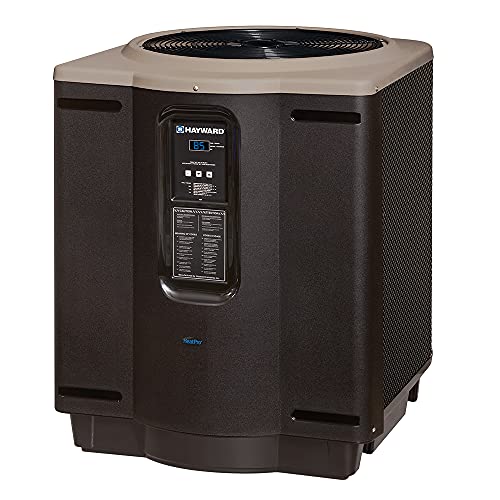
Hayward HeatPro pool heat pump is the more controlled option for inground pools that get regular use. Based on the listed specs and buyer feedback patterns, it fits owners who want consistent temperature maintenance and are willing to pay more up front for better day-to-day control. The drawback is obvious: the purchase price is high, and it needs proper electrical support.
SolarPoolSupply universal solar pool heater panel replacement fits owners who already have a solar thermal setup or want a collector-focused path to lower operating cost. The listed design points to outdoor durability and compatibility with common hose-and-clamp connections. The drawback is that it remains weather dependent, so it is not the right answer for cloudy climates or exact temperature control.
Should you buy it?
Buy solar thermal if your pool use is seasonal, your site gets good sun, and the main goal is to keep operating cost low. Buy a heat pump if you want longer-season comfort with predictable water temperature and can accept a bigger upfront check. Buy gas only when fast recovery is more important than everything else.
The wrong move is choosing by sticker price alone. The right choice follows your swim pattern, local weather, and how tightly you want to control water temperature.
Frequently asked questions
Is a solar pool heater or heat pump cheaper to run?
Solar pool heaters are usually cheaper to run because they use sunlight directly and mainly rely on circulation energy. Heat pumps are efficient, with a COP around 4.5 to 6 in warm weather, but they still use electricity every time they run. A cover improves both economics by reducing overnight heat loss.
Do solar pool heaters work in cloudy weather?
They can still work, but output drops fast when sunlight is weak. That is the big limitation of solar thermal systems: they depend on weather and roof exposure. In cloudy or cool stretches, a heat pump is usually the more dependable option because it is less tied to direct sun.
What temperature does a pool heat pump stop working?
There is no single cutoff, but efficiency falls as air gets colder. Heat pumps work best in warm air and shoulder seasons, and performance declines in cooler conditions. If your pool season depends on cold nights or frequent overcast weather, plan on reduced output rather than expecting constant heat.
How many solar panels does a pool heat pump need?
Covering a pool heat pump load may require roughly a 5 to 8 kilowatt solar array. The exact number depends on panel wattage, run time, and how much of the load you want to offset. Battery storage is usually unnecessary for daytime pool heating unless you need night operation or off-grid power.
Should I use a pool cover with solar heating or a heat pump?
Yes. A pool cover lowers evaporation and overnight heat loss, which helps both solar thermal and heat pump systems. It can improve real-world heating performance more than many owners expect, because less collected heat escapes after sunset. Covers are especially useful when nights are cool.