How Airflow Problems Reduce Heater Efficiency
Weak airflow can lower heater efficiency by cutting heat delivery to rooms, forcing longer run times, and may waste about 10% or more of the fuel or electricity that should become usable heat. Ignoring it can mean higher bills, uneven room temperatures, longer run times, or a noisy blower, and it can wear the fan, filter, and heat exchanger sooner. This guide explains the airflow faults that cause the problem, the symptoms to watch for, and the first fixes that usually pay off fastest.
How poor airflow cuts heater efficiency


A heater can still make heat while failing to move that heat into the rooms that need it. The problem is delivery. When airflow is restricted, the system sees higher static pressure, the blower works harder to push air, and heat stays in the equipment longer instead of reaching supply vents.
That extra resistance raises run time and energy use. It can also create hot spots inside the furnace cabinet, which increases stress on the blower motor and heat exchanger. In other words, the equipment may be producing heat normally, but the house still feels underheated because the air path is blocked, leaking, or unbalanced.
Heat production versus heat delivery
Heat production happens at the burner or electric heat source. Heat delivery depends on moving enough air across that source and then out through supply ducts to each room. If airflow drops, the heater may cycle longer to satisfy the thermostat, yet less usable heat reaches the living space.
That is why a system can seem “fine” at the unit and still underperform in the rooms. Reduced airflow can leave some rooms cold while others feel normal. Airflow maldistribution can also make average airflow look acceptable while parts of the house are underheated.
Why restricted airflow raises run time and energy use
Restricted airflow increases resistance through the system. The blower needs more effort to move the same air, while the heater often has to run longer to raise room temperature by the same amount. That added runtime is wasted energy when the bottleneck is delivery, not heat generation.
When the restriction is severe, the furnace may shut down on a safety limit or operate in shorter, less effective cycles. Either outcome reduces comfort and can raise bills. Long run times with weak room temperature gains are a classic sign that airflow, not fuel input, is the main issue.
Why some rooms stay cold even when the heater is running
Rooms at the end of long or undersized duct runs often get less delivered air. A blocked return can also starve the blower, which affects the whole house, while a blocked supply vent affects only the room it serves. Both problems lower comfort, but they do it in different ways.
Furniture, rugs, closed doors, and partly closed registers can create a pressure imbalance that changes how air moves. The heater may still run for a normal amount of time, but the air never circulates well enough to spread heat evenly.
What causes airflow restriction?
Three common causes are dirty filters, blocked vents, and duct problems. They are not equal. A filter restriction mainly loads the blower and limits total air volume. Vent blockage changes where air can go. Duct faults waste or choke the airflow between the furnace and the rooms.
Dirty air filters and added blower load
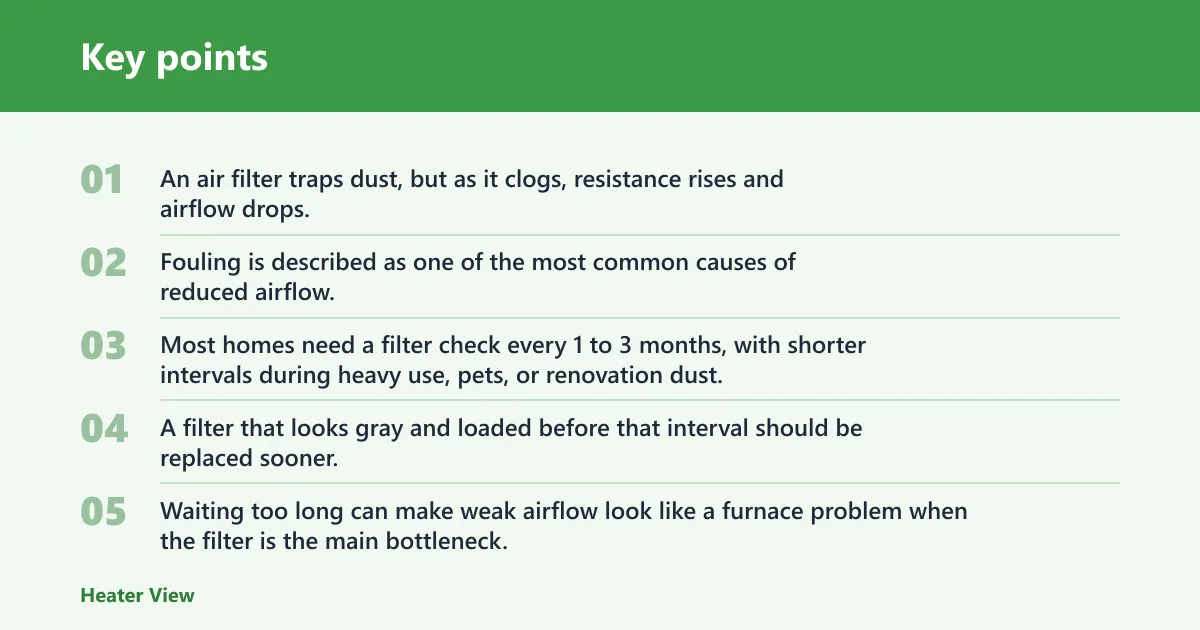
An air filter traps dust, but as it clogs, resistance rises and airflow drops. The blower must work against that added resistance, which increases load and can reduce the amount of warm air reaching the house. Fouling is described as one of the most common causes of reduced airflow.
Most homes need a filter check every 1 to 3 months, with shorter intervals during heavy use, pets, or renovation dust. A filter that looks gray and loaded before that interval should be replaced sooner. Waiting too long can make weak airflow look like a furnace problem when the filter is the main bottleneck.
Blocked supply vents and return vents
Supply vents deliver heated air into rooms. Return vents pull room air back to the heater so it can be reheated. If furniture, curtains, rugs, or closed doors block either side, circulation drops and the room-to-room pressure balance shifts.
Blocked supply vents reduce delivery to a room. Blocked return vents reduce the system’s ability to pull air back, which can starve the blower and make the whole system feel weak. Blocked vents can reduce circulation and create pressure imbalances.
Leaky, crushed, or undersized ductwork
Duct leaks waste heated air before it reaches the rooms. Crushed sections, disconnected joints, debris inside ducts, and long run lengths all add resistance. If ducts are undersized for the blower and load, airflow can stay weak no matter how clean the filter is.
Ducts that run through attics, crawl spaces, or garages lose more heat than sealed ducts inside conditioned space. Even if the furnace works normally, those losses make the home feel inefficient because less heated air arrives where it should.
What are the signs of restricted airflow?
Restricted airflow usually shows up as weak vent flow, uneven room temperatures, longer run times, or a noisy blower. High bills can follow because the system has to run longer to do the same job. Weak airflow from vents is a clear warning sign of system trouble.
Weak vent flow and uneven rooms
If a hand held near a supply register feels only a light stream while the thermostat is still calling for heat, airflow may be restricted. Some rooms may stay cool while rooms near the furnace feel normal. That pattern points to distribution trouble more than heat production trouble.
Longer cycles or repeated cycling
Longer run times are common when the system cannot move heated air efficiently. Repeated cycling can happen if the furnace overheats, trips a limit switch, and starts again after cooling down. Both patterns waste energy and can wear parts faster.
Noisy blower behavior and high bills
A blower that sounds strained, louder than usual, or like it is pushing against resistance may be working against a clogged filter, blocked return, or duct issue. Higher bills often follow because the system runs longer and uses more energy to overcome the restriction.
Airflow troubleshooting matrix
This matrix helps separate symptoms from likely airflow causes. Start with the symptom you can observe, then check the simplest cause first. If the problem keeps returning after those checks, the issue is usually in the ducts, blower, or system balance.
| Symptom | Likely airflow cause | Quick homeowner check | When it becomes repair-worthy |
|---|---|---|---|
| Weak vent flow | Dirty filter, blocked supply vent, leaky duct | Remove obvious blockage, then inspect the filter for visible loading and check whether several vents feel weak | If the filter is clean and multiple vents still feel weak, the restriction is likely in the duct or blower path |
| Uneven rooms | Blocked return, duct imbalance, undersized branch run | Check for furniture over returns, closed doors, or rooms farthest from the furnace running colder than others | If one room stays cold after vents are clear, air balancing or duct repair is worth a professional visit |
| Longer run times | High static pressure from restriction or leakage | Compare current cycle length with normal operation and look for a filter, vent, or duct change that preceded it | If run time increases without a thermostat change, the airflow loss is affecting delivered heat and should be checked |
| Noisy blower | Blower under load, dirty filter, return restriction | Listen for a louder whoosh or strained sound when the system starts and while it runs | If the noise is new or paired with overheating shutdowns, the blower or airflow path needs service soon |
| High bills | Long runtime from reduced delivered heat | Check whether comfort dropped at the same time the bill rose and whether room airflow feels weaker | If higher cost tracks with weak airflow and not colder weather alone, the loss is efficiency-worthy, not cosmetic |
How filter and vent problems affect airflow
Filter and vent problems are the easiest to inspect, and they often explain weak heat faster than the furnace itself. They also differ in effect. Filters mainly affect total airflow. Vents mainly affect where that air goes and how well rooms circulate.
-
Check the filter first. Replace a loaded filter with the size and type the system accepts. A filter that is overdue by a few months can add enough resistance to reduce airflow and increase blower load.
-
Clear the supply path. Move furniture, rugs, and drapes away from supply registers. Even partial blockage can reduce room delivery and create a hot-cold pattern that feels like poor heater performance.
-
Open return paths. Make sure returns are not covered by boxes, curtains, or wall hangings. If a room has a closed door and no return path, air circulation can drop enough to make the room feel starved for heat.
Picture a 2-story home with one bedroom at the end of a long duct run. If the return under the hall is covered by a storage bin, the bedroom can stay cold even though the furnace runs normally. The problem is not heat production. It is air movement through the house.
A common first-timer mistake is closing several supply registers to “push” more heat into one room. That can raise pressure in the remaining ducts and sometimes reduce total airflow. It may make one room feel warmer for a short time while making the whole system less efficient.
Can duct problems make a heater seem inefficient?
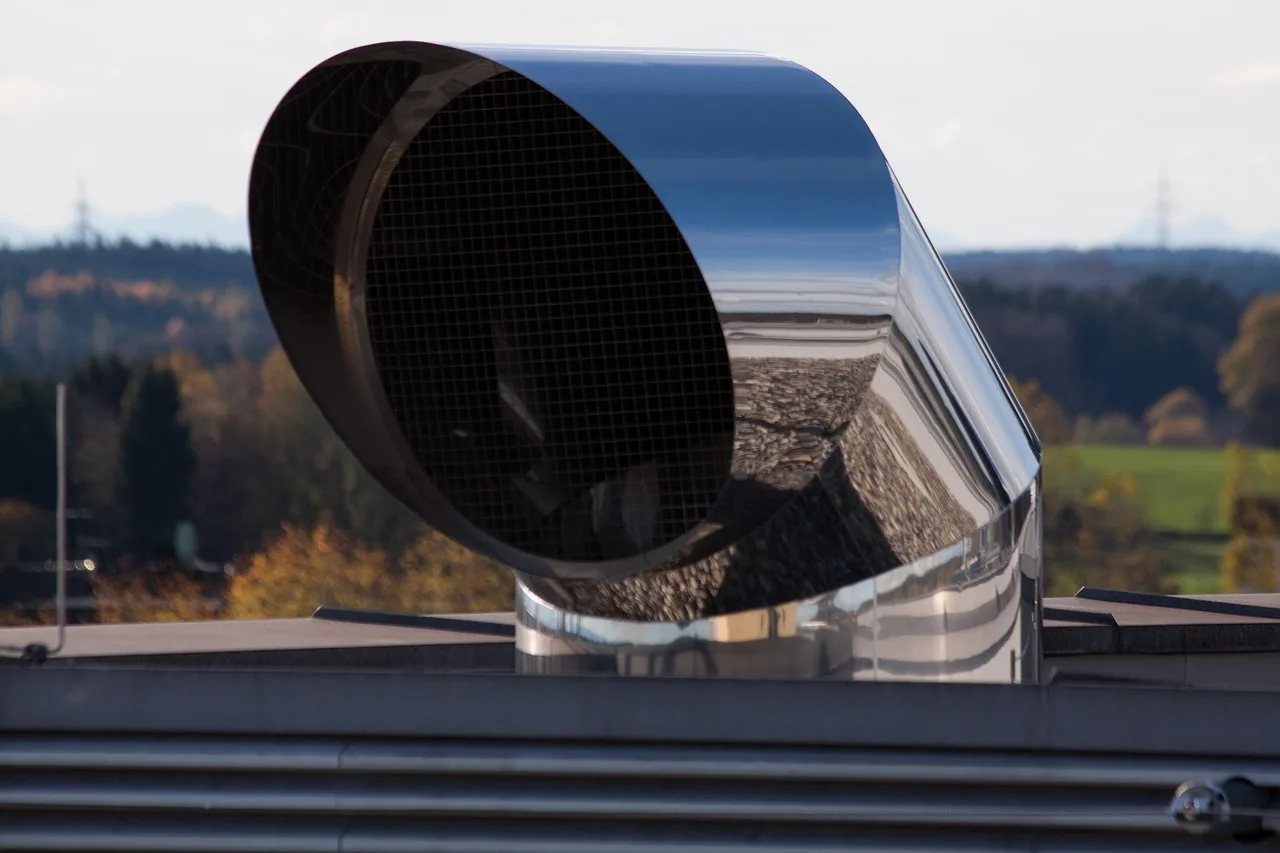
Yes. Duct problems can waste heated air before it reaches the rooms, or they can restrict delivery enough that the furnace has to run longer. Leaks, crushed sections, obstructions, and long or poorly sized runs all create losses that look like a weak heater from inside the house.
Leaks that waste heated air before it reaches rooms
Leaks in supply ducts can send warm air into attics, crawl spaces, or wall cavities instead of the living space. That lowers delivered heat and makes the heater run longer to compensate. Duct sealing reduces leakage and improves delivery.
Leaky ducts can also pull in unconditioned air on the return side, which changes the temperature and balance of the air the system moves. Sealing both supply and return leaks usually matters more than sealing only the obvious warm-air side.
Crushed sections, obstructions, and long duct runs
Crushed flex duct, debris inside metal duct, and sharp bends all increase resistance. Long runs add friction and can leave distant rooms underheated. A duct that is too small for the airflow demand can create the same weak-room symptom even when the furnace itself is healthy.
Reduced airflow can also make outlet temperatures rise while overall comfort drops, because the system is moving less air through the heat source. The heater may seem stronger at the cabinet and weaker at the vent. That is a delivery failure, not a fuel problem.
Why duct sealing and air balancing matter
Duct sealing restores more of the heated air to the rooms. Air balancing adjusts how much each branch receives so one room does not hog airflow while another is left short. A professional inspection is the right call when the house has uneven rooms after the simple checks are done.
Air balancing is especially useful when the main system appears to move enough air overall, but one zone is persistently cold. That is where supply and return balance matter most.
When airflow reaches the blower and heat exchanger
Weak airflow does more than reduce comfort. It can stress the moving parts that keep the heater safe. The blower motor may run hotter under load, and the heat exchanger depends on enough air to carry heat away at the right rate.
Blower motor load, overheating risk, and weak delivery
When the filter is clogged or the return is blocked, the blower works against higher resistance. That extra load can reduce airflow, overheat the motor, and shorten component life. In severe cases, motor burnout can follow if the restriction remains in place.
Small blade-pitch deviations can significantly affect fan performance, and excessive fan tip clearance reduces aerodynamic efficiency. Poor inlet conditions can reduce effective fan performance. Those facts explain why a blower problem often shows up as weak vent flow long before the motor fails completely.
Heat exchanger airflow dependence and shutdown potential
The heat exchanger needs enough moving air to take heat away at the proper rate. If airflow drops too far, heat stays in the exchanger longer, which can raise temperature and trigger a safety shutdown. That shutdown is a protection step, not a random nuisance.
If the furnace shuts off and restarts often while vents still feel weak, the airflow path deserves attention before another reset. Ignoring that pattern can mean repeated overheating stress on the exchanger and unnecessary wear on the blower.
How to improve HVAC air flow
Start with the simple restrictions that most often cause weak delivery. Then move to duct and balance issues if the problem remains. The goal is not to make the fan louder or the vents feel stronger, but to restore useful heat to the rooms.
-
Replace the filter. Use the correct size and replace it if it looks loaded. A clean filter lowers resistance, reduces blower load, and often restores immediate airflow.
-
Open and clear vents. Make sure supply and return vents are unobstructed. Keep rugs, furniture, and storage away from them so air can move in and out of the room.
-
Check visible ducts. Look for disconnected joints, crushed flex, or obvious gaps in accessible ductwork. Sealing leaks and repairing damage helps the system deliver more of the heat it makes.
-
Call for balancing help. If the house still has uneven rooms, ask for a professional air balancing inspection. This is especially useful when one floor or one end of the home remains cold while the rest heats normally.
How to reduce airflow from vent depends on the goal. If you mean reducing draft in a single room, do it by clearing room airflow problems first, not by shutting multiple registers. If one register is overpowering a space, a proper balancing damper or professional adjustment is safer than closing vents across the house.
How to improve airflow in room usually starts with the return side. A room needs a path for air to leave as well as enter. Open the door, clear the return grille, and remove obstacles from the supply vent. If the room still runs cold, the branch duct may be undersized or leaking.
Frequently asked questions
How does poor airflow reduce heater efficiency?
Poor airflow reduces efficiency by limiting how much heat reaches the rooms. The heater may still produce heat, but longer run times, higher static pressure, and more blower load mean more energy goes into moving air and less into useful room heating. Comfort drops even when the unit seems active.
What are the signs of restricted airflow in a heater?
The most common signs are weak vent flow, uneven room temperatures, longer run times, noisy blower behavior, and a higher bill without a clear weather change. A furnace that overheats or shuts down and then restarts can also point to restricted airflow rather than a bad thermostat.
Can dirty filters make a heater use more energy?
Yes. A dirty filter raises resistance, lowers airflow, and increases blower load. The system often runs longer to satisfy the thermostat, which uses more energy. If the filter is visibly loaded or overdue, replacing it is one of the fastest ways to cut wasted runtime.
How do blocked vents affect heating performance?
Blocked supply vents reduce delivery to a room, while blocked return vents reduce circulation back to the heater. Both can create pressure imbalance and uneven temperatures. A vent blocked by furniture or rugs can make a room feel cold even when the furnace is running normally.
How can I tell if duct problems are causing low heat output?
If the filter is clean, vents are clear, and weak heat persists in one or more rooms, ducts become more likely. Signs include leaks at seams, crushed flexible duct, long runs with poor delivery, and heat loss in unconditioned spaces. Those issues usually need repair, not just cleaning.
How do I improve airflow in a room?
Start by clearing the supply and return paths. Move furniture, open a closed door if the room lacks a return, and make sure the vent is not blocked by rugs or drapes. If the room still feels starved for heat, the branch duct may need balancing or sealing.