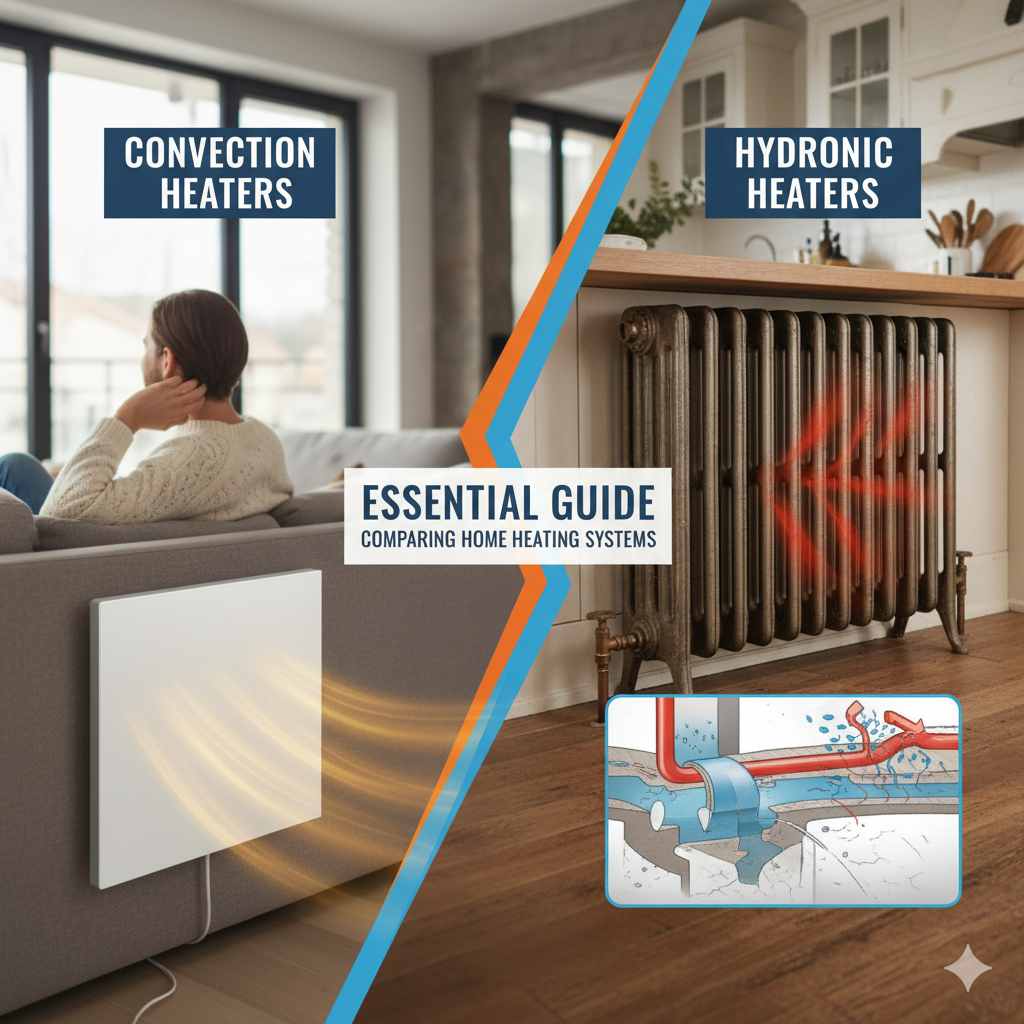
Convection vs. Hydronic Heaters: Essential Guide
Choosing between convection and hydronic heaters is simple! Convection heaters heat air directly for quick warmth, ideal for quick heating and smaller spaces. Hydronic heaters use hot water for gentle, consistent heat, perfect for steady comfort and energy saving in larger areas or rooms needing constant warmth. Both offer safe, efficient heating solutions for your home.
Convection vs. Hydronic Heaters: Your Essential Guide to a Cozy Home
Feeling a chill and wondering how to best warm your home? Navigating the world of electric baseboard heaters can feel a bit daunting, especially when you hear terms like “convection” and “hydronic.” But don’t worry, it’s simpler than it sounds! Think of me, Tanim, as your friendly guide. My goal is to make choosing and using heaters easy, safe, and affordable for you. We’ll walk through the differences, discover what makes each one tick, and help you find the perfect fit for your comfort. Ready to get cozy? Let’s break it down!
What Are Electric Baseboard Heaters, Anyway?
Electric baseboard heaters are a common, convenient way to add supplemental heat to rooms in your home. They run on electricity and are installed along the base of your walls, typically under windows. Their main job is to provide heat where you need it most, helping to maintain a comfortable temperature without relying solely on your central heating system. They come in different types, and understanding these types is key to choosing the best one for your needs.
Convection Heaters: Speedy Warmth
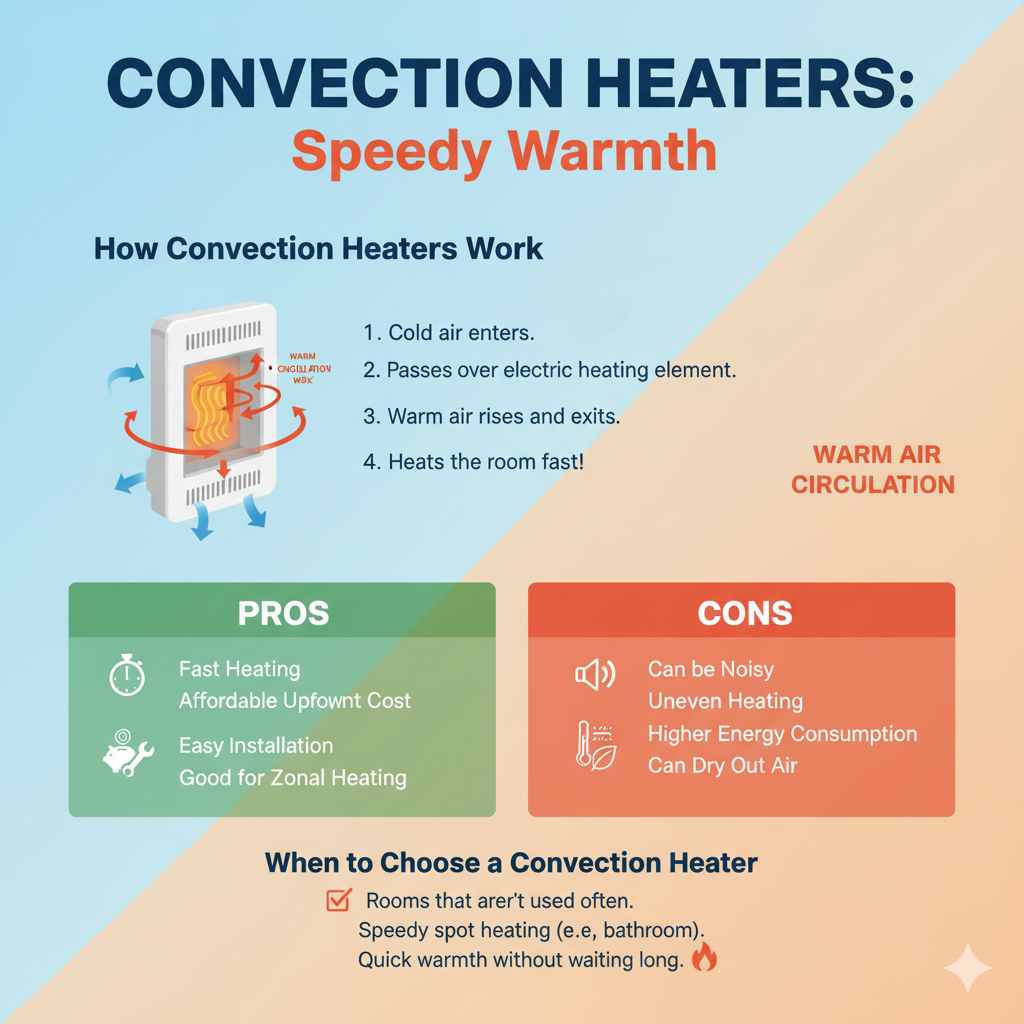
Convection heaters are all about speed. They work by heating the air around them directly. Imagine a mini-tornado of warm air! Cold air is drawn into the heater, passes over a heating element, and then rises out, circulating warm air throughout the room. This process happens relatively quickly, making them great for bringing a chilly room up to temperature fast.
How Convection Heaters Work
- Cold air enters the bottom of the heater.
- It passes over an electric heating element, getting hot.
- The warm air rises and exits the top of the heater.
- This creates a continuous cycle of air circulation, warming the room.
Pros of Convection Heaters
- Fast Heating: They quickly raise the temperature of a room.
- Affordable Upfront Cost: Generally less expensive to purchase than hydronic models.
- Easy Installation: Often simpler to install, especially for DIYers.
- Good for Zonal Heating: Excellent for heating specific rooms or areas as needed.
Cons of Convection Heaters
- Can be Noisy: The circulation of air can sometimes create fan noise.
- Uneven Heating: May lead to warmer spots near the heater and cooler spots further away if not properly sized.
- Higher Energy Consumption: Because they heat air directly and quickly, they might use more energy to maintain a temperature compared to hydronic systems.
- Can Dry Out Air: The rapid air movement can sometimes make the air feel drier.
When to Choose a Convection Heater
Convection heaters are a fantastic choice for:
- Rooms that aren’t used very often.
- Speedy spot heating, like in a bathroom before a shower.
- Garages or workshops where you need heat only when you’re there.
- Smaller spaces that heat up and cool down quickly.
They’re also great if you want to heat a room without waiting long for the warmth to spread. Since they heat the air directly, you feel the effect much sooner.
Hydronic Heaters: Gentle, Consistent Comfort
Hydronic heaters, often called hot water baseboard heaters, use a different approach. Instead of directly heating air, they heat water that then circulates through the fins of the heater. This hot water gently warms the air around it, which then rises and circulates throughout the room. It’s a slower, more gradual process, creating a very even and consistent level of warmth that many people find more comfortable.
How Hydronic Heaters Work
- An internal heating element heats a sealed fluid (usually water or a special oil).
- This heated fluid circulates through pipes within the baseboard unit.
- The fins on the heater transfer warmth from the fluid to the surrounding air.
- The warm air rises and circulates, providing a steady, gentle heat.
Pros of Hydronic Heaters
- Consistent & Even Heat: Distributes warmth very evenly, reducing temperature fluctuations.
- Quiet Operation: Because they don’t rely on forced air, they are typically very quiet.
- Energy Efficient: They can be more energy-efficient for maintaining a constant temperature over long periods.
- Moist Heat: The gentler heating process can help retain moisture in the air, making it feel less dry.
- Safer Surfaces: The finned tubes often don’t get as scalding hot as exposed heating elements, which can be a plus in homes with children or pets.
Cons of Hydronic Heaters
- Slower to Heat: Takes longer to initially warm up a cold room compared to convection heaters.
- Higher Upfront Cost: Can be more expensive to purchase initially.
- Installation Complexity: Installation might be more involved, often requiring professional help.
- Potential for Leaks: Though rare with modern units, any system involving water carries a small risk of leaks over time.
When to Choose a Hydronic Heater
Hydronic heaters are an excellent choice for:
- Primary living areas where you spend a lot of time.
- Bedrooms that you want to keep consistently warm and comfortable throughout the night.
- Homes where consistent, gentle heat is preferred.
- Spaces where quiet operation is important.
If you’re looking for a reliable, steady source of warmth that mimics the comfortable glow of a radiator, hydronic is often the way to go. They’re designed for sustained comfort.
Convection vs. Hydronic: A Quick Comparison
To make it even easier to see the differences, let’s put them side-by-side:
| Feature | Convection Heater | Hydronic Heater |
|---|---|---|
| Primary Heating Method | Directly heats air by convection currents. | Heats a fluid (water/oil) which then heats air. |
| Heating Speed | Fast. Heats up a room quickly. | Slower. Provides gradual, sustained warmth. |
| Heat Distribution | Can be uneven, with warmer spots near the unit. | Very even and consistent. |
| Noise Level | Can be noticeable due to air movement. | Extremely quiet. |
| Energy Efficiency | Can use more energy for quick heating; efficiency depends on usage. | Often more efficient for maintaining steady temperatures over time. |
| Moisture in Air | Can dry out the air. | Helps retain air moisture for a more comfortable feel. |
| Upfront Cost | Generally lower. | Generally higher. |
| Installation | Often simpler. | Can be more complex, may require professional help. |
| Best For | Quick spot heating, infrequent use rooms, smaller spaces. | Consistent comfort, bedrooms, main living areas, long-term heating. |
Key Factors to Consider When Choosing
When you’re deciding between convection and hydronic heaters, think about these important questions:
- How quickly do you need heat? If instant warmth is a priority, convection wins. For steady, gradual comfort, hydronic is better.
- What kind of comfort do you prefer? Some people love the gentle, enveloping warmth of hydronic, while others prefer the quick blast from convection.
- How will you use the space? A seldom-used guest room might be fine with a convection heater, while your master bedroom might benefit from the consistent quiet of a hydronic one.
- What’s your budget for purchase and operation? While convection heaters are cheaper to buy, hydronic might save you money on energy bills for sustained heating.
- Is noise a concern? If silence is golden, hydronic is definitely the way to go.
Installation and Safety Tips
No matter which type you choose, safety and proper installation are paramount. Always follow the manufacturer’s instructions. For electric baseboard heaters, a few general guidelines include:
- Clearance is Key: Ensure there’s always adequate space around the heater for air to circulate. Keep curtains, furniture, and other objects at least 3 feet away from the front and top of the heater, and away from the air intake at the bottom. The U.S. Department of Energy recommends maintaining clearance for optimal performance and safety.
- Professional Installation: While some simpler models might be DIY-friendly, it’s often best to have a qualified electrician install electric baseboard heaters. This ensures they are wired correctly and safely.
- Thermostat Settings: Use the built-in thermostat or consider a wall-mounted thermostat for better control. Don’t place rugs or other coverings directly in front of the heater, as this can obstruct airflow and be a fire hazard.
- Regular Cleaning: Dust and debris can accumulate on the heating elements and fins, reducing efficiency and potentially creating a fire risk. Clean your heaters regularly according to the manufacturer’s recommendations. This usually involves vacuuming out the dust from the vents.
- Child and Pet Safety: Be mindful of surface temperatures, especially with convection models. While hydronic heaters tend to have cooler surfaces, always ensure children and pets cannot touch or play with the heaters.
Energy Efficiency: Making the Most of Your Heater
Both convection and hydronic heaters can be energy-efficient when used correctly. Here are some tips:
For Both Types:
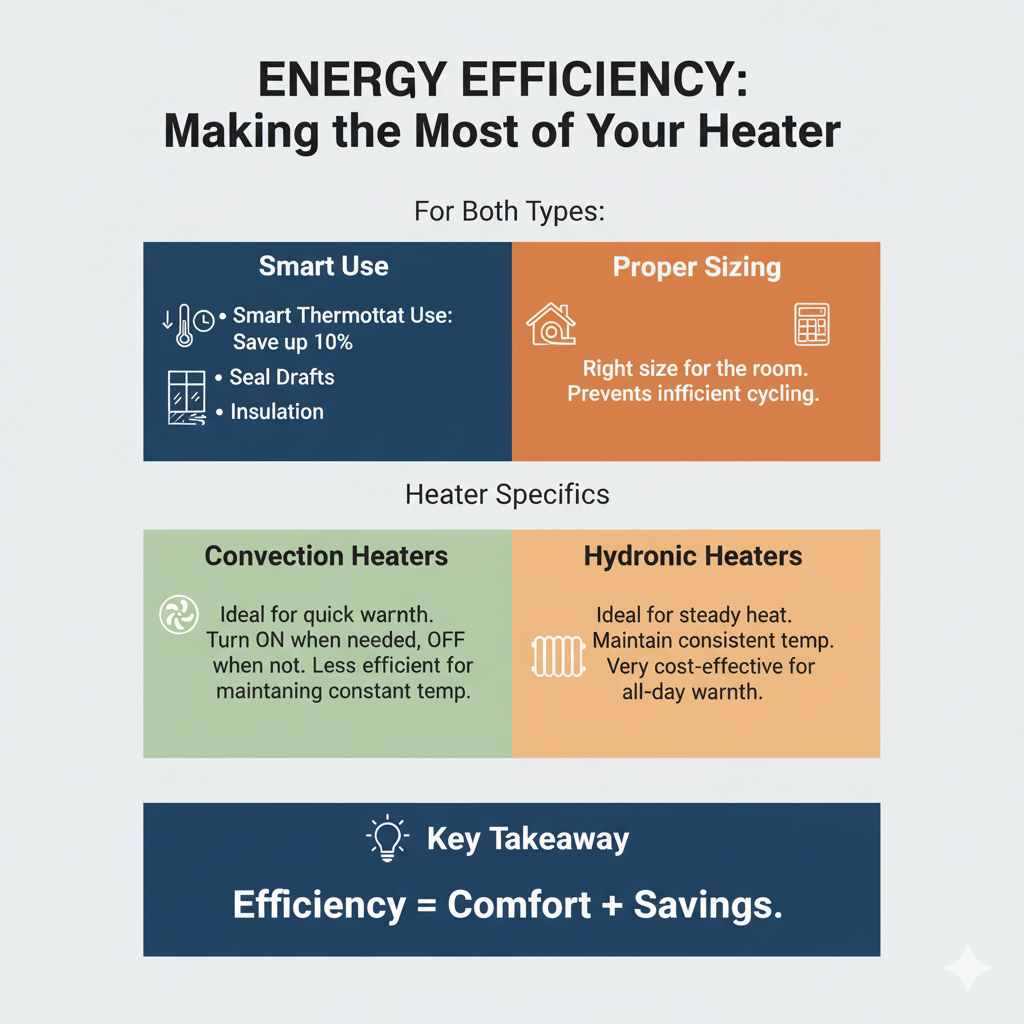
- Proper Sizing: Ensure your heater is the right size for the room. Too small, and it will run constantly without heating effectively. Too large, and it will cycle on and off too frequently inefficiently. Online calculators or a professional can help determine the right wattage.
- Smart Thermostat Use: Don’t overheat your home! Use thermostats efficiently. Lower the temperature when you’re away or asleep. Smart thermostats can even learn your habits. According to Energy Star, setting your thermostat back 7–10°F for 8 hours a day can save up to 10% a year on your heating bill.
- Seal Drafts: Prevent heat from escaping by sealing air leaks around windows, doors, and electrical outlets.
- Insulation: Good insulation in your walls and attic is crucial for retaining heat and reducing the workload on any heating system.
Specific to Convection:
Use convection heaters for their strength: quick heating. Turn them on when you need the room warmed up and turn them off or lower the setting once comfortable. They are less efficient for holding a temperature over many hours compared to hydronic models.
Specific to Hydronic:
Leverage their steady, even heat. Set them to maintain a consistent temperature. Because they hold heat well, they can be very cost-effective for keeping rooms at a comfortable baseline temperature all day or night.
Frequently Asked Questions (FAQs)
Q1: Which type of heater is better for a cold climate?
For very cold climates where consistent, reliable heat is essential, hydronic heaters often provide a more stable and comfortable warmth. However, properly sized convection heaters can also be effective, especially if used strategically in conjunction with other heating sources.
Q2: Can I use both convection and hydronic heaters in my home?
Absolutely! Many homeowners use a combination. For example, a hydronic heater might provide the consistent background warmth in main living areas, while a convection heater is used in a guest room or a basement that’s only used occasionally, offering quick heat when needed.
Q3: How often should I clean my electric baseboard heaters?
It’s a good idea to clean them at least once a year, typically before the heating season begins. Some people prefer to dust them more often, especially if you have pets or allergies. Always ensure the heater is turned off and cool before cleaning.
Q4: Are electric baseboard heaters expensive to run?
The running cost depends on several factors: the size and efficiency of the heater, the temperature you set it to, how long it runs, and your local electricity rates. Hydronic heaters can be more cost-effective for maintaining steady temperatures, while convection heaters are efficient for quick heating but might use more power if left on to maintain a room’s temperature over long periods.
Q5: Can I install an electric baseboard heater myself?
Some basic models can be installed by a homeowner who is comfortable with basic electrical wiring. However, for safety and to ensure proper function, it is highly recommended that a qualified electrician installs electric baseboard heaters. They can ensure the wiring is correct and the unit is safely connected to your electrical system.
Q6: What’s the difference between a built-in thermostat and a wall-mounted thermostat?
A built-in thermostat is part of the heater itself, controlling the temperature of the immediate area around the heater. A wall-mounted thermostat is installed on a separate wall and controls the temperature for the entire zone or room, generally offering more accurate and consistent temperature control.
Q7: How do I choose the right wattage for my room?
A common guideline for electric baseboard heaters is to use 10 watts per square foot for average insulation and 12 watts per square foot for rooms with poorer insulation or in very cold climates. Measure your room’s square footage (length x width) and multiply by the appropriate wattage. For example, a 10×12 foot room would need 120 sq ft * 10 watts/sq ft = 1200 watts. It’s always best to consult a professional for precise sizing, especially for main heating systems.
Conclusion: Your Path to a Warmer Home
Well, we’ve journeyed through the world of convection and hydronic heaters, and I hope you’re feeling much more confident about making the right choice for your home. Remember, convection heaters offer quick bursts of warmth and are great for targeted heating and smaller spaces, while hydronic heaters provide that steady, gentle, and quiet comfort perfect for living areas and bedrooms. Each has its unique strengths, and the “best” one really depends on what you need and prefer.
Think about how you use your rooms, what kind of comfort feels best to you, and what your budget allows. Don’t forget the importance of safety and efficiency – proper installation, regular cleaning, and smart thermostat use will ensure your heater keeps you warm and your bills manageable. With this knowledge, you’re well-equipped to select the perfect electric baseboard heater to make your home a cozy sanctuary. Happy heating!