Do Solar Air Heaters Work for Home Heating?
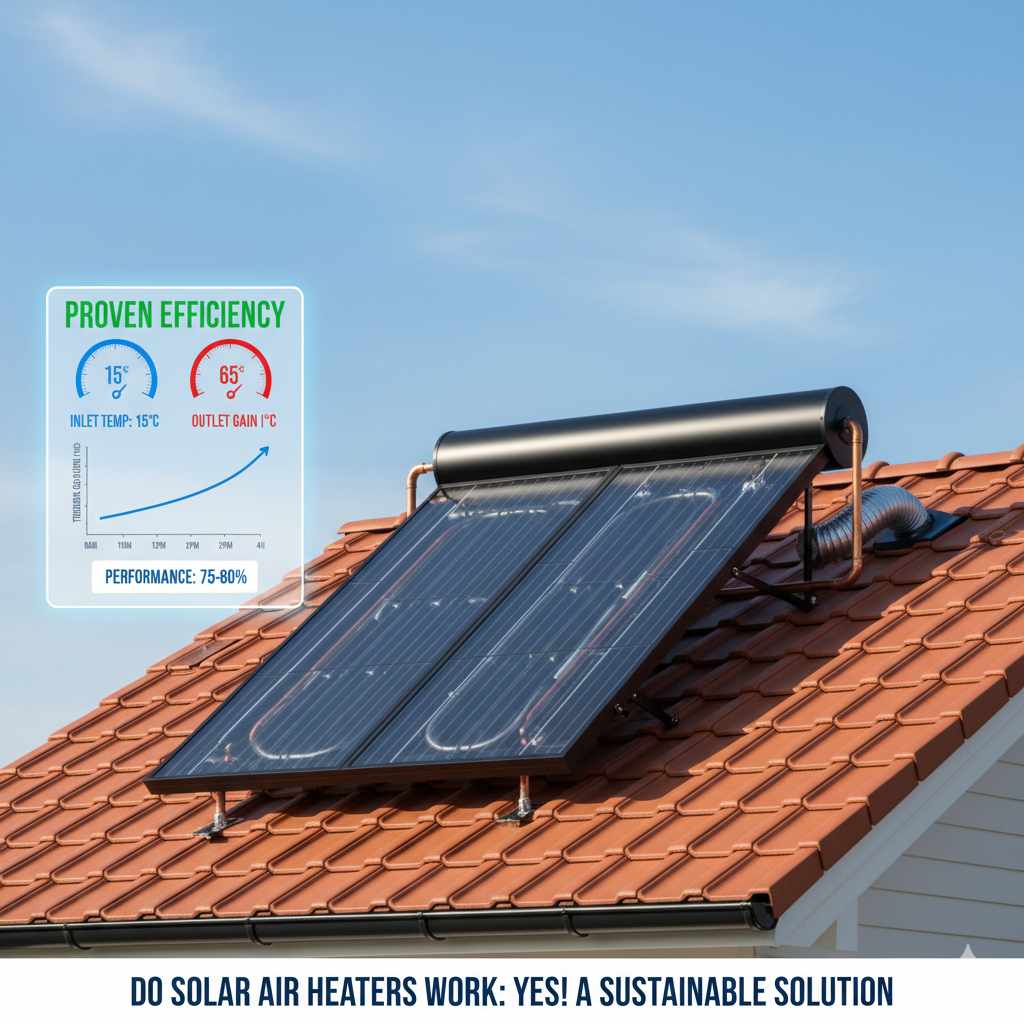
Yes, solar air heaters absolutely work and can be a highly efficient way to supplement your home’s heating needs! They capture free energy from the sun and use it to warm the air inside your home, reducing your reliance on traditional heating systems and lowering energy bills.
Are you wondering if there’s a way to make your home warmer this winter without watching your energy bills skyrocket? Many homeowners feel the same way, especially when the cold winds blow. Figuring out the best heating solution can feel complicated, but it doesn’t have to be. Solar air heaters are a fascinating option that harness the sun’s power to provide warmth. This guide will break down exactly how they work, how efficient they are, and what you need to know to see if they’re right for your home, making your comfort simple and achievable.
What Exactly is a Solar Air Heater?
Think of a solar air heater as a clever box that sits outside your home, usually mounted on a sunny wall or your roof. Its main job is to soak up the sun’s rays and use that energy to heat up the air. This warmed air is then silently blown into your home, giving your existing heating system a break and making your living space cozier. It’s a simple concept that uses the free power of the sun to add warmth. Unlike solar water heaters which heat liquids, these systems focus on heating air, making them a direct solution for making rooms feel warmer.
How Does a Solar Air Heater Work? The Basic Process
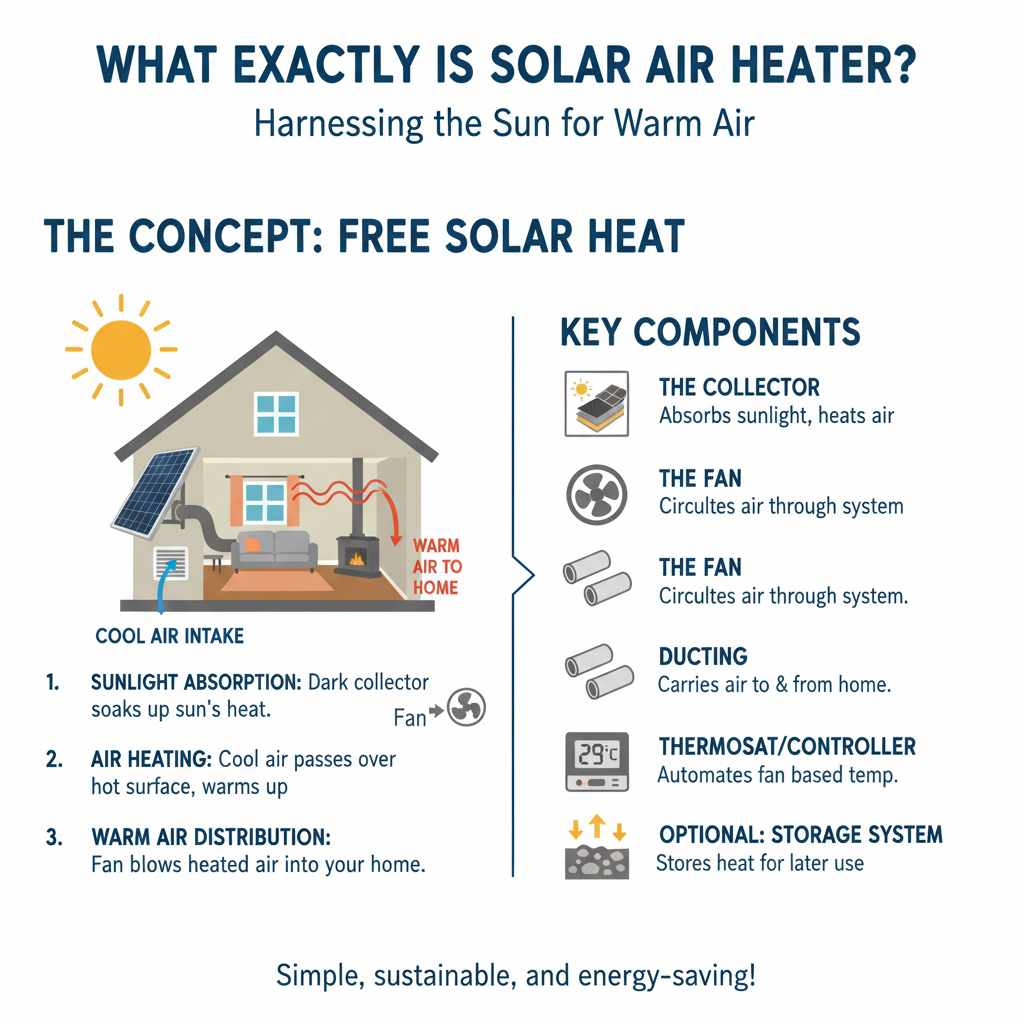
The magic of a solar air heater lies in its simplicity and clever design. Here’s the step-by-step process of how it brings the sun’s warmth right into your home:
- Sunlight Absorption: The collector, which is the heart of the system, has a dark-colored absorber plate. This dark surface is excellent at soaking up solar radiation, which is essentially heat from the sun.
- Air Heating: As sunlight hits the absorber plate, it gets hot. Cooler air from your home is drawn into the collector, usually from behind. This air then passes over or through the hot absorber plate, picking up its warmth.
- Warm Air Distribution: The pre-heated air is then ducted back into your home. Often, this can be done through existing vents or specialized vents, typically in the room you want to heat most.
- Thermostat Control: A simple thermostat or a temperature sensor manages the fan. When the air inside the collector reaches a certain temperature (often around 85-90°F or 29-32°C), the fan turns on, circulating the warm air. When the collector cools down, the fan turns off, preventing any cooler air from being blown into your home.
- Circulation Loop: This process happens in a continuous loop. Cold air goes in, gets heated by the sun, and comes back into your house as warm air, all thanks to solar power.
Key Components of a Solar Air Heater System
To understand how efficient these heaters are, it’s helpful to know the main parts that make them work:
- The Collector: This is the visible panel, usually mounted on the south-facing side of your home. It contains a dark absorber plate, insulation to keep heat in, and glazing (like glass or plastic) to let sunlight in while trapping heat.
- The Fan: This is usually a small, low-power fan that circulates air through the system. It’s what moves the heated air from the collector into your living space.
- Ducting: These are the tubes or pipes that carry the air from the collector to your home and back.
- Thermostat/Controller: This device tells the fan when to turn on and off based on the temperature in the collector and your home.
- Optional: Storage Systems: Some advanced systems might include a thermal storage unit (like rock beds or water tanks) to store heat for use during cloudy periods or at night. However, most basic DIY and commercially available units focus on direct heating during sunny hours.
Do Solar Air Heaters Actually Work? Proven Efficiency
This is the big question, and the answer is a resounding yes! Solar air heaters can be remarkably effective, especially under the right conditions. Their efficiency isn’t about how much heat they produce in absolute terms, but how much they contribute to your overall heating needs. They are designed to supplement, not entirely replace, your primary heating system in most climates.
Factors Influencing Efficiency
The real-world performance of a solar air heater depends on several key factors:
- Sunlight Availability: This is the most critical factor. On clear, sunny days, especially during cooler months when the sun is lower in the sky and heating is most needed, these systems perform best. Cloudy days mean less solar energy captured.
- System Size and Design: A larger collector area will generally capture more heat. The quality of insulation and the absorber plate’s material also play a significant role in how efficiently heat is captured and transferred.
- Installation Location: Mounting the collector on a south-facing wall or roof with no obstructions (like trees or buildings) maximizes sun exposure throughout the day.
- Climate: In regions with abundant sunshine, especially during heating seasons, solar air heaters can provide a substantial amount of free heat. They are most effective in climates that are sunny and cold, rather than uniformly warm or perpetually cloudy.
- Home Insulation: A well-insulated home will retain the heat better, making any supplemental heat from a solar air heater more impactful and longer-lasting.
Efficiency Scores and Metrics
Understanding the efficiency of solar air heaters involves looking at a few common metrics, though these are often expressed in terms of heat output rather than a strict percentage like a furnace:
- BTUs per Hour: A common way to measure output is in British Thermal Units (BTUs) per hour. A typical unglazed solar air heater (a simpler, often DIY type) might produce around 150-250 BTUs per hour per square foot of collector area on a sunny day. A more advanced, glazed system can achieve 300-500 BTUs per hour per square foot or even more.
- Average Contribution: For a standard residential system (e.g., 4 ft x 8 ft collector), it can easily provide 1,000 to 4,000 BTUs of heat per hour during peak sunlight. Over a sunny winter day, this could translate to a significant reduction in the load on your main heater, potentially saving 20-50% of your heating costs in some scenarios. Studies by organizations like the U.S. Department of Energy have shown the potential for significant energy savings from well-designed solar systems.
- Temperature Increase: Solar air collectors can often raise the temperature of the air passing through them by 40°F to 80°F (22°C to 44°C) or more, delivering noticeably warm air.
It’s important to note that these are estimates, and actual performance can vary greatly. However, the proven principle is that they efficiently convert solar energy into usable heat for your home.
Types of Solar Air Heaters
Solar air heaters come in a few variations, each with its own pros and cons:
1. Unglazed Solar Air Heaters
These are the simplest and often the most affordable. They consist of a dark metal absorber panel with fins, mounted in a box, but they don’t have a glass or plastic cover.
- Pros: Low cost, easy to build (great for DIY projects), lightweight, good performance in mild to cold sunny conditions, and very porous to allow maximum air flow.
- Cons: Less efficient in very cold or windy conditions because they lose heat more easily. Can be more susceptible to debris.
2. Glazed Solar Air Heaters
These systems have a transparent cover (glazing) over the absorber plate. This cover traps heat, making them more efficient, especially in colder temperatures.
- Pros: More efficient than unglazed models due to the greenhouse effect, better heat retention, can operate effectively in colder climates.
- Cons: Higher cost, heavier, more complex to build or install.
3. Thermosiphoning Solar Air Heaters
These systems use natural convection to circulate air – warm air rises. They are designed so that the collector is mounted below the room being heated. As air heats up in the collector, it rises naturally through ducts into the room, while cooler room air is drawn down into the collector. This means they often don’t require a fan.
- Pros: No electricity needed for the fan, very low operating costs, silent operation.
- Cons: Performance is highly dependent on design and placement. Can be bulky. Typically only heat the room they are directly connected to.
4. Integrated Solar Air Heating Systems
These are more advanced systems that might integrate with other solar technologies or your home’s HVAC system for more sophisticated control and storage of heat.
Can You DIY a Solar Air Heater?
Absolutely! Many homeowners find immense satisfaction and cost savings in building their own solar air heater. Unglazed collectors are particularly popular for DIY projects because they are simpler to construct. You’ll typically need materials like:
- Sheet metal (for the absorber plate)
- Plywood or wood for the collector box
- Insulation (like rigid foam)
- A clear cover (plexiglass or polycarbonate for glazed systems)
- Aluminum cans or other materials for airflow channels (in some designs)
- A small, low-power fan and a thermostat
- Ducting and vent materials
There are many excellent online resources and plans available, often from renewable energy groups or DIY enthusiasts. For instance, organizations like Build It Solar offer extensive, free plans and advice for solar projects.
DIY vs. Professional Installation
Choosing between a DIY and a professionally installed system depends on your budget, skills, and time:
- DIY:
- Cost: Significantly lower material costs
- Skill Level: Requires basic carpentry, some metalworking, and a willingness to follow plans
- Time: Can take a weekend or several days depending on complexity
- Customization: Can be tailored to specific needs and available materials
- Professional Installation:
- Cost: Higher, includes labor and potentially higher-quality components
- Skill Level: None required from the homeowner
- Time: Typically installed in one to two days
- Warranty: Often comes with a warranty for parts and labor
Benefits of Using Solar Air Heaters
Beyond just providing heat, solar air heaters offer a range of advantages:
- Reduced Energy Bills: By using free solar energy, you decrease your reliance on electricity or fossil fuels for heating, leading to noticeable savings.
- Environmentally Friendly: They produce heat without burning fossil fuels, reducing your carbon footprint and contributing to cleaner air.
- Simple Operation: Most systems are automatic, requiring minimal user interaction once installed.
- Low Maintenance: Once set up, they generally require very little maintenance, typically just occasional cleaning of the collector.
- Increased Home Comfort: They provide gentle, consistent warmth, especially during sunny periods, making your home more comfortable.
- Easy to Integrate: They can work alongside your existing heating system, providing supplemental heat exactly when you need it.
Are There Any Downsides?
While beneficial, it’s fair to consider potential drawbacks:
- Intermittent Heat Source: They only work when the sun is shining. They don’t produce heat at night or on very cloudy days unless paired with a storage system, which adds complexity and cost.
- Initial Cost: While DIY options are affordable, professionally installed systems can have a significant upfront cost.
- Space Requirements: Collectors need adequate, unobstructed space on a sunny wall or roof.
- Not a Complete Replacement: In most climates, they are best considered a supplementary heating solution, not a complete replacement for a primary heating system.
- Aesthetics: Some homeowners may find the visible collector on their home’s exterior unappealing.
How Much Can You Save? A Quick Comparison
To illustrate the potential impact, let’s look at how solar air heaters compare to other heating methods in terms of energy source and cost:
| Heating Method | Primary Energy Source | Potential for Free Energy | Environmental Impact | Typical Operating Cost (Relative) |
|---|---|---|---|---|
| Solar Air Heater | Sunlight | 100% | Very Low | Very Low (fan electricity) |
| Electric Heater | Electricity | 0% | Varies (depends on electricity source) | High |
| Gas Furnace | Natural Gas / Propane | 0% | Medium – High (emissions) | Medium |
| Heat Pump | Electricity | Partial (extracts heat from outside air) | Low – Medium | Low – Medium |
As you can see, the allure of 100% free energy from the sun is a major advantage. While a solar air heater might not provide all the heat your home needs, every BTU it generates is a BTU you don’t have to pay for from other sources.
Maximizing Your Solar Air Heater’s Performance
To get the most out of your solar air heater, consider these tips:
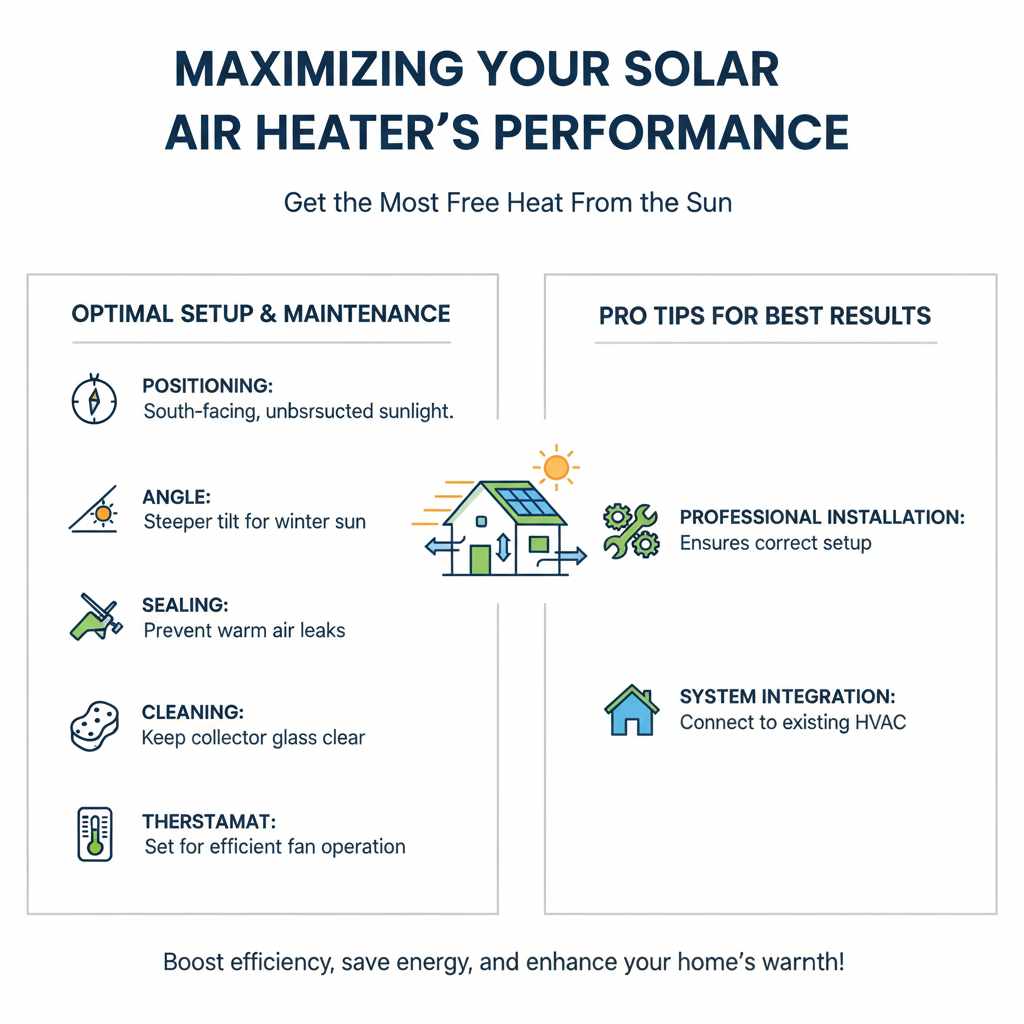
- Positioning: Ensure the collector is facing south (in the Northern Hemisphere) and has unobstructed sunlight from early morning to late afternoon.
- Angle: For winter heating, angle the collector slightly steeper than vertical to best capture the lower sun. Many commercial units have adjustable mounts.
- Sealing: Make sure the collector box and all duct connections are well-sealed to prevent warm air leaks.
- Maintenance: Clean the collector glazing periodically to remove dust and debris that can block sunlight.
- Thermostat Settings: Set your thermostat appropriately to ensure the fan only operates when beneficial.
- Integration: If you have a sophisticated HVAC system, explore how to best integrate the solar-heated air into your existing ductwork.
Frequently Asked Questions (FAQ)
Q1: How much does a solar air heater cost?
The cost varies widely. A DIY solar air heater can cost between $200-$800 for materials. Professionally installed systems can range from $3,000 to $10,000 or more, depending on size, complexity, and location.
Q2: Will a solar air heater heat my entire house?
Typically, no. Solar air heaters are best suited as a supplemental heat source. They are very effective at reducing the load on your primary heating system, especially for specific rooms or zones, but they usually cannot provide 100% of a home’s heating needs in most climates.
Q3: Do I need a permit to install a solar air heater?
This depends on your local building codes and zoning regulations. For professionally installed systems, the installer will usually handle permits. For DIY projects, it is wise to check with your local building department beforehand, especially if you are mounting it on the roof or modifying home structures.
Q4: How much heat can a solar air heater produce?
A typical residential solar air collector (around 32 sq ft) can produce from 1,000 to 4,000 BTUs per hour on a sunny day. This output is directly related to the size of the collector and the intensity of the sunlight.
Q5: Can solar air heaters be used in the summer?
Most basic solar air heaters are not designed for cooling. Some advanced systems might have a “vent” mode to exhaust hot air from the collector, but they won’t actively cool your home like an air conditioner.
Q6: What kind of maintenance is required?
Maintenance is generally minimal. Occasional cleaning of the collector’s glass or plastic cover is recommended to ensure maximum sunlight absorption. You should also periodically check the fan and ductwork for any obstructions or issues.
Q7: Do solar air heaters work on cloudy days?
They produce significantly less heat on cloudy days because there is less direct sunlight. However, some diffused sunlight can still be captured, leading to a small amount of heat generation. They perform best on clear, sunny days.