
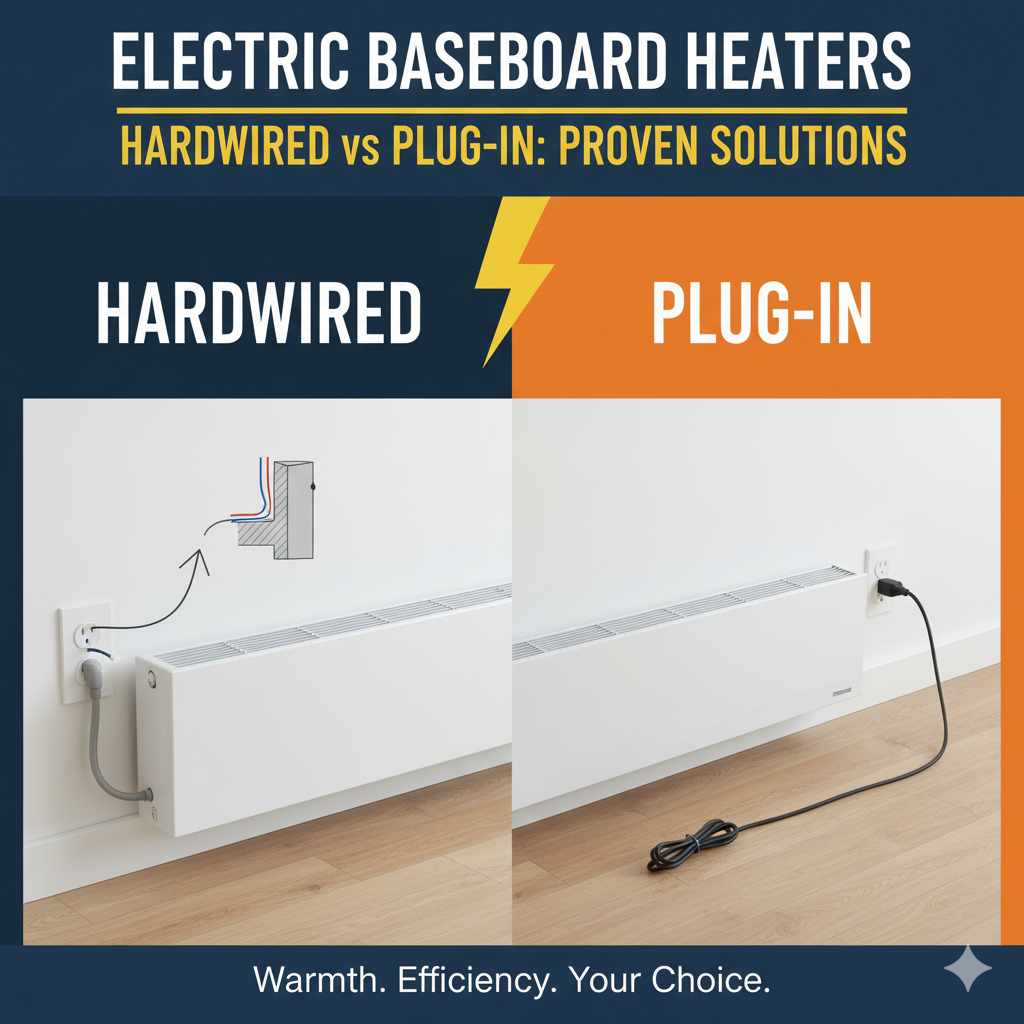
If you’re trying to decide between hardwired and plug-in electric baseboard heaters, the best choice depends on your specific needs. Hardwired heaters offer a permanent, integrated heating solution perfect for whole-room or whole-house heating and are generally more efficient, while plug-in models are excellent for supplemental heat in specific areas, offering flexibility and ease of installation for renters or temporary heating needs.
Choosing the right heater for your home can feel like a puzzle, especially when you’re looking for efficient and cozy warmth. Electric baseboard heaters are a popular choice, but the big question is: should you go for a hardwired model or a plug-in one? It’s a common point of confusion for many homeowners and renters, and getting it right means a warmer, safer, and more comfortable home without unnecessary hassle. Don’t worry, I’m here to help you understand the differences, so you can make the best decision for your space and peace of mind.
In this guide, we’ll break down everything you need to know about hardwired versus plug-in electric baseboard heaters. We’ll explore what makes each type tick, their pros and cons, and when each one is the perfect fit. By the end, you’ll feel confident choosing the right heating solution to keep your home toasty all season long.
Understanding Electric Baseboard Heaters
Electric baseboard heaters work by drawing in cool air, heating it with an electric element inside, and then releasing the warm air back into the room. They are a type of direct-acting electric space heating, meaning each heater directly converts electricity into heat without needing a central furnace or boiler. This makes them a straightforward way to add heat to a space or supplement an existing heating system.
The main difference between the two types we’ll be discussing comes down to how they are connected to your home’s electrical system. One is a permanent installation, while the other offers more portability and simpler setup. Let’s dive into each one.
Hardwired Electric Baseboard Heaters: The Permanent Solution
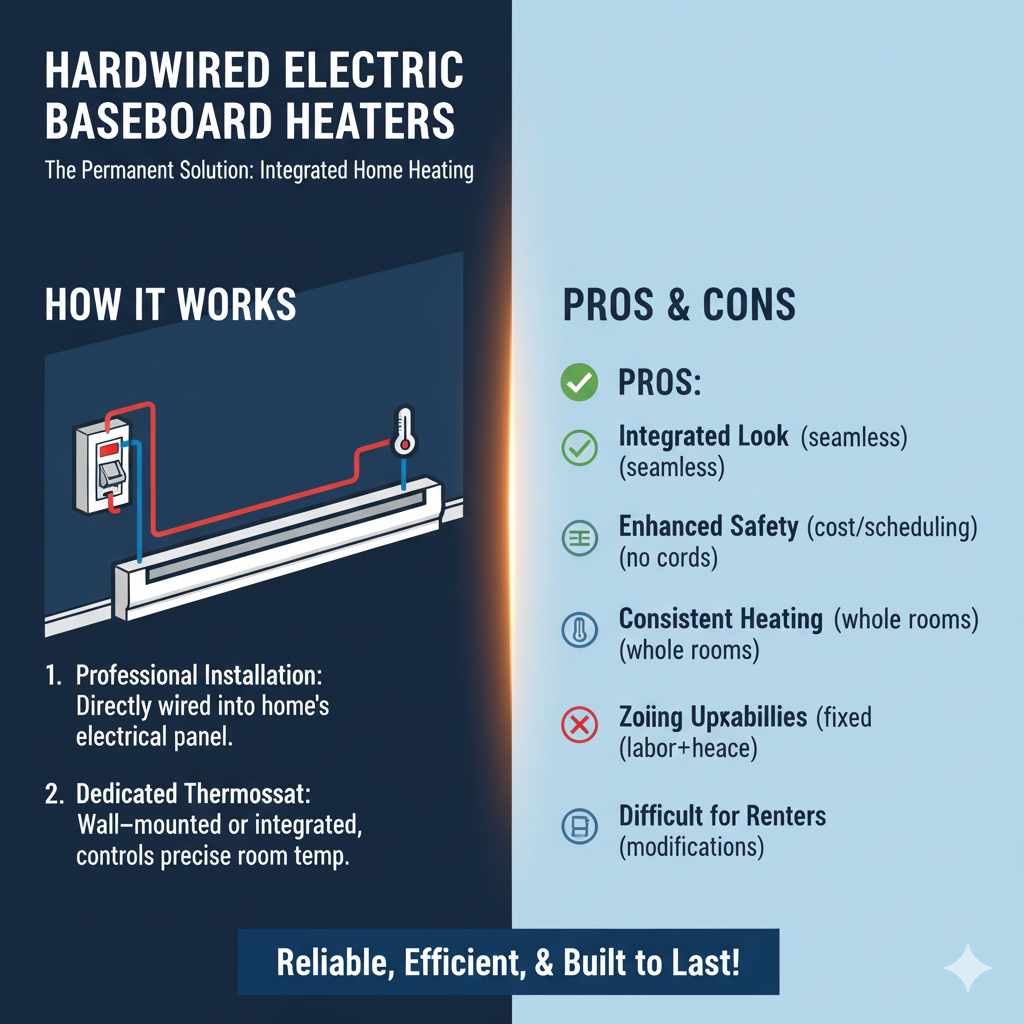
Hardwired electric baseboard heaters are designed for a permanent installation. This means they are directly connected to your home’s electrical wiring by a qualified electrician. They don’t have a visible plug and cord; instead, they are wired directly into a dedicated circuit in your electrical panel. This type of installation is typically used when you want to heat an entire room or even a whole house using baseboard heaters as the primary or a significant supplemental heat source.
Because they require professional installation and are a permanent fixture, hardwired heaters are often chosen for new constructions, major renovations, or for homeowners who want a clean, integrated look and reliable heating for specific zones.
How Hardwired Baseboard Heaters Work
The installation process involves running electrical cables from your main electrical panel to the exact location where the baseboard heater will be installed. This often involves removing a section of the heater’s casing to access the wire connections, where the power supply wires are connected directly to the heater’s internal terminals. This secure connection ensures a stable and continuous power supply.
These heaters are usually controlled by a dedicated thermostat installed on the wall nearby, or sometimes, they have an integrated thermostat within the unit itself. The thermostat is also wired into the same circuit, allowing it to monitor the room’s temperature and turn the heater on or off as needed to maintain the desired heat level. This direct hookup to the electrical system allows for precise temperature control and efficient energy usage for the entire space it’s meant to warm.
Pros of Hardwired Electric Baseboard Heaters
Opting for hardwired baseboard heaters brings several advantages, making them a sound choice for many homeowners looking for consistent and integrated warmth.
- Permanent and Integrated Look: They blend seamlessly with your home’s decor as they are affixed to the wall and don’t have visible cords. This gives a cleaner, more aesthetically pleasing finish.
- Enhanced Safety: Direct wiring reduces the risk of tripping over cords or loose connections. The wiring is typically done by a professional, ensuring it meets safety codes and is properly protected. You can learn more about electrical safety from resources like the U.S. Consumer Product Safety Commission (CPSC).
- Consistent Heating: Designed for longer runs and greater heat output, they are ideal for heating entire rooms or larger spaces effectively.
- Potentially More Energy Efficient: When installed on appropriate circuits and controlled by accurate thermostats, they an provide efficient heat distribution for the area they are designed to serve.
- Zoning Capabilities: Multiple hardwired units can be installed and controlled independently, allowing for zone heating. This means you can heat only the rooms you are using, saving energy.
- No Ongoing Maintenance for Cords: Since there are no plugs or cords, you don’t have to worry about wear and tear on these components over time.
Cons of Hardwired Electric Baseboard Heaters
While hardwired heaters offer many benefits, there are also drawbacks to consider before committing to this type of installation.
- Professional Installation Required: This is the biggest hurdle. You’ll need to hire a qualified electrician, which adds to the upfront cost and requires scheduling.
- Higher Upfront Cost: The cost of the heaters plus the electrician’s labor can make the initial investment more significant than plug-in models.
- Not Portable: Once installed, hardwired heaters are fixed in place. If you want to change the room layout or move the heat source, you cannot easily move the heater.
- Difficult for Renters: Permanent installation is generally not an option for renters, as it requires significant modifications to the property.
- Potential for Over-reliance on Electricity: If electricity prices are high in your area, running these heaters as a primary heat source can become expensive.
Plug-In Electric Baseboard Heaters: The Flexible Option
Plug-in electric baseboard heaters are much simpler. As the name suggests, they come with a power cord and a standard plug that you simply insert into a wall outlet. This makes them incredibly easy to set up and use right out of the box, requiring no special wiring or professional installation. They are perfect for adding supplemental heat to a specific area, a single room that tends to be cold, or for temporary heating needs.
If you’re a renter, or if you’re looking for a heating solution that you can easily move around your home or take with you when you move, plug-in models are a fantastic choice.
How Plug-In Baseboard Heaters Work
The operation is very straightforward. The heater is an appliance that plugs directly into a standard electrical outlet. Inside the unit is an electric heating element that warms up when electricity flows through it. A convection fan or natural air movement draws cooler room air in, passes it over the hot element, and expels the warmed air back into the room.
Most plug-in baseboard heaters have an integrated thermostat. You simply set your desired temperature on a dial or digital display. The internal thermostat then controls the heating element, cycling it on and off to maintain that temperature. Some models also have safety features like tip-over protection or overheat shut-off.
Pros of Plug-In Electric Baseboard Heaters
The appeal of plug-in heaters lies in their convenience and adaptability. Here are the key benefits:
- Easy Installation: No electrician needed! Just plug them into a standard wall outlet and they’re ready to go. This saves money and hassle.
- Portability: You can easily move them from room to room as needed. If one area of your house is colder, just relocate the heater.
- Ideal for Renters: Since no permanent modifications are needed, they are a perfect heating solution for apartments or rental homes.
- Lower Upfront Cost: Generally, plug-in models are less expensive to purchase than their hardwired counterparts.
- Instant Heat: You can quickly add warmth to a specific spot, making it feel cozier faster.
- Supplemental Heating: They are great for boosting the heat in a room that your main heating system doesn’t quite reach or for rooms you use occasionally, like a home office or guest room.
Cons of Plug-In Electric Baseboard Heaters
Despite their convenience, plug-in models do have some considerations to keep in mind:
- Limited Heat Output for Large Spaces: Generally, plug-in models are designed for smaller areas or supplemental heat. They may struggle to adequately heat an entire large room or a whole house.
- Cord and Outlet Limitations: You’re limited by the length of the power cord and the location of available outlets. Cords can also be a tripping hazard.
- Potential for Overloading Circuits: Plugging in multiple high-wattage appliances into a single circuit can risk tripping breakers. It’s important to consider your home’s electrical capacity. You can find guidance on household electrical circuits and safety on resources like NFPA’s Electrical Safety page.
- Less Integrated Appearance: The visible cord and the unit placement might not be as aesthetically pleasing as hardwired units for some homeowners.
- Reliance on Wall Outlets: If a particular outlet is on a circuit with many other devices, the heater’s performance might be affected or cause issues.
Hardwired vs. Plug-In: Key Differences at a Glance
To make your decision even clearer, let’s summarize the main distinctions between hardwired and plug-in electric baseboard heaters in a table. This comparison should help you weigh the options based on your priorities for installation, cost, and functionality.
| FeatureHardwired Electric Baseboard HeatersPlug-In Electric Baseboard Heaters | ||
|---|---|---|
| Installation | Requires professional electrician for direct wiring to electrical panel. Permanent. | Plugs into standard wall outlet. No special installation needed. Portable. |
| Cost (Upfront) | Higher: Heater cost + electrician fees. | Lower: Heater cost only. |
| Portability | None. Fixed installation. | High. Easily movable between rooms. |
| Ideal Use Case | Whole room heating, primary heat source, new construction, renovations, permanent installations. | Supplemental heat, specific cold spots, renters, temporary heating, easy-to-manage heat. |
| Aesthetics | Clean, integrated, hidden wires. | Visible cord, may not blend as well with decor. |
| Safety Considerations | Professional wiring reduces electrical hazards; permanent fixtures. | Tripping hazard from cords, risk of overloading outlets if not managed properly. |
| Thermostat Control | Typically wall-mounted or built-in, wired to heater and circuit. | Usually integrated into the unit. |
When to Choose Which Type
Making the final decision involves understanding your specific home heating needs and circumstances. Here’s a breakdown of scenarios that might point you towards one type over the other.
Choose Hardwired if:
- You are building a new home or undertaking a major renovation: This is the ideal time to integrate permanent heating solutions.
- You want to heat an entire room or an addition as a primary source: Hardwired units are better suited for providing substantial heat to larger areas.
- You desire a clean, built-in look: The absence of cords and plugs offers a more streamlined aesthetic.
- Safety is your absolute top priority, and budget allows for professional installation: Proper hardwiring by an electrician offers robust safety.
- You are looking for precise zone heating control for multiple rooms: Setting up dedicated circuits and thermostats for different areas gives you excellent control.
Choose Plug-In if:
- You are a renter and cannot make permanent modifications: Plug-in heaters are the go-to solution.
- You need supplemental heat for a specific cold spot: Like a drafty corner of a living room or a home office.
- You need temporary heating: Perhaps for a guest room that’s only used occasionally or during a particularly cold spell.
- You are on a tighter budget for initial setup: The lower upfront cost is a significant advantage.
- You value flexibility and the ability to move your heat source: Being able to relocate the heater is a huge benefit.
- You have readily available and appropriately rated electrical outlets: Ensure the outlet can handle the heater’s wattage without overloading the circuit.
Installation and Safety Tips for Both Types
Whether you choose hardwired or plug-in, safety and proper installation are paramount. Here are some crucial tips.
For Hardwired Heaters:
Professional Installation is not just recommended; it’s essential. An electrician will:
- Assess your electrical panel: Ensure you have sufficient capacity and the correct breaker types.
- Run dedicated circuits: Most baseboard heaters require their own circuit to prevent overloading. The National Electrical Code provides guidelines for residential electrical installations.
- Properly size wires: Use the correct gauge wire for the heater’s wattage and distance from the panel.
- Make secure connections: Ensure all wiring is done to code, minimizing fire hazards.
- Install thermostats correctly: Ensuring accurate temperature readings and control.
Placement: Install heaters along exterior walls under windows. This helps to counteract cold drafts. Ensure there is adequate clearance around and above the heater as per the manufacturer’s instructions—typically a few inches on the sides and above, and often more clearance below and in front of the unit.
For Plug-In Heaters:
Outlet Check:
- Dedicated Outlet: Ideally, plug your baseboard heater into an outlet that is not shared with other high-draw appliances (like microwaves, toasters, or hair dryers) on the same circuit.
- Outlet Condition: Ensure the outlet is in good condition, without cracks or signs of damage. Use a properly grounded outlet. For advice on outlet types and wiring, consult resources like Electrical Safety Foundation International (ESFI).
- Wattage Consideration: Check the heater’s wattage and compare it to the outlet and circuit’s capacity. A 15-amp circuit can typically handle about 1800 watts, while a 20-amp circuit can handle about 2400 watts. Many baseboard heaters are 1500 watts or more, so they might need their own circuit, especially if they are hardwired.
Cord Management:
- Avoid Extension Cords: Most manufacturers advise against using extension cords, as they can overheat and pose a fire risk. If an extension cord is absolutely necessary, ensure it’s heavy-duty and rated for the heater’s wattage.
- Keep Cords Clear: Ensure the cord is not pinched, frayed, or running under carpets or heavy furniture where it can be damaged or overheat.
Placement & Clearance:
- Similar to Hardwired: Place them along exterior walls, under windows if possible.
- Maintain Clearances: Respect the manufacturer’s recommended clearances for airflow and safety, typically at least 6-12 inches around the unit. Keep flammable materials like curtains or furniture away from the heater.
Thermostat and Settings:
- Understand Your Thermostat: Familiarize yourself with how to set the temperature accurately.
- Avoid Overheating: Don’t set the thermostat too high continuously if not needed; this wastes energy.
General Safety for Both:
- Never Block Airflow: Ensure the fins and vents are clear.
- Regular Inspection: Periodically check for any signs of damage to the unit or cords.
- Supervise Children and Pets: Keep them at a safe distance to prevent burns or accidental damage.
- Turn Off When Away: Consider turning off heaters when not in use for extended periods, especially if leaving the house for days.
Energy Efficiency Considerations
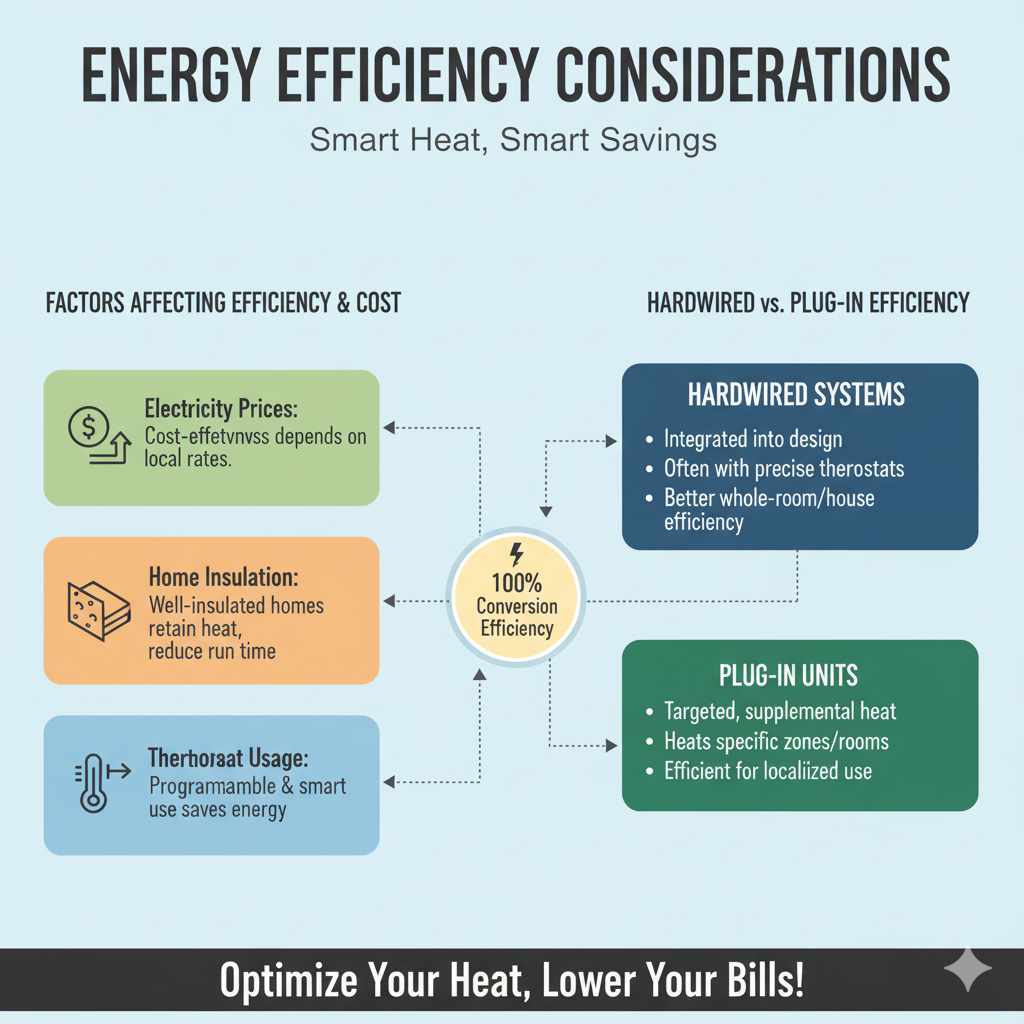
When thinking about electric baseboard heaters, energy efficiency is a key concern for many homeowners, especially given the cost of electricity. It’s a common misconception that all electric heating is inefficient. While direct electric resistance heating (like baseboard heaters) has an efficiency rating of 100% (meaning all the electricity consumed is converted to heat), the cost efficiency depends heavily on factors like electricity prices, insulation, and how the heaters are used.
Factors Affecting Efficiency and Cost:
- Electricity Prices: This is arguably the biggest factor. In areas with low electricity costs, electric baseboard heaters can be a cost-effective solution. Where electricity is expensive, they may be less economical than natural gas or other heating sources.
- Home Insulation: A well-insulated home will retain heat much better, meaning your heaters won’t have to run as often or as long to maintain a comfortable temperature. This dramatically impacts energy consumption.
- Thermostat Usage: Precisely controlling your thermostat is crucial. Using programmable thermostats (more common with hardwired systems) or simply adjusting the set point on plug-in models when you’re not home or sleeping can save significant energy.
- Zoning: As mentioned, both types can be used for zoning. Heating only the areas you use most can drastically reduce overall energy bills compared to heating the entire house to a high temperature.
- Heater Wattage: Higher wattage heaters produce more heat but also consume more electricity. Choosing the right size for the space is important for efficiency and comfort.
Hardwired vs. Plug-In Efficiency: In terms of raw energy conversion, both are 100% efficient. However, hardwired systems, when installed correctly with good quality thermostats and utilized for whole-room or whole-house heating, can sometimes offer better system efficiency because they are integrated into the building’s design for optimal heat distribution. Plug-in units are more about targeted, supplemental heat, so their efficiency lies in warming only what you need, when you need it, without heating unoccupied spaces.
For detailed information on energy-efficient heating, the U.S. Department of Energy (Energy Saver) offers excellent advice and resources.
Frequently Asked Questions (FAQ)
Here are some common questions homeowners and renters have about electric baseboard heaters:
Q1: Can I use a plug-in baseboard heater to heat an entire room?
A1: While plug-in heaters are great for supplemental heat or small rooms, they may struggle to adequately heat a large room as the primary heat source, especially in very cold climates. For whole-room heating, hardwired units are generally more powerful and suitable.
Q2: Is it safe to leave electric baseboard heaters on all the time?
A2: Modern electric baseboard heaters are designed with safety features and can be left on. However, for energy savings and to prevent unnecessary wear, it’s recommended to set back the thermostat when away from home or sleeping. Always follow the manufacturer’s guidelines and ensure good ventilation and clearance.
Q3: How much does it cost to install hardwired electric baseboard heaters?
A3: The cost varies significantly based on your location, the complexity of the electrical work, the number of heaters, and the electrician’s rates. Expect to pay anywhere from a few hundred dollars to over a thousand dollars for professional installation of multiple units, in addition to the cost of the heaters themselves.
Q4: Can I replace an existing hardwired baseboard heater with a plug-in model?
A4: Yes, in many cases. If the existing wiring was for a dedicated heater circuit, an electrician might be able to convert it to a standard outlet. However, this depends on the circuit’s amperage and the room’s electrical layout. It’s best to consult an electrician.
Q5: What maintenance do electric baseboard heaters require?
A5: For both types, regular cleaning is key! Dust and debris can accumulate on the fins and inside the heater, reducing efficiency and potentially causing odor or smoke. Vacuum the fins at least once a year, or more often if you have pets. For hardwired units, annual checks by an electrician can ensure wiring remains safe.
Q6: Are electric baseboard heaters expensive to run?
A6: This depends heavily on your local electricity rates and how you use the heaters. While they convert 100% of electricity to heat, electricity can be more expensive per unit of heat than other fuel sources in some regions. Using them efficiently (e.g., zoning, proper thermostat settings, good insulation) is crucial for managing running costs.
Q7: Do I need a separate thermostat for each hardwired baseboard heater?
A7: Not necessarily. You can have one thermostat control multiple heaters on the same circuit, but this means they will all turn on and off together. For more precise zone control, installing individual thermostats for each heater or zone is common and more efficient.
Choosing the Right Heater for Your Home
Deciding between hardwired and plug-in electric baseboard heaters is a significant step toward ensuring your home is comfortably warm. We’ve explored the core differences: hardwired models offering a permanent, integrated, and often more robust heating solution for entire spaces, requiring professional installation and presenting a cleaner aesthetic. On the other hand, plug-in units provide unparalleled flexibility, ease of use, and affordability, making them perfect for supplemental heating needs, renters, or those who value portability.
Think about your primary goals. Are you looking for a long-term, whole-house heating strategy, or do you simply need to banish a cold spot in your favorite room? Are you a homeowner ready for an upgrade, or a renter seeking a temporary comfort solution? Answering these questions will naturally guide you toward the type that best fits your lifestyle and home.
By carefully considering the installation requirements, upfront costs, long-term energy usage, and your specific needs for flexibility and aesthetics, you can confidently select the electric baseboard heater that will provide reliable warmth and comfort for years to come. Remember, proper installation, safe usage, and mindful operation are key to maximizing both the performance and lifespan of your chosen heating solution.