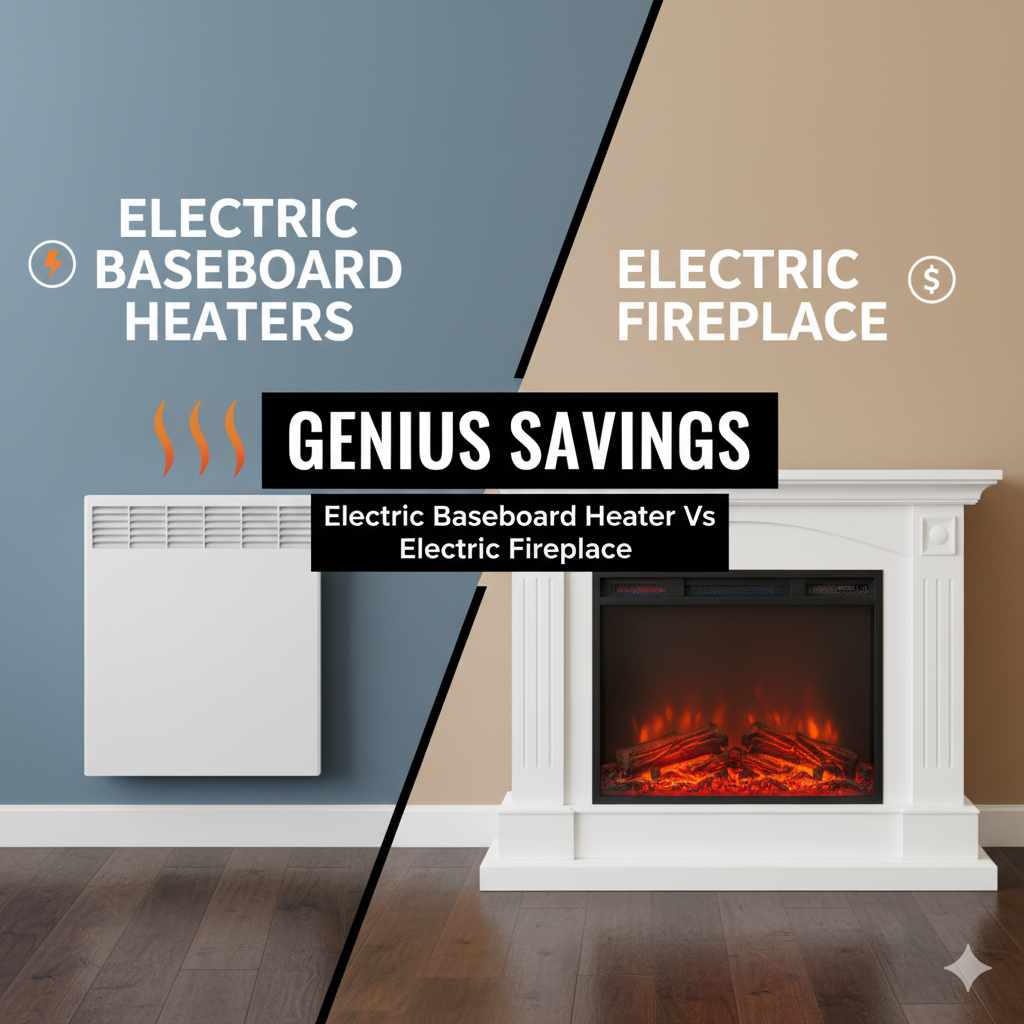
Electric Baseboard Heaters Vs Electric Fireplace: Genius Savings
When comparing electric baseboard heaters versus electric fireplaces for smart energy savings, electric baseboard heaters often win for consistent, room-by-room heating efficiency when used as a primary heat source. Electric fireplaces provide ambiance and supplemental heat, but are typically less economical for whole-home heating.
Keeping your home warm and cozy doesn’t have to be a puzzle. Many of us wonder about the best way to heat our spaces, especially when looking for options that are both effective and kind to our wallets. Are you trying to figure out if electric baseboard heaters or electric fireplaces are the way to go for saving money and staying toasty? It’s a common question, and the answer can make a big difference in your comfort and your energy bills. Don’t worry, we’ll break it down simply, step-by-step, so you can feel confident in your choice. Get ready to discover which option offers genius savings for your home!
Understanding Your Heating Needs: The First Step to Savings
Before we dive into comparing these two popular electric heating options, let’s think about what you actually need your heater to do. Are you looking to warm up a small chilly room, or do you need to heat your entire house? Understanding this will guide us toward the most energy-efficient solution. Think about the spaces you use most and the kind of warmth you’re after. This simple step is the foundation for making smart choices that lead to real savings.
Electric Baseboard Heaters: Consistent Warmth, Efficient Control
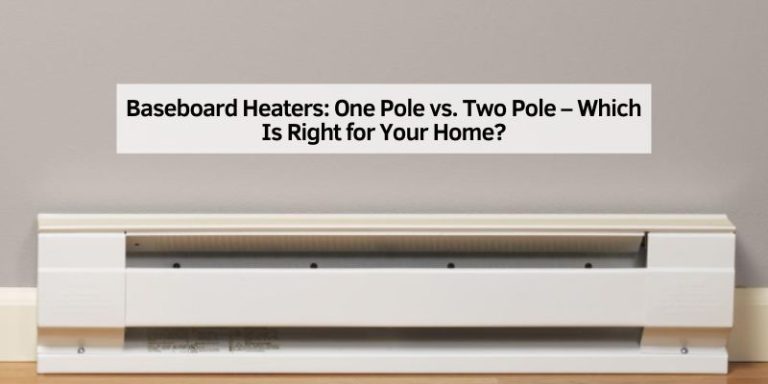
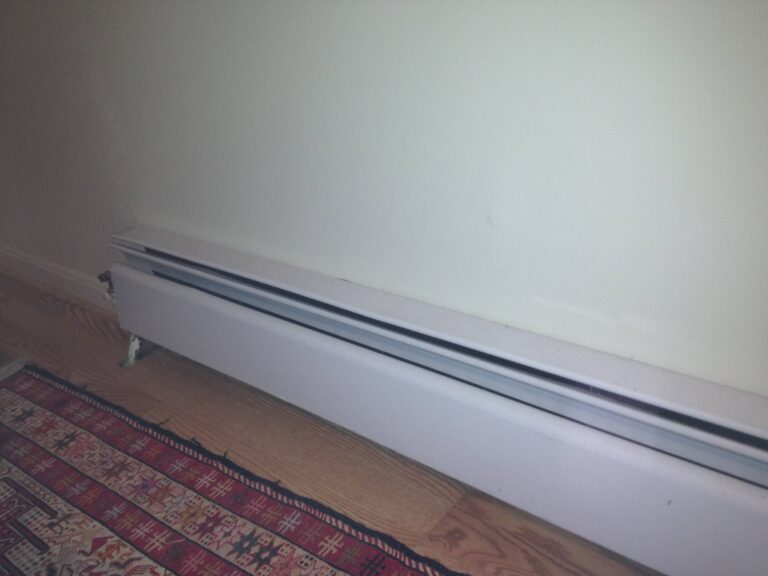
Electric baseboard heaters are a common sight in many homes, especially those without central heating systems. They are designed to provide consistent, even heat directly into a room. Their primary advantage lies in their ability to heat specific zones, meaning you can heat only the rooms you’re using, which can lead to significant energy savings.
How Electric Baseboard Heaters Work
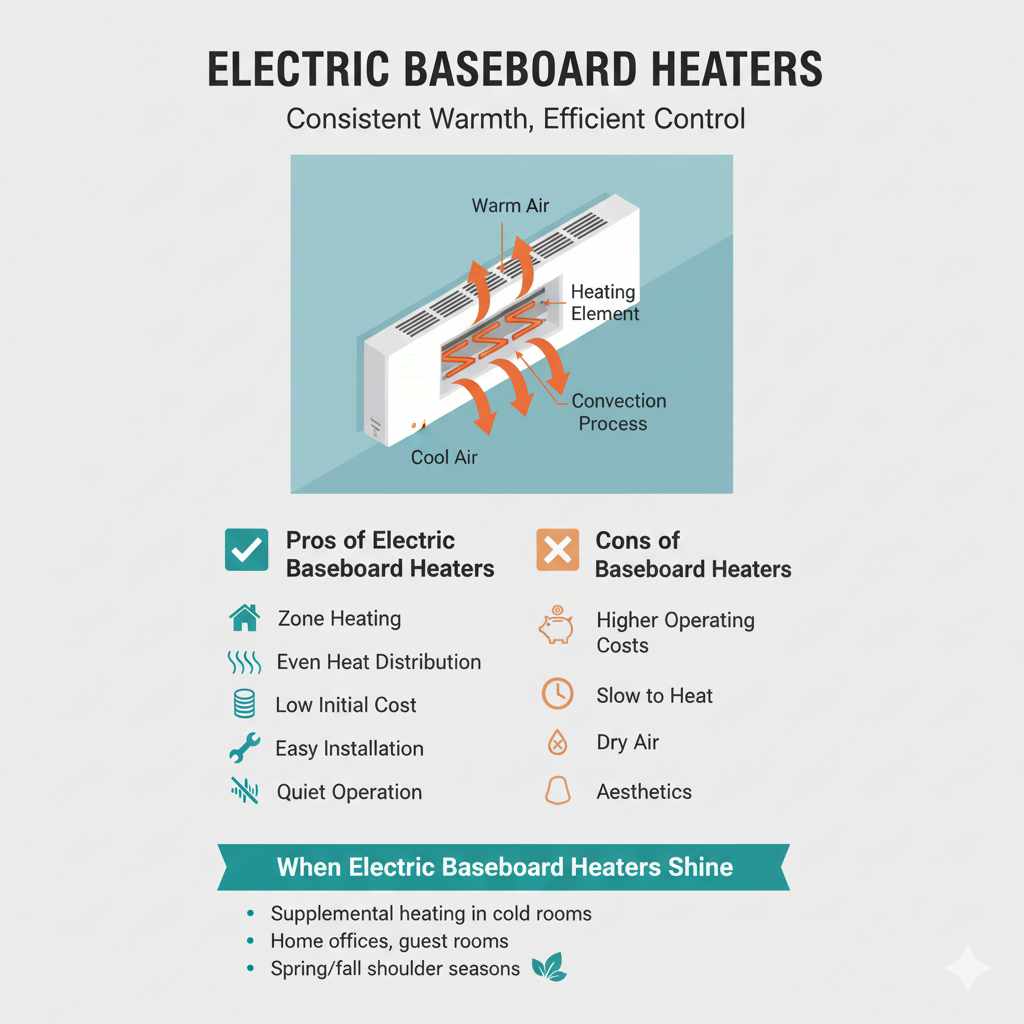
These heaters work by drawing in cool air from the room, passing it over a heating element, and then releasing the warmed air back into the room. This convection process creates a gentle, steady flow of heat. They typically mount along the base of your walls, beneath windows, leveraging natural air currents.
The heating element inside is usually a resistive wire. When electricity flows through it, it encounters resistance, which generates heat. This heat is then transferred to the metal fins of the heater, which in turn warm the air that passes through them. Many electric baseboard heaters come with built-in thermostats, allowing you to set a specific temperature for each room. This individual control is key to their energy efficiency.
Pros of Electric Baseboard Heaters
- Zone Heating: You can control the temperature in individual rooms, so you’re not wasting energy heating unoccupied spaces.
- Even Heat Distribution: They provide consistent, comfortable warmth throughout the room.
- Low Initial Cost: Compared to some other heating systems, the purchase price is often more affordable.
- Easy Installation: For most DIY-savvy homeowners, installation is straightforward, often requiring basic electrical knowledge.
- Quiet Operation: They are virtually silent, providing heat without adding noise.
- Safer Surfaces: Designed with cooler surface temperatures compared to older models, reducing burn risks, especially important for families with children or pets.
Cons of Electric Baseboard Heaters
- Higher Operating Costs: Electricity is generally more expensive than natural gas, so running them as a sole heat source for a large area can increase electricity bills.
- Can be Slow to Heat: They take time to warm up a room, as they rely on convection to circulate air.
- Potential for Dry Air: Like many electric heaters, they can sometimes contribute to drier indoor air.
- Aesthetics: Some people find their appearance utilitarian and not very decorative.
When Electric Baseboard Heaters Shine
- For supplemental heating in rooms that are consistently cooler than the rest of the house.
- In spaces where you can precisely control usage, like home offices or guest rooms that are only used occasionally.
- As an affordable primary heating solution for smaller homes or apartments where individual room control offers maximum savings.
- During spring and fall shoulder seasons when only a little heat is needed in specific areas.
Electric Fireplaces: Ambiance with Supplemental Heat
Electric fireplaces have become incredibly popular, not just for the warmth they provide but also for the cozy ambiance they create. They offer a beautiful visual of dancing flames without the mess, smell, or maintenance of a real fire. While they can add warmth to a room, their primary function is often decorative.
How Electric Fireplaces Work
An electric fireplace typically consists of a firebox that houses realistic-looking LED flames, logs, and a heater. The flames are usually created using LED lights and mirrors or specialized screens that create a flickering effect. The heating component is an electric resistance heater, similar to those found in portable space heaters, often with a fan to help distribute the warm air.
Many electric fireplaces offer adjustable flame settings (brightness, color, speed) and independent flame-only modes, meaning you can enjoy the visual appeal even when you don’t need heat. The heater function usually has a thermostat and multiple heat settings. They are designed to provide supplemental heat to a specific room, making it feel cozier faster than a baseboard heater might.
Pros of Electric Fireplaces
- Ambiance and Aesthetics: The biggest draw is the realistic flame effect, adding charm and coziness to any room.
- Instant Heat: The fan-forced heater can quickly warm up a smaller or medium-sized room.
- Easy Installation: Most are plug-and-play, requiring no special wiring. Some wall-mounted or insert models might need mounting.
- No Venting Required: Unlike gas or wood fireplaces, they don’t need chimneys or vents.
- Flame-Only Mode: Enjoy the visual appeal year-round without using the heater.
- Thermostat Control: Most units come with adjustable thermostats and timers.
Cons of Electric Fireplaces
- Higher Energy Consumption for Heat: When using the heater function continuously, they can be less energy-efficient than baseboard heaters for consistent room heating due to the fan and wattage.
- Limited Heating Capacity: They are best suited for supplemental heat in one room, not for heating an entire house.
- Higher Initial Cost: Especially for larger or more elaborate units, the upfront investment can be significant.
- Fan Noise: While generally quiet, the fan used to circulate heat can sometimes be noticeable.
- Surface Temperature: The glass front can get hot, posing a potential safety concern for households with very young children or curious pets.
When Electric Fireplaces Shine
- As a decorative focal point that also provides supplemental warmth in a living room or bedroom.
- For quick bursts of heat to take the chill off a specific area.
- When you want the visual appeal of a fireplace without the hassle of a real one.
- As a heating solution for rentals where permanent installations are not allowed (most are plug-in).
Electric Baseboard Heaters vs. Electric Fireplace: A Direct Comparison for Savings
When we put electric baseboard heaters and electric fireplaces head-to-head on the topic of “genius savings,” it’s important to consider their primary roles. For consistent, efficient, and cost-controlled heating of individual rooms or an entire home, electric baseboard heaters generally have the edge. Electric fireplaces are fantastic for adding warmth and crucial to their appeal, but their energy use for primary heating can be higher.
Energy Efficiency Breakdown
Both types of heaters convert electrical energy into heat at nearly 100% efficiency at the point of use (meaning all the electricity they consume becomes heat). The difference in savings comes down to how that heat is used and controlled.
- Electric Baseboard Heaters: Their strength is granular control. A thermostat in each room allows you to set precise temperatures. If you’re not using a room, you can turn the heat down or off completely. This prevents wasted energy. The convection method also distributes heat evenly throughout the space, providing comfort without needing excessive output.
- Electric Fireplaces: While they have thermostats, their primary function is often supplemental and aesthetic. The built-in heaters are often designed to quickly warm a single zone. If used continuously to maintain a whole room’s temperature, especially a larger one, they can consume more electricity than a carefully managed baseboard heater system. The fan-forced nature can also lead to quicker heat loss if the room isn’t well-insulated.
Cost of Operation: What You Can Expect
The cost to operate any electric heater is primarily determined by two factors: the wattage of the heater and the price of electricity in your area (cents per kilowatt-hour, or kWh). While electricity costs vary, understanding the wattage can give you a good estimate.
According to the U.S. Department of Energy, electric resistance heating (which both types use) is typically more expensive per unit of heat than other fuel sources like natural gas. However, when comparing electric options:
- Electric Baseboard Heaters: Often have wattages ranging from 500 to 2000 watts. For example, a 1000-watt heater running for 3 hours would use 3 kWh of electricity. If your electricity costs $0.15 per kWh, that’s $0.45 for 3 hours of heat. The savings come from only running them when and where needed.
- Electric Fireplaces: Heater wattages can be similar, often around 1000-1500 watts. However, they also use energy for their visual effects, though this is usually minimal. The key is that they are designed for supplemental heat. If you were to rely on a 1500-watt fireplace heater to keep a room consistently warm for many hours, it could be more costly than a baseboard heater with a more precise thermostat that cycles less often.
Installation Expenses: Where the Initial Investment Lies
This is another area where significant differences can be found, impacting your overall “genius savings” journey.
Electric Baseboard Heaters Installation
While some baseboard heaters are plug-in models, many are hardwired. Hardwiring requires connecting them directly to your home’s electrical system. This can involve running new circuits, which might require a qualified electrician. The cost can vary greatly depending on your current electrical setup and the complexity of the installation. For professional installation, you could be looking at anywhere from a few hundred to over a thousand dollars, depending on the number of units and the labor costs in your area. However, if your home already has suitable wiring, the installation cost could be minimal or even a DIY project for those comfortable with electrical work.
Electric Fireplaces Installation
The vast majority of electric fireplaces are designed for extremely simple installation, often just requiring assembly and plugging into a standard wall outlet. Wall-mounted units might involve drilling into studs and mounting brackets, which is generally straightforward. Therefore, the installation cost is typically very low, often just the cost of the unit itself. This makes them an attractive option for renters or those on a tighter upfront budget.
Tip: For homes that need more extensive heating upgrades, consider looking into available energy efficiency rebates or tax credits from your local utility company or government. For example, ENERGY STAR often has resources for efficient home upgrades.
Making the Smart Choice: Which Heater Fits Your Savings Plan?
Choosing between electric baseboard heaters and electric fireplaces for maximum savings really depends on how you plan to use them. The “genius” in savings comes from matching the heater’s capabilities to your specific home heating needs and habits.
When Electric Baseboard Heaters Offer Genius Savings
- Primary Heating: If you’re looking for a primary heating solution for your entire home or significant portions of it, especially where specific room temperature control is desired.
- Energy Budgeting: When you want to meticulously control heating costs by only heating the rooms you occupy.
- Long-Term Efficiency: If you prioritize the lowest possible operating cost for consistent, widespread warmth over many hours.
- Zonal Control is Key: For maximizing comfort and minimizing wasted energy in homes with varying occupancy schedules or different temperature preferences in different rooms.
When Electric Fireplaces Offer Genius Savings
- Supplemental Warmth & Ambiance: If you primarily need to take the edge off a cool room quickly and want the aesthetic appeal of a fireplace.
- Quick Fixes: For areas that get cold suddenly or for short periods, where the rapid heat-up time is more important than long-term efficiency.
- Aesthetics First: When the visual impact of a fireplace is a major part of the decision, and the heating is a bonus.
- Ease of Use & Mobility: For renters or those who want a heating solution that can be easily moved or installed without permanent modifications.
Creating a Cozy, Efficient Home: Practical Tips
No matter which heating source you choose, there are always ways to maximize your comfort and minimize your energy bills.
Tips for Electric Baseboard Heaters
- Program Your Thermostat: If your baseboard heaters have programmable thermostats, use them! Set back the temperature when you’re asleep or away.
- Seal Air Leaks: Drafts around windows and doors let warm air escape. Use caulk or weatherstripping to seal them. The EPA offers great advice on reducing air leakage.
- Use Curtains Wisely: Open curtains on sunny days to let in free solar heat, and close them at night to keep heat from escaping through windows.
- Regular Maintenance: Keep them clean by vacuuming dust from the fins to ensure efficient operation.
Tips for Electric Fireplaces
- Use the Flame-Only Mode: Enjoy the ambiance without using the energy-intensive heater when the room is already comfortable.
- Targeted Heating: Use it in the room you’re occupying most often, and keep doors closed to retain heat.
- Combine with a Programmable Thermostat: If it has a thermostat, ensure it’s set to maintain a comfortable, but not excessive, temperature.
- Proper Placement: Don’t place it near drafty windows or doors where heat can be lost quickly.
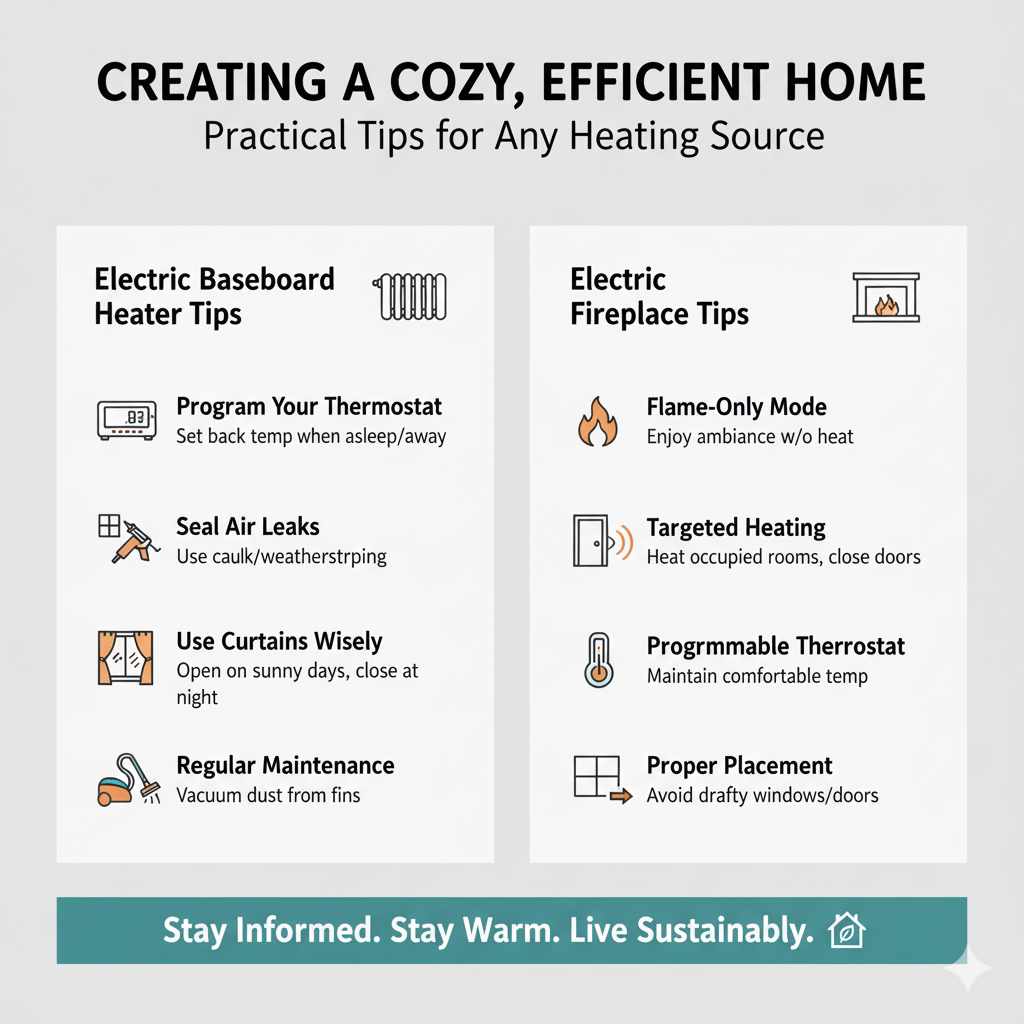
Table: Electric Baseboard Heater vs. Electric Fireplace at a Glance
Here’s a quick look at how these two heating options stack up:
| Feature | Electric Baseboard Heaters | Electric Fireplaces |
|---|---|---|
| Primary Function | Consistent, efficient room heating | Ambiance, supplemental heat |
| Energy Efficiency (Primary Heat) | High (with zone control) | Moderate (best for supplemental) |
| Operating Cost (Long-Term) | Generally Lower (with smart use) | Can be Higher if used as primary heat |
| Installation Complexity | Moderate to High (hardwired) | Very Low (plug-in) |
| Initial Cost | Moderate | Moderate to High (unit dependent) |
| Heat Distribution | Even, convective | Fan-forced, directional |
| Ambiance Factor | Low | Very High |
| Ideal Use Case | Primary heating, precise zone control | Adding warmth & visual appeal to one room |
Frequently Asked Questions (FAQ)
Q1: Can electric baseboard heaters heat my whole house affordably?
Electric baseboard heaters can heat an entire home, especially smaller, well-insulated ones. For affordability, it’s crucial to use their programmable thermostats effectively, heating only occupied rooms to desired temperatures. If electricity prices are high in your area, it might still be more expensive than other fuel types, but they offer excellent control for maximizing savings.
Q2: Are electric fireplaces expensive to run daily?
Electric fireplaces can be less expensive to run daily if you use them sparingly for supplemental heat or only use the flame effect. If you run the heater continuously on high wattage, especially in a large room or a poorly insulated one, the daily cost can add up quickly. They are designed to take the chill off, not to be a primary whole-home heating solution.
Q3: Which is safer for kids and pets: baseboard heaters or fireplaces?
Both have safety considerations. Modern electric baseboard heaters have cooler surface temperatures than older models, reducing burn risks.