How to Fix Discolored or Rusty Hot Water
If rusty or brown water shows up only on hot taps, the water heater is the likely source. If hot and cold both look off, check house piping or the incoming supply first. Ignoring the source can waste money on the wrong repair and leave corrosion, sediment, or bacteria untreated. This guide shows a fast test sequence and the fix for each cause.
Why is my hot water rust colored?



Rust-colored hot water usually points to iron oxide, sediment in the tank, or a failing anode rod inside the water heater. If the discoloration is only on hot water, that narrows the problem to the heater more than the house piping. If both hot and cold are colored, the source is usually farther upstream.
What rust color usually means
Brown, orange, or reddish water is often iron oxide suspended in the water stream. That can come from corroded steel parts, loose tank sediment, or old galvanized piping shedding material from the inside. EPA consumer guidance on water discoloration notes that rust-colored water can occur when iron or other particles are present, and that the issue may be localized or systemwide depending on where the source is. The color may be strongest after the water sits, then fade after several minutes of running.
What Hot-Only Discoloration Suggests
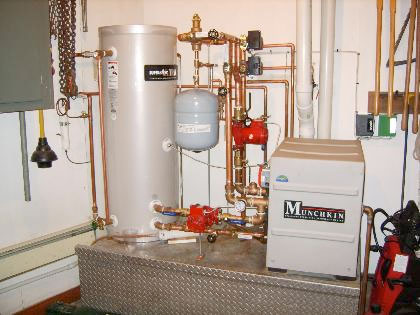
If discoloration appears only when running hot water, the water heater is usually the culprit. Sediment that has settled at the bottom of the tank, along with a corroding anode rod, can release rust-colored particles into the hot line. Manufacturer guidance commonly warns that draining and flushing should be done with the power or fuel source off and the water cooled as much as practical because hot water and steam can cause burns. That pattern matters because it points to the heater before you spend time on the rest of the plumbing.
What Makes It Urgent
Rust plus worsening pressure, repeated return after flushing, or a leak around the tank means the problem may be more than loose sediment. A tank that is corroding from the inside can fail suddenly. If the water heater is older and the discoloration keeps coming back, replacement may be a better call than another rinse.
Is It the Water Heater or the Pipes?
The fastest way to separate the heater from the piping is to compare hot and cold water at several fixtures. Hot-only discoloration points to the water heater. If both hot and cold are rusty, the issue is more likely galvanized piping, a disturbed municipal supply, or a problem in the incoming line before the heater.
Compare Hot and Cold Water at Several Taps
Turn on a kitchen sink, a bathroom sink, and a tub. Check the cold side first, then the hot side, and note whether the color appears at every fixture or only one. A single affected tap can point to a local branch line, while a whole-house pattern suggests the main supply or shared piping.
Use Fixture-by-Fixture Patterns to Narrow the Source
If only one bathroom shows rust, the problem may be limited to that branch or a single valve. If all hot taps show rust and cold taps stay clear, the heater is the first place to inspect. If both temperatures are discolored everywhere, older galvanized steel pipes become a stronger suspect.
What a Main Shutoff Check Can Tell You
A main shutoff reference can help separate incoming water from house plumbing. If the water looks discolored before it passes through the home’s internal system, the supply may be the issue. If the water is clear at that point but turns rusty after it moves through the house, the corrosion is likely inside the plumbing. Municipal utility guidance also notes that temporary discoloration can happen after main breaks, hydrant use, or utility work and may clear after the system is flushed.
Rusty Water Troubleshooting Matrix
Use this matrix to match the symptom pattern to the most likely cause. It also shows what you can check at home, when a flush may help, and when the problem needs a plumber instead of another round of guessing.
| Symptom pattern | Likely cause | Likely source location | Quick at-home check | Urgency | Next step |
|---|---|---|---|---|---|
| Hot-only rusty water | Water heater sediment or failing anode rod | Heater | Run cold water at two fixtures; if it stays clear, check the heater drain valve for a sample | Moderate; higher if the color keeps returning | Flush the tank if sediment is light; inspect the anode rod if rust returns after each hot-water draw |
| Both hot and cold rusty water | Galvanized piping, incoming supply disturbance, or widespread corrosion | Branch line, whole-house piping, or municipal/well supply | Compare several fixtures; if both temperatures are colored, the heater is less likely to be the only source | Moderate to high | Call a plumber to inspect older piping and confirm whether repiping is needed |
| Rust after vacations or long idle periods | Sediment settled in the tank or pipe scale loosened by long inactivity | Heater or branch line | Run a bucket test from a hot tap for several minutes and note whether the water clears | Low if it clears; higher if it returns repeatedly | Flush the heater once; if discoloration returns quickly, inspect for tank corrosion |
| Rust plus low pressure | Internal pipe corrosion or heavy sediment buildup | Whole-house piping, branch line, or heater | Compare pressure at hot and cold taps; a drop on both suggests a supply issue or old piping | High | Stop relying on flushing alone and schedule a plumber visit |
| Rust with odor | Iron bacteria or contaminated sediment | Municipal/well supply, branch line, or heater | Look for a slimy rust-colored film and a musty or fuel-like odor | High | Get water quality testing; severe cases may need shock chlorination or replacement of affected parts |
A common first-timer mistake is flushing a heater after the water has already turned milky with rust and then assuming the tank is fixed. If the water clears for a day and turns brown again after the next shower, that pattern points to ongoing corrosion, not a one-time disturbance.
What the Water Heater Checks Can Tell You
Heater checks help confirm whether the tank is shedding sediment or if the anode rod has failed. Use the drain valve for a sample only after cooling the water as much as practical and following the heater’s shutoff and pressure-relief steps in the owner’s manual. Hot water can cause scalding.
How to Sample From the Drain Valve Safely
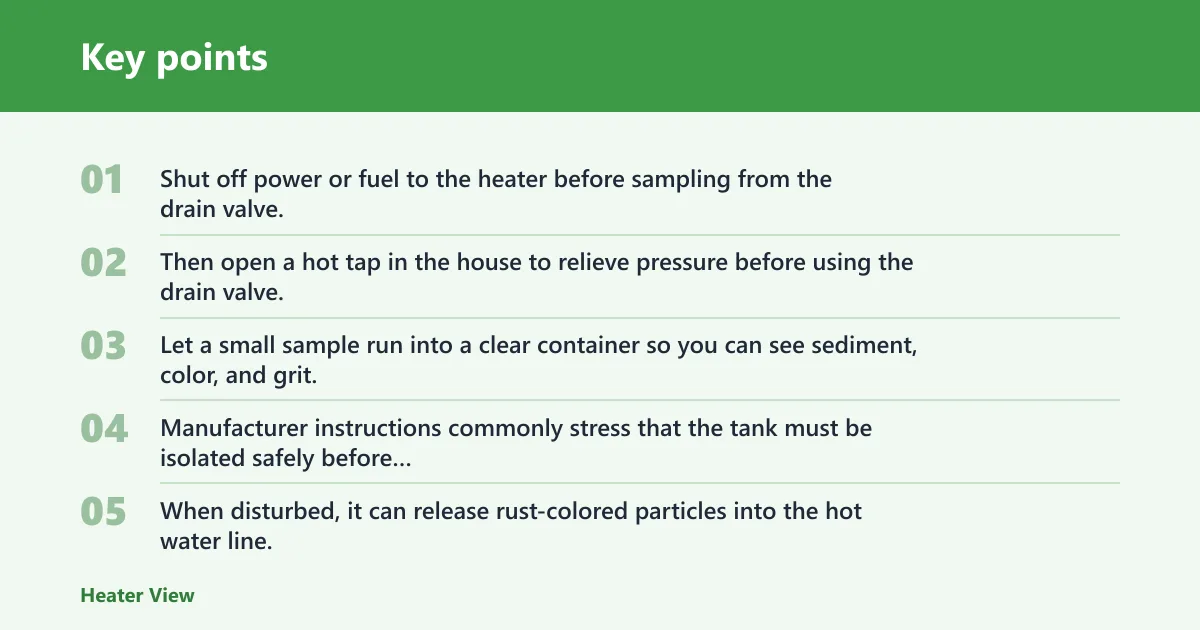
Shut off power or fuel to the heater before sampling from the drain valve, and make sure the water has had time to cool. Then open a hot tap in the house to relieve pressure before using the drain valve. Let a small sample run into a clear container so you can see sediment, color, and grit. Manufacturer instructions commonly stress that the tank must be isolated safely before draining so that hot water, steam, or a pressurized surge does not create a burn hazard.
What Sediment in the Tank Means
Sediment collects at the bottom of the tank. When disturbed, it can release rust-colored particles into the hot water line, and discolored hot water can point to sediment buildup in the tank bottom. If the sample contains heavy rust sediment, the anode rod may have failed and tank corrosion may already have begun.
When to Inspect the Anode Rod
The water heater anode rod is a sacrificial corrosion protection component that depletes over time. When it is used up, the tank itself can start corroding. If hot water turns rusty after each draw, or if the flush sample shows repeated rust after clear water briefly returns, the anode rod deserves a close look.
When a Flush May Help and When It May Not
A flush can help when sediment is loose and the tank is otherwise sound. It may not help if the buildup is heavy, because severe sediment accumulation can keep reappearing after each cycle. It can also stir up the tank temporarily, which makes the water look worse before it gets better.
Suppose a 40-gallon heater sends clear cold water from the kitchen but rusty hot water from the tub after a long idle weekend. A careful flush may clear loose sediment once. If the same brown water returns on the next hot draw, the problem is no longer a simple rinse job.
Could Galvanized Pipes Be the Source?
Galvanized steel pipes are a commonly reported source of discolored water in older plumbing. They corrode from the inside out, which can send iron oxide into both hot and cold lines. If the water is rusty at multiple fixtures and both temperatures are affected, pipe corrosion moves up the list fast.
How Internal Corrosion Shows Up in Older Piping
As galvanized pipe ages, its inside coating breaks down and rust begins to flake away. That iron oxide can make the water look brown or reddish, and the flow may weaken as the pipe narrows. This is more likely in older homes or in sections that have been exposed to long-term corrosion and mineral buildup.
Why Both Hot and Cold Water Can Look Rusty
When the pipe itself is corroding, the water can pick up discoloration before it reaches the water heater. That is why both hot and cold taps may show the same tint. In that situation, the heater may be part of the symptom pattern, but it is not the only system worth checking.
When Repiping with PEX or Copper Makes Sense
If corrosion is widespread, a targeted repair may not last. Repiping with PEX or copper is the better long-term fix when several galvanized sections are failing or when pressure loss keeps returning with rust. That is more likely to solve the source than repeated flushing or spot repairs.
Could Iron Bacteria Be Causing the Stain?
Iron bacteria can create rust-colored slime, not just loose sediment. If the water has a musty or fuel-like odor, or if you see a slimy film in fixtures or tank samples, bacteria becomes a stronger suspect. EPA and CDC guidance on water quality concerns notes that biological growth can contribute to staining, odor, and visible residue, especially when water has been sitting or iron is present. That calls for testing and, in severe cases, treatment beyond ordinary flushing.
How Slimy Rust and Odor Point to Iron Bacteria
Iron bacteria can produce a slimy, rust-colored biofilm. That biofilm may cling to fixtures, coating screens and aerators with brown residue. The presence of slime helps separate bacterial growth from plain mineral staining, especially when the water has a recurring odor or the discoloration looks gelatinous rather than dusty.
When Water Quality Testing Helps
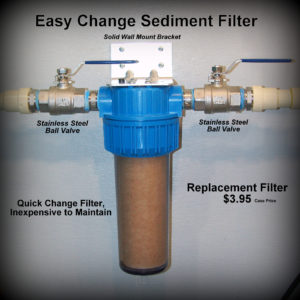
Water quality testing can measure iron, manganese, sediment, pH, and turbidity. That matters when the source is unclear, when rust keeps returning after flushing, or when odor points beyond ordinary corrosion. The results help separate internal plumbing damage from contaminated supply water and guide the repair plan.
When Shock Chlorination or Replacement May Be Needed
Shock chlorination may be appropriate when iron bacteria is confirmed and the system is still structurally sound. If the growth is severe, or if the heater or piping is already badly corroded, replacement may be the cleaner fix. Do not treat bacterial slime like ordinary tank sediment.
When Should You Call a Plumber?
Call a plumber when the discoloration keeps returning, pressure drops with the rust, or the tank or piping may be failing. A plumber should also handle cases where the problem is widespread, the water heater is leaking, or the flush only stirs up more debris instead of clearing the water.
Signs the Tank or Piping May Be Failing
Heavy rust sediment, repeated hot-water discoloration after flushing, and visible staining around the heater all point to a failing system. If the anode rod is spent and the tank is corroding, repairs may not buy much time. If both hot and cold are rusty, old piping may be breaking down too.
Signs the Problem Keeps Returning After Flushing
If the water clears, then turns brown again within a short time, the source is still active. That recurring pattern matters because it often means the tank bottom is loading up again or the pipe walls are shedding rust. A one-time flush is not the right answer for a recurring source.
Signs the Fix Is Beyond DIY
Do not keep draining a heater if the water is very hot, the drain valve is clogged, the tank leaks, or the discoloration is paired with low pressure throughout the house. Those signs point to a repair that needs a plumber’s tools, and possibly a replacement plan rather than another cleanup cycle.
Fast 5-Step Diagnosis
- Check one hot tap and one cold tap at more than one fixture.
- Note whether the water is rusty on hot only, both hot and cold, or only after long idle periods.
- Look for odor, slime, low pressure, or a return of discoloration after flushing.
- If hot-only discoloration dominates, sample the heater drain valve safely after cooling and pressure relief.
- If both temperatures are rusty, suspect galvanized piping or a supply-side issue and call a plumber.
Frequently asked questions
Why Does My Hot Water Look Rusty?
Hot water that looks rusty usually comes from sediment in the tank, a failing anode rod, or corrosion inside the heater. If cold water stays clear, the heater is the first place to inspect. If the color returns after each hot-water draw, the problem is active, not a one-time stain.
How Long Should Rusty Water Last After a Flush?
Rusty water should clear after the tank has been flushed and fresh water has moved through the system. If discoloration lasts more than a short period or comes back after the next hot-water use, the source is still present. That can mean heavy sediment, tank corrosion, or corroded piping.
How Do I Tell If the Water Heater or Pipes Are Causing Rusty Water?
Compare hot and cold water at several taps. Hot-only discoloration points to the heater. If both hot and cold are rusty, look at galvanized piping, the incoming supply, or widespread corrosion. A main shutoff reference and fixture-by-fixture comparison help narrow the source before repairs start.
When Is Rusty Hot Water a Sign I Need a Plumber?
Call a plumber if the rust returns after flushing, pressure drops with the discoloration, the heater leaks, or the issue spreads to both hot and cold water. Those signs suggest a failing tank or corroded piping, not a simple sediment problem. Waiting can turn a repair into a replacement.