How to Flush a Water Heater When the Drain Is Slow
Attach a hose, open the drain, and if flow is weak, crack a hot-water faucet for a moment, then clear the drain nipple or hose before you force anything. Slow drainage can leave sediment behind, clog the valve harder, and make a full flush impossible. The safest fix is to diagnose the restriction first, then move from simple clearing to valve removal only if the tank will not empty.
What you’ll need
- Garden hose long enough to reach an outdoor drain or floor drain
- Bucket and towels for catchment and cleanup
- Work gloves and eye protection
- Flashlight for checking the drain outlet and nearby fittings
- Small wrench for valve removal only if the tank will not empty
- Wooden dowel for loosening sediment at the drain opening
- Access to the cold water shutoff valve and a hot water faucet
Why a slow drain changes the flush
A slow drain changes the job because you are no longer just emptying the tank; you are trying to move sediment without packing it tighter at the outlet. A weak trickle can still work if it stays open, but a drain that stops, backs up, or spits brown water without real flow needs a different approach.
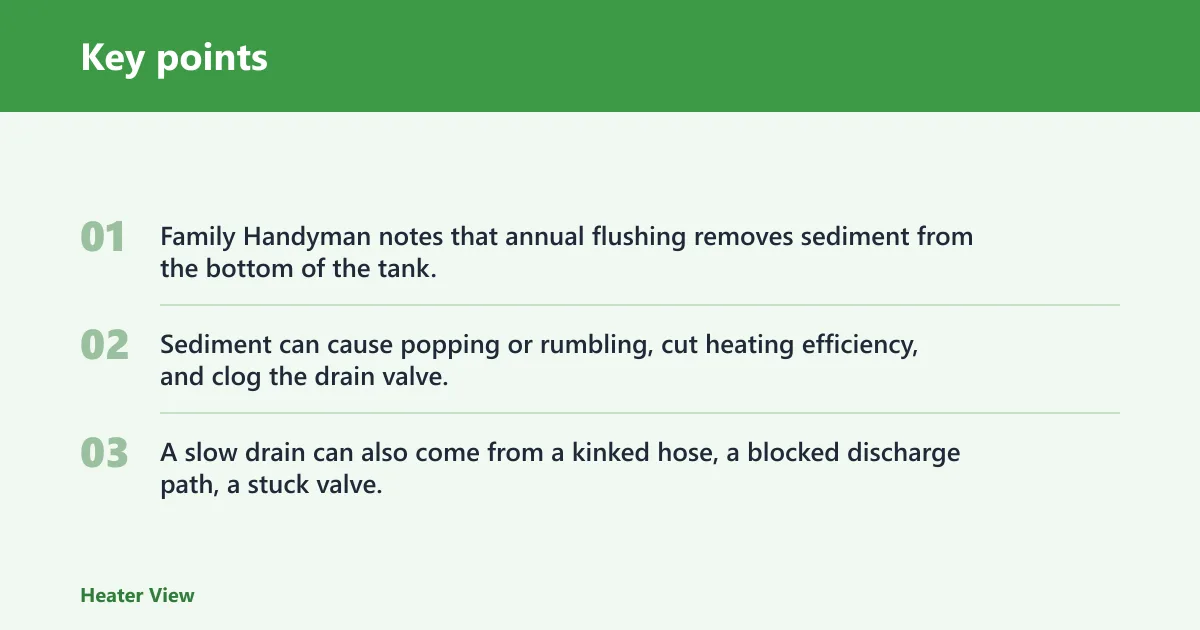
Heavy sediment is the most common reason. Family Handyman notes that annual flushing removes sediment from the bottom of the tank, and hard-water homes need it more often. Sediment can cause popping or rumbling, cut heating efficiency, and clog the drain valve. A slow drain can also come from a kinked hose, a blocked discharge path, a stuck valve, or heavy internal scale.
Slow drain decision tree
| Symptom | Likely cause | Quick test | Safe next step | Stop-point |
|---|---|---|---|---|
| Weak trickle | Sediment at the outlet or a partly blocked drain valve | Disconnect the hose and check whether the valve opening itself still drips slowly | Clear the nipple with a dowel, then restart drainage | Stop if the fitting cracks, leaks, or will not open further |
| Drain starts then stops | Sediment shifted and bridged the opening | Close the valve, wait a few seconds, then reopen it | Pulse the cold supply in short bursts to stir the tank | Stop if repeated pulses do not restore flow |
| Brown water but no flow | Heavy sediment or scale is clogging the passage | Check the hose for kinks and verify the discharge path is open | Backflush with short cold-water bursts | Stop if the tank still will not empty after repeated clearing attempts |
| Valve won’t reopen after sediment shifts | Debris lodged in the valve seat or a worn valve body | Try a gentle reopen after closing it fully | Remove the valve only if the tank is still safe to depressurize and drain | Stop if the valve feels stuck, twists oddly, or leaks at the threads |
How do you flush a water heater with a slow drain?
Start by shutting down the heater, closing the cold supply, and opening a hot faucet in the house so air can enter the system. Then drain through a hose, watch for a weak stream, and use short cold-water pulses to break loose sediment. If the tank still will not empty, clear or remove the drain valve instead of forcing it.
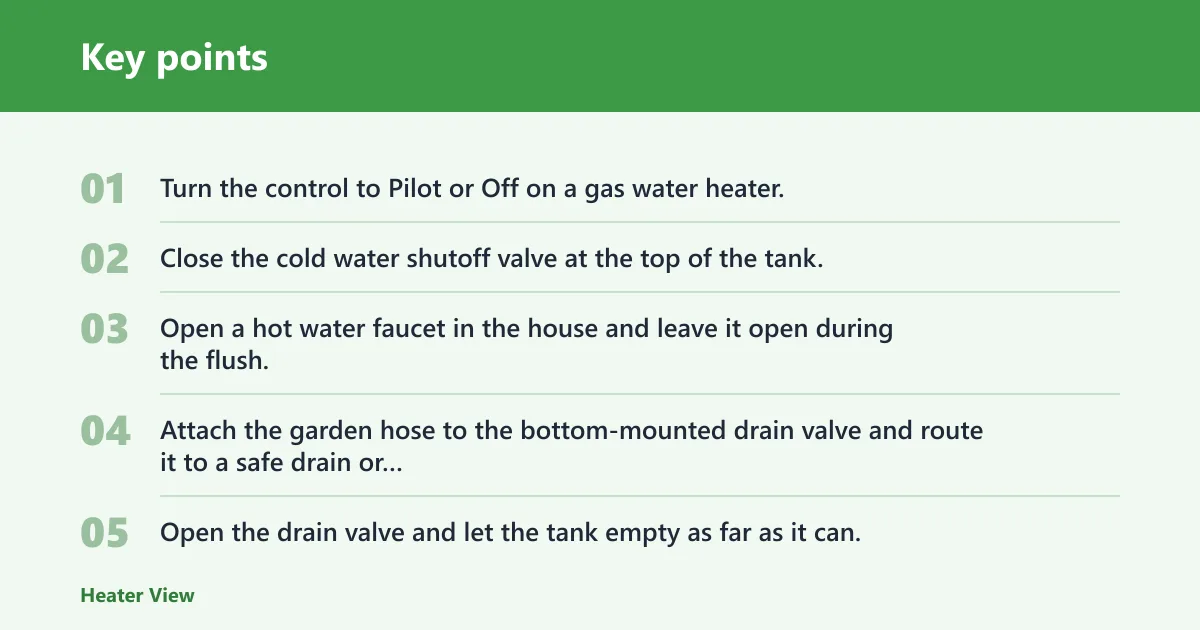
- Turn the control to Pilot or Off on a gas water heater, or switch off the breaker for an electric water heater.
- Close the cold water shutoff valve at the top of the tank.
- Open a hot water faucet in the house and leave it open during the flush.
- Attach the garden hose to the bottom-mounted drain valve and route it to a safe drain or outdoors.
- Open the drain valve and let the tank empty as far as it can.
- If flow weakens, close the drain for a moment, then reopen the cold supply for 5 to 10 seconds to stir sediment, and close it again.
- Repeat short bursts until the discharge clears or the flow stops improving.
- If the valve clogs, clear the drain nipple with a wooden dowel, then restart drainage.
- If the tank still will not empty, remove the valve carefully; very hot water and sediment may still release during removal, and replace it with a full-port valve when reassembly is practical.
- Refill the tank completely before restoring power to an electric unit, and relight older gas units if required by the model.
Bob Vila advises draining the tank completely, not just for a few minutes, and says opening hot water faucets before draining helps. Art of Manliness notes that leaving a hot faucet on prevents vacuum in the lines. A basement heater may need a portable pump if the drain route cannot carry water away by gravity.
How long should you run the cold water while flushing? Use short bursts, then recheck the drain after each burst. A common rule of thumb is about 5 to 10 seconds at a time, long enough to stir sediment but short enough to avoid refilling the tank faster than it can drain.
Do you need to remove the drain valve?
Remove the drain valve when the tank will not empty, the valve only trickles after clearing the hose, or sediment has packed the opening so tightly that normal flushing no longer works. Bob Vila says that if sediment slows the flow, the drain valve may need to come out. A long wooden dowel can sometimes free the blockage first.
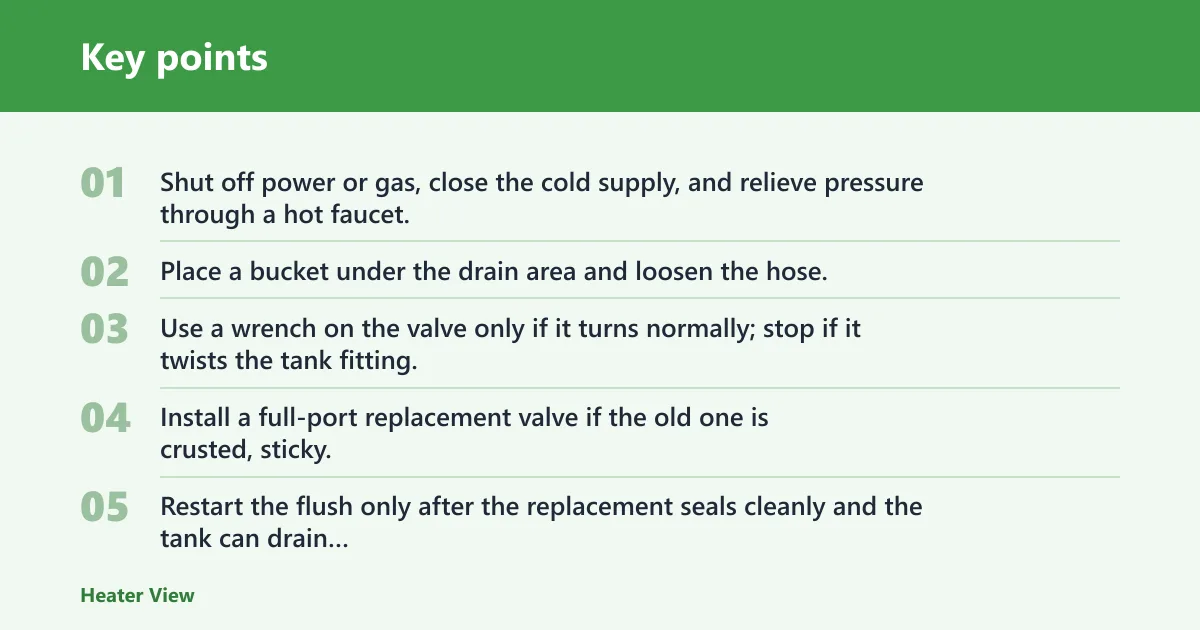
- Shut off power or gas, close the cold supply, and relieve pressure through a hot faucet.
- Place a bucket under the drain area and loosen the hose.
- Use a wrench on the valve only if it turns normally; stop if it twists the tank fitting.
- Install a full-port replacement valve if the old one is crusted, sticky, undersized for the amount of sediment, very old plastic, or heavily corroded.
- Restart the flush only after the replacement seals cleanly and the tank can drain without backing up.
Picture an older gas heater in a hard-water area where the drain starts well, then plugs twice in the same hour. That pattern usually points to sediment shifting inside the valve passage, not a problem solved by more force.
Stop and call a pro if the valve body cracks, the tank outlet leaks, or the fitting will not seal after removal. Those failures can turn a simple flush into a replacement job.
What should you do if sediment clogs the drain valve?
Clear the opening first, then backflush the tank in short cycles before you consider removal. Do not force a clogged valve open with heavy pressure or a long wrench swing. A clog can be packed sediment, and forcing the handle can crack the fitting or shear the valve body.
- Shut the drain, then reopen it once to see whether the clog breaks loose.
- Insert a wooden dowel carefully at the drain opening to dislodge loose sediment.
- Reconnect the hose and use short cold-water bursts to push debris out through the drain.
- Pause and clear the hose if discharge slows again.
Brown water with no real flow usually means the valve is moving mud, not water. That is the point to slow down, not press harder.
Common mistakes
Skipping the hot faucet makes draining harder and can slow the flush. The hot faucet should stay open while the flush runs.
- Forcing a stuck valve open: stop if the handle resists or the fitting twists.
- Turning power back on too early: an electric tank must be full before the breaker goes back on.
- Using a bad drain route: do not send hot water to a floor that cannot handle it or to a drain that can back up.
- Stopping after a few minutes: Bob Vila advises draining the tank completely.
Today’s Homeowner notes that flushing can help extend service life, and DIY flushing costs next to nothing compared with a plumber price estimate of $100 to $200. The savings disappear fast if a stuck valve is forced into a leak.
How do you properly flush a water heater?
Shut off gas or electricity, close the cold supply, open a hot faucet, attach a hose, and drain the tank until the discharge runs clear. If the drain slows, use short cold-water pulses and clear the valve opening before moving to removal. The proper method is usually patient and controlled.
Do not assume a slow drain means the tank is safe to leave half-empty. A partial flush can leave sludge behind and can pack the drain even tighter on the next attempt.
Frequently asked questions
How do you flush the water heater?
Turn off gas or the breaker, close the cold shutoff valve, open a hot faucet, and connect a hose to the drain valve. Drain to a safe location, use short cold-water bursts if the flow weakens, and refill fully before restoring service. Leave the hot faucet open until air is out and steady water returns.
How do you flush your hot water heater?
Use the same method as any tank unit: shut down the heat source, close the cold inlet, and open a hot faucet to admit air. If the basement setup needs extra hose length, connect multiple hoses securely and keep the outlet lower than the tank so gravity can work.
Why is my water heater draining so slowly?
Slow drainage usually points to sediment at the bottom, a partly blocked drain valve, a kinked hose, or heavy scale inside the tank. More than one issue can be present at once. If the drain starts strong and then stalls, sediment bridging the outlet is the most likely next problem to clear.
How often should you drain your water heater?
The same source says annual flushing removes bottom sediment, and hard-water homes need it more often. Some models can be flushed every one to three years, but hard water and heavy use shorten that interval. If the tank starts popping, rumbling, or draining slowly, flush sooner rather than waiting for a calendar date.