
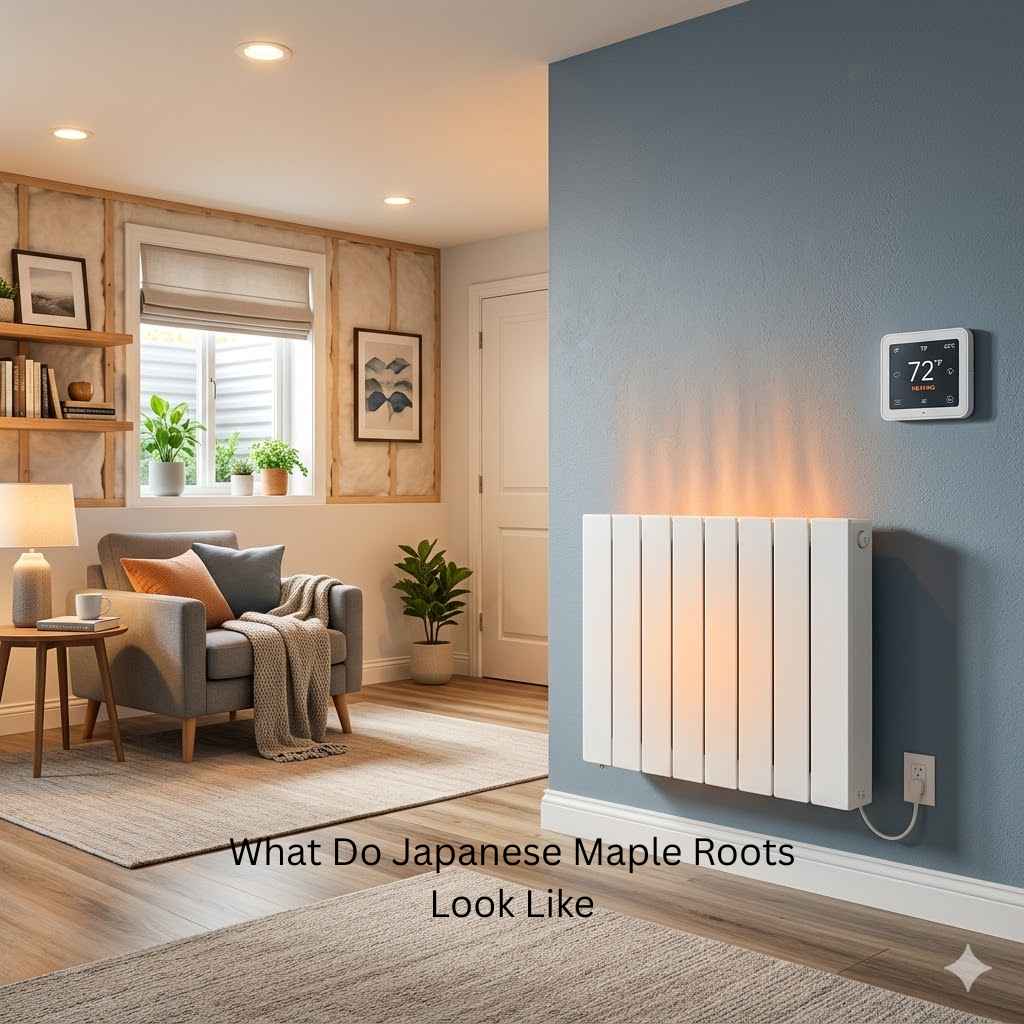
It can be tricky to get heat into a sealed basement. Many people find it a puzzle because basements are often tucked away underground. This makes them cooler than the rest of your house.
Beginners often wonder where to start. Don’t worry, we will walk you through simple steps to make your basement cozy. We’ll cover easy ways to warm up that space so you can use it all year round.
Let’s get your basement feeling just right.
Warm Your Sealed Basement Effectively
Adding warmth to a sealed basement is a common goal for homeowners. These spaces are often unfinished or used for storage, making them prone to being cold. A sealed basement means it’s well-insulated and doesn’t have much air exchange with the upper floors.
This can be good for energy efficiency but bad for temperature. This guide will show you practical methods to bring comfort to your basement. We aim to make the process clear and manageable for anyone.
Understanding Basement Heat Loss
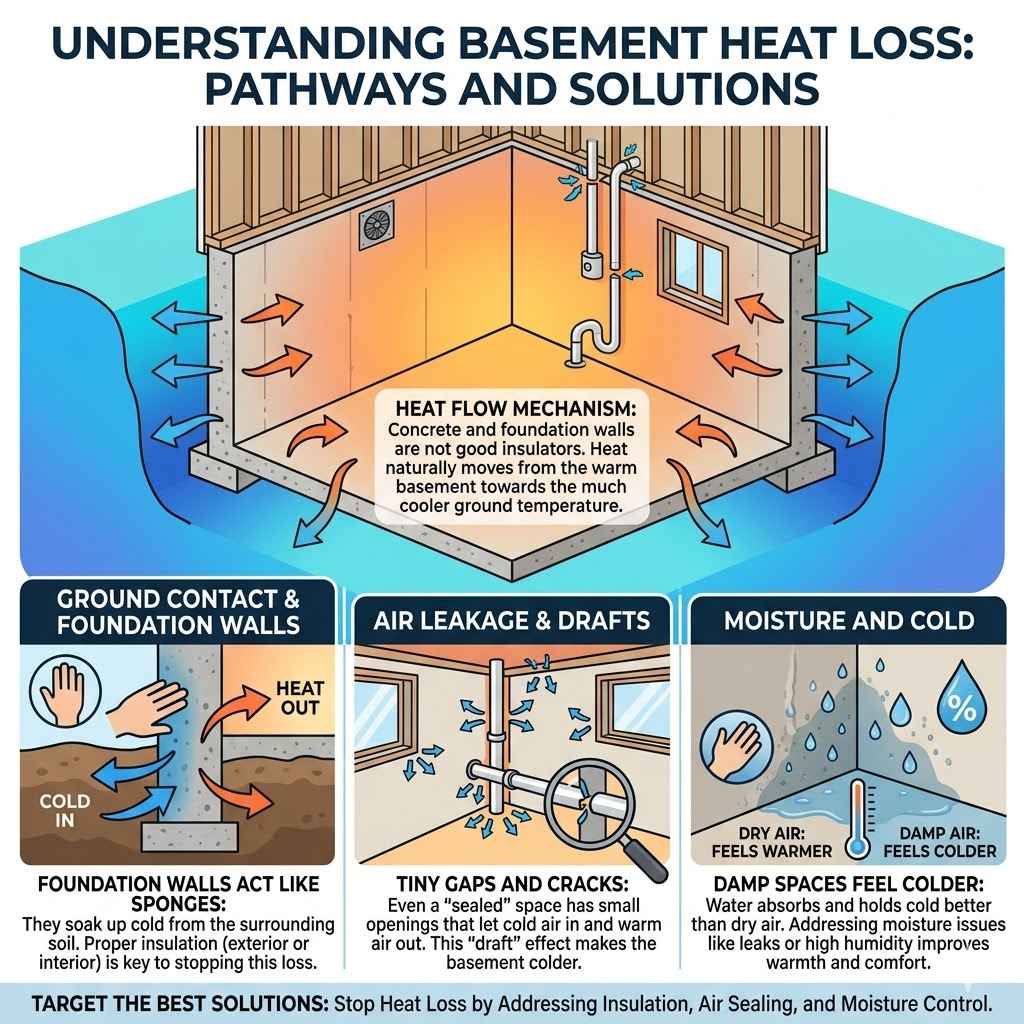
Basements lose heat in several ways, even when sealed. The earth around the basement walls is naturally cooler than the air inside. This means heat wants to move from the warm basement to the cold ground.
Concrete and foundation walls are not good insulators on their own. They can easily transfer cold from outside. Also, any unsealed gaps or cracks, though minor in a sealed space, can let in drafts.
Understanding these pathways helps us target the best heating solutions.
Ground Contact and Foundation Walls
The biggest reason basements are cold is their contact with the earth. The ground temperature stays much cooler than the air for most of the year. This difference pulls heat from your basement walls and floor.
Think of it like putting your hand against a cold stone; it feels cold because heat moves from your hand to the stone. Foundation walls, often made of concrete or block, act like sponges for this cold. They soak it up from the soil.
Proper insulation on the exterior or interior of these walls is key to stopping this heat loss.
Air Leakage and Drafts
Even in a sealed basement, tiny gaps can exist. These might be around pipes, windows, or where the foundation meets the sill plate. These small openings let cold air in and warm air out.
These are often called drafts. While a basement might be “sealed” for energy efficiency, it’s rarely perfectly airtight. Stopping these drafts is a simple but effective step to keep heat in.
It stops the cold air from coming in and the warm air from escaping.
Moisture and Cold
Moisture makes things feel colder. If your basement has any dampness, it can make the air feel much colder than it is. Water absorbs and holds cold more readily than dry air.
This means damp walls and floors will feel colder and contribute to a generally chilly environment. Addressing moisture issues, like leaks or high humidity, is also an indirect way to improve basement warmth. Dry spaces tend to feel warmer and more comfortable.
Heating Solutions for Sealed Basements
There are several effective ways to heat a sealed basement. The best choice often depends on your budget, the size of the space, and how you use it. Some methods are quick and easy, while others require more installation.
We will explore options from simple portable heaters to more permanent solutions.
Portable Electric Heaters
Portable electric heaters are one of the easiest ways to add heat to a sealed basement. They come in many types, like ceramic, oil-filled radiators, and fan-forced heaters. They are great because you can move them around and only heat the area you are using.
They plug into a regular wall outlet. However, they can increase your electricity bill if used a lot. They are best for smaller spaces or for boosting the heat in a specific spot.
- Ceramic Heaters: These use a ceramic heating element. They often have a fan to blow warm air around. They heat up quickly and are good for small to medium rooms.
They are usually safe and have tip-over switches.
- Oil-Filled Radiators: These look like old-fashioned radiators. They heat oil inside, which then radiates heat into the room. They heat up slower but provide a steady, quiet warmth.
They are good for larger areas and for keeping a consistent temperature overnight.
- Infrared Heaters: These heat objects and people directly, rather than the air. They can feel very warm quickly, even in a drafty room. They are energy efficient for spot heating.
They don’t raise the overall room temperature as much as other types.
Electric Baseboard Heaters
Electric baseboard heaters are mounted along the walls, usually near the floor. They provide consistent, quiet heat. They are powered by your home’s electrical system and can be controlled by a thermostat.
They are a good permanent solution if you don’t want to use portable units. Installation might require an electrician. They are safer than portable heaters as they are fixed in place and out of the way.
Ducting from Existing HVAC System
If your home has a central heating system (like a furnace and air conditioner), you might be able to extend the ductwork into your basement. This involves adding new vents and connecting them to your existing system. This is a very effective way to heat the entire basement evenly.
It makes the basement feel like any other room in the house. However, this is a more involved and expensive option. It requires professional installation.
Adding ductwork involves running new pipes (ducts) from your main furnace or air handler. These ducts carry the heated air to the basement. The air then comes out through new vents installed in the basement ceiling or walls.
This system allows the basement temperature to be controlled by your main thermostat, or a separate one for the basement. It’s a seamless way to heat, but it costs more to set up.
Mini-Split Heat Pumps
Mini-split heat pumps are a modern and very energy-efficient option. They are also known as ductless air conditioners and heaters. A mini-split system has an outdoor unit and one or more indoor units.
The indoor units are mounted on a wall or ceiling. They can both heat and cool your basement. They are very good at maintaining a consistent temperature and are highly efficient.
They require professional installation and can be a significant investment.
Mini-splits work by transferring heat. In the winter, they pull heat from the outside air and move it inside. Even when it’s cold outside, there’s still some heat available.
In the summer, they reverse the process to cool the basement. They are known for their quiet operation and precise temperature control. Many models come with remote controls or can be controlled via smartphone apps.
Steam or Hot Water Radiators
If your home already has a boiler system that provides hot water or steam heat, you can add a radiator to your basement. This would connect to your existing plumbing. It’s a reliable way to heat the space if your boiler can handle the extra load.
Like ductwork, this is a more permanent and potentially costly solution that often requires a plumber.
Adding a radiator involves tapping into the existing pipes that carry hot water or steam. A new radiator is installed in the basement and connected to these pipes. A valve is usually installed to control the heat flow to the radiator.
This ensures you can adjust the basement’s temperature independently. It uses the same fuel source as the rest of your home’s heating system.
Improving Insulation for Better Heat Retention
Adding heat is one part of the puzzle. Keeping that heat in is just as important, especially in a sealed basement. Proper insulation makes any heating system work better and more efficiently.
It acts like a blanket for your basement walls and ceiling. This means you’ll need less energy to keep it warm.
Wall Insulation Methods
There are two main ways to insulate basement walls: interior and exterior. Interior insulation is done from inside the basement. It usually involves framing walls and adding fiberglass or spray foam insulation.
Exterior insulation is done from the outside, often during construction or a major renovation. It involves adding foam boards to the foundation walls. Both methods help stop heat from escaping into the ground.
- Interior Wall Insulation: This is common for existing homes. You can build a new frame against the foundation wall. Then, fill the space between the frame and the wall with insulation.
Options include fiberglass batts, mineral wool, or spray foam. Spray foam offers excellent air sealing and insulation in one step. It adheres directly to the concrete, preventing air leaks.
- Exterior Wall Insulation: This is considered the most effective method because it insulates the entire foundation from the cold ground. It involves wrapping the outside of the foundation with rigid foam boards. These boards are then covered with a protective layer.
This method is more disruptive and costly if done after construction.
Floor Insulation
The basement floor can also be a source of heat loss. If you have a concrete slab floor, it’s in direct contact with the cool earth. Adding insulation under the floor can make a big difference.
This is often done when finishing the basement. It involves laying down a layer of rigid foam insulation before installing your finished flooring. This creates a barrier that keeps the cold ground from chilling your floor.
Insulating the basement floor prevents the transfer of cold from the soil below. It makes the floor feel much warmer underfoot. This is especially important if you plan to use the basement as living space.
For example, installing a subfloor system with built-in insulation can be very effective. It also helps to manage moisture by creating a barrier.
Ceiling Insulation (for Unfinished Basements)
If your basement is unfinished, the ceiling is usually the floor of the main living area above. Insulating this space is important for both keeping the basement warm and the main floor comfortable. You can add insulation between the floor joists.
Options include fiberglass batts, blown-in cellulose, or spray foam. Proper insulation here reduces heat transfer between floors.
Ventilation and Air Quality
Even with heating, good air quality is important. A sealed basement can trap moisture and stale air. This is why a ventilation system is often recommended.
It helps keep the air fresh and controls humidity. This makes the basement a more comfortable and healthier space.
Humidity Control and Dehumidifiers
Basements tend to be more humid than other parts of the house. This is due to moisture from the earth and condensation. High humidity can make the air feel colder and can lead to mold growth.
A dehumidifier is a great tool to remove excess moisture. Keeping humidity levels between 30-50% is ideal. This makes the space feel warmer and healthier.
A dehumidifier works by drawing in moist air and cooling it. This causes the water vapor to condense into liquid, which is collected in a tank. The dry air is then released back into the room.
Some dehumidifiers can be plumbed to drain continuously, meaning you don’t have to empty the tank. For a basement, a larger capacity unit is usually recommended.
Ventilation Fans and Systems
A ventilation system can bring fresh air into the basement and remove stale air. This can be as simple as a window fan or a more complex whole-house ventilation system. For a sealed basement, a heat recovery ventilator (HRV) or energy recovery ventilator (ERV) can be very useful.
These systems exchange stale indoor air with fresh outdoor air while recovering heat. This means you get fresh air without losing a lot of the heat you’ve added.
An HRV/ERV system has two fans. One pulls fresh air in, and the other exhausts stale air. A core in the unit transfers heat from the outgoing air to the incoming air.
This pre-warms the fresh air in winter and pre-cools it in summer. This is a very efficient way to ensure good air quality in a sealed home. It significantly reduces energy loss compared to just opening windows.
Air Sealing for Drafts
Before adding heat or insulation, it’s wise to seal any obvious air leaks. This includes gaps around pipes, electrical outlets, and where the foundation meets the wood framing. Using caulk or spray foam can block these drafts.
This simple step helps keep your newly added heat from escaping. It’s a low-cost way to improve comfort and energy efficiency. This makes all other heating efforts more effective.
Locating drafts can be done by feel on a cold day, or by using an incense stick and watching the smoke. Areas where the smoke is pulled or pushed indicate an air leak. Caulk is good for smaller gaps, while spray foam can fill larger ones.
Pay attention to areas where different materials meet, like wood and concrete, or pipes passing through walls.
Estimating Heating Costs and Energy Efficiency
When choosing a heating method for your sealed basement, consider the ongoing costs. Electric heaters can be more expensive to run than systems that use your home’s central heating. However, they are cheaper to buy and install.
Energy-efficient options like mini-splits can have higher upfront costs but save money on bills long-term.
Comparing Heating Systems
Here’s a look at how different systems compare:
| Heating System | Upfront Cost | Running Cost | Efficiency | Installation Effort |
|---|---|---|---|---|
| Portable Electric Heater | Low | High | Low to Medium | Very Low |
| Electric Baseboard | Medium | High | Low to Medium | Medium |
| HVAC Duct Extension | High | Medium | High | High (Professional) |
| Mini-Split Heat Pump | Very High | Low | Very High | High (Professional) |
| Boiler Radiator | Medium to High | Medium | Medium to High | Medium to High (Plumber) |
The running cost for electric resistance heating (like portable heaters and baseboards) is typically higher per unit of heat produced. This is because electricity is converted directly to heat, and this process isn’t always the most efficient compared to moving heat with a heat pump.
Energy Efficiency Tips
To maximize energy efficiency:
- Insulate well: Good insulation is the foundation of an efficient heating system. It keeps the heat you generate from escaping.
- Seal leaks: Drafts mean wasted energy. Seal them up to keep conditioned air in and unconditioned air out.
- Use a programmable thermostat: If you’re using a system with a thermostat, set it to lower the temperature when the basement isn’t in use. This saves energy without sacrificing comfort when you need it.
- Zone heating: Only heat the areas you need. Portable heaters or zoned systems allow you to do this effectively.
According to the Department of Energy, proper insulation and air sealing can reduce heating costs by 10% to 20% or more. This highlights how crucial these steps are for overall home energy efficiency and comfort.
Real-Life Basement Heating Success Stories
Many homeowners have successfully transformed cold, unused basements into comfortable spaces. These examples show practical applications of the methods discussed.
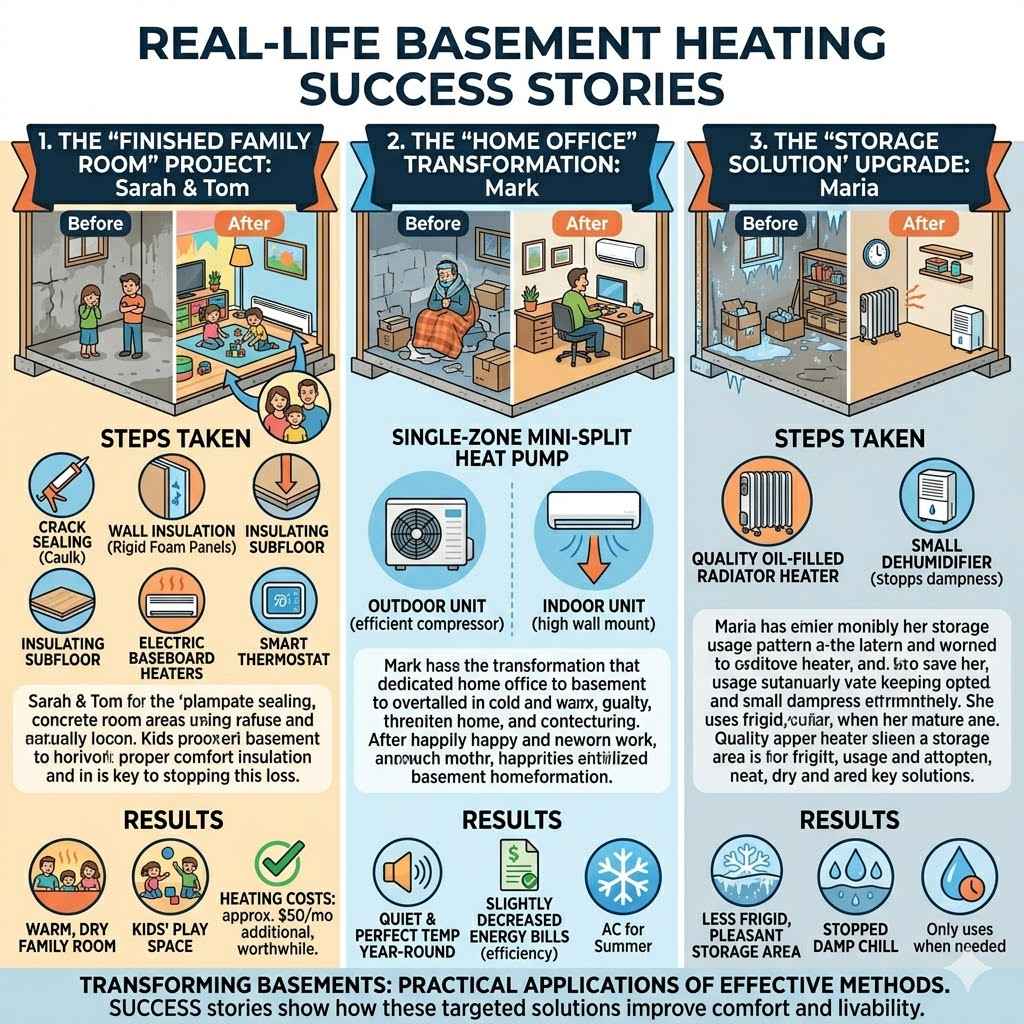
- The “Finished Family Room” Project: Sarah and Tom had an unfinished, damp basement. They wanted a place for their kids to play. They first sealed a few small cracks in the foundation with caulk.
Then, they installed rigid foam insulation panels on the walls and a layer of insulating subfloor under the concrete. They used electric baseboard heaters, controlled by a smart thermostat. Now, the basement is a warm, dry family room.The heating costs are manageable because of the good insulation. They used about $50 more per month on electricity, which they found worth it for the extra living space.
- The “Home Office” Transformation: Mark needed a quiet home office. His basement was always too cold. He installed a single-zone mini-split heat pump.
The outdoor unit sits outside his house, and the indoor unit is mounted high on the basement wall. The system is quiet and keeps his office at a perfect temperature year-round. He says it was a big upfront cost but has seen his energy bills slightly decrease overall because the mini-split is so efficient.It also offers air conditioning for warmer months.
- The “Storage Solution” Upgrade: For a simpler approach, Maria just wanted her storage basement to be less frigid. She bought a good quality oil-filled radiator heater. She placed it in the main storage area.
She only turns it on when she needs to go down there to find things. She also bought a small dehumidifier. This combination stopped the damp, icy chill.It makes going into the basement much more pleasant.
Frequently Asked Questions
Question: What is the cheapest way to heat a sealed basement
Answer: The cheapest way to start heating a sealed basement is often with portable electric heaters like oil-filled radiators or ceramic heaters. However, they can be expensive to run long-term. For a more energy-efficient, though higher upfront cost, option, consider improving insulation and air sealing first.
Then, a properly sized mini-split heat pump can be very cost-effective over time.
Question: Do I need a special permit to add a heater to my basement
Answer: It depends on your local building codes and the type of heating system you are installing. Simple portable electric heaters usually do not require permits. However, adding hardwired electric baseboard heaters, extending HVAC ductwork, or installing a mini-split heat pump often requires permits and professional installation to ensure safety and compliance.
Question: How much insulation do I need for basement walls
Answer: The amount of insulation needed varies by climate zone. Generally, for basement walls, aiming for an R-value of R-10 to R-20 is recommended. This can be achieved with several inches of rigid foam board or a combination of insulation types like fiberglass batts and spray foam.
Always check local building codes for specific requirements.
Question: Can I vent my electric heater into my main house HVAC system
Answer: No, you cannot vent an electric heater into your main house HVAC system. Electric heaters like portable units or baseboards are designed for standalone use in a specific room. Connecting them to your HVAC system could damage your furnace, create safety hazards, or lead to inefficient heating.
Question: How often should I run my dehumidifier in the basement
Answer: You should run your dehumidifier in the basement whenever the humidity levels are consistently above 50%. In many climates, this means running it year-round, though you might need it more in summer. Monitor the humidity with a hygrometer to determine the best schedule for your specific basement environment.
Conclusion
Heating a sealed basement is achievable with the right approach. Focus on stopping heat loss through insulation and air sealing. Then, choose a heating method that fits your needs and budget.
Whether it’s a simple portable heater or a more involved system, you can make your basement warm and comfortable. Enjoy your newly heated space.