How to Safely Store a Heater After Winter
Unplug the heater, let it cool all the way down, vacuum dust from the vents, wrap the cord loosely, and store it in a sealed container that stays off the floor and out of damp air; if the cord, plug, or grille is damaged, repair or replace it before storage. Poor storage can leave you with a heater that overheats, shortens cord life, or becomes a pest shelter by next season. Dust is the main problem, and moisture follows close behind.
Why storage matters after winter
A portable space heater can sit unused for six to eight months, so the off-season is long enough for dust, moisture, and pests to cause damage. Dust can clog intake and exhaust grilles, moisture can corrode internal metal components, and pests can chew cords or pack nesting material into airflow paths. Ceramic, fan, oil-filled, and infrared units all benefit from the same basic storage discipline, but fan-style heaters and compact ceramic units tend to collect dust faster because they move more air through grilles.
Store it the wrong way and next season can start with blocked airflow, a burnt smell, or a cord that looks fine outside but has hidden stress inside. A cool, dry, low-humidity spot protects the heater and makes the next startup easier to judge.
What dust, moisture, and pests do to a heater
Dust can settle on heating elements, motors, switches, and grilles. Moisture can corrode internal metal components even when the heater looks dry on the outside. Pests can damage cords and airflow, especially in garages, sheds, basements, and attics where food crumbs, nesting material, or warm hiding spots may be present.
Which heater types need the most care?
Fan heaters and compact ceramic units usually need the closest dust check because their grilles are often narrow and can be easy to clog. Oil-filled and infrared units still need the same storage steps, but their housings may trap less visible lint. Any portable space heater with a power cord, plug, switch, or air openings deserves the same inspection before you pack it away.
What you’ll need before you start
- Vacuum with a soft brush attachment
- Microfiber cloth that can be slightly damp
- Compressed air, if the manual allows it
- Velcro strap for loose cord storage
- Original box, heavy-duty plastic trash bag, or plastic storage bin with lid
- Dry, clean shelf or closet space off the floor
How do you safely store a heater after winter?
Unplug it, let it cool fully, inspect it, clean the outside and vents, secure the cord without tight bends, and place it in a cool, dry container away from dampness and pests. If it previously smelled burnt, tripped breakers, or needed frequent resets, do not treat storage as the finish line; set it aside for a manual check before next season.
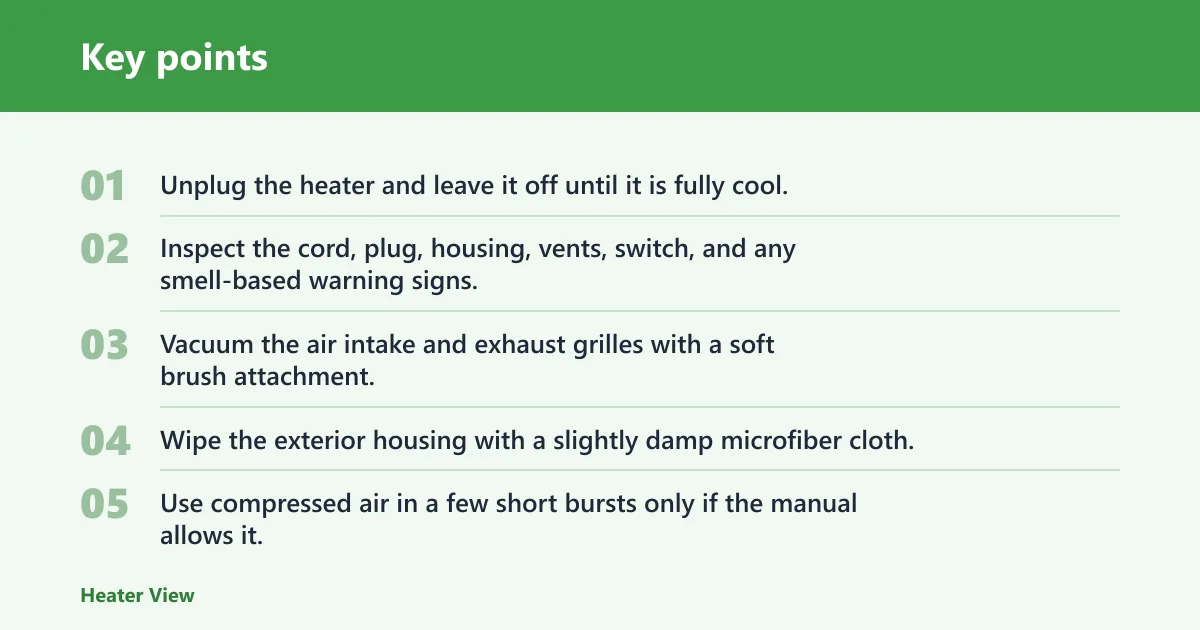
- Unplug the heater and leave it off until it is fully cool.
- Inspect the cord, plug, housing, vents, switch, and any smell-based warning signs.
- Vacuum the air intake and exhaust grilles with a soft brush attachment.
- Wipe the exterior housing with a slightly damp microfiber cloth.
- Use compressed air in a few short bursts only if the manual allows it.
- Wrap the cord loosely with a Velcro strap in a figure-eight pattern.
- Pack the heater in the original box, or in a covered bin or bag that protects it from dust and bumps.
- Store it in a cool, dry, low-humidity location off the floor.
Do you need to clean a heater before storing it?
Yes. Cleaning before storage keeps dust from hardening on vents and internal surfaces during months of downtime. The heater should be unplugged before cleaning, and it should be fully cool before you touch the housing or grilles. A clean heater is less likely to smell burnt at first startup next season.
Say your ceramic heater spent the winter beside a sofa and now has lint around both grilles. Vacuum the vents first, then wipe the outside. If the buildup is inside the grille where a brush cannot reach, use compressed air only in short bursts and only where the manual allows it.
Can you use compressed air on a heater?
Yes, but only as a finishing step and only when the manufacturer allows it. Keep the can upright if the product instructions require that, and use a few short bursts rather than a long blast. Do not open the unit or try to clean internal parts unless the manual explicitly permits access.
Can you wrap the cord around the unit?
No. Wrapping the cord tightly around the heater can stress internal wiring and can pinch insulation over time. Loose storage is safer, especially for cords with stiff bends near the plug or at the strain relief. A soft Velcro strap is the better default.
Protect the plug and cord from bend stress
Fold the cord loosely in a figure-eight pattern and keep the plug from pressing into the housing. If the cord wants to spring back hard, do not force it flat. That kind of bend stress is what creates hidden damage that may not show up until the next season.
Store the cord so it cannot snag or pinch
Keep the cord separate from the heater body if the design allows it. A small cloth tie or Velcro strap is enough. A tight zip tie can cut into the jacket, so it is not the safer choice here.
Where should you store it for summer?
Store the heater in a cool, dry place with stable temperature and low humidity. A dry closet is usually the best option. Basements, garages, sheds, and attics are acceptable only if they stay dry and free of pests; if they are damp or swing hot and cold, they are poor choices.
| Location | Dryness | Temperature stability | Pest risk | Verdict |
|---|---|---|---|---|
| Dry closet | High | High | Low | Best choice |
| Garage | Depends on sealing and climate | Low to medium | Medium to high | Use only if dry and enclosed |
| Basement | Depends on humidity control | Medium | Medium | Avoid if damp |
| Attic | Often low in humid weather | Low | Medium to high | Avoid if heat or pests are a problem |
Should you use the original box to store a heater?
Yes, if you still have it. The original box is the best storage container because it fits the heater, cushions bumps, and keeps dust off. If the box is gone, a heavy-duty plastic trash bag is an alternative, and a plastic storage bin with a lid adds better bump protection.
Can moisture damage a heater in storage?
Yes. Moisture can cause corrosion in internal metal components, and high humidity is especially hard on stored electrical gear. A heater kept in a damp basement or garage may look fine outside and still develop problems inside. Keep it away from wet floors, exterior walls that sweat, and unsealed spaces that trap humid air.
What if it smelled burnt last season?
If the heater smelled burnt, tripped breakers, or needed frequent resets, treat that as a warning sign, not a storage note. Dust buildup, blocked airflow, or a damaged switch can all cause repeat issues. Put the unit aside and plan a manual check before the first use next season.
- Check the grille openings for lint, pet hair, or visible blockage.
- Inspect the cord and plug for hard spots, melted areas, or discoloration.
- Review the heater’s reset or overheat protection behavior in the manual.
- Keep the unit tagged for service or replacement if the warning signs return at startup.
If that didn’t work, try this next
Suppose a fan heater tripped a breaker twice in late winter and then gave off a burnt smell during the same week. Do not pack it away as if nothing happened. First clear the vents, then set it aside for a manual check before next season. If the smell comes back on the first startup next year, stop using it and inspect it again before a second attempt.
Heater storage checklist
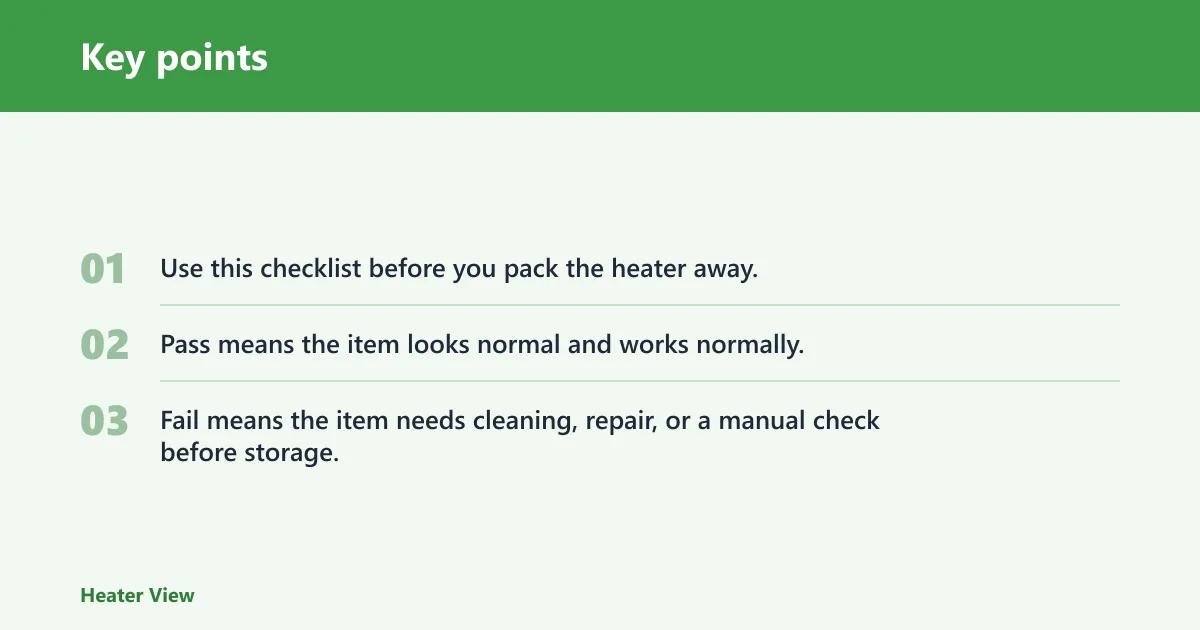
Use this checklist before you pack the heater away. Pass means the item looks normal and works normally. Fail means the item needs cleaning, repair, or a manual check before storage.
| Item | Pass/fail | What to look for | Action if failed |
|---|---|---|---|
| Cord | Pass if jacket is smooth and flexible | No cuts, flat spots, stiff bends, or exposed wire | Do not store as-is; repair or replace first |
| Plug | Pass if prongs are straight and clean | No heat marks, looseness, or discoloration | Set aside for inspection or replacement |
| Housing | Pass if shell is intact | No cracks, warped plastic, or scorch marks | Do not pack until it is checked |
| Vents | Pass if openings are clear | No lint, pet hair, or packed dust | Vacuum again with a soft brush attachment |
| Switch behavior | Pass if controls move and click normally | No sticking, chatter, or failure to hold position | Flag for service before next use |
| Smell | Pass if no burnt odor remains | Burnt plastic, hot dust, or electrical smell during or right after startup | Set aside for a manual check before next season |
Store heater scorecard
| Location | Dry | Low humidity | Stable temperature | Pest exposure | Score |
|---|---|---|---|---|---|
| Dry closet | Yes | Yes | Yes | Low | Best |
| Garage | Sometimes | Sometimes | No | Medium to high | Use only if sealed and dry |
| Basement | Often no | Often no | Medium | Medium | Avoid if damp |
| Attic | Depends on season | Depends on season | No | Medium to high | Avoid if hot, damp, or pest-prone |
Common mistakes
Packing a warm heater traps heat and moisture under the container or bag. Leaving dust in the vents invites burnt smells and weak airflow later. Storing the unit in a damp garage, basement, shed, or attic invites corrosion and pest damage. Wrapping the cord tightly around the heater can stress the wire and damage insulation.
A common first-timer mistake is putting the heater back in its box while the grille still holds pet hair. The heater looks clean, but the first startup next season produces dust odor fast. Vacuum first, then pack it away.
Another mistake is choosing a basement because it is out of the way. If that basement is humid, the storage choice works against the heater. Pick the driest indoor space available instead.
Frequently asked questions
How long can a heater sit unused before next winter?
Six to eight months is a normal off-season span, so the heater can sit unused that long if it is clean, dry, and stored with the cord loosely wrapped. Before the first cold snap, do a quick recheck of the cord, plug, vents, and smell during startup.
Can you wrap the cord around the heater for storage?
No. Wrap it loosely in a figure-eight pattern and secure it with a Velcro strap. Tight wrapping can stress the internal wire and damage the jacket over time. Keep the plug from pressing into the housing so the cord does not kink at the same spot.
Where should you store a heater during the summer?
A dry closet is the safest default. If you must use a garage, basement, or attic, confirm that the space stays dry, has low humidity, and does not attract pests. Store the heater off the floor in a covered box, bag, or lidded bin.
What should you do if your heater smelled burnt last season?
Clean the grilles, inspect the cord and plug, and do not assume the smell was harmless. If the heater tripped breakers or needed frequent resets, set it aside for a manual check before next season. A burnt odor during or right after startup is a warning sign, not something to ignore.