Should Heaters Be on Dedicated Circuits? A Practical Guide
Yes for many portable electric heaters, especially 1,500-watt units run for hours or any heater sharing a circuit with other loads. I have seen a single heater work fine on a 15A or 20A circuit when the branch was nearly empty, but repeated trips, dim lights, or warm outlets point straight to a dedicated circuit problem.
Should heaters be on dedicated circuits?

The short answer for portable heaters
A plug-in space heater pulls a lot of current. It often ends up on the same branch circuit as lamps, a TV, a computer, or a kitchen device, and that is where trouble begins. A dedicated circuit cuts nuisance trips and keeps the branch from running hot when several loads are on at once.
When the answer changes for hardwired units
Hardwired electric heaters and furnaces are a different question. Those units often have manufacturer instructions and code requirements that control the circuit layout. HVAC systems get dedicated circuits because high starting current can overload general-purpose circuits, and the same logic often applies to fixed electric heat equipment.
The first decision: one heater, or one circuit?
If the heater is portable, ask whether it is the only major load on that branch circuit. If the heater is hardwired, ask whether the equipment listing and installation instructions call for a dedicated run from the panel. That is the clean split homeowners should use before guessing.
What counts as a dedicated circuit?
A dedicated circuit runs from the main panel directly to one appliance or one equipment location. It is sized for that load, with wire gauge and breaker amperage matched. That setup helps prevent nuisance trips caused by multiple devices drawing current together and lowers stress on the branch.
How a dedicated circuit is wired from the panel
The circuit starts at one breaker in the service panel and ends at one location or one appliance. Nothing else should be tied into that run. The point is simple: one load path, one breaker, one wire size, one predictable result.
Breaker size, wire gauge, and load match
The breaker protects the wire, not the heater in the casual way people often mean. If the breaker amperage is too high for the wire size, the wire can overheat before the breaker opens. That is why breaker size and conductor size must match the load.
Why electricians use them for high-draw appliances
Heaters, HVAC equipment, and other high-draw appliances can pull enough current to disturb a shared branch circuit. Dedicated circuits keep that load isolated. They also help when a motor or heating element starts up and the current jumps briefly above normal running demand.
How much current does a heater draw?
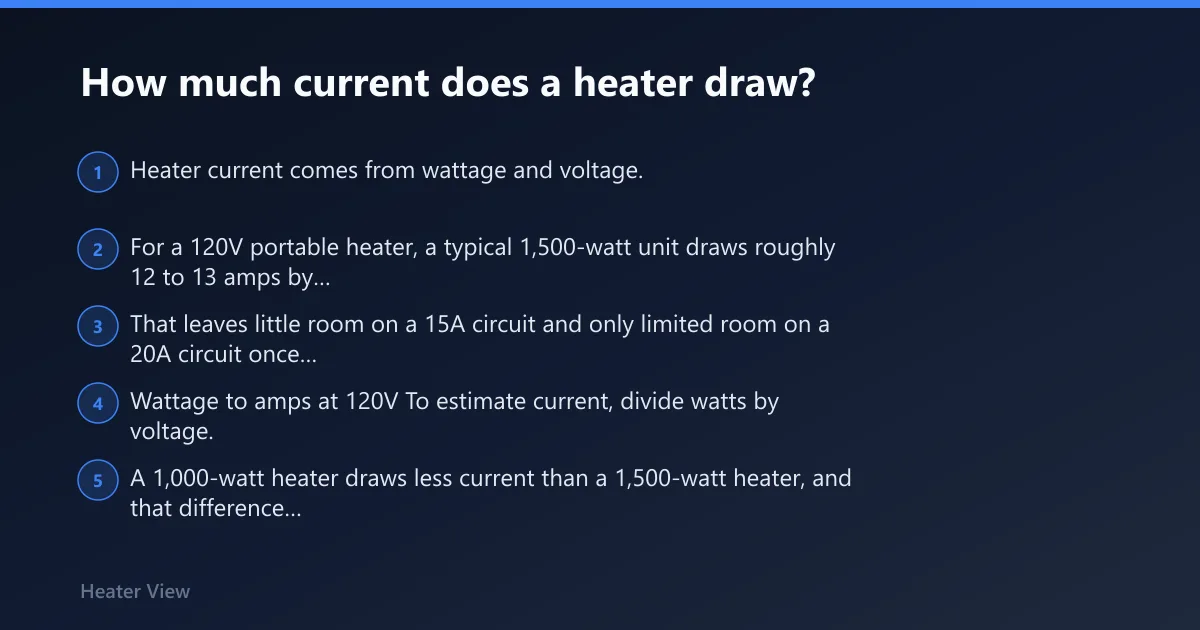
Heater current comes from wattage and voltage. For a 120V portable heater, a typical 1,500-watt unit draws roughly 12 to 13 amps by simple load math. That leaves little room on a 15A circuit and only limited room on a 20A circuit once other devices are on the same branch.
Wattage to amps at 120V
To estimate current, divide watts by voltage. A 1,000-watt heater draws less current than a 1,500-watt heater, and that difference matters a lot on a branch circuit that also feeds lights, outlets, or small appliances. The higher the wattage, the closer you are to the breaker limit.
Why 1,500W heaters are the common problem case
Many portable heaters are sold around 1,500 watts because that level gives strong heat output while still plugging into a standard receptacle. The catch is that 1,500 watts at 120V leaves little headroom. Add a coffee maker, a computer, or even several lamps, and the branch can hit its limit fast.
How the 125% continuous load rule changes the math
For heaters used three hours or longer, the continuous load rule matters. That 125% sizing factor means the circuit and breaker need margin, not a bare match to the running current. A heater that seems fine for short bursts may be a poor fit for all-day use on a lightly sized branch.
Can you run a heater on a 15A or 20A circuit?
Sometimes yes, but only when the heater is the main load and the branch circuit has enough margin. A single smaller heater may be acceptable on a 15A or 20A circuit. A 1,500-watt unit on a shared branch is much more likely to trip a breaker or sag voltage under load.
How many heaters can you run on one circuit?
Usually one portable heater is the practical limit on a general-purpose branch circuit, and even that depends on what else is plugged in. Running two heaters on the same circuit is a common way to overload it. If both run at once, the breaker can trip quickly, especially on a circuit already serving lights or electronics.
What else is already on that branch circuit?
Branch circuits are shared by multiple outlets, so the heater is rarely alone in the real world. Kitchen, office, and laundry circuits are frequent trouble spots because they already support appliances with their own demand spikes. Shared circuits can cause voltage sags when multiple loads run at once.
When a heater is acceptable alone, and when it is not
A heater can be acceptable alone on a lightly loaded 15A or 20A circuit if nothing else major is running. It is not acceptable when the circuit already feeds a fridge, computer setup, microwave, vacuum, or other heat-producing load. The more devices on the branch, the less safe the heater becomes.
Heater load table and circuit guidance
| Heater wattage | Estimated amps at 120V | Safe on 15A circuit alone? | Safe on 20A circuit alone? |
|---|---|---|---|
| 750W | 6.25A | Yes, if the circuit is otherwise light | Yes, if the circuit is otherwise light |
| 1,000W | 8.33A | Usually yes | Yes |
| 1,250W | 10.42A | Maybe, with little else on the branch | Yes, with normal caution |
| 1,500W | 12.5A | Borderline; best as the only major load | Usually yes as a single load |
This table assumes the heater is the main load on the branch circuit and does not account for long wire runs, weak receptacles, or other devices already drawing current. Shared loads change the answer fast. The same heater that seems fine on paper can still trip a breaker in a real house.
What are the signs a circuit is overloaded?
The common signs are breaker trips, dimming lights, warm receptacles, buzzing outlets, and a heater that seems to cycle oddly or lose performance. Voltage drop and nuisance tripping are often the first clues that the branch circuit is near its limit, especially when the heater and other loads run together.
Breaker trips and nuisance trips
A circuit breaker trips on overload or fault. One trip can happen by chance, but repeated tripping means the circuit is being asked to do more than it should. If the breaker trips as soon as the heater starts or when another appliance turns on, that is a strong warning sign.
Dimming lights, warm outlets, and buzzing receptacles
Dimming lights often show that current demand is pulling the circuit voltage down. Warm receptacles or a buzzing outlet are more serious. Those signs can point to a loose connection, worn receptacle, or an overloaded branch. A heater should never be ignored if the outlet faceplate feels hot.
Voltage drop and why heater performance falls off
Voltage drop increases with long runs and shared loads. In plain terms, the heater may get less of the power it expects, so heat output falls and wiring stress rises. Long circuit runs may require larger wire to maintain proper voltage, which is another reason a dedicated circuit can matter.
Can you plug a heater into a power strip?
No, a space heater should not be plugged into a power strip. Power strips are not a fix for an overloaded branch circuit, and they can overheat under the steady draw of a heater. If the strip also feeds other devices, the risk climbs quickly.
Why power strips fail with heaters
Most power strips are made for light electronics, not heating loads that run for long periods. The strip, its cord, and its plug connection can warm up well before the breaker reacts. That is a bad place to be with a heater running unattended.
Are extension cords safe with heaters?
Usually no. Extension cords add resistance, reduce voltage at the heater, and can overheat if they are undersized or loosely connected. If a heater must be placed farther from the outlet, the safer fix is usually a properly located receptacle or dedicated circuit, not a cord.
What goes wrong with long cords
Long runs can worsen voltage drop, especially when the heater is already pulling a large load and other devices are on the same branch. Loose plugs, damaged cord jackets, and cheap light-duty cords are common failure points. Heat at the plug or cord end is a stop sign.
What size circuit does an electric heater need?
The circuit size depends on the heater’s nameplate wattage and whether it is a portable 120V unit or a fixed electric heater. A 1,500-watt portable heater can sometimes run on a lightly loaded 15A or 20A circuit, but larger or continuous loads often need a dedicated circuit sized to the equipment.
How circuit sizing follows the nameplate
Circuit sizing uses the equipment nameplate listing voltage and amperage. That is the starting point, not a guess. For heaters used for hours, the continuous load rule raises the bar. For hardwired equipment, the installation instructions and the listing should control the final circuit choice.
Do furnaces and hardwired heaters need their own circuit?
Usually yes. Furnaces and hardwired electric heaters are commonly supplied by a dedicated circuit because the load is fixed, substantial, and more sensitive to breaker and wire sizing. Manufacturer instructions and the National Electrical Code can require dedicated circuits for certain equipment, so the equipment listing matters.
When manufacturer instructions control the answer
If the nameplate or installation manual calls for a dedicated circuit, that instruction should be followed. For fixed electric heat, the circuit is not sized by guesswork. The equipment listing, voltage, amperage, and installation method all need to line up before the heater is energized.
How code and installation practice differ for HVAC equipment
The National Electrical Code sets requirements for certain dedicated circuits, and HVAC systems routinely get them because of starting current and load behavior. A furnace may also need its own disconnect or service method depending on the installation. That is separate from a plug-in space heater question.
Panel capacity limits when adding a new circuit
Adding circuits depends on available breaker spaces in the panel, and panel capacity also depends on remaining amperage after existing loads are counted. An older panel may have room for a breaker but not enough service capacity for another large heater load. That is when a load calculation or panel review becomes necessary.
How do you tell if a circuit is overloaded?
A circuit is overloaded when the connected load exceeds what the breaker and wire can safely support over time. The signs are repeated trips, hot outlets, flickering lights, and a heater that causes other devices on the same branch to misbehave. The pattern matters more than one isolated event.
A simple homeowner decision path
- Check the heater wattage on the nameplate.
- Estimate the current draw at 120V by dividing watts by volts.
- Look at what else is on that branch circuit.
- Watch for dimming lights, warm receptacles, buzzing, or breaker trips.
- If any warning sign appears, stop using the heater on that circuit.
- Call an electrician if trips repeat, the panel is crowded, or wire size is uncertain.
What appliances need dedicated circuits?
High-draw appliances and equipment with specific installation requirements commonly need dedicated circuits. HVAC systems are the clearest example. Many fixed electric heaters, furnaces, microwaves, dishwashers, disposal units, and laundry equipment may also need dedicated runs depending on the nameplate, the local electrical code, and the installation instructions.
The practical rule for homeowners
If an appliance heats, motor-starts hard, or runs for long periods at high load, it deserves a close look. If the label or manual calls for a dedicated circuit, treat that as the answer. When in doubt, the breaker size and wire size should be checked before any new load is added.
Frequently asked questions
Does a space heater need a dedicated circuit?
Not always, but often yes in practice. A small heater on a lightly loaded branch circuit may be fine. A 1,500-watt heater used for long periods, or one sharing a circuit with other loads, is much more likely to need its own circuit to avoid trips and overheating.
Is a dedicated circuit required for a furnace?
Often yes, because furnaces and other HVAC equipment frequently have dedicated circuit requirements tied to manufacturer instructions and code. The exact answer depends on the unit’s listing and installation method. If the furnace is hardwired, it should be treated as an equipment-specific circuit decision, not a general outlet question.