Are Heaters Safe for Birds and Small Pets? Key Rules
Heaters can be safe for birds and small pets if you use a sealed electric model, keep cages a few feet away, and avoid exposed elements, fumes, and hot surfaces. Poor setup can dry the air, overheat cages, and expose birds to toxic gases or burns. This guide explains heater types, safe placement, air-quality limits, and warning signs to watch for.
Are heaters safe for birds and small pets?

Yes, but only with careful setup. Birds often need a stricter safety standard than many small mammals because their respiratory system can react quickly to dust, fumes, and dry air. A safe room keeps heat controlled, air moving gently, and the heater far from cages, enclosures, and play areas.
Why birds and small pets react differently to heater risks
Birds can develop breathing problems or sickness faster when air gets dry or contaminated. Small mammals such as rabbits, guinea pigs, and hamsters also dislike heat stress, but they are usually more affected by direct warmth, enclosure temperature spikes, and poor airflow than by airborne fumes alone.
Common room conditions raise risk fast: dust near the heater intake, scented cleaners, smoke, blocked airflow, and direct heat aimed at the cage. A heater can be technically safe and still create trouble if it sits too close to bedding, bars, plastic fittings, or a draft-free corner.
How birds, rabbits, guinea pigs, and hamsters differ
Birds are the most sensitive to air quality, so avoid heaters that stir dust or run with a hot, exposed surface. Rabbits and guinea pigs need lower heat stress and dry air control. Hamsters are small and can overheat in a warm room or a closed enclosure more quickly than many owners expect.
A common mistake for new owners is treating every pet room the same. A bird room needs tight control of humidity and fumes. A rabbit pen needs distance from radiant heat. A hamster habitat needs stable room temperature and no direct warm blast through the cage bars.
📊 Mainstays ceramic fan-force space heater is listed at 1500W. Source: Portable and Electric Space Heaters.
What kind of heater is safest in a pet room?
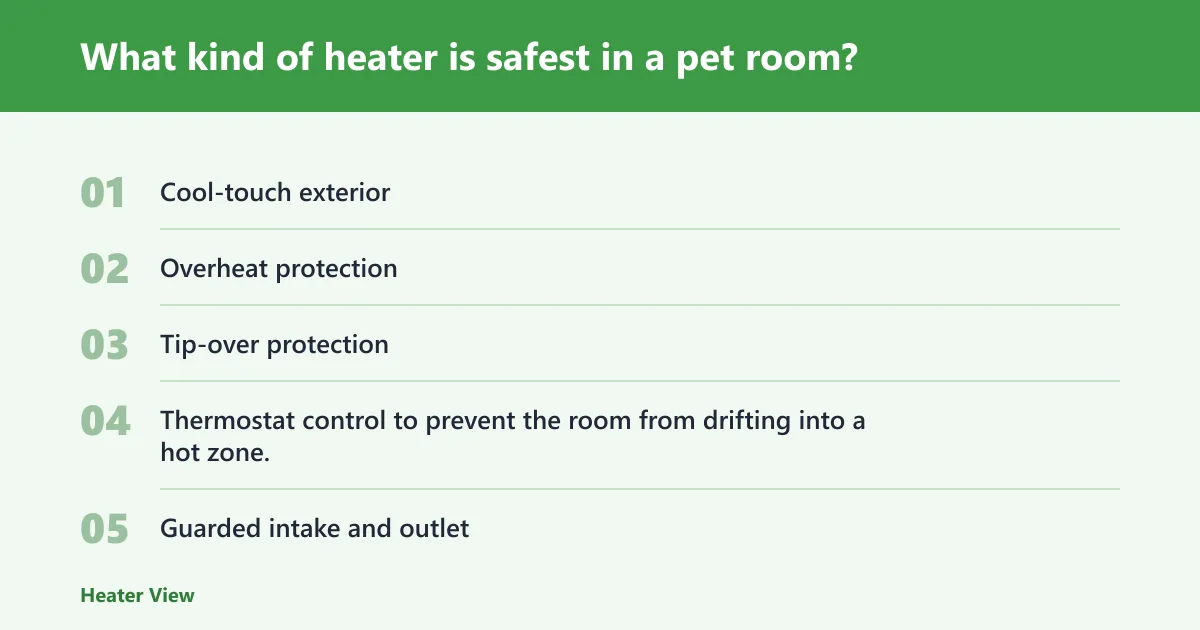
The safest choices are sealed electric heaters with a thermostat, overheat protection, and tip-over protection. A ceramic space heater can work well if it has a guarded face and cool-touch exterior. Avoid exposed elements, open flames, fuel-burning units, and anything that throws direct radiant heat at a cage.
Why ceramic space heaters are often a better fit
A ceramic space heater uses a ceramic heating plate and fan-blown warm air to spread heat more evenly across a room. That helps reduce hot spots near the floor or in one corner. The tradeoff is surface heat and airflow noise, so the unit still needs distance from pets and bedding.
Some product listings show practical control features that matter in pet rooms. One DREO heater listing includes a thermal sensor and 12-hour timer. A Comfort Zone infrared tower heater is listed at 1500W with thermostat. A Lasko tower heater listing is described as 1500W and oscillating. These features can help manage room heat, but they do not remove placement risk.
Features that reduce pet-room risk
- Cool-touch exterior to lower burn risk if a pet or person brushes against the unit.
- Overheat protection with automatic shutoff or thermal cutout to reduce fire risk.
- Tip-over protection so the heater shuts off if knocked over by an active pet or bumped stand.
- Thermostat control to prevent the room from drifting into a hot zone.
- Guarded intake and outlet to reduce dust buildup and contact with hot parts.
Features to avoid
Exposed heating elements are a poor fit for birds and small mammals. Strong radiant fronts, unguarded coils, open flames, and loose bases increase burn and tip-over risk. Fuel-burning units also introduce fumes, which matter far more in a bird room than in a typical living room.
Numbers on the label can help compare size, but they do not make a heater safe by themselves. A LifePlus electric oil-filled radiator is listed with 700W output. A Mainstays ceramic fan-force space heater is listed at 1500W. A Midea quartz indoor heater listing shows 1500W. A Hyper Tough milkhouse utility heater is listed at 1500W.
How far should a heater be from a bird cage?
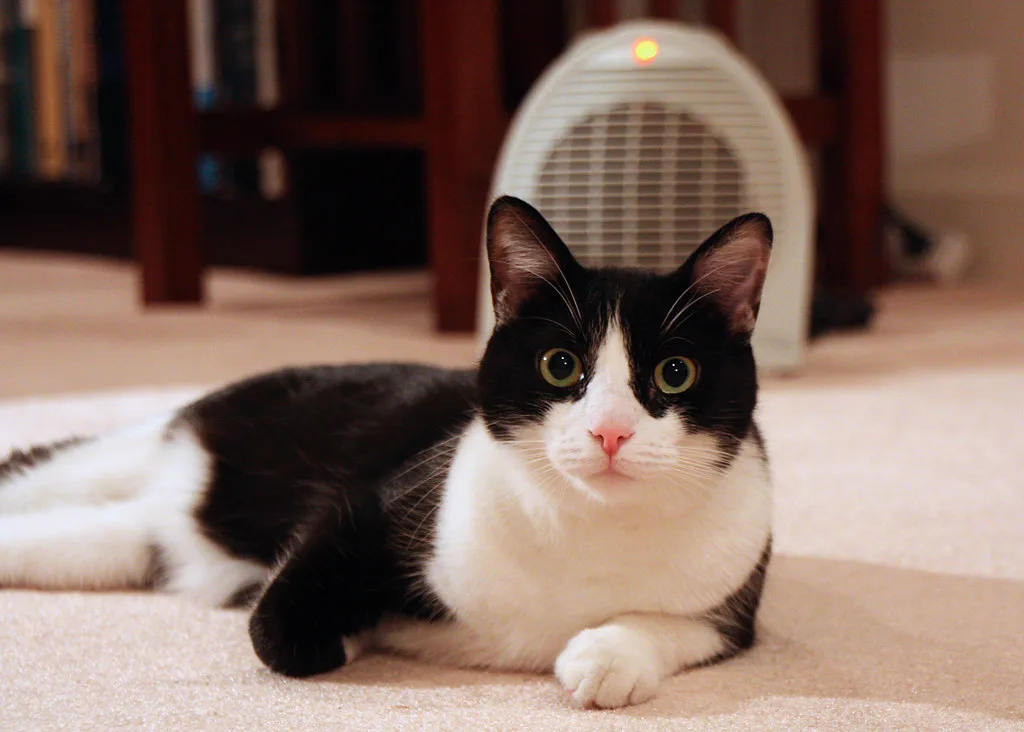
Keep the heater at least 3 feet away from a bird cage, and farther if the unit blows hot air directly toward the enclosure. Distance should also keep the heater away from perches, play stands, bedding, plastic parts, and any flying path that could carry a bird into the warm zone.
Placement rules for cages, enclosures, and play areas
Do not aim the heater at cage bars, nest boxes, or bedding. Heat striking one side of a cage can create uneven temperature, dry out the air near the enclosure, and overheat a corner while the rest of the room seems normal. That unevenness is often missed without a room thermometer.
Suppose a 36-inch bird cage sits beside a wall heater. The side closest to the heater may feel fine to a person standing in the room, while the enclosure inside warms enough to stress the bird. Moving the heater across the room and aiming airflow away from the cage is the safer fix.
How to avoid hot spots and direct exposure
- Place the heater on a flat, stable surface with clear space around it.
- Keep it at least 3 feet from cages, pens, curtains, and bedding.
- Point the outlet away from the pet area, not toward it.
- Check the area above and beside the cage for warm air drift.
- Use a room thermometer near the pet zone, not only near the heater.
Do heaters dry out the air for birds?
Yes. Heaters can lower room humidity, and dry air can irritate birds and small pets. In birds, low humidity can make breathing feel harder and can add stress to an already sensitive respiratory system. Dry rooms can also keep bedding, dust, and dander airborne longer.
How to check humidity and room temperature
Use a hygrometer to read humidity in the pet zone and a room thermometer to verify the ambient temperature near the cage or enclosure. Do not measure only at the heater. The goal is to know what the pet actually experiences, which can differ a lot from the wall reading.
A practical check method is simple: place the thermometer and hygrometer near, but not inside, the pet area; wait until the heater has run long enough for the room to stabilize; then compare readings across the room. If one side is warm and the pet side is cool, the room needs better airflow, not more direct heat.
How ventilation helps without creating drafts
Ventilation helps remove buildup of heat, dust, and fumes. It should be gentle, not a cold stream aimed at the cage. A brief exchange of air from another part of the room or house can help, but avoid setting a fan or open window so it blows directly on birds or small mammals.
Can a space heater hurt a bird cage nearby?
Yes. A nearby heater can warm bars, perches, plastic parts, and bedding enough to create a burn zone or a dry hot pocket inside the enclosure. It can also push dust and particles toward the cage, which is especially risky for birds with sensitive breathing systems.
What cage materials and setups are most exposed
Plastic clips, water bottle parts, fabric covers, and paper bedding can all react badly to direct heat. Even if the cage itself does not feel hot to the touch, the air layer around it may be hotter and drier than the rest of the room. That is enough to cause discomfort or stress.
Common room layout mistakes
Heaters placed under a cage stand, beside a play gym, or near a hanging bird cage create trouble fast. So do units aimed across a hallway where the airflow sweeps through the enclosure. Keep the heater in open room space and let it warm the room evenly.
Can birds get burned by a heater?
Yes. Birds can be burned by contact with hot surfaces, by landing too close to an exposed face, or by flying into a direct blast of warm air. Small mammals can also be burned, especially if they climb onto a heater, touch a grille, or press against a hot side panel.
Why burn risk matters even with guarded units
A cool-touch exterior reduces burn risk if touched, but it does not make every surface safe. Outlet grills, top vents, and side panels can still become hot enough to matter. Tip-over protection and overheat protection help, but they do not replace distance and supervision.
When to stop using the heater right away
Stop using the heater immediately if you notice odor, smoke, unusual dust buildup, unstable placement, open hot surfaces, or an enclosure temperature that rises faster than expected. Also stop if a bird coughs, pants, holds feathers oddly, or moves away from the normal resting area.
For small mammals, watch for stretching away from warmth, rapid breathing, restlessness, or crowding to one end of the enclosure. Those are signs the room is too warm or too dry for the setup.
What signs show a heater is unsafe around pets?
Unsafe setup often shows up before there is an emergency. Signs include smell from the unit, visible dust on vents, hot air pointed at the cage, a warm wall behind the heater, flickering performance, repeated tip-over events, or a pet that avoids the room. Any of those calls for shutdown and reassessment.
Pet-room heater safety setup table
| Pet type | Safe heater traits | Minimum placement distance | Humidity check method | Stop-use red flags |
|---|---|---|---|---|
| Birds | Sealed electric unit, cool-touch exterior, thermostat, overheat protection, tip-over protection | At least 3 feet from cage, farther from flying paths | Hygrometer near cage; keep the pet zone from feeling dry or dusty | Odor, smoke, coughing, ruffled feathers, hot cage side, dust buildup |
| Rabbits | Guarded heater, stable base, thermostat, overheat protection | At least 3 feet from pen and bedding | Check humidity and the pen side of the room with a room thermometer | Restlessness, heavy breathing, hot enclosure wall, unstable heater |
| Guinea pigs | Low-fan, cool-touch, guarded outlet, thermostat | At least 3 feet from hideouts and hay | Use a hygrometer near the floor level where the cage sits | Dry bedding, warm corner, odor, dust on grille, pet crowding away |
| Hamsters | Compact sealed heater, tip-over protection, thermostat, overheat protection | At least 3 feet from habitat and tunnels | Check room temperature near the enclosure, not only near the heater | Overheating, lethargy, hot bedding, unstable stand, burning smell |
Species-and-size setup notes
Birds need the strictest air-quality control because their respiratory system is sensitive to dust, fumes, and dry air. Rabbits and guinea pigs need a stable room without hot spots near the floor, where they spend most of their time. Hamsters are small enough that a warm room can become too warm quickly, especially in a closed habitat.
Short setup checklist
- Choose a sealed electric heater with thermostat, overheat protection, and tip-over protection.
- Keep the heater at least 3 feet from cages, pens, bedding, and play areas.
- Set a hygrometer and room thermometer in the pet zone.
- Confirm the heater does not blow directly toward the enclosure.
- Watch for odor, smoke, dust buildup, or pet distress and shut the unit off if any appear.
Bird-focused product traits seen in compact units
Some bird-room products are built small by design. The K&H Pet Products Snuggle-Up Bird Warmer is described as compact and lightweight, uses 12-volt power consumption, and measures 3 x 5 inches. The SYSAI Snuggle-Up Bird Warmer offers 104°F and 113°F settings and measures 4 X 6 inches. The GlowUp Bird Cage Heater includes two 100W ceramic heat lamp bulbs.
Those details can help with size and placement planning, but the same room rules still apply. Small heaters can still overheat a cage if they sit too close, and lamp-style units still need careful guarding and distance from feathers, bedding, and bars.
Frequently asked questions
Are heaters safe for birds indoors?
They can be, if the heater is sealed, stable, and kept well away from the cage. Birds need protection from dry air, fumes, dust, and direct heat. Use a thermostat, monitor humidity, and keep the heater at least 3 feet from the bird and its flight path.
What kind of heater is safest for small pets?
A safe choice is a sealed electric heater with a cool-touch exterior, thermostat, overheat protection, and tip-over protection. Ceramic space heaters are often a practical option because they move warm air more evenly, but the outlet must still stay far from bedding, pens, and cages.
Do heaters dry out the air for birds?
Yes. Heaters can lower room humidity, and that dry air can irritate birds and make breathing more stressful. Use a hygrometer near the cage area to check conditions. If humidity drops too far or the room feels dusty, add gentle ventilation and reduce heater output.
How far should a heater be from a bird cage?
A common safe minimum is 3 feet, with more distance if the heater sends air directly toward the cage or if the room is small. Keep the unit away from flying paths, perches, bedding, and anything that can catch warm air or touch hot surfaces.
Can birds get burned by a heater?
Yes. Birds can be burned by touching a hot surface, landing too close to a radiant face, or contacting heated cage parts. A cool-touch exterior lowers the risk, but it does not remove it. Direct heat, exposed elements, and unstable units remain a problem.
What signs show a heater is unsafe around pets?
Warning signs include odor, smoke, dust buildup, unstable placement, unusual warmth around the cage, and pet distress. Birds may cough, hold feathers tight, or avoid the area. Small mammals may pant, crowd away from the heat, or act restless. Shut the unit off and reassess the room layout.