How to Fix Smelly Hot Water From a Water Heater
If only hot water smells like rotten eggs, flush the tank, then swap the magnesium anode for aluminum; if cold water also smells, test the supply first. Ignoring it can leave the odor in place, wear parts faster, and send you toward the wrong fix. This guide shows how to isolate heater, plumbing, or supply issues in homes, wells, and RVs, then choose the next step.
Smelly hot water troubleshooting matrix


Use this table before you buy parts. Match the symptom first, then try the first fix listed. The hot-versus-cold check matters because the water heater tank is only one possible source.
| Symptom pattern | Likely cause | First fix |
|---|---|---|
| Hot water smells, cold water does not | Heater tank, anode rod, or hot-side reaction | Flush the tank and inspect the anode rod |
| Cold and hot water both smell | Incoming water, private well issue, or house supply problem | Test at several fixtures and check the source water first |
| Only one fixture smells | Drain, trap, aerator, or branch line odor | Clean the drain and fixture parts before touching the heater |
| Odor appears after water sits unused | Stagnation and sulfur-reducing bacteria in low-oxygen water | Run the hot water, then consider tank flushing or disinfection |
| Odor returns after flushing | Source water, persistent bacteria, or anode-driven reaction | Check the supply, then consider anode swap or chlorination |
| Well water home with stronger odor in hot water | Hydrogen sulfide in the supply or bacteria in the well and tank | Test the well water and plan source treatment if needed |
| RV hot water smells after storage or low use | Small tank, warm standby water, and bacterial growth | Drain, flush, and disinfect the RV water heater |
| Odor continues after anode replacement | Water chemistry, bacteria, sediment, or another source remains | Recheck the supply and disinfect the tank before replacing more parts |
Why hot water smells like rotten eggs?
The rotten-egg odor is usually hydrogen sulfide, or H2S. It often reads stronger in hot water than in cold because heat can drive the smell out of the water and because hot-side reactions inside the tank can generate more of it. That is why the heater itself is often the first place to look.
Hydrogen sulfide and the sulfur smell
Hydrogen sulfide is the gas most people notice as a sulfur smell. It can come from the water supply, from bacteria in low-oxygen areas, or from reactions inside the water heater tank. The smell can be faint at first and then become obvious after the tap runs for a few seconds.
Sulfur-reducing bacteria in low-oxygen water
Sulfur-reducing bacteria are commonly reported to feed on sulfates and produce hydrogen sulfide. They are more common in low-oxygen spaces such as tanks, sediment layers, wells, and stagnant branches. That is why odor can show up after the water has sat unused, then fade once fresh water moves through the system.
Why heat can make the odor stronger
Heat can make a sulfur smell easier to notice because warm water releases dissolved gas more readily. In a tank, temperature also changes the chemistry around the anode rod and sediment. A smell that is mild in cold water but strong in hot water usually points to the heater or hot-side plumbing.
Is the smell only in hot water?
Check hot and cold water at several fixtures before you assume the heater is the problem. If only hot water smells, the heater is usually involved. If cold water also smells, the issue may be in the incoming supply, a private well, or the house plumbing before the heater.
Test hot and cold at multiple fixtures
Run both hot and cold water at a kitchen sink, a bathroom sink, and a tub or shower. If the smell is only at one fixture, the drain or branch line is a stronger suspect than the tank. If the smell shows up everywhere, the problem is wider than a single faucet.
What it means when only hot water smells
If hot water smells and cold water does not, the heater is usually the culprit. That points to the water heater tank, its anode rod, sediment, or bacteria living in the hot-side environment. Start there before replacing faucets or treating the whole house.
What it means when cold water smells too
If cold water also smells, the incoming supply needs attention. That is especially true on a private well system, where sulfur odor may come from the well, pressure tank, or source water chemistry. Treating the heater alone will not fix that pattern for long.
Water heater parts and odor
The tank is a common odor source because it holds warm water, sediment, and low-oxygen pockets. The anode rod protects the tank from corrosion, but it can also play a part in odor formation. Sediment and mineral scale can trap stale water and make the smell linger.
Anode rod types and how they can react
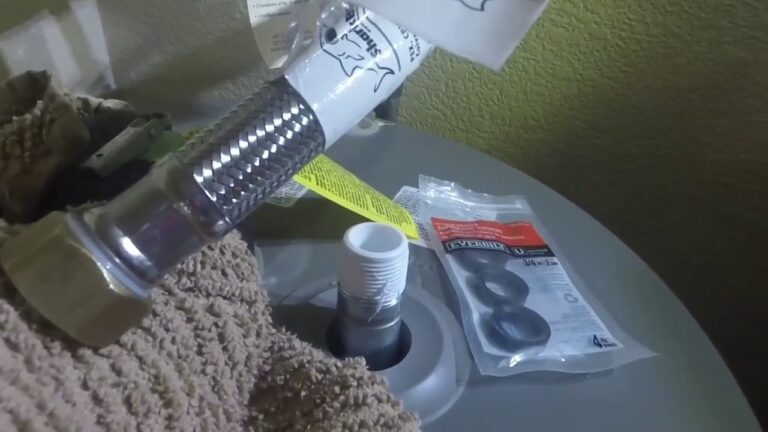
Water heater anode rods are typically aluminum or magnesium. Their job is corrosion protection: the rod sacrifices itself so the tank lining lasts longer. Magnesium rods are often involved when a rotten-egg odor starts or gets worse, so swapping to aluminum is a common next step.
A common first-timer mistake is replacing parts before checking the symptom pattern. Suppose only the upstairs bath smells, while the kitchen hot water stays fine. That points away from the tank and toward a drain or branch-line issue, so anode replacement would miss the real cause.
Sediment and mineral scale in the tank
Sediment and mineral scale can hold odors and stale water near the bottom of the tank. They can also reduce heater efficiency. If the tank has a layer of buildup, flushing may help by removing trapped material, but a heavy odor that returns can mean the supply or bacteria problem is still active.
When the heater interior needs disinfection
Chlorine treatment is a temporary odor-control method used to disinfect the heater interior or the water system. It should come after diagnosis, not before it. After treatment, the heater or system needs downtime before use again so the disinfectant can do its work safely.
Start with the least invasive step that matches the symptom pattern. If hot water alone smells, flush the tank first. If the smell returns after flushing or after anode replacement, move to disinfection or source-water checks. Stop and call a plumber if you are unsure about gas, electric, or scald risks.
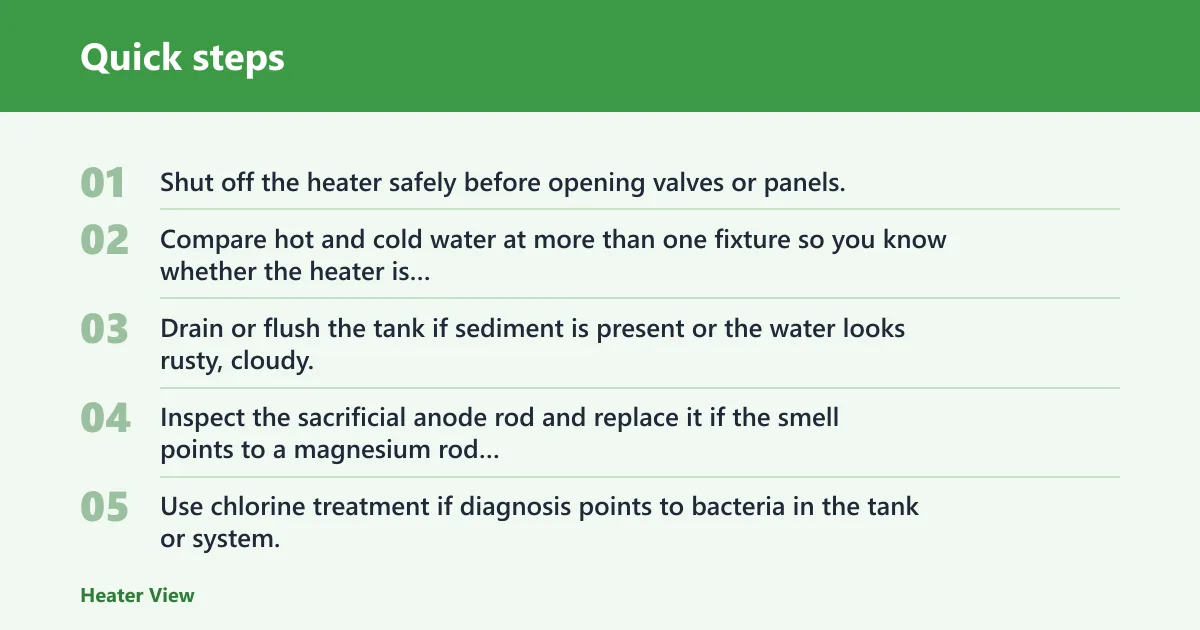
- Shut off the heater safely before opening valves or panels. Gas and electric heaters need different shutdown steps, and hot water can cause scalds.
- Compare hot and cold water at more than one fixture so you know whether the heater is really involved.
- Drain or flush the tank if sediment is present or the water looks rusty, cloudy, or gritty.
- Inspect the sacrificial anode rod and replace it if the smell points to a magnesium rod reaction.
- Use chlorine treatment if diagnosis points to bacteria in the tank or system.
- Recheck the smell after the system is back in service. If it returns, move upstream to the supply or well.
Flush the tank if sediment is present
Flushing helps most when sediment or mineral scale is part of the problem. It removes stale water and loose buildup that can trap odor. It will not solve every case, though. If the smell comes from incoming water or a bacteria source outside the tank, flushing may only provide short relief.
Replace or swap the anode rod when indicated
Should you replace the anode rod if your water heater smells? Often, yes, when only hot water smells and the odor points to the tank. A magnesium anode can contribute to odor formation in some systems, and replacing it with aluminum is a common fix. If the smell comes back quickly, the rod was not the whole problem.
Picture a 50-gallon heater in a basement where hot water smells strongest after a weekend away. That pattern fits standing water in the tank. Flushing and an anode swap can help, but if the odor returns after a few days, the water supply or bacteria are probably still feeding the problem.
Use chlorine treatment after diagnosis
Chlorine treatment can disinfect the heater interior or the system when sulfur-reducing bacteria are suspected. It is a temporary fix, not a permanent one. Use it after you have ruled out a one-fixture drain smell and confirmed that the heater or supply system is involved.
Call a plumber for persistent or unsafe cases
Call a plumber if the odor persists after flushing, anode replacement, and disinfection, or if the heater needs shutdown work you are not comfortable doing. Gas controls, electric elements, and scald risk are all reasons to stop. A persistent smell can also point to a source-water problem that needs a different treatment path.
When the smell is not from the heater
Do not assume every rotten-egg smell starts in the tank. One-fixture odor often comes from the drain, trap, or branch line. Cold-and-hot odor together points outside the heater. On private wells, the source water may need treatment at the well head or point of entry instead of more tank work.
Drain and trap odor at one fixture
If only one sink or shower smells, check the drain first. A dry trap, biofilm, or debris in the drain can mimic a water heater problem. Run water, clean the drain parts, and retest hot and cold separately before opening the heater.
Source water problems in private well systems
Private well systems are often more likely to have sulfur odor issues. The source can be the well water itself, low-oxygen conditions, or an interaction with septic or sealing issues near the well. If both hot and cold water smell, source treatment is often the better first move than heater-only repairs.
Why recurring odor can point outside the tank
Recurring odor after flushing or recurring odor after anode replacement is a clue. It usually means the source water, bacteria, or tank conditions are still in play. If the smell returns quickly, keep looking upstream instead of swapping another part at random.
Smelly hot water RV guide
RV water heaters are small, can sit unused for stretches, and can hold warm stagnant water. That makes odor more likely. A small tank can also recover faster from bacterial growth, so the smell may return quickly after a trip or after the rig sits in storage.
Low-use tanks and stagnant water
Low use lets water sit long enough for odor to build. If the smell appears after storage or after a few days without use, start with a full drain and flush. Check the hot water only, then compare it to the cold supply so you know whether the tank or the source hose is to blame.
Flush and disinfect an RV water heater
How do you clean a smelly hot water heater in an RV? Drain the tank, flush out sediment, and disinfect the heater interior if the odor remains. Because RV systems are compact, leftover water in the tank or lines can keep feeding the smell. Let the system sit through the disinfecting period before putting it back in service.
When to suspect the supply hose or tank source
If the odor shows up in cold and hot water, suspect the source hose, campground supply, or onboard tank rather than the water heater alone. If it is only in hot water, the RV heater and its anode are the first places to check. The same symptom split used in a house applies here too.
Frequently asked questions
How do I fix smelly hot water from a water heater?
Start by comparing hot and cold water at more than one fixture. If only hot water smells, flush the tank, inspect the anode rod, and consider chlorine treatment if bacteria are suspected. If the smell returns after those steps, the source water or well may be the real cause.
Why does my hot water smell like rotten eggs?
The most common reason is hydrogen sulfide, which smells like rotten eggs. It can come from sulfur-reducing bacteria, the heater tank, or the water supply. Heat often makes the odor stronger, so the smell may show up more clearly in hot water than in cold.
How do I know if the smell is coming from the water heater or the drain?
Test several fixtures and compare hot and cold water. If only one sink or shower smells, the drain or trap is more likely than the heater. If hot water smells everywhere and cold water does not, the water heater tank is usually the source.
Should I replace the anode rod if my water heater smells?
Yes, if the smell is only in hot water and points to the tank. Magnesium anode rods can contribute to odor formation in some systems, and swapping to aluminum is a common fix. If the odor returns quickly, check for sediment, bacteria, or source-water issues too.
Will flushing the water heater get rid of the smell?
Flushing can help when sediment or mineral scale is holding odor in the tank. It may also remove stale water that has sat too long. It will not fix every case, especially if the smell is coming from the supply, a well, or bacteria that remain in the system.
How do I clean a smelly hot water heater in an RV?
Drain the RV tank, flush out sediment, and disinfect the heater if needed. RV systems often smell after storage or low use because water sits in a small tank for too long. If cold water also smells, check the supply hose or source water instead of the heater alone.